
Why Your Home’s Water Management System Matters
Gutter downspout replacement is a critical home maintenance task that protects your foundation from water damage, prevents erosion, and keeps your basement dry. Most homeowners need to replace downspouts when they show signs of rust, leaks, separation from the gutter system, or physical damage from storms or age.
Quick Answer: When to Replace Your Downspouts
- Visible rust or corrosion eating through the metal
- Cracks, holes, or splits in the downspout walls
- Loose connections between sections or at the gutter outlet
- Water pooling near your foundation after rain
- Sagging or pulling away from the house
- Cost: DIY materials run $15-50 per downspout; professional installation averages $315-1,070 total (ranging up to $3,265 for complex projects)
Your home might be your castle, but without functioning downspouts, you could end up with a moat where your garden once thrived. A damaged or missing downspout can lead to foundation repairs costing $10,000 or more—far exceeding the modest investment of timely replacement.
The good news? Replacing a downspout is one of the most straightforward gutter repairs you can tackle. With about $15 in materials and three to four hours of your time, you can install a standard 10-foot section yourself. However, knowing when to DIY and when to call in professionals can save you both money and headaches.
I’m Jack Golini, and I’ve been protecting homes in the Wakefield area since 1982. Over more than three decades, I’ve seen how proper gutter downspout replacement prevents costly water damage and extends the life of your entire roofing system—which is why I’m sharing this comprehensive guide with you.
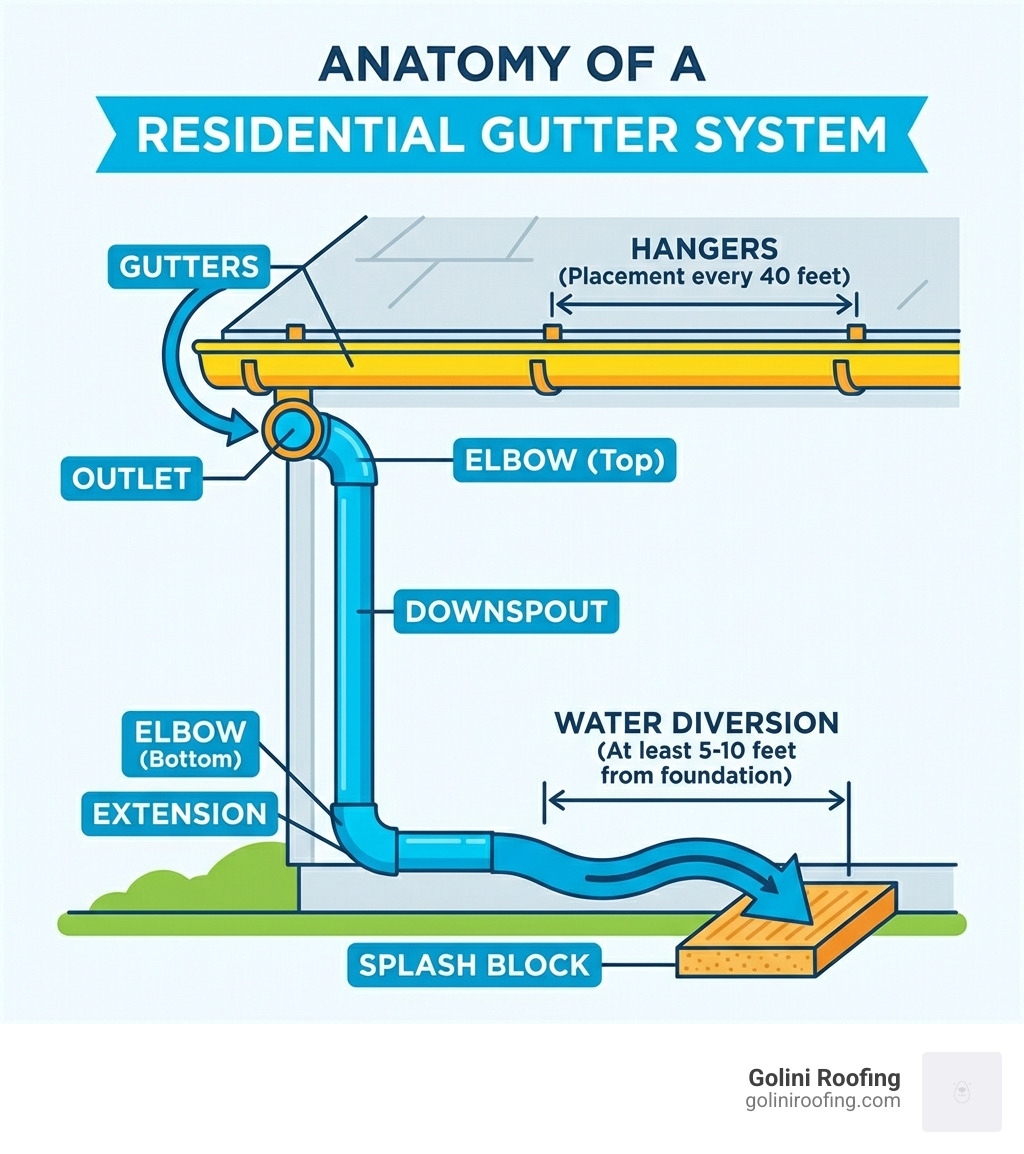
Must-know gutter downspout replacement terms:
Signs You Need a Gutter Downspout Replacement
Recognizing the early warning signs of a failing downspout can save you from a major financial headache. While gutters get all the attention for being clogged with leaves, the downspout is the vertical engine that actually moves that weight away from your home. If it fails, the whole system fails.
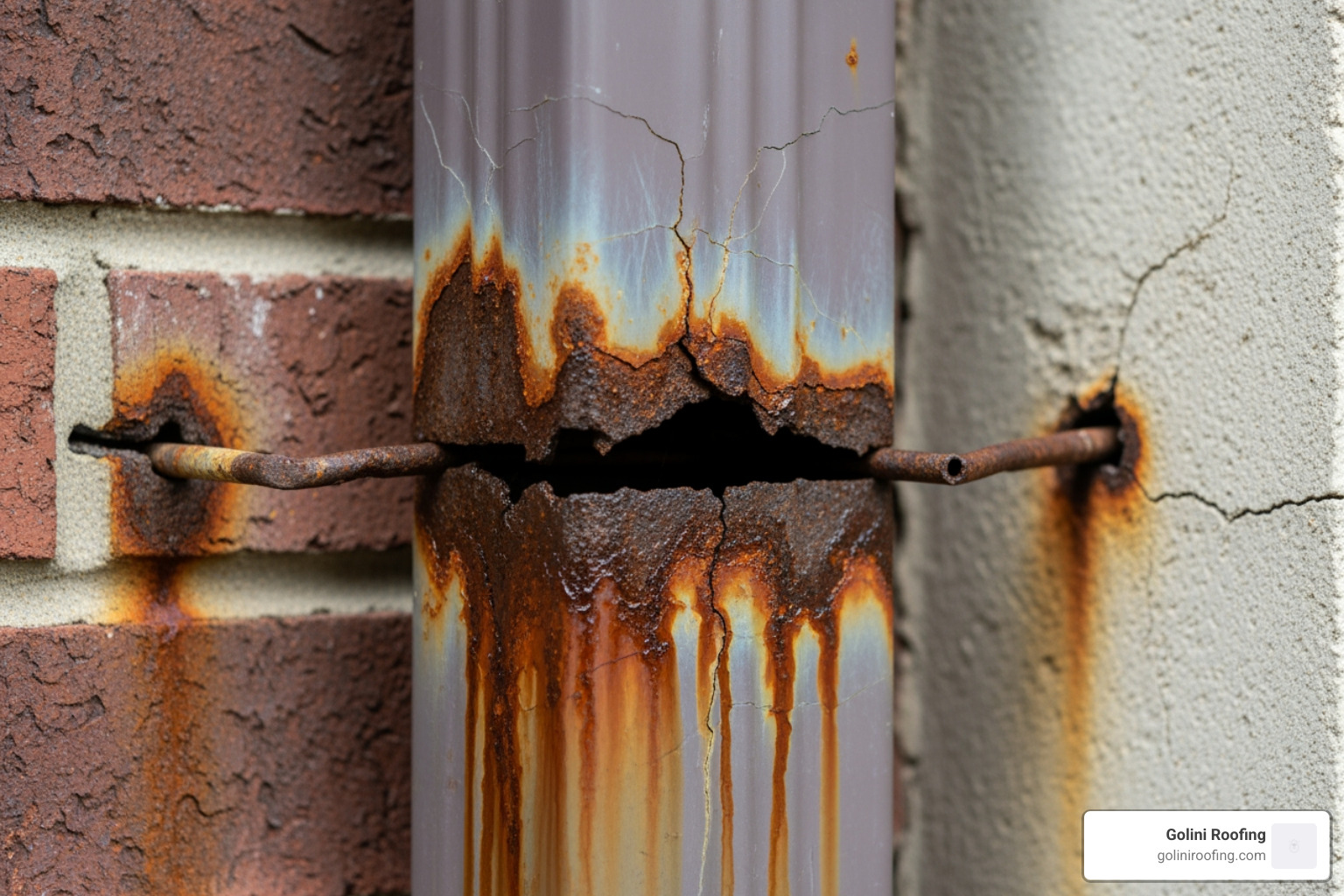
One of the most obvious signs is visible rust or orange-colored staining on the metal. This is especially common in older galvanized steel systems. Once rust eats through the material, water will leak directly onto your siding or fascia boards, leading to wood rot. If you notice peeling paint on your home’s exterior or white “efflorescence” (salt deposits) on your basement walls, it’s a clear signal that water is escaping the downspout and soaking into your structure.
Landscape erosion is another major red flag. If you see a “trench” forming in your mulch or soil directly beneath a downspout joint, the seal has likely failed. This localized flooding can lead to foundation cracks, which are notoriously expensive to fix. In some cases, you might notice your downspout is actually pulling away from the wall. This often happens because the rain-gutter-downspout-repair wasn’t performed correctly in the past, or the wall brackets have rusted through.
According to research on Replacing Rain Gutters and Downspouts, water pooling near the foundation is the number one cause of basement leaks. If your downspout isn’t long enough or is leaking at the seams, it’s time to consider a full gutter downspout replacement to ensure the water is carried at least 5 to 10 feet away from your home’s perimeter.
Choosing the Right Materials and Sizes
When you decide to move forward with a replacement, you’ll need to choose a material that matches your home’s aesthetic and your local climate. Here in Massachusetts, we have to deal with heavy snow loads and freezing temperatures, which can put a lot of stress on your drainage system.
| Material | Pros | Cons | Average Cost per Linear Foot |
|---|---|---|---|
| Aluminum | Rust-resistant, lightweight, many colors | Can dent easily | $7 – $30 |
| Vinyl (PVC) | Cheapest option, easy for DIY, no rust | Can crack in extreme cold | $6 – $12 |
| Galvanized Steel | Very strong, stands up to ladders | Can rust over time if not maintained | $7 – $22 |
| Copper | Beautiful patina, lasts 50+ years | Very expensive, requires soldering | $23 – $68 |
Note: Pricing is based on internet averages and does not reflect actual Golini Roofing service costs.
Beyond the material, size is crucial. Most residential homes use a standard 2×3 inch downspout. However, if you have a large roof area or a steep pitch, you might need to upgrade to a 3×4 inch size to handle the increased water volume. A larger downspout is often a “pricier but necessary choice” for larger roofs to prevent the gutters from overflowing during our heavy New England thunderstorms. For more details on choosing the right dimensions, check out our gutter-sizes-complete-guide.
You should also consider the style. K-Style (rectangular) is the most common for modern homes, while Half-Round gutters often pair with round downspouts for a more historic look. In areas like North Reading or Winchester, where historic homes are common, matching the existing style is essential for maintaining curb appeal.
The DIY Process for Installation
If you’re handy with a ladder and basic tools, you can save on labor costs by handling the replacement yourself. A single 10-foot downspout section usually costs less than $13 at a local home center, and the entire project for one corner can often be completed for about $15 in materials.
Essential Tools for Gutter Downspout Replacement
Before you climb that ladder, make sure you have all your gutter-supplies ready. You don’t want to be halfway up and realize you forgot the screws!
- Ladder: Ensure it is on stable, level ground.
- Tape Measure: Accuracy is key for fitting the elbows.
- Hacksaw or Tin Snips: For cutting the aluminum or vinyl sections to length.
- Cordless Drill: To secure the brackets and joints.
- Self-Tapping Screws: Specifically “gutter screws” that won’t rust.
- Gutter Sealant: A high-quality waterproof caulk for the joints.
- Pop Rivet Tool (Optional): For a more professional, permanent finish on aluminum.
Step-by-Step Gutter Downspout Replacement Guide
- Remove the Old Downspout: Unscrew the brackets holding the downspout to the wall. Carefully pull the top section out of the gutter outlet. If it’s stuck, you may need to scrape away old sealant.
- Inspect the Outlet and Fascia: Before installing the new parts, check the “drop outlet” (the hole in the gutter). Make sure it’s clean and not rusted. Inspect the fascia board for any signs of rot and repair it now if needed.
- Measure and Cut: Measure the distance from the gutter to the wall. You will likely need two elbows and a short piece of downspout to create an “S” curve that brings the downspout flush against the house. Use your hacksaw to cut the sections.
- Assemble the Top Sections: Fit the first elbow over the gutter outlet. Pro tip: The top piece should always fit inside the bottom piece to ensure water flows downward without leaking out of the joints. Apply a bead of sealant inside the joint and secure it with two self-tapping screws.
- Secure to the Wall: Attach the long vertical section. Use wall brackets (straps) every 8 to 10 feet. In high-wind areas or places with heavy snow, we recommend placing them every 6 feet for extra stability.
- Add the Bottom Elbow and Extension: At the bottom, add another elbow to direct water away from the house. Attach a downspout extension or a splash block. The extension should carry water at least 5 feet (ideally 10 feet) away from your foundation.
Costs and Professional Considerations
While DIY is affordable, there are times when hiring a professional is the smarter move. If your home is more than one story tall, the safety risks of working on a high ladder often outweigh the savings.
Based on national internet data, here is a breakdown of what you might expect to pay for professional gutter downspout replacement. Please remember these are average ranges and not specific quotes from Golini Roofing:
- Average Total Cost: $670
- Typical Range: $315 – $1,070
- High-End Projects: $3,265+ (for large homes with copper or underground drainage)
- Cost per Linear Foot: $6 to $68 (depending on material)
Several factors influence these prices. The height of your home is a big one; labor prices for multi-story homes can jump by as much as 50% because of the specialized equipment and safety harnesses required. If you need prep work, such as removing old, heavy wood gutters or repairing rotted fascia, that can add 2% to 20% to the project cost.
If you’re feeling overwhelmed, you can always Find Local Pros to get a better sense of the local market rates. For a full breakdown of what a complete gutter overhaul might look like, see our guide on the average-cost-to-replace-gutters.
Best Practices for Water Diversion
The job isn’t finished just because the downspout is attached to the wall. The most important part is where that water ends up. If the water just dumps at the base of your home, you’ve replaced the hardware but haven’t solved the problem.
Best practices for water diversion include:
- Use Extensions: A simple “clip-up” or flexible vinyl extension can be added for about $8.
- Splash Blocks: These plastic or concrete pads prevent the water from digging a hole in your lawn.
- Underground Drainage: For a cleaner look, you can bury your downspouts. This typically costs an additional $3 to $8 per linear foot but is “often worth the added benefits” as it eliminates tripping hazards and makes mowing the lawn much easier.
- Distance Rules: Never end a downspout within 6 feet of a basement wall or 2 feet of a concrete slab. You want that water far away!
- Rain Barrels: If you’re environmentally conscious, you can divert your downspout into a rain barrel. Just be sure to check local regulations in towns like Woburn or Stoneham, as some areas have specific rules about rainwater collection.
If your current extensions are crushed or leaking, a quick downspout-extension-repair can often bridge the gap until you’re ready for a full system upgrade.
Frequently Asked Questions about Downspouts
How often should I clean my downspouts?
We recommend cleaning your gutters and downspouts at least twice a year—once in the spring and once in the fall. If you live in a heavily wooded area in a town like Lynnfield or Reading, you might need to do it more often. A single clog in an elbow can cause the entire gutter to back up, leading to heavy water damage.
What is the best material for residential downspouts?
For most homeowners in our service area, aluminum is the best balance of cost and durability. It won’t rust like steel and is more resistant to the cold-weather cracking that can plague vinyl. If you’re looking for a “forever” solution and have the budget, copper is the gold standard.
How far should water drain from the foundation?
The absolute minimum is 5 feet, but 10 feet is much safer, especially if you have a basement. The goal is to get the water past the “backfill” zone (the loose soil around your foundation that was dug up when the house was built), which acts like a sponge for rainwater.
Conclusion
Gutter downspout replacement is more than just a cosmetic fix; it’s a foundational protection strategy for your home. Whether you choose to spend a Saturday afternoon on a DIY project or hire a professional to ensure everything is pitched and sealed perfectly, the investment will pay for itself the next time a heavy New England storm rolls through.
Remember to inspect your system seasonally. Look for loose brackets, check for leaks after a storm, and ensure your extensions are still pointing away from the house. If you’re in the Burlington, Wilmington, or Wakefield area and realize your gutters need more than just a simple fix, we’re here to help. At Golini Roofing, we bring over 35 years of experience to every job, ensuring your home stays dry from the roof down to the foundation.
For more professional tips or to schedule an inspection, check out More info about gutter services or give us a call. Don’t wait for a “moat” to form around your home—take care of your downspouts today!
