

Why Understanding Metal Roofing Types Matters
Types of metal residential roofing are surging in popularity. U.S. demand for residential metal re-roofing hit a record 18 percent in 2022, a six percent jump in just three years. Homeowners now appreciate what commercial builders have long known: these roofing systems offer superior durability, longevity, and energy efficiency over traditional materials.
The main types of metal residential roofing include:
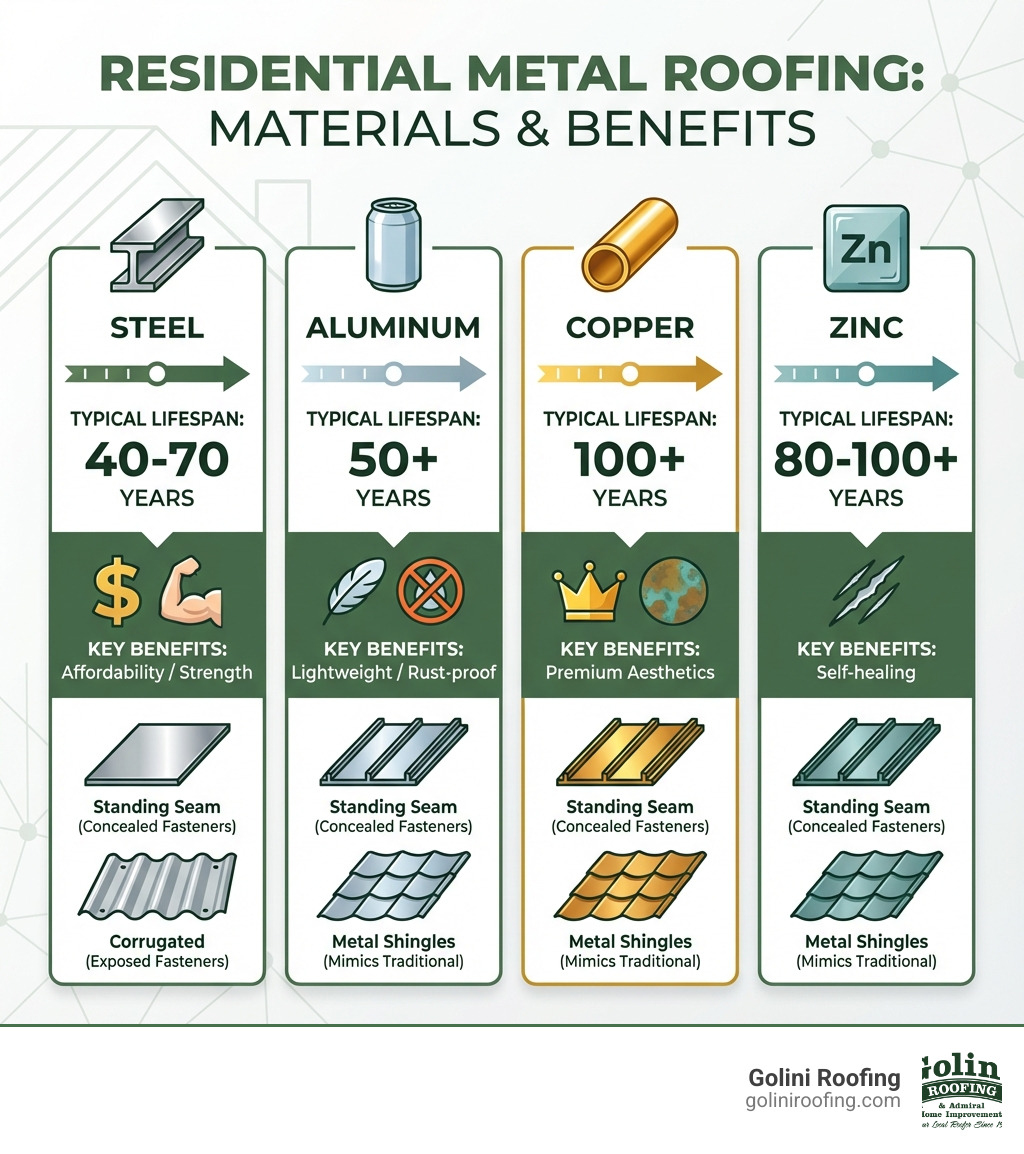
- Steel roofing (galvanized or Galvalume) – Most common and affordable, lasting 40-70 years
- Aluminum roofing – Lightweight and rust-proof, ideal for coastal areas, lasting 50+ years
- Copper roofing – Premium option with 100+ year lifespan and distinctive patina
- Zinc roofing – Self-healing premium metal lasting 80-100+ years
- Standing seam – Modern profile with concealed fasteners and raised seams
- Corrugated panels – Classic wavy profile with exposed fasteners, more budget-friendly
- Metal shingles/tiles – Designed to mimic traditional asphalt, slate, or clay materials
A metal roof can last 40 to 80 years, two to five times longer than asphalt shingles. These roofs boast a Class A fire rating, can cut cooling costs by up to 25 percent by reflecting UV rays, and are made from recycled content that is 100 percent recyclable.
However, not all options are the same. The right choice hinges on your budget, home style, climate, and goals. Steel provides affordable strength, while aluminum is ideal for coastal regions. Copper and zinc offer premium looks and century-long performance. Your chosen profile—from modern standing seam to classic metal shingles—also affects appearance and weather resistance.
I’m Jack Golini. Since 1982, I’ve installed metal roofing systems across the North Shore, helping homeowners steer the types of metal residential roofing to find lasting solutions. This guide will detail each material and style’s performance, cost, and suitability, helping you choose the best option for your Massachusetts home.
Types of metal residential roofing word roundup:
Understanding the Anatomy of a Metal Roof
Homeowners increasingly choose metal roofing to boost home value, appeal, and long-term protection. But what are the core components that make these systems so effective?
A modern metal roof is a sophisticated system of materials, styles, and fasteners. Each component is vital for durability, appearance, and longevity. Understanding these fundamentals is key to choosing the right system for your Massachusetts home.
Key Components: Material and Style
The two most important choices you’ll make are the material and the style (or profile). The material—typically steel, aluminum, copper, or zinc—determines the roof’s lifespan, cost, and corrosion resistance. The style—such as standing seam, corrugated panels, or metal shingles—defines the home’s aesthetic and influences weather performance. We’ll explore these options in detail in the following sections, and you can also explore more on residential roofing options.
Exposed vs. Concealed Fasteners
A key distinction in types of metal residential roofing is the fastening method. How panels are attached to the roof deck impacts appearance, performance, and longevity.
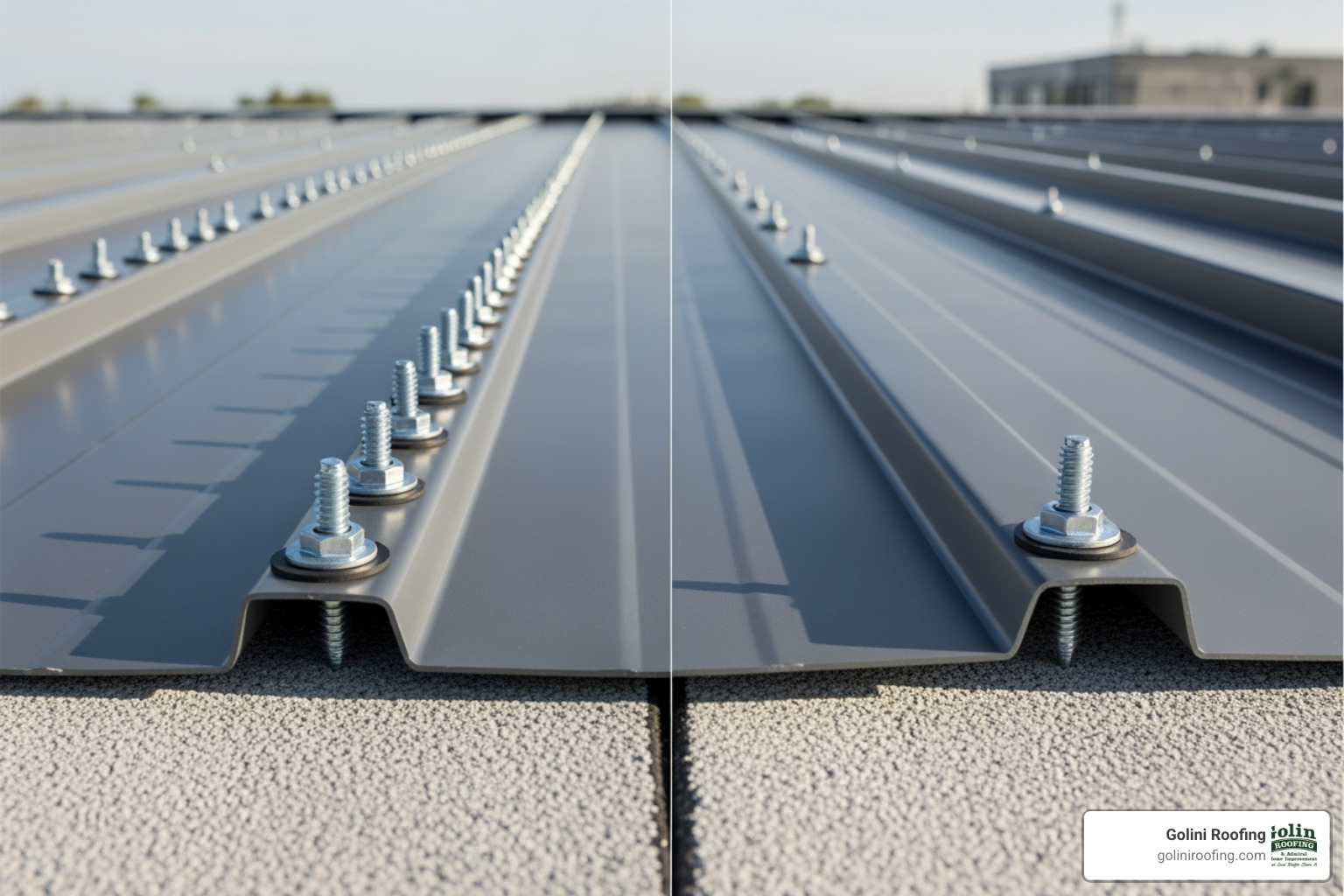
- Exposed Fasteners: These systems use screws with sealing washers that go directly through the panels into the roof deck.
- Pros: Less expensive and faster to install, offering a rustic or industrial look common with corrugated panels.
- Cons: The sealing washers can degrade over time, creating potential leak points. Fasteners may loosen with temperature changes, requiring periodic inspection and reducing long-term weather-tightness.
- Aesthetics: A visible grid of screw heads across the roof surface.
- Concealed Fasteners: Used in systems like standing seam, these use hidden clips to attach panels to the deck without puncturing the panel’s surface.
- Pros: Superior weather-tightness with a longer lifespan and less maintenance. The hidden fasteners also allow panels to expand and contract freely, reducing material stress.
- Cons: Higher initial cost due to more complex installation.
- Aesthetics: A clean, sleek, and modern appearance with continuous lines.
For homeowners seeking a long-term, low-maintenance solution, concealed fastener systems typically provide superior longevity and aesthetics.
The Main Types of Metal Residential Roofing Materials
Let’s explore the most common materials for residential roofing. Each has unique characteristics, performance benefits, and ideal applications for the different types of metal residential roofing.
Steel Roofing: The Popular & Versatile Choice
Steel is the industry workhorse, offering an excellent balance of strength, durability, and affordability for residential roofing.
- Galvanized Steel: This is steel coated with a layer of zinc to protect the base metal from rust.
- Zinc-Aluminum Coated Steel: This steel is coated with a zinc and aluminum alloy, offering even better corrosion resistance than traditional galvanization.
- Pros: Steel is incredibly strong, withstanding severe weather like high winds and heavy snow. It’s also the most affordable metal roofing option.
- Cons: If the protective coating is severely scratched, the underlying steel can rust. It is also heavier than aluminum.
- Lifespan: A properly coated steel roof can last 40 to 70 years.
- Coatings: The finish is critical. PVDF is the gold standard, offering superior fade resistance and long warranties (30-40 years). SMP is a more cost-effective paint system but may fade more quickly.
- Gauge Thickness: Residential steel is typically 26 or 24-gauge. A lower number means thicker, stronger metal. 24-gauge steel is more dent-resistant but costs more than 26-gauge.
Aluminum Roofing: The Lightweight Coastal Champion
For coastal regions, aluminum is one of the best types of metal residential roofing available.
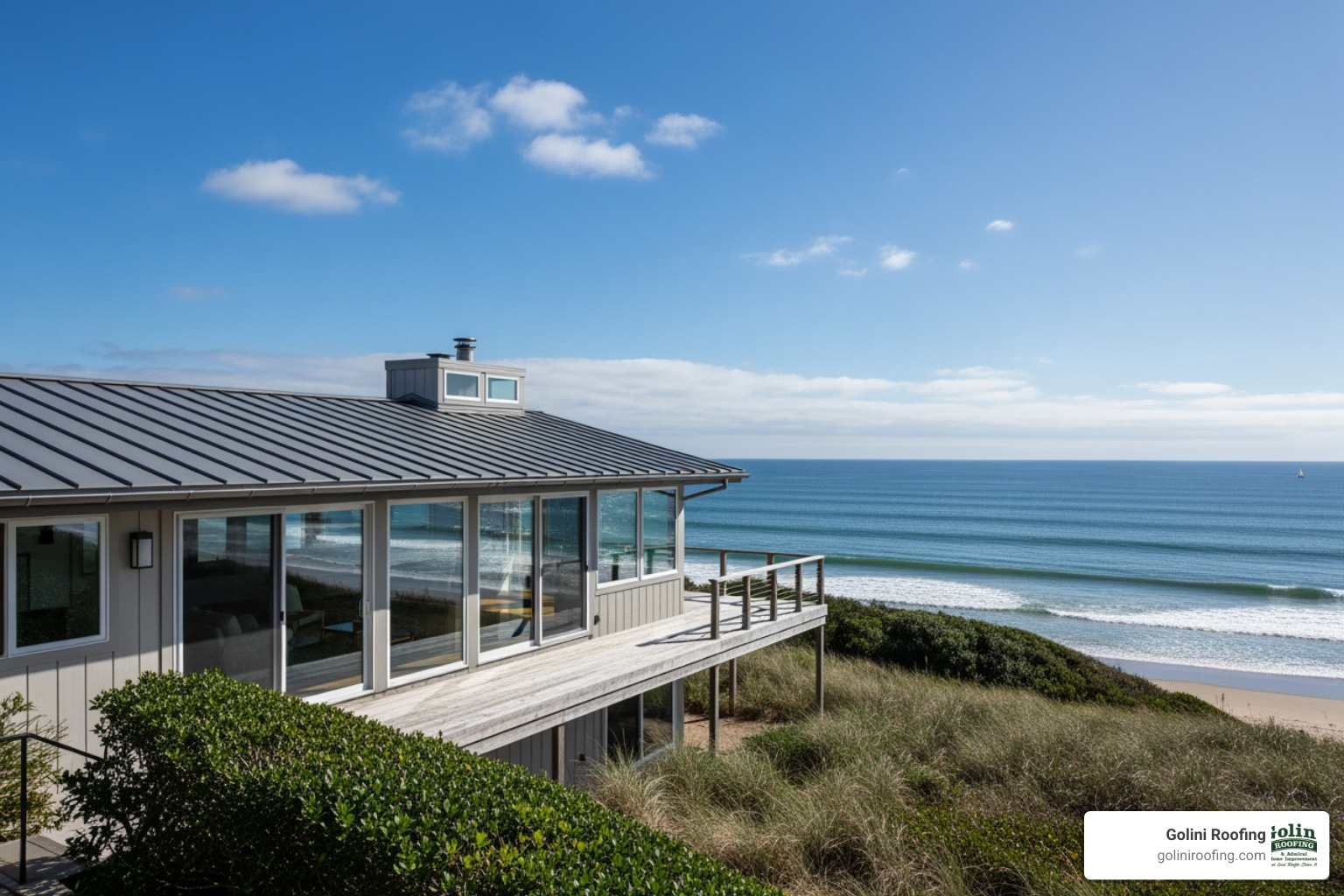
- Pros: Aluminum is extremely lightweight and naturally rust-proof, making it a top choice for homes in coastal Massachusetts towns like Gloucester or Lynnfield. Its natural oxide layer prevents corrosion even if scratched. It is also highly heat-reflective.
- Cons: Aluminum is softer and more expensive than steel. Thicker gauges (e.g., .040″) are recommended to improve dent resistance.
- Lifespan: Aluminum roofing typically lasts 50+ years.
Copper & Zinc: The Premium, Lifetime Metals
For ultimate luxury and longevity, copper and zinc are premium types of metal residential roofing. Often called “lifetime materials,” they offer extraordinary durability.
- Pros:
- Exceptional Longevity: Both copper and zinc roofs can last 60 to 100 years or more.
- Stunning Aesthetics: Both metals develop a beautiful, distinctive patina over time. Copper turns a classic blue-green, while zinc develops a blue-gray patina.
- Self-Healing Patina (Zinc): Zinc’s protective patina can “self-heal” minor scratches.
- Low Maintenance: Both are highly corrosion-resistant and require minimal upkeep.
- Eco-Friendly: Both are 100% recyclable, and zinc requires less energy to produce than other metals.
- Cons:
- Highest Material Cost: These are the most expensive options, with copper often costing triple the price of steel.
- Specialized Installation: They require highly skilled installers to prevent issues like oil canning (waviness).
- Softer Metals: Copper, in particular, can be prone to denting from heavy hail, though thicker gauges offer better resistance.
From Industrial to Traditional: A Guide to Metal Roofing Styles
The profile of a metal roof can transform a home’s architectural style. This section explores common styles to help you find the right look for your Massachusetts property.
Standing Seam: The Sleek & Modern Profile
Standing seam is a popular premium style, featuring vertical panels with raised, interlocking seams that run from eave to ridge.
- Concealed Fasteners: Its key feature is hidden fasteners, which eliminates surface penetrations and drastically reduces leak risks.
- Clean Lines: The style creates a sleek, modern, and sophisticated look.
- Superior Weather Resistance: The smooth, continuous panels are excellent at shedding snow and rain, making them ideal for the Massachusetts climate.
- Higher Initial Cost: This style has a higher upfront cost due to the specialized panels and intricate installation.
- Ideal for Modern Homes: Its clean lines complement contemporary designs but can also add a striking look to traditional homes.
Corrugated Panels: The Classic & Cost-Effective Look
Corrugated roofing has a familiar wavy or ribbed profile, often associated with a more traditional or rustic look.
- Exposed Fasteners: Panels are installed with exposed screws, which have sealing washers.
- Wavy Profile: The shape adds structural rigidity and helps with water runoff.
- Pros: This is one of the most affordable types of metal residential roofing and is relatively quick to install. Its rustic aesthetic is popular for farmhouses and cabins.
- Cons: Exposed fasteners are potential leak points as washers age, requiring more regular inspection than concealed fastener systems.
- Rustic Aesthetic: This style evokes a classic, all-American feel.
Metal Shingles, Shakes, and Tiles
For those who love a traditional look but want the durability of metal, these products offer the best of both worlds.
- Mimics Traditional Materials: These panels are stamped to replicate the look of asphalt shingles, cedar shakes, or clay tiles. Stone-coated steel is a popular variation that improves this resemblance.
- Versatility: This style provides incredible design flexibility for achieving a classic, Mediterranean, or rustic look.
- Lightweight Alternative: Metal tiles are far lighter than authentic slate or clay, reducing the structural load on your home without requiring reinforcement.
- Benefits: They offer the same durability, fire resistance, and energy efficiency as other metal systems. Stone-coated varieties also provide excellent sound-dampening.
- Aesthetics: From the ground, high-quality metal shingles can be indistinguishable from their traditional counterparts.
You can learn more about various roofing shingles and how metal options compare.
Key Factors for Choosing Your Metal Roof
Choosing the right metal roof involves weighing cost against long-term value, climate considerations, and component performance. Let’s break down these key factors to help you make the best choice for your home.
Comparing the different types of metal residential roofing on Cost vs. Longevity
While initial cost is a key factor, it’s crucial to consider long-term value, lifespan, and return on investment (ROI). The table below offers a general comparison, but prices vary based on location and project complexity.
| Material | Average Cost Per Sq. Ft. (Installed) | Typical Lifespan | Key Pros | Key Cons |
|---|---|---|---|---|
| Steel | $7 – $20 | 40-70 years | Most affordable, strong, durable, wide range of colors/finishes. | Can rust if coating is damaged, heavier than aluminum, requires high-quality coatings for longevity. |
| Aluminum | $8 – $25 | 50+ years | Lightweight, excellent corrosion resistance (ideal for coastal areas), energy-efficient, never rusts. | More expensive than steel, softer (prone to denting from heavy hail if not thicker gauge), fewer color options. |
| Copper | $15 – $40 | 60-100+ years | Exceptional longevity, stunning aesthetic (patina), highly corrosion-resistant, virtually maintenance-free. | Highest material cost, specialized installation required, softer (prone to denting). |
| Zinc | $13 – $35 | 60-100 years | Very long lifespan, unique aesthetic (patina), self-healing properties, highly corrosion-resistant, sustainable. | High material cost, specialized installation required, patina color can be unpredictable, limited availability. |
Return on Investment (ROI): A metal roof offers a strong ROI, often around 48.9%. While the upfront cost is higher than asphalt, the investment is often justified by longevity. A metal system can last 40-80+ years, potentially outliving two or three asphalt roofs, which typically last only 15-30 years. To get a clearer picture, you can learn about metal roof costs.
How Climate and Location Impact Your Choice
Massachusetts’ climate, from coastal salt spray to heavy winter snow, influences the best choice among types of metal residential roofing.
- Coastal Areas (e.g., Ipswich, Gloucester): For homes near the ocean, corrosion resistance is key. Aluminum is an excellent choice, as are copper and zinc. Coated steel can be used, but any damage to the coating increases rust risk.
- Snowy Regions (e.g., Wakefield, Burlington): Metal roofs are fantastic for shedding snow. Standing seam systems are particularly effective. All common metal materials are strong enough to handle heavy snow loads.
- High-Sun Areas: “Cool roofs” are designed to reflect sunlight and absorb less heat. Light-colored metal roofs with a high Solar Reflective Index (SRI) of 29 or more can significantly reduce cooling costs. You can find rated products in the Cool Roof Rating Council’s database.
Understanding the Importance of Coatings, Gauge, and Maintenance
Technical details like coatings and gauge also affect performance and cost, while proper maintenance maximizes your roof’s lifespan.
- Coatings: As mentioned, PVDF coatings offer the best long-term color retention for painted steel and aluminum. For copper and zinc, the natural patina provides its own protection.
- Metal Thickness (Gauge): For steel, a lower gauge number means thicker metal (24-gauge is thicker than 26-gauge). For aluminum, .040″ offers better dent resistance than .032″. Thicker metal is more durable but costs more.
- General Maintenance Requirements: Metal roofs are low-maintenance but not no-maintenance. Regular gutter cleaning is crucial. We also recommend an annual information on roof inspection to check for loose fasteners, damage, or debris, especially after major storms.
Frequently Asked Questions about Metal Roofing
We hear a lot of questions from homeowners curious about the types of metal residential roofing. Let’s address some of the most common concerns.
Are metal roofs noisy when it rains?
This is a common myth. When installed correctly over a solid roof deck with proper underlayment and attic insulation, a modern residential metal roof is no louder than an asphalt shingle roof. The layers of material and the air space in the attic all work to dampen sound, resulting in a gentle pitter-patter during rainfall, not a loud clamor. Materials like stone-coated steel are especially quiet.
Can you install a metal roof over existing shingles?
Yes, installing a metal roof over a single layer of existing asphalt shingles is often possible, which can save on costs. However, this depends on local building codes and the condition of the existing roof deck. The structure must be sound, and any rot or sagging must be repaired first. Proper installation with ventilation is critical to prevent trapped moisture. While it can be an option, a complete roof replacement, which involves removing the old material, is the best practice. This allows for a full inspection of the roof deck and ensures optimal performance.
How does a metal roof improve energy efficiency?
Metal roofs are highly energy-efficient. Unlike dark asphalt that absorbs heat, metal surfaces reflect solar radiation, keeping your attic and home cooler. These “cool roofs,” especially those with high Solar Reflective Index (SRI) ratings and Energy Star certification, can lower cooling costs by 10-25 percent by reducing the strain on your air conditioning system. This makes them a smart choice for long-term savings in our Massachusetts climate.
Making the Right Choice for Your Massachusetts Home
Choosing the right metal roof is a significant investment in your home’s protection and curb appeal. The best option balances your budget, aesthetic goals, and local climate demands. For over 35 years, Golini Roofing has provided expert guidance and craftsmanship to homeowners in Burlington, Lynnfield, North Reading, Reading, Stoneham, Wakefield, Wilmington, Winchester, and Woburn. Our team can help you steer the options and ensure a flawless installation that lasts for decades. To learn more about the best roofing materials for your home, explore our guide to residential roofing types.