
Types of roofs for homes: Ultimate Guide 2025
Why Your Roof Choice Matters More Than You Think
Types of roofs for homes come in many styles and materials, each offering unique benefits for protection, durability, and curb appeal. Your roof isn’t just your home’s crown; it’s your first line of defense against New England’s harsh weather.
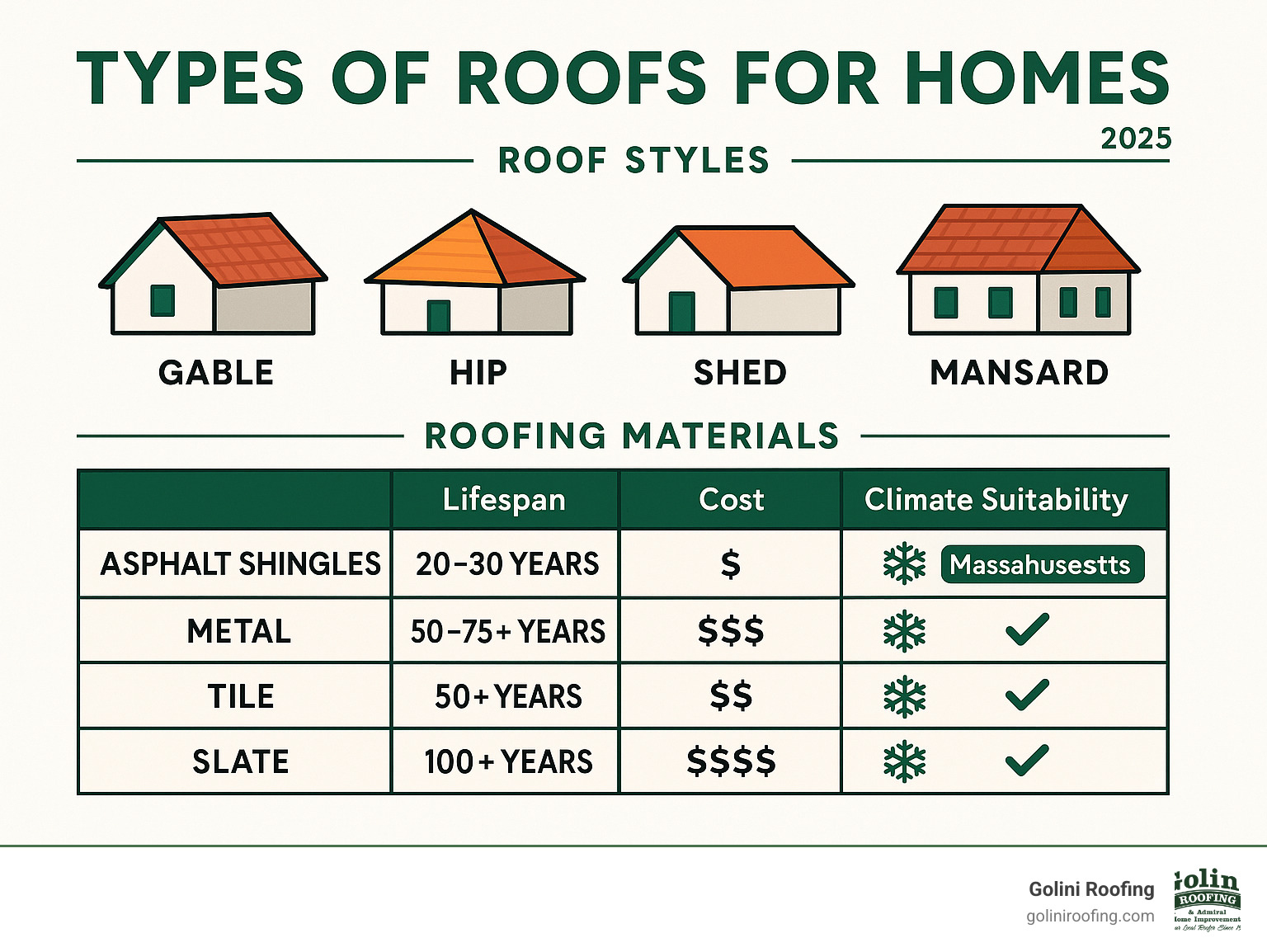
Most common roof types include:
- Gable roofs – Triangular shape, excellent for snow shedding, most affordable
- Hip roofs – Four sloped sides, superior wind resistance, ideal for storms
- Shed roofs – Single slope, modern look, great for solar panels
- Mansard roofs – French design with extra living space
Popular roofing materials are:
- Asphalt shingles – 20-30 year lifespan, most budget-friendly option
- Metal roofing – 50-75+ year lifespan, energy efficient but higher cost
- Tile roofing – 50+ year lifespan, heavy but extremely durable
- Slate roofing – 100+ year lifespan, premium choice with highest cost
The right choice depends on your budget, local climate, and home style. In Massachusetts, materials must handle heavy snow, ice dams, and strong winds. Thinking about your roof before a problem arises can save you thousands in future repairs and energy costs.
I’m Jack Golini, and with over 35 years of experience, I’ve helped Massachusetts homeowners choose the best types of roofs for homes since 1982. I understand which styles and materials perform best in our challenging New England climate.
Decoding Roof Architecture: Common Styles and Shapes
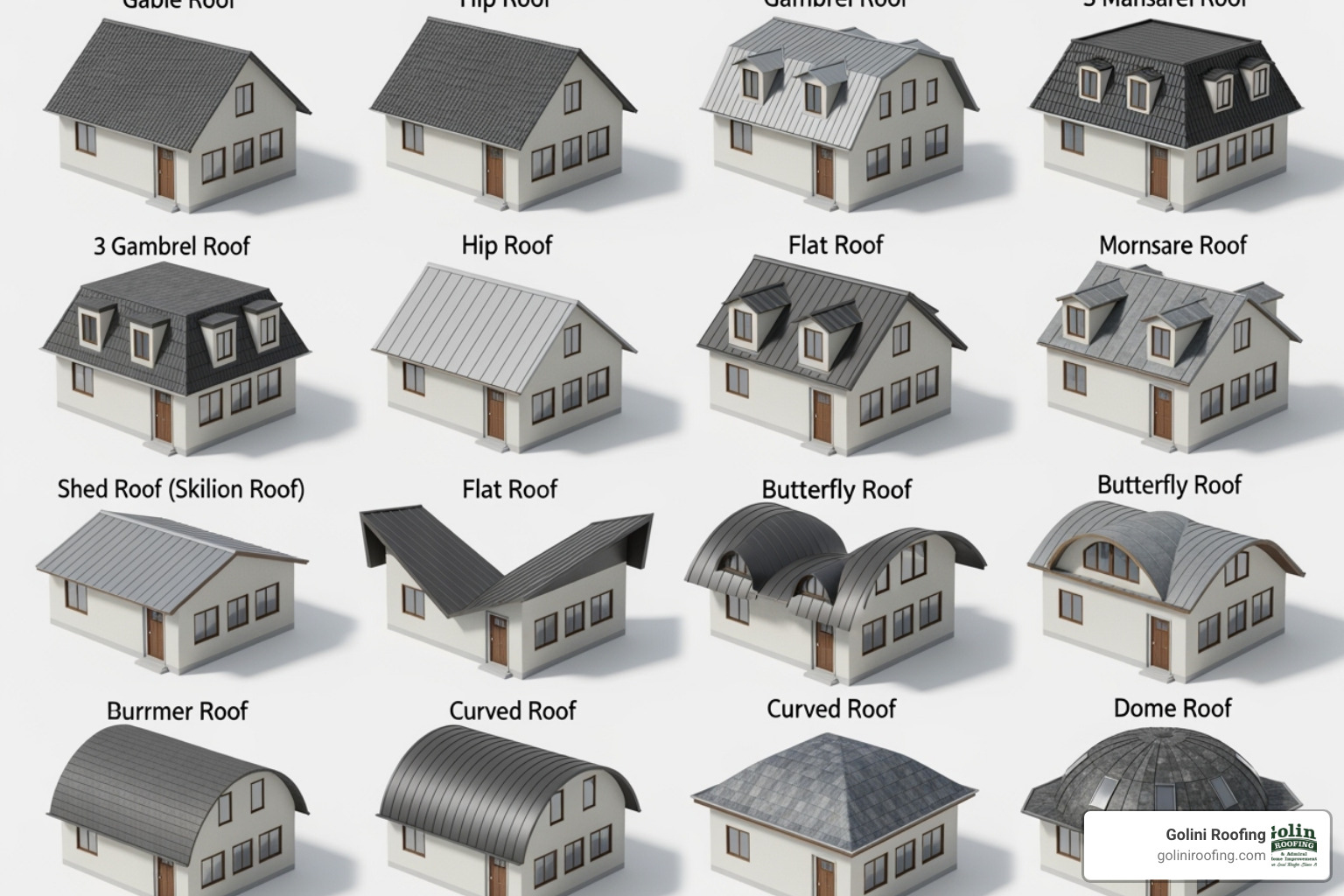
The structural design of your roof dictates your home’s silhouette and influences which materials will work best against New England weather. Understanding these different types of roofs for homes helps you make the right choice for your needs.
The Great Debate: Gable vs. Hip Roofs
These two styles are the most common in residential roofing for good reason.
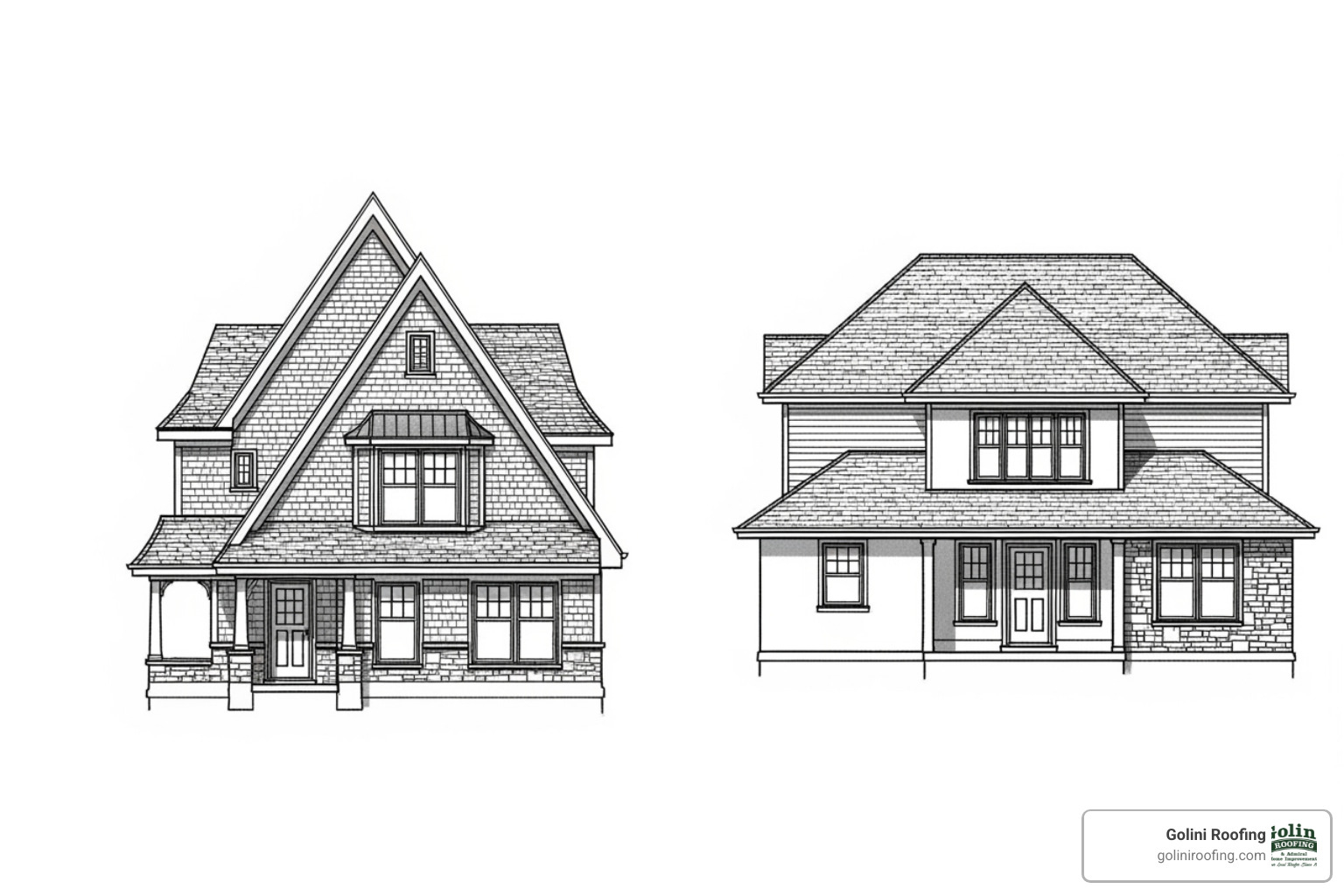
The gable roof has a classic triangular shape. Its simple, practical design is excellent at shedding snow, making it ideal for Massachusetts winters, and it provides ample attic space. However, the flat gable ends can be vulnerable to high winds during storms.
Hip roofs feature four sloped sides that meet at a central ridge, creating a pyramid-like shape. This design offers superior stability in high winds and storms because it lacks flat ends for wind to catch. The trade-offs are increased construction complexity and cost, as well as reduced attic space.
Other Notable Roof Styles for Homes
Beyond the classics, other types of roofs for homes offer unique character and practical benefits.
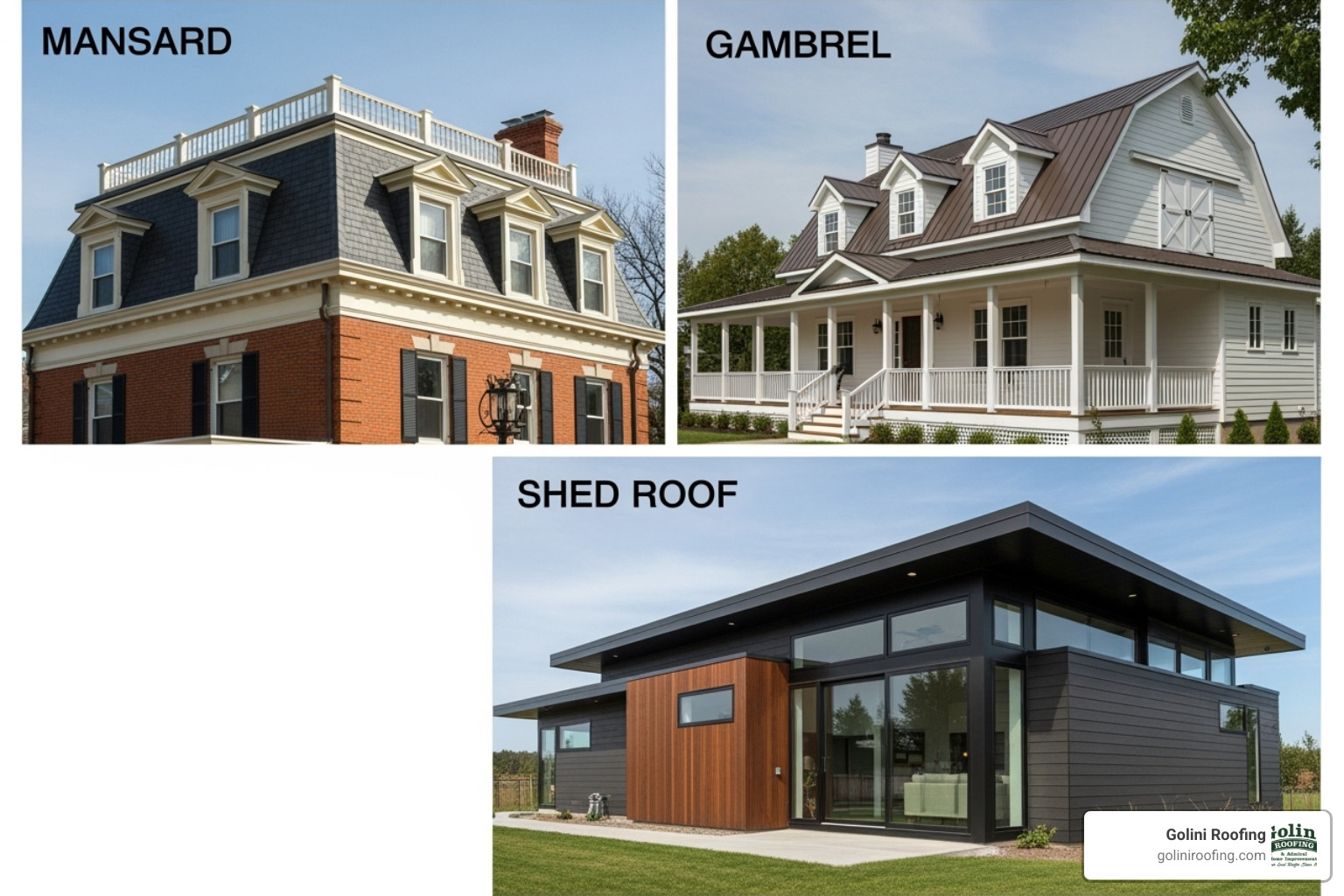
The Mansard roof, with its French origins, has four sides, each with two slopes: a steep lower slope and a gentler upper one. This design creates significant extra living space but is more complex and costly to build.
Gambrel roofs are the classic barn-style roof. They have two slopes on each side, with the lower slope being much steeper, which maximizes attic space while keeping construction relatively simple.
The shed roof (or skillion) is a single, long slope. Its sleek, modern aesthetic is budget-friendly and ideal for solar panel installations.
Flat roofs, while common on commercial buildings, are used in some modern residential designs. They have a slight slope for drainage but require excellent waterproofing and regular maintenance. For those considering this option, our Flat Roofing Services offer expert guidance.
Choosing Your Shield: A Deep Dive into Common Types of Roofs for Homes
Your roof’s material is critical for its longevity, performance, and appearance. Here’s a breakdown of the most popular types of roofs for homes.
Asphalt Shingles: The Popular Choice
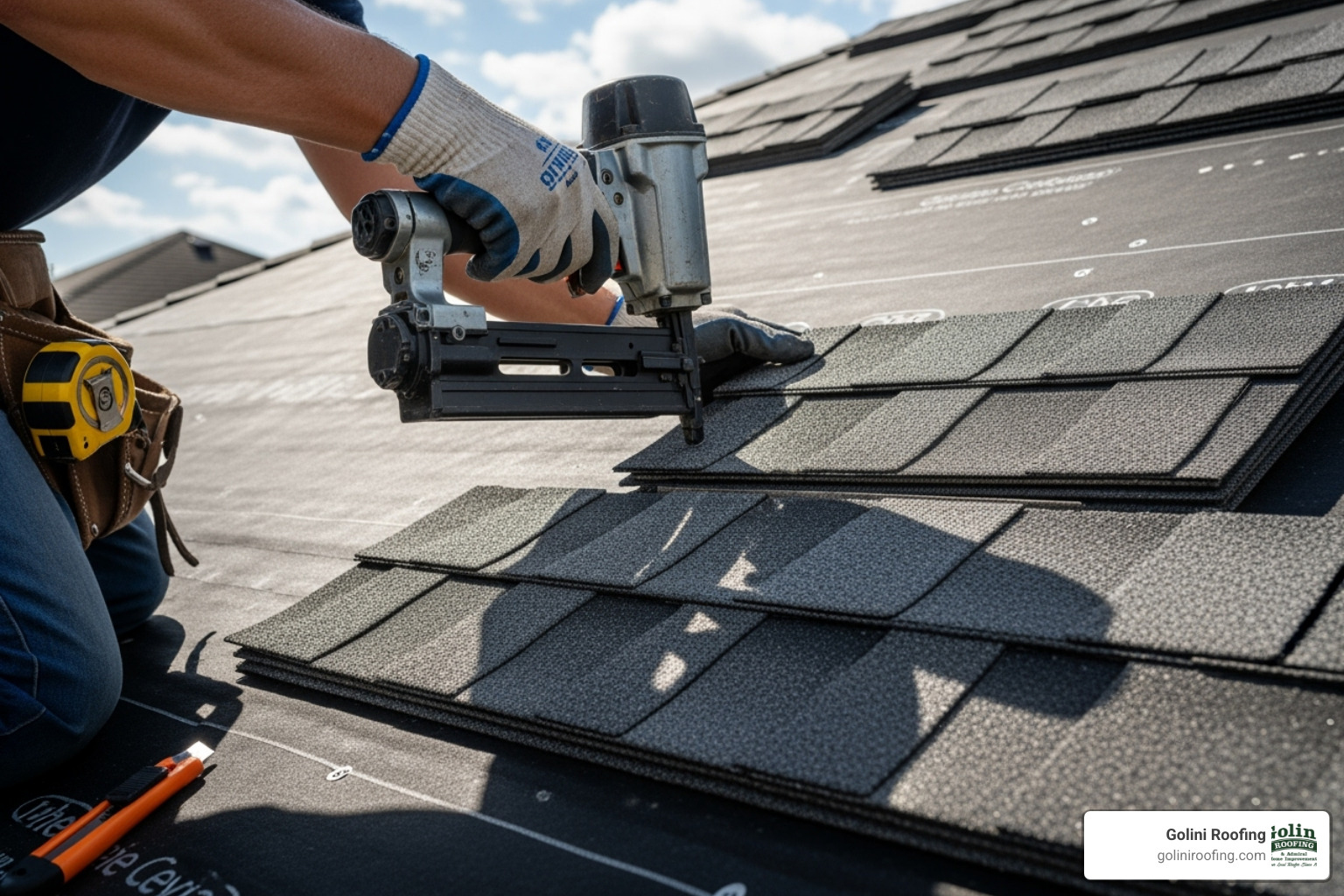
Asphalt shingles are the most common roofing material in North America, offering a great balance of affordability, versatility, and performance. They are relatively easy to install and repair, come in a wide variety of colors and styles, and have good fire resistance. Styles range from basic 3-tab shingles to thicker, more durable architectural shingles that provide a dimensional look. While asphalt shingles typically last 20 to 30 years, their lifespan can be affected by harsh weather. A key sign of aging is the loss of protective granules, which you might find in your gutters. For more details, see our page on Types of Roofing Shingles.
Metal Roofing: Durability and Modern Appeal
Metal roofing is a popular choice for homes due to its durability, energy efficiency, and modern aesthetic. Common styles include standing seam metal, which offers a clean look with hidden fasteners to minimize leak points, and stone-coated steel, which mimics the appearance of traditional shingles or tiles. With a lifespan of 50 years or more, metal roofs are a long-term investment.
- Durable: Metal excels in harsh weather, resisting high winds, hail, and rot. It also sheds snow easily, a major benefit in Massachusetts.
- Energy Efficient: Reflective properties can lower cooling costs.
- Fire Resistant: Metal is non-combustible, offering excellent fire protection.
- Lightweight & Green: Often made from recycled materials, metal is lightweight and fully recyclable.
The primary drawbacks are a higher upfront cost compared to asphalt and potential for noise during rain, though proper insulation can mitigate this. Based on internet data, average installation costs can range from $10,000 to $40,000 or more, but these are not quotes from Golini Roofing.
Tile, Slate, and Wood: Classic & Premium Materials
For homeowners seeking a premium, timeless look, these types of roofs for homes offer unparalleled beauty and longevity, though at a higher price point.
| Material | Lifespan | Cost (Internet Data Avg.) | Weight (per sq. ft.) | Key Pros | Key Cons |
|---|---|---|---|---|---|
| Clay & Concrete Tiles | 30-50+ years | $15,000 – $60,000+ | 8-12 lbs. | Extremely durable, fireproof, beautiful aesthetic (Mediterranean), low maintenance, good for hot climates | Very heavy (often needs structural reinforcement), expensive, clay can be fragile, can become brittle in cold climates |
| Slate | 100+ years | $30,000 – $120,000+ | 8-15 lbs. | Best durability, stunning appearance, fire-resistant, very low maintenance, eco-friendly | Very heavy (needs structural reinforcement), extremely expensive, requires specialist installation, fragile to walk on |
| Wood Shakes & Shingles | 20-50 years (climate dependent) | $12,000 – $48,000+ | 2.5-4.5 lbs. | Natural beauty, rustic charm, good insulation, biodegradable | High maintenance (rot, insects, fire risk), lower lifespan in wet climates, expensive, limited warranties |
Clay and concrete tiles provide a durable, fireproof roof with a Mediterranean aesthetic. Their main drawback is their significant weight, which may require structural reinforcement.
Slate is the pinnacle of roofing, offering a lifespan of over 100 years with best durability and a beautiful, natural stone appearance. Like tile, it is extremely heavy and requires a strong roof structure and specialized installation.
Wood shakes and shingles offer a beautiful, rustic charm. However, they require significant maintenance to prevent rot and insect damage, and their lifespan is shorter in wet climates like Massachusetts.
Key Factors Influencing Your Roofing Decision
Choosing a roof involves more than just picking a style you like. Several practical factors will guide you toward the perfect choice from the many types of roofs for homes.
How Roof Slope Impacts Your Options
The slope, or “pitch,” of your roof is a critical factor that dictates which materials are suitable. Measured as a ratio (e.g., “6 in 12”), a steeper pitch excels at shedding snow and water, which is vital in Massachusetts for preventing leaks and ice dams. Building codes, like those from the International Code Council (ICC), specify minimum slopes for different materials. For example, asphalt shingles are not suitable for very low-slope or flat roofs, which require specialized membrane systems. A steeper roof is also more visible, playing a larger role in your home’s curb appeal, but can be more complex and costly to install.
Matching Your Roof to Climate, Budget, and Home Style
Selecting the right roof requires balancing three key elements:
- Climate: In Massachusetts, your roof must handle heavy snow, ice dams, and high winds. Steeper pitches on gable roofs and materials like metal are excellent for shedding snow. For wind resistance, hip roofs are superior. Materials must be chosen for their proven performance in our challenging New England weather.
- Budget: While asphalt shingles have the lowest upfront cost, it’s important to consider the lifetime value. Premium materials like metal or slate cost more initially but can last two to three times longer with less maintenance, potentially saving money over time. Energy-efficient materials can also reduce utility bills. Cost estimates online (e.g., asphalt from $7,000-$28,000, slate from $30,000-$120,000+) are general averages and not quotes from Golini Roofing.
- Home Style: Your roof can be up to 40% of your home’s exterior, so it should complement the architecture. Traditional homes pair well with asphalt shingles or slate, while Mediterranean styles suit tile. Modern homes often feature metal or skillion roofs. It’s wise to use online visualizers or look at similar homes to see how different options will look.
Protecting Your Investment: Maintenance and Replacement
A roof’s lifespan depends heavily on proper care. Knowing what to look for can save you from costly damage down the line.
Essential Maintenance for All Types of Roofs for Homes
Regular maintenance is key to maximizing your roof’s lifespan and preventing costly repairs.
- Regular Inspections: Have a professional inspect your roof annually, ideally in the spring and fall, to catch issues early.
- Gutter Cleaning: Clean gutters at least twice a year to prevent water backup, which can cause rot and ice dams.
- Debris Removal: Clear leaves and twigs from the roof surface to prevent moisture retention and moss growth.
- Trim Overhanging Branches: Keep branches at least six feet from your roof to prevent scratches and damage during storms.
- Address Moss and Algae: Treat moss and algae growth promptly, as they can damage shingles by trapping moisture.
- Snow Removal: After extreme snowfalls, professional snow removal may be necessary to relieve stress on your roof’s structure.
Proper maintenance is often a condition of your homeowner’s insurance. Our Roof Inspection Services can help you stay ahead of potential problems.
Telltale Signs Your Roof Needs Replacement
Recognizing the warning signs early can save you from emergency repairs. Look for these red flags:
- Curling or Cracked Shingles: Shingles that are curling, cupping, or cracking have reached the end of their lifespan and are no longer watertight.
- Bald Spots & Granules in Gutters: The protective granules on asphalt shingles shield them from UV rays. If you see bare patches or a lot of granules in your gutters, the shingles are wearing out.
- Ceiling Stains: Water stains on your ceiling or walls are a clear sign of a leak.
- Sagging Roof Deck: A drooping or sagging roofline is a serious structural issue that requires immediate professional attention.
- Light from the Attic: If you can see daylight through your roof boards from the attic, you have gaps that let in water and pests.
While some issues can be repaired, multiple warning signs often mean a full replacement is the most cost-effective solution. Our team can provide an honest assessment with our Roof Repair and Replacement services.
Frequently Asked Questions about Home Roofing
Here are some of the most common inquiries about types of roofs for homes and their care.
How does home insurance cover roof damage?
Home insurance typically covers roof damage from sudden, accidental events like windstorms, hailstorms, or falling trees. However, it generally does not cover damage from old age, wear and tear, or lack of maintenance. This is why regular upkeep is so important.
Policies pay out in two main ways:
- Actual Cash Value (ACV): Pays the value of your roof minus depreciation for its age.
- Replacement Cost: Covers the full cost to replace your roof with new, similar materials, without deducting for age.
Review your policy with your provider to understand your specific coverage. Keeping records of maintenance and repairs can be very helpful when filing a claim.
How long does a typical roof last?
A roof’s lifespan depends on the material, installation quality, and maintenance. Here are typical lifespans for common types of roofs for homes:
- Asphalt Shingles: 20-30 years
- Asphalt Roll (Torch-On): 10-15 years
- Composite Panel/Shingle Roofing: ~25 years
- Clay or Concrete Tiles: 30-50+ years
- Metal Roofs: 50-75+ years
- Tar and Gravel Roofing: ~20 years
- Wood Shingles or Shakes: 25-50 years (highly climate-dependent)
- Synthetic Composite Roofing: 50+ years
- Slate Roofs: 100+ years
Proper installation is critical to achieving these lifespans.
Can I put a new roof over an old one?
Installing a new roof over an old one, known as a “roof-over,” is sometimes possible with asphalt shingles. It can save money and time by avoiding the tear-off process.
However, we generally advise against it for several reasons:
- It can hide underlying problems like rot or structural damage to the roof deck.
- The added weight puts extra stress on your home’s structure.
- Most building codes limit you to two layers of roofing.
- It can shorten the new roof’s lifespan and may void the manufacturer’s warranty.
For the best long-term results, we always recommend a full tear-off. This allows for a thorough inspection and repair of the roof deck, providing a solid foundation for your new roof.
Choosing the Right Roof for Your Massachusetts Home
Choosing a roof is a major investment in your home’s safety and value. The right choice, made upfront, can mean decades of protection. The key is to balance our challenging Massachusetts climate, your budget, and your home’s architectural style.
Our New England weather demands a tough roof that can handle heavy snow, ice, and high winds. For many homeowners, asphalt shingles offer a practical, well-rounded solution. For those prioritizing longevity, metal roofing is an excellent investment, especially for its ability to shed snow. For a truly distinctive, lifelong roof, slate or tile can transform a home.
The quality of the installation is what ensures performance. We take pride in our meticulous hand-nailing of each shingle—a mark of craftsmanship that guarantees your roof will stand strong against Massachusetts weather.
Serving Wakefield, Lynnfield, Reading, North Reading, Burlington, Stoneham, Wilmington, Winchester, Woburn, and surrounding communities, we understand how different types of roofs for homes perform here. We can help you find the perfect roof for your home, budget, and goals.
More info about our Residential Roofing Services
