
What is a Roof Inspection? 5 Crucial Insights 2025
What is a roof inspection? It’s a critical process that ensures the integrity and safety of your home. Your roof is an essential part of your home’s structure, tasked with protecting you from harsh weather conditions such as wind, rain, and snow, while also regulating indoor temperatures. A roof inspection involves a detailed visual examination of various roofing components including shingles, fascia, soffits, and penetrations to assess their condition and identify potential issues. This proactive approach in home maintenance can extend your roof’s lifespan, prevent costly repairs, and maintain energy efficiency.
As the owner of Golini Roofing, I bring over 35 years of experience in the roofing industry, ensuring thorough inspections and high-quality craftsmanship. Understanding what is a roof inspection is essential for maintaining your roof’s health and safeguarding your property from unexpected damages.
Transitioning into the detailed aspects of what a roof inspection entails opens up a clearer view of its significance and what homeowners around North Shore should expect.
What is a roof inspection terms made easy:
– roof inspections
– certified roof inspector
– roof inspection for insurance
What is a Roof Inspection?
A roof inspection is a detailed process designed to assess the condition of your roof and its components. It’s not just about looking for visible damage; it’s about understanding the overall health of your roof.
Purpose of a Roof Inspection
The primary purpose of a roof inspection is to identify problems before they escalate. This can include spotting missing shingles, leaks, or damage from storms. By catching these issues early, you can prevent major damage and costly repairs down the line.
Another key goal is to gauge the lifespan of your roof. A professional inspection can tell you how much life your roof has left. This is crucial for planning future maintenance or a potential replacement.
Finally, regular inspections help prevent major damage by ensuring the structural integrity of your roof. A strong roof protects your home from weather elements and helps maintain its energy efficiency.
Types of Roof Inspections
There are several types of roof inspections, each offering different levels of detail:
- Basic Inspection: This is a simple visual check, often done from the ground or a ladder. It’s useful for spotting obvious issues like missing shingles or sagging areas.
- Complex Inspection: This involves a more thorough examination, often including checking the attic for leaks or water damage. It may also involve looking at the roof’s decking and frame for structural issues.
- Expert Inspection: Conducted by professional roof inspectors, this type uses advanced tools like infrared sensors or drones to detect hidden problems. It’s the most comprehensive option and provides a detailed analysis of your roof’s condition.
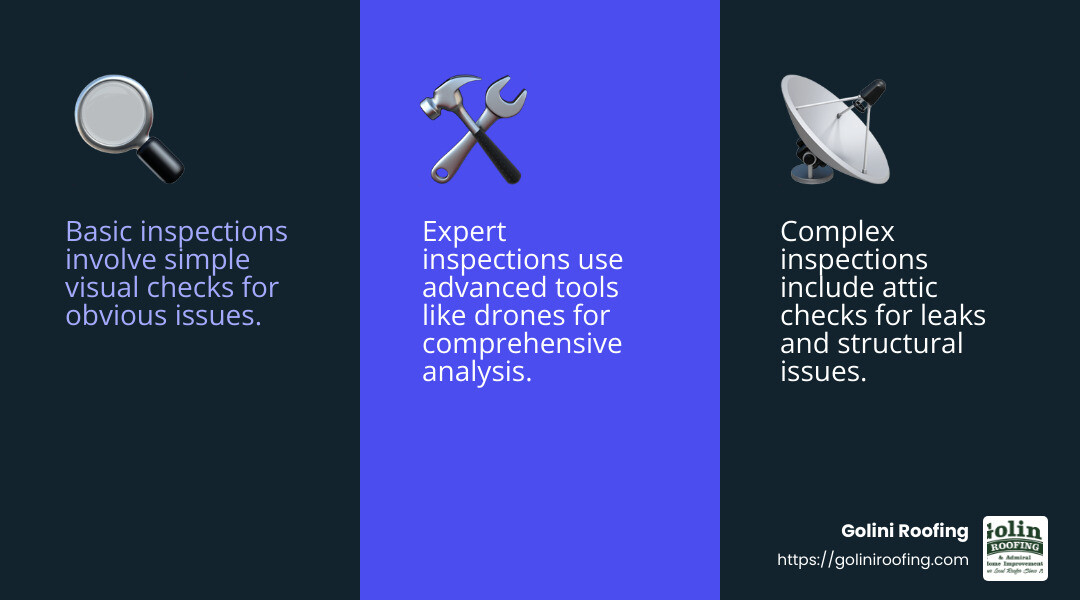
Understanding these different inspection types helps homeowners make informed decisions about what level of inspection their roof might need. Whether it’s a simple check-up or a detailed analysis, regular inspections are vital for maintaining a safe and sound roof over your head.
Next, we’ll dive into the specific components checked during a roof inspection and why they matter.
Components Checked During a Roof Inspection
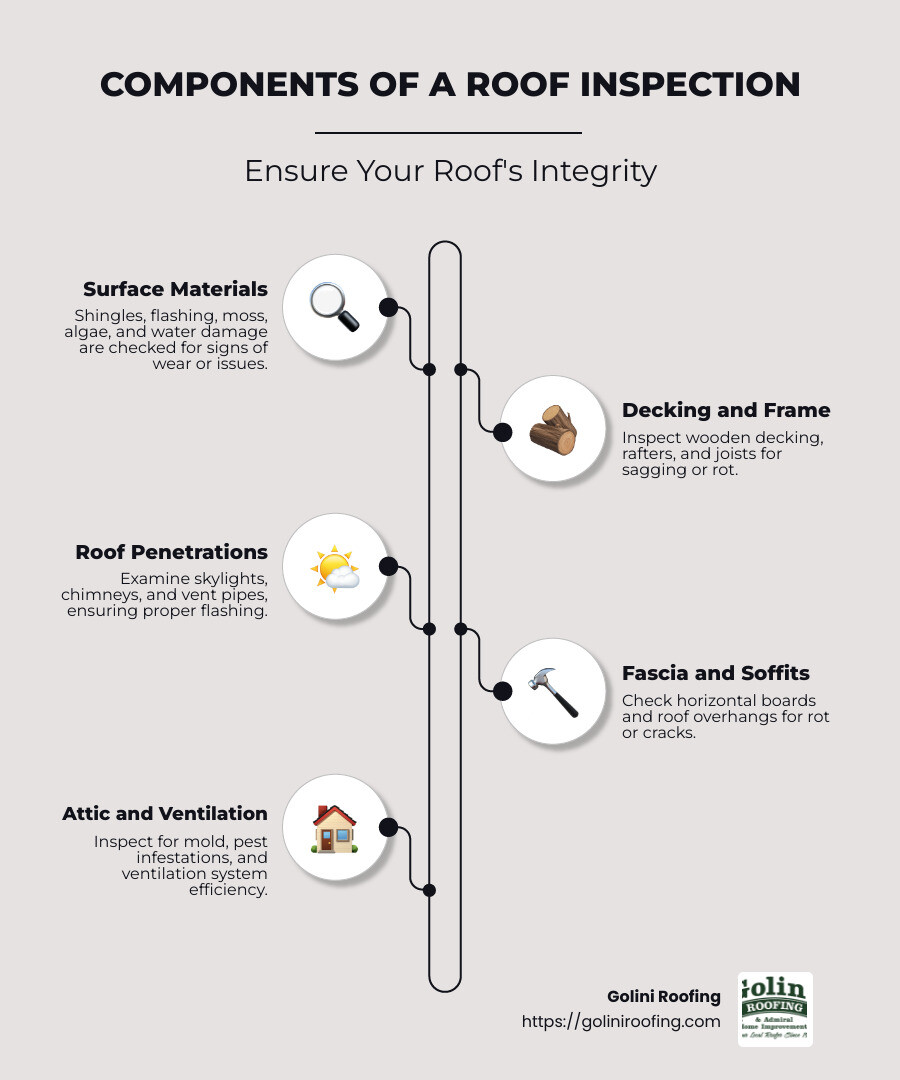
When it comes to maintaining the health of your roof, understanding what gets checked during an inspection is crucial. A roof inspection covers a wide range of components to ensure everything is in top shape. Let’s break down what inspectors look for:
Surface Materials
The first thing inspectors check are the surface materials, like shingles. Shingles protect your home from the elements, so any missing, cracked, or curling shingles can lead to leaks and water damage. Inspectors also look for signs of moss and algae growth, which can trap moisture and damage shingles over time. Flashing, which diverts water away from roof joints, is also examined to ensure it’s not rusted or loose.
Decking and Frame
Beneath the surface materials lies the roof’s decking and frame. Inspectors assess the wooden decking, rafters, and joists for signs of sagging or rot. These issues can compromise the roof’s structural stability. If the decking is weak or damaged, it might not support the weight of the roof, leading to potential collapse.
Roof Penetrations
Roof penetrations, such as skylights, chimneys, and vent pipes, are areas where leaks often occur. Inspectors check the sealing around these penetrations, using flashing and other materials to ensure they’re leak-free. A thorough check of the chimney includes examining the mortar and chimney cap for cracks or damage.
Fascia and Soffits
The fascia and soffits are the horizontal boards and panels under the roof overhang. Inspectors look for rot, cracks, or any signs of water damage. These components help ventilate the attic and protect the roof’s edge from water damage. Proper maintenance here is vital to prevent pests and moisture from entering your home.
Attic and Ventilation System
Inspecting the attic is a crucial part of the process. Inspectors look for signs of mold, pest infestations, and proper ventilation. Poor ventilation can lead to moisture buildup, which can damage the roof’s structure and increase energy bills. Inspectors also check for water stains or discoloration on the attic’s underside, indicating possible leaks.
Gutter System
Gutters and downspouts play a key role in directing water away from your home. Inspectors ensure they are free of blockages and cracks. Clogged or damaged gutters can cause water to overflow, leading to foundation problems or basement flooding. Properly functioning gutters help maintain your home’s structural integrity.
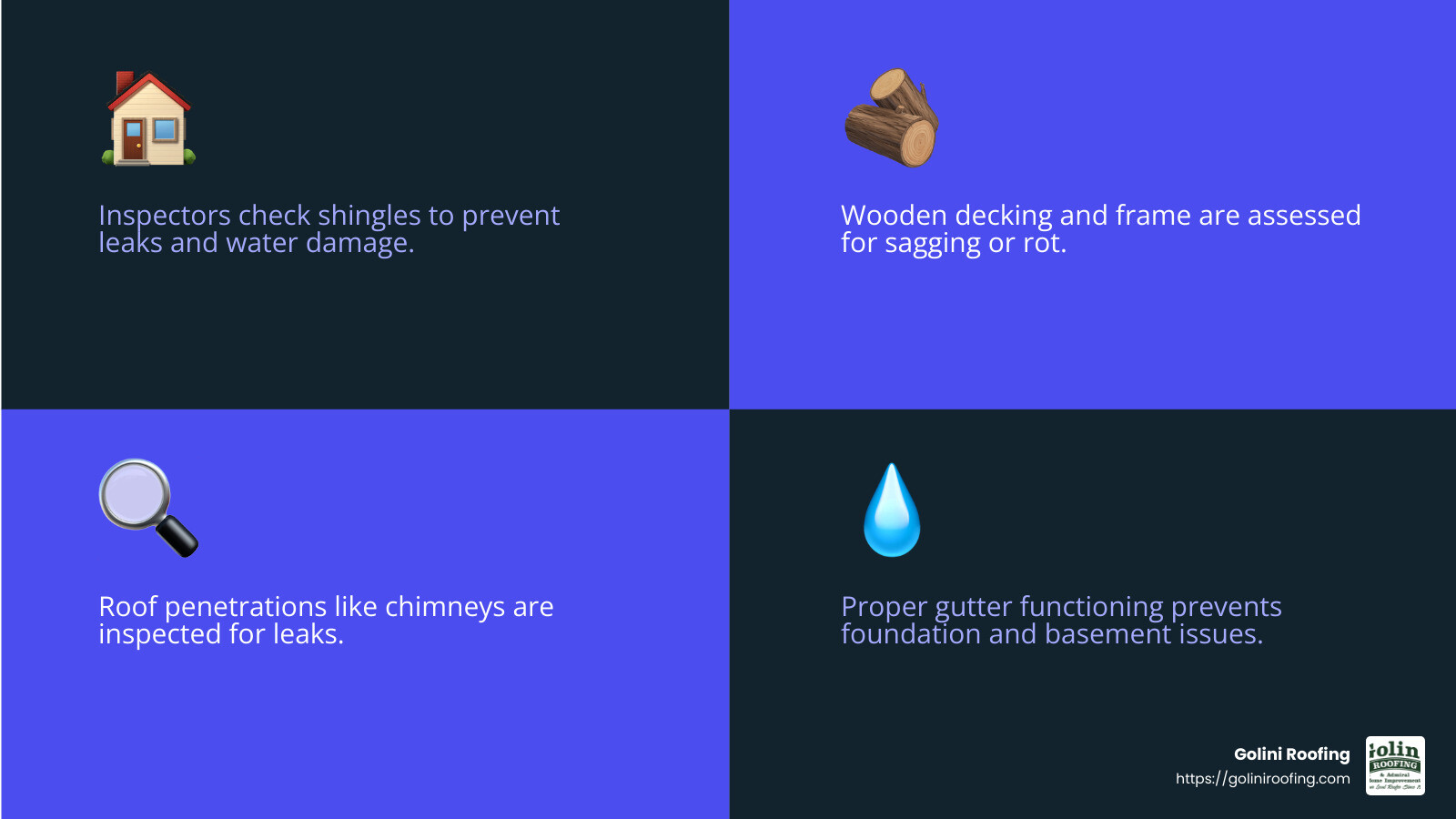
Understanding these components helps you see the importance of a thorough roof inspection. Each element plays a role in keeping your home safe and dry. By regularly checking these areas, you can catch problems early and avoid costly repairs.
Next, we’ll discuss how often you should inspect your roof and the signs that indicate it’s time for an inspection.
How Often Should You Inspect Your Roof?
Regular roof inspections are essential for keeping your home safe and dry. But how often should you do them? Let’s break it down.
Seasonal Inspections
Spring and Fall are the best times for a roof inspection. These seasons offer mild weather, making it easier to spot and fix any issues. After winter, it’s crucial to check for damage caused by ice or snow. In the fall, prepare your roof for the upcoming winter by checking for wear and tear.
Severe Weather Inspections are also important. After a big storm, like a hurricane or snowstorm, inspect your roof for damage. Strong winds, hail, and heavy snow can cause leaks and structural damage, so it’s best to catch these problems early.
Signs You Need a Roof Inspection
Sometimes, you don’t need a calendar to tell you it’s time for an inspection. Here are some signs:
- Leaks: Water stains on your ceiling or walls are a sign that your roof might be leaking. Catching leaks early can prevent major water damage.
- Weather Damage: If your area has experienced severe weather, it’s smart to check your roof. Look for missing shingles, dents, or other visible damage.
- Selling Your Home: If you’re putting your home on the market, a roof inspection can reassure potential buyers and help you avoid surprises during the sale process.
- Insurance Requests: Some insurance companies require regular roof inspections. This helps ensure your roof is in good condition and reduces the risk of claims.
Roof Age Considerations
The age of your roof is another factor. If your roof is over 10 years old, it should be inspected annually. Older roofs are more susceptible to wear and tear, and regular inspections can help extend their lifespan.
By keeping an eye on these factors, you can ensure your roof stays in great shape and avoid costly repairs down the road.
Next, we’ll explore the cost of a roof inspection and what factors can affect it.
Cost of a Roof Inspection
When it comes to maintaining your roof, understanding the cost of a roof inspection is crucial. Here’s what you need to know about the average costs and factors that can influence them.
Average Cost
Typically, a regular roof inspection costs between $120 and $400. However, the price can vary based on several factors. For more comprehensive inspections using advanced tools like infrared sensors or drones, costs might rise to $500 or $600.
Factors Influencing Cost
- Roof Size: Larger roofs require more time and effort to inspect, which can drive up the cost. A bigger surface area means more materials and components to check.
- Accessibility: If your roof is steep or difficult to access, expect to pay more. Inspectors need to take extra precautions and possibly use specialized equipment, which adds to the overall cost.
- Inspection Type: There are different types of inspections, and each comes with its own price tag. A basic visual inspection is the most affordable, while drone or infrared inspections cost more due to the technology involved.
- Roofing Materials: The type of materials used on your roof can also affect the cost. Some materials, like tile or metal, might require more detailed inspections due to their complexity.
Understanding these factors can help you prepare for the cost of a roof inspection and ensure you’re getting the best value for your money. Keep these in mind when planning your next inspection to avoid any surprises.
Next, we’ll discuss the benefits of hiring professional roof inspectors versus doing it yourself.
Professional Roof Inspectors vs. Homeowner Inspections
When it comes to inspecting your roof, you might wonder if you should do it yourself or hire a professional. Let’s explore why professional roof inspectors have the upper hand.
Tools Used by Professional Inspectors
Professional roof inspectors have access to advanced tools that most homeowners don’t. Here are some of the key tools they use:
- Infrared Sensors: These sensors help detect heat loss and moisture that aren’t visible to the naked eye. They can find hidden leaks or insulation issues that might otherwise go unnoticed.
- Drones: For roofs that are steep or hard to access, drones provide a safe way to get a bird’s-eye view. They capture high-resolution images and videos, ensuring no area is left unchecked.
- Thermal Imaging: This technology allows inspectors to see temperature variations on the roof. It’s perfect for spotting areas that might be losing heat or have water damage.
Using these tools, professionals can provide a detailed analysis of your roof’s condition.
Benefits of Professional Inspections
Hiring a professional roof inspector offers several benefits:
- Expertise: Professionals have the training and experience to spot issues that a homeowner might miss. They know what to look for and how to address potential problems.
- Safety: Climbing onto a roof can be dangerous, especially if you’re not used to working at heights. Professionals have the right equipment and training to do the job safely.
- Thoroughness: A professional inspection is more comprehensive. Inspectors check every detail, from shingles to flashing, ensuring nothing is overlooked.
- Early Problem Detection: By catching issues early, you can prevent small problems from becoming major repairs. This can save you a lot of money and stress down the road.
- Peace of Mind: Knowing that your roof has been thoroughly inspected by a professional can give you confidence in its condition. You’ll have a clear understanding of any necessary repairs or maintenance.
By relying on professional expertise, you ensure your roof is in top shape and avoid potential hazards.
Next, we’ll dive into frequently asked questions about roof inspections.
Frequently Asked Questions about Roof Inspections
How do I know if my roof needs replacing?
Your roof might need replacing if you see signs like moss, algae, or cracked shingles. Moss and algae can trap moisture, leading to rot and decay. Cracked shingles expose your roof to water damage. Another warning sign is a sagging deck. If your roof looks uneven or droopy, it may indicate structural issues that need urgent attention.
Regular inspections can help spot these problems early. If you notice any of these signs, it’s wise to call a professional for an assessment.
How long does a roof inspection take?
The duration of a roof inspection varies. Typically, it takes between one and two hours. However, the time can depend on factors like home size and roof complexity. Larger homes or roofs with intricate designs may require more time. If your roof has multiple layers or hard-to-reach areas, expect a longer inspection.
Professional inspectors use tools like drones and thermal imaging to speed up the process without missing any details.
Will my insurance cover roof damage?
Insurance coverage for roof damage depends on the cause. Most policies cover damage from covered events like storms, hail, or fire. However, they might not cover issues caused by poor maintenance. For example, if your roof leaks because you didn’t address moss buildup, your claim could be denied.
To ensure coverage, keep your roof well-maintained and document any repairs. If you’re filing an insurance claim, a professional inspection report can support your case. Always check with your insurance provider to understand your policy’s specifics.
By understanding these FAQs, you can better maintain your roof and ensure it’s in good condition for years to come.
Conclusion
Regular roof inspections are crucial for maintaining the health and longevity of your roof. Why? Because they help you catch small problems before they become big, expensive issues. Think of inspections as a routine check-up for your home. They ensure everything is in tip-top shape and can save you thousands in potential repairs.
At Golini Roofing, we understand the value of a well-maintained roof. With over 35 years of experience, our team is dedicated to providing top-notch roofing services in Massachusetts. Our meticulous hand-nailing technique ensures your roof is both durable and reliable.
Roof maintenance tips:
- Schedule annual inspections: Aim for once in the spring and again in the fall. This helps catch any damage from the previous season.
- Post-storm checks: After severe weather, it’s wise to inspect your roof for damage. This can prevent minor issues from escalating into major repairs.
- Clean your gutters: Clogged gutters can lead to water damage. Regular cleaning helps maintain proper drainage.
- Look for warning signs: Keep an eye out for moss, algae, cracked shingles, or sagging areas. These can indicate underlying problems.
By following these tips, you can extend the life of your roof and avoid costly repairs. For more information on our services, visit our roofing services page.
A well-maintained roof not only protects your home but also improves its value and safety. Trust Golini Roofing to keep your roof in excellent condition.
