Commercial Roof Maintenance Plan: 7 Powerful Benefits in 2025
Why Every Business Needs Proactive Roof Protection
A commercial roof maintenance plan is a structured program of regular inspections, preventive repairs, and documentation designed to extend your roof’s lifespan while avoiding costly emergency replacements. Here’s what you need to know:
Key Components:
– Inspection Schedule: Semi-annual inspections (spring and fall) plus post-storm checks
– Preventive Tasks: Drain cleaning, debris removal, sealant repairs, flashing maintenance
– Documentation: Detailed reports to maintain warranties and support insurance claims
– Cost Savings: Maintenance typically costs $0.05-$0.09 per square foot vs. $10+ for replacement
Why It Matters:
– Prevents 70% of premature roof failures caused by neglected maintenance
– Extends roof life by 25-100% according to industry data
– Keeps warranties valid (most require annual documented inspections)
– Reduces emergency repair costs by catching issues early
Your commercial roof represents a major investment, yet it’s often “out of sight, out of mind” until problems arise. Without a maintenance plan, small issues become expensive disasters. Research shows that preventative maintenance costs roughly half as much as reactive repairs after failure occurs.
I’m Jack Golini, and over my 35+ years in the roofing industry, I’ve seen countless businesses save thousands through proper commercial roof maintenance plans. The key is catching problems before they become emergencies – something that’s only possible with regular, professional oversight.
Commercial roof maintenance plan vocab explained:
– commercial roofing company north reading ma
– commercial roofing company reading ma
– commercial roofing reading ma
The High Cost of “Out of Sight, Out of Mind”
The statistics on commercial roof failures are sobering. According to industry research, 70% of commercial roofs are replaced prematurely with 30% of their serviceable life remaining. The primary culprit? Neglecting inspections and maintenance.
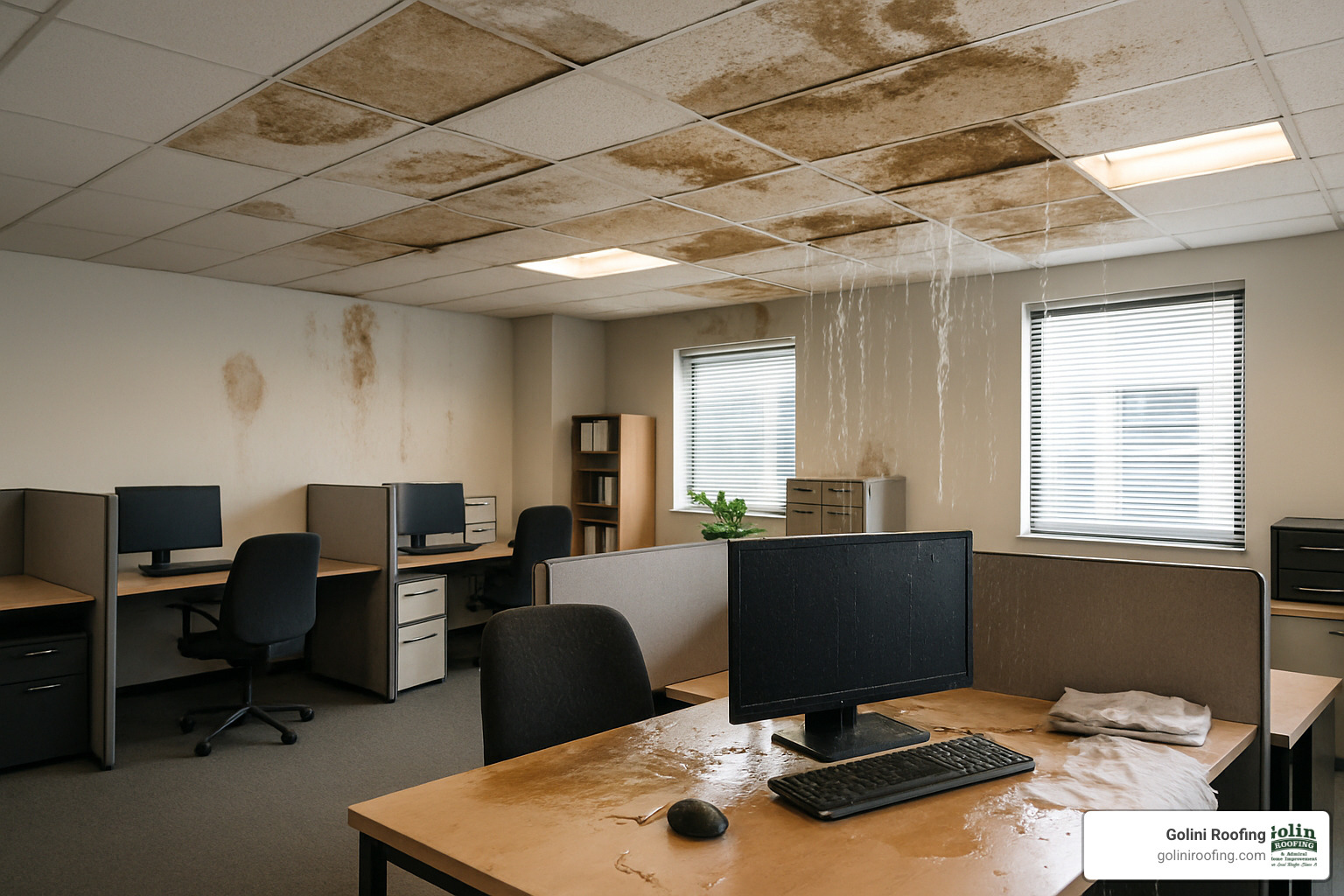
When facilities don’t have a maintenance plan, minor defects worsen over time. What starts as a small leak becomes a major infiltration problem during severe weather. We’ve responded to emergency calls where a $200 repair could have prevented $50,000 in water damage.
Most commercial roof warranties require documented annual inspections to remain valid. Without this documentation, manufacturers can void coverage entirely, leaving building owners responsible for the full cost of repairs. This means skipping a $500 annual inspection could cost you a $100,000 warranty claim.
Understanding a Commercial Roof Maintenance Plan
Think of a commercial roof maintenance plan as your roof’s personal healthcare program. Just like regular check-ups catch problems early, a maintenance plan creates a systematic approach to keeping your roof healthy before small issues turn into expensive emergencies.
At its core, this is a service agreement that shifts you from reactive “fix it when it breaks” thinking to a preventative strategy. The National Roofing Contractors Association (NRCA) recommends inspecting commercial roofs at least twice yearly, plus additional checks after severe weather events. Scientific research on preventive maintenance backs this up with hard data proving that proactive care saves money compared to waiting for failures.
Here in New England, your maintenance plan needs to account for our unique challenges. Freeze-thaw cycles can wreak havoc on sealants and flashings. Ice dams test your drainage systems every winter. Those beautiful old trees surrounding your building constantly drop debris that can clog drains and damage your roof surface.
Each maintenance visit generates detailed documentation of your roof’s condition, completed tasks, and recommended future actions. This paperwork isn’t just bureaucracy – it’s your warranty protection and insurance coverage lifeline.
Core Goals of a Commercial Roof Maintenance Plan
Leak avoidance tops the priority list for any commercial roof maintenance plan. Water damage costs exponentially more than the roof repair itself. A tiny leak can compromise insulation, ruin interior finishes, shut down operations, and create mold conditions that pose serious health risks.
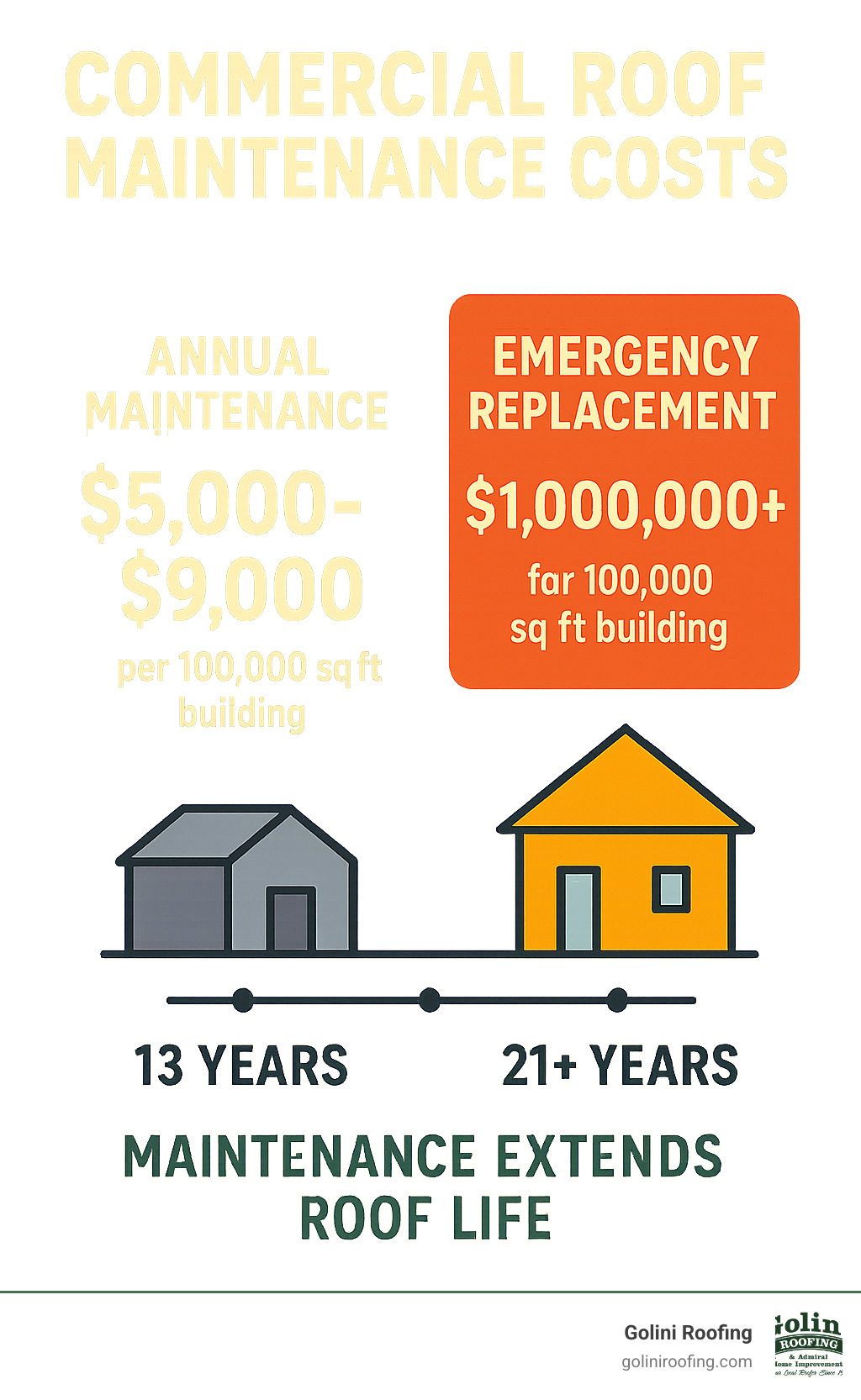
Life extension comes in as a close second goal. Properly maintained roofs average 21 years of service life compared to just 13 years for neglected systems. That’s a 60% improvement in lifespan, which means you can delay major capital expenditures while getting maximum value from your original investment.
Capital budgeting becomes much more predictable when you’re not dealing with surprise repair bills. Instead of emergency replacement costs hitting your budget like a sledgehammer, you can plan maintenance expenses years in advance.
Safety considerations round out the core goals. Regular maintenance identifies potential hazards like loose materials, damaged safety railings, or unsafe access points.
Inspection Tasks in a Commercial Roof Maintenance Plan
Every comprehensive inspection starts with flashings – those critical transition areas around roof penetrations, walls, and equipment. These spots are leak magnets because they involve different materials that expand and contract at different rates.
Drain and gutter systems get special attention since water management makes or breaks flat and low-slope roofs. Clogged drains create ponding water that accelerates membrane breakdown and can overload your building’s structure.
Roof penetrations for HVAC equipment, vents, and utilities need careful examination because they’re high-stress areas. We look for damaged pipe seals, loose equipment supports, and spots where vibration might have compromised waterproofing.
Sealant inspection covers all caulked joints, expansion joints, and equipment connections. Sealants typically need renewal every 5-10 years, well before your roof membrane wears out.
Ponding water assessment looks for areas where water stands more than 48 hours after rainfall. While some ponding is normal on flat roofs, excessive or expanding puddles signal drainage problems that need attention.
Debris removal might seem like simple housekeeping, but it’s crucial for roof longevity. Leaves, branches, and trash can clog drains, trap moisture against your roof surface, and create growing conditions for unwanted vegetation.
For more detailed information about what we look for during these inspections, visit our page on Commercial Roof Inspections.
Benefits & ROI: Why Maintenance Beats Replacement
The financial case for a commercial roof maintenance plan becomes crystal clear when you break down the costs. Annual preventative maintenance typically runs 5-9 cents per square foot, while roof replacement averages $10-30 per square foot.
For a typical 50,000 square foot facility, you’re looking at spending $2,500-$4,500 per year on maintenance versus $500,000-$1,500,000 for a complete replacement.
The long-term savings become even more impressive. Research shows that maintaining a 100,000 square foot roof costs approximately $640,000 over ten years, including periodic recoating. Compare that to $1,000,000 for full replacement, and you’re looking at $360,000 in savings – that’s a 56% cost reduction while actually extending your roof’s useful life.
Energy efficiency improvements add another layer of value. A well-maintained roof with proper drainage and intact insulation performs significantly better thermally. When we apply reflective roof coatings during maintenance visits, cooling costs can drop by 10-20% during summer months.
Warranty protection provides crucial financial security. Most commercial roofing warranties require documented annual maintenance to remain valid. Without a maintenance plan, you’re essentially gambling with what could be a $200,000 warranty.
Insurance claims also benefit from maintenance documentation. When storm damage occurs, having records of regular preventive care strengthens your claim by demonstrating responsible building management.
Asset value preservation extends far beyond the roof itself. A well-maintained building commands higher rents, attracts better tenants, and maintains stronger resale value.
Sustainability considerations are becoming more important for corporate responsibility goals. Extending roof life through maintenance reduces waste sent to landfills and minimizes the environmental impact of manufacturing new roofing materials.
| Maintenance Approach | Annual Cost (per sq ft)* | 20-Year Total Cost (50,000 sq ft building)* | Roof Lifespan |
|---|---|---|---|
| Preventive Maintenance | $0.05 – $0.15 | $50,000 – $150,000 | 20-25 years |
| Reactive Maintenance | $0.08 – $0.25 | $80,000 – $250,000 | 12-15 years |
| No Maintenance | $0.00 – $0.05 | $500,000 – $1,500,000 (replacement) | 8-12 years |
*These are average costs based on internet data and not actual costs for Golini Roofing.
Key Components of an Effective Commercial Roof Maintenance Plan
Building a solid commercial roof maintenance plan requires the right components in the right proportions. The foundation starts with a semi-annual inspection schedule, typically in spring and fall. Spring inspections identify damage from freeze-thaw cycles, ice dams, and heavy snow loads. Fall inspections catch issues before they face another harsh winter.
Post-storm inspections are absolutely crucial. After significant weather events – hail, high winds, or heavy rainfall – you need eyes on that roof quickly. Waiting weeks or months makes it nearly impossible to prove storm damage to insurance companies.
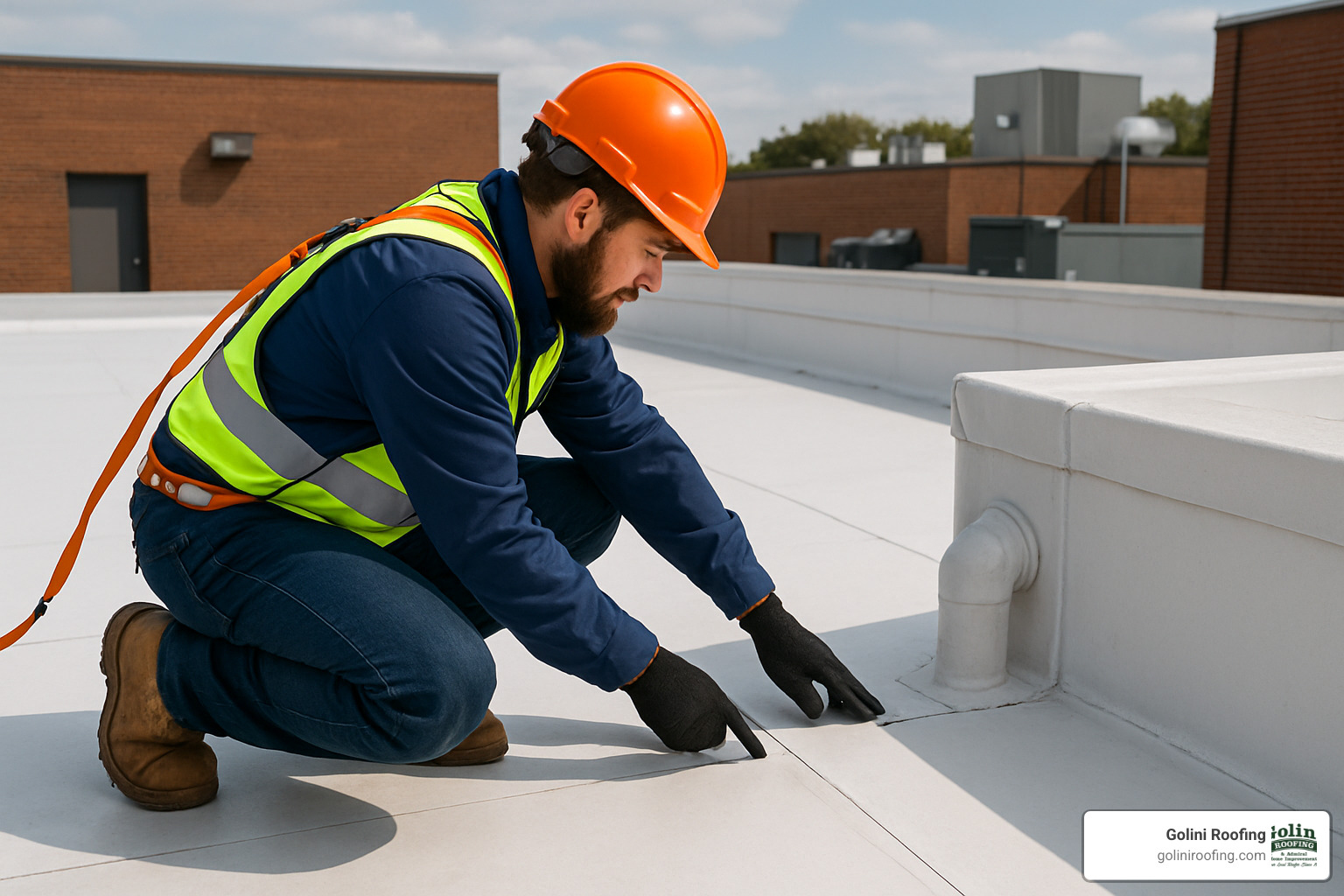
Documentation standards might sound boring, but they’re your financial lifeline. Each inspection needs to generate detailed reports with photographs, condition assessments, and recommended actions. We maintain digital records that track changes over time, creating a complete story of your roof’s health.
Access control procedures protect both your roof and everyone who steps foot on it. We coordinate with facility managers to plan safe routes and minimize disruption to your operations.
The difference between effective maintenance and throwing money away comes down to trained personnel. Our technicians understand the quirks of different roofing systems, can spot subtle signs of trouble, and know how to fix problems without creating new ones.
Safety and PPE requirements aren’t suggestions – they’re absolute necessities. All our work follows OSHA standards for fall protection, and our crews use appropriate safety equipment.
Finally, customized checklists ensure we don’t miss anything while focusing on what matters most for your specific building. When we do find issues that need attention, our Commercial Roof Repair services can address them quickly.
Budgeting Your Commercial Roof Maintenance Plan
Visit frequency drives most of your maintenance costs. Semi-annual inspections work well for most buildings, but older roofs or those facing harsh conditions might benefit from quarterly visits. Based on internet data, basic maintenance typically runs $0.05-$0.09 per square foot annually, though complex or problematic roofs can reach $0.20-$0.30 per square foot. These are average costs from various sources, not Golini Roofing’s actual pricing.
When calculating square footage, don’t just measure your building footprint. Multi-level buildings, equipment platforms, and canopies all need inspection and maintenance.
Smart budgeting includes an inflation buffer for multi-year agreements. Construction costs typically climb 3-5% annually, so build this escalation into long-term contracts.
Coating allowances become important as roofs reach middle age. Protective coatings can add 10-15 years to roof life at a fraction of replacement cost. Budget approximately $2-5 per square foot for coating applications.
Contingency funds for unexpected repairs found during routine maintenance are often overlooked. Set aside an additional 20-30% of your annual maintenance budget for minor repairs like sealant replacement or flashing adjustments.
Consider multi-year agreements for better value and consistency. Committing to a longer-term maintenance relationship often secures better pricing while ensuring service continuity.
Best Practices to Extend Roof Life & Protect Assets
Think of your commercial roof maintenance plan as preventive medicine for your building. These best practices can add years to your roof’s life while protecting your valuable assets below.
Debris clearing might seem like housekeeping, but it’s actually one of your roof’s biggest lifesavers. Leaves and branches trap moisture against your roof surface, clog your drainage systems, and can puncture membranes when blown around by wind. We’ve seen $50,000 in water damage caused by a simple clogged drain that could have been cleared for under $100.
During fall months, we recommend monthly debris removal since leaves accumulate quickly. The rest of the year, quarterly cleaning usually does the trick.
Drain maintenance goes beyond just scooping out leaves. Your drainage system is your roof’s lifeline, and it needs to work perfectly every time it rains. During each maintenance visit, we test every drain with water to make sure it flows properly. A slow drain today becomes a major ponding problem tomorrow.
Vegetation control prevents both immediate headaches and long-term disasters. Small plants growing in roof cracks might look harmless, but they’re like nature’s crowbars – slowly prying your roof apart as they grow. Tree branches overhanging your roof drop debris all year and become projectiles during storms.
Walkway pads protect high-traffic areas from the wear and tear of regular foot traffic. Even careful HVAC technicians can gradually wear down your roof membrane over time. Installing designated walkways with protective pads concentrates traffic in reinforced areas.
HVAC service coordination prevents unnecessary problems. Mechanical contractors are focused on fixing equipment, not protecting your roof, so accidents happen. We work with facility managers to establish clear protocols for roof access and can inspect areas after HVAC work.
Reflective coatings are like sunscreen for your roof, providing multiple benefits. These white or light-colored coatings reflect solar heat instead of absorbing it, which reduces thermal stress on your roofing system while cutting your cooling costs. They also provide an extra layer of UV protection.
Climate adjustments are crucial because what works in Arizona won’t necessarily work in Massachusetts. Here in New England, freeze-thaw cycles create unique challenges that require specific attention to expansion joints, flashings, and drainage systems.
Snow removal evaluation becomes critical during harsh New England winters. While most commercial roofs can handle typical snow loads, ice dams and uneven accumulation can create serious problems.
For facilities with metal roofing systems, our Commercial Metal Roofing Services page provides more specific guidance.
Seasonal Checklist for New England Facilities
Spring inspections are like your roof’s annual physical – we’re looking for any damage winter might have caused. New England’s freeze-thaw cycles are particularly hard on sealants and flashings, so we pay special attention to these vulnerable areas. Ice dams can also cause damage around roof edges that only becomes apparent after snow melts.
During spring visits, we focus on inspecting all sealants and caulking for freeze-thaw damage, checking for ice dam damage around roof perimeters, testing drainage systems after snow melt, removing winter debris accumulation, and scheduling repairs identified during winter months.
Fall preparations are your last chance to get your roof ready for another New England winter. This includes sealing any new cracks, ensuring drainage systems are clear and working properly, and removing debris that could trap snow and ice.
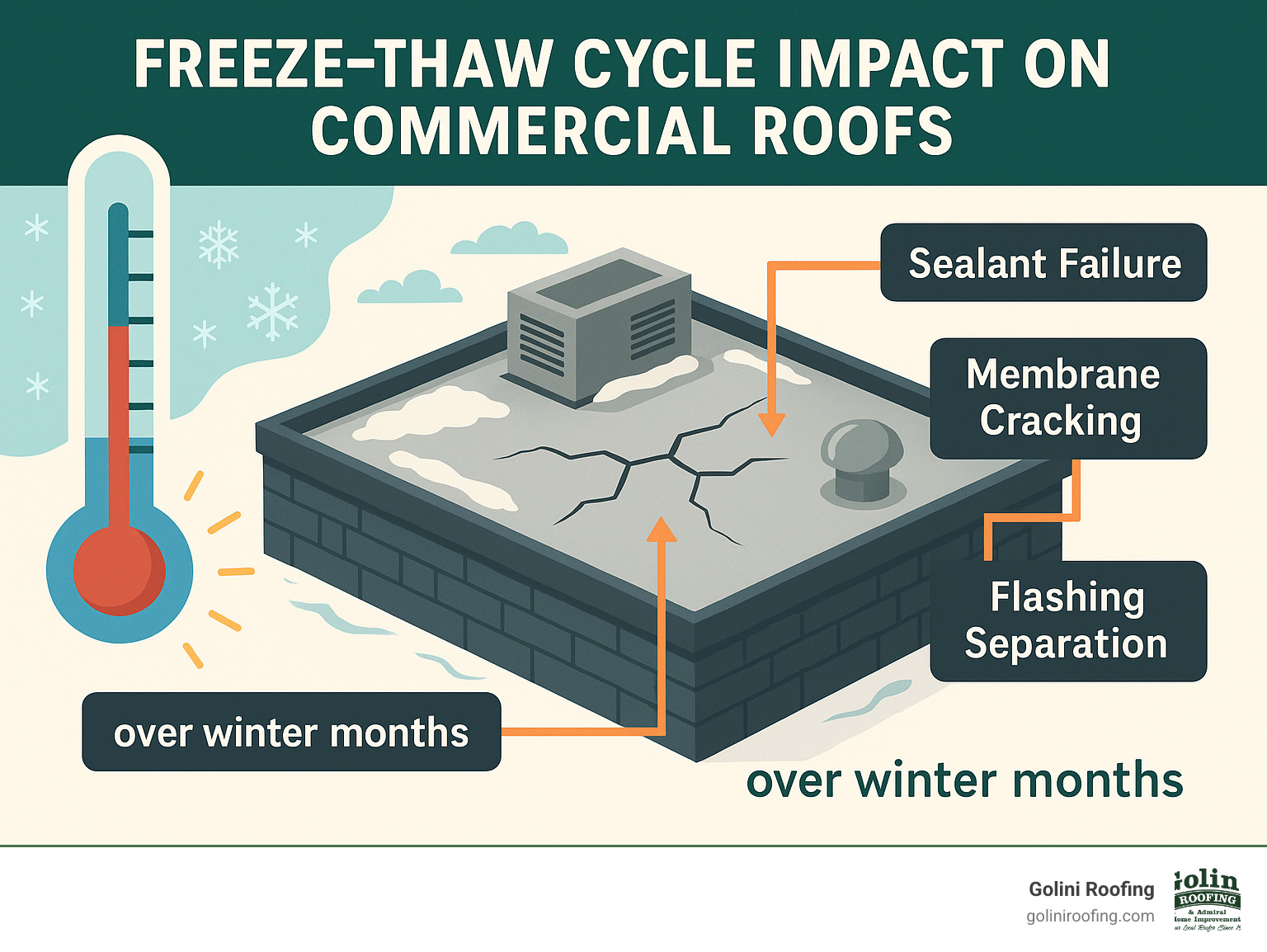
Essential fall tasks include comprehensive sealant inspection and renewal, drain cleaning and flow testing before freeze-up, tree trimming to prevent winter storm damage, equipment securing and weatherization, and emergency contact information updates.
Storm aftercare protocols ensure we can respond quickly when severe weather hits. We maintain emergency contact procedures and can provide expedited inspections after major storms.
Ice dam monitoring becomes crucial for facilities with roof edge vulnerabilities. While proper insulation and ventilation prevent most ice dams, monitoring allows early intervention when conditions develop.
Thermal imaging technology helps us identify insulation problems and air leaks that contribute to ice dam formation. During fall inspections, we can use infrared cameras to spot areas where heat loss might cause ice buildup.
Frequently Asked Questions about Commercial Roof Maintenance Plans
How often should my roof be inspected?
The National Roofing Contractors Association recommends inspecting commercial roofs at least twice per year – typically in spring and fall. But the real answer depends on your specific situation.
Roof age makes a huge difference. Newer roofs under 10 years might get away with annual inspections if they’re performing well. But once your roof hits middle age, those semi-annual checkups become much more important. Older roofs benefit from quarterly visits because small problems can escalate quickly when materials are already stressed.
Here in New England, our freeze-thaw cycles are brutal on roofing systems. Those temperature swings create stresses that roofs in milder climates never experience. That’s why we typically recommend semi-annual inspections for all commercial roof maintenance plans in our service area.
Your building’s exposure and use matter too. If you’ve got heavy rooftop equipment, frequent foot traffic, or chemical emissions, your roof needs more attention.
Don’t forget your warranty requirements. Most commercial roofing warranties require documented annual inspections to stay valid, and some premium warranties want semi-annual visits.
Beyond your regular schedule, always get an inspection after severe weather. Hailstorms, winds over 50 mph, heavy rainfall, or significant snow loads can all cause damage that’s easier to document and repair when it’s fresh.
Can in-house staff handle maintenance tasks?
This is probably the question I get asked most. Building maintenance staff are capable people, and it seems like it should save money to handle roof maintenance in-house. The reality is more complicated.
Your maintenance team can absolutely handle some basic tasks safely. Visual inspections from inside the building are actually really valuable – your staff knows what normal looks like and can spot new stains or damage quickly. They can also handle basic debris removal from easily accessible areas and clean drain strainers if they can reach them safely.
But comprehensive roof inspections require specific expertise that takes years to develop. Our technicians know how to spot subtle membrane deterioration, identify flashing problems before they leak, and understand how different roofing systems age and fail.
The safety considerations alone make professional maintenance worthwhile. Commercial roofs present serious fall hazards, and proper fall protection equipment is expensive and requires training.
From a cost perspective, DIY maintenance often backfires. I’ve responded to emergency calls where a $200 professional repair could have prevented $20,000 in water damage caused by improper DIY fixes.
Most importantly, warranty compliance typically requires professional documentation. Your warranty probably specifies that inspections must be performed by licensed, insured roofing contractors with detailed written reports.
What happens to my warranty without a plan?
This question always makes me a little sad because I’ve seen too many building owners learn the answer the hard way. Most commercial roofing warranties become worthless without documented maintenance – and I mean completely worthless, not just reduced coverage.
Here’s what most warranties require: annual inspections by qualified contractors with written reports documenting roof condition and maintenance performed. Premium warranties often want semi-annual inspections. The documentation needs to be detailed enough to prove you’ve been taking care of the roof proactively.
The maintenance standards are usually specific too. Warranties typically require drain cleaning, debris removal, and prompt repair of minor issues identified during inspections.
The “qualified contractor” requirement trips up a lot of people. Many warranties specify that work must be done by licensed, insured roofing professionals. That maintenance your facilities team did? Probably doesn’t count for warranty purposes.
Without proper maintenance records, manufacturers routinely deny warranty claims entirely. That $200,000 roof replacement becomes your full financial responsibility instead of being covered under warranty terms.
The bottom line? A commercial roof maintenance plan isn’t just about keeping your roof in good shape – it’s about protecting one of your biggest investments and ensuring you have recourse when things go wrong.
Conclusion
Here’s the bottom line: a commercial roof maintenance plan isn’t just smart business – it’s the difference between controlling your roofing costs and having them control you. After 35 years in this business, I can tell you that the buildings with the oldest, best-performing roofs all have one thing in common: they’ve been consistently maintained.
The math speaks for itself. Spending $0.05-$0.09 per square foot annually on maintenance versus $10-30 per square foot for premature replacement is a no-brainer. But beyond the dollars and cents, there’s something more valuable at stake: your peace of mind.
When you have a proper maintenance plan in place, you’re not lying awake during storms wondering if tomorrow will bring a nasty surprise. You’re not scrambling to find emergency contractors or explaining to customers why your facility is temporarily closed due to water damage.
At Golini Roofing, we bring the same meticulous attention to maintenance that we’re known for in our installation work. Just like we hand-nail every shingle for maximum durability, we customize every commercial roof maintenance plan to your specific building, climate challenges, and operational needs.
We’ve seen too many business owners learn the hard way that “out of sight, out of mind” is an expensive philosophy when it comes to commercial roofing. The good news? It’s never too late to start protecting your investment.
Our team serves businesses throughout Burlington, Lynnfield, North Reading, Reading, Stoneham, Wakefield, Wilmington, Winchester, and Woburn. We understand the unique challenges that Massachusetts weather throws at commercial roofs, and we’ve developed maintenance protocols that work in our climate.
Don’t wait for the first leak to realize you need professional roof care. Contact Golini Roofing today, and let’s design a maintenance program that keeps your roof – and your business – running smoothly for decades to come. Learn more about our comprehensive Commercial Roofing Services and take that first step toward worry-free roof ownership.
Your roof protects your business 24/7. Make sure you’re returning the favor with the professional care it deserves.
