
A Rain Gutter: Top 1 Home Protection
Why a Rain Gutter is Essential for Your Home’s Protection
A rain gutter is a critical component of your home’s water discharge system, designed to channel rainwater away from your foundation, walls, and landscaping. Without a properly functioning gutter system, your home is vulnerable to a range of costly problems.
Key Functions & Consequences of Failure:
- Water Diversion: Gutters channel roof runoff safely away. Without them, you risk foundation erosion, structural damage, and basement flooding.
- Siding & Foundation Protection: They prevent water from pooling and splashing, which can cause cracks in the foundation, stained or rotting siding, and soil washout.
- Health & Safety: By managing moisture, gutters help prevent mold growth and pest infestations that thrive in damp conditions.
I’m Jack Golini, and since 1982, I’ve seen how a well-installed rain gutter system acts as a home’s first line of defense against water damage. Protecting homes in the Wakefield area for over 35 years has taught me the importance of getting this crucial element right.
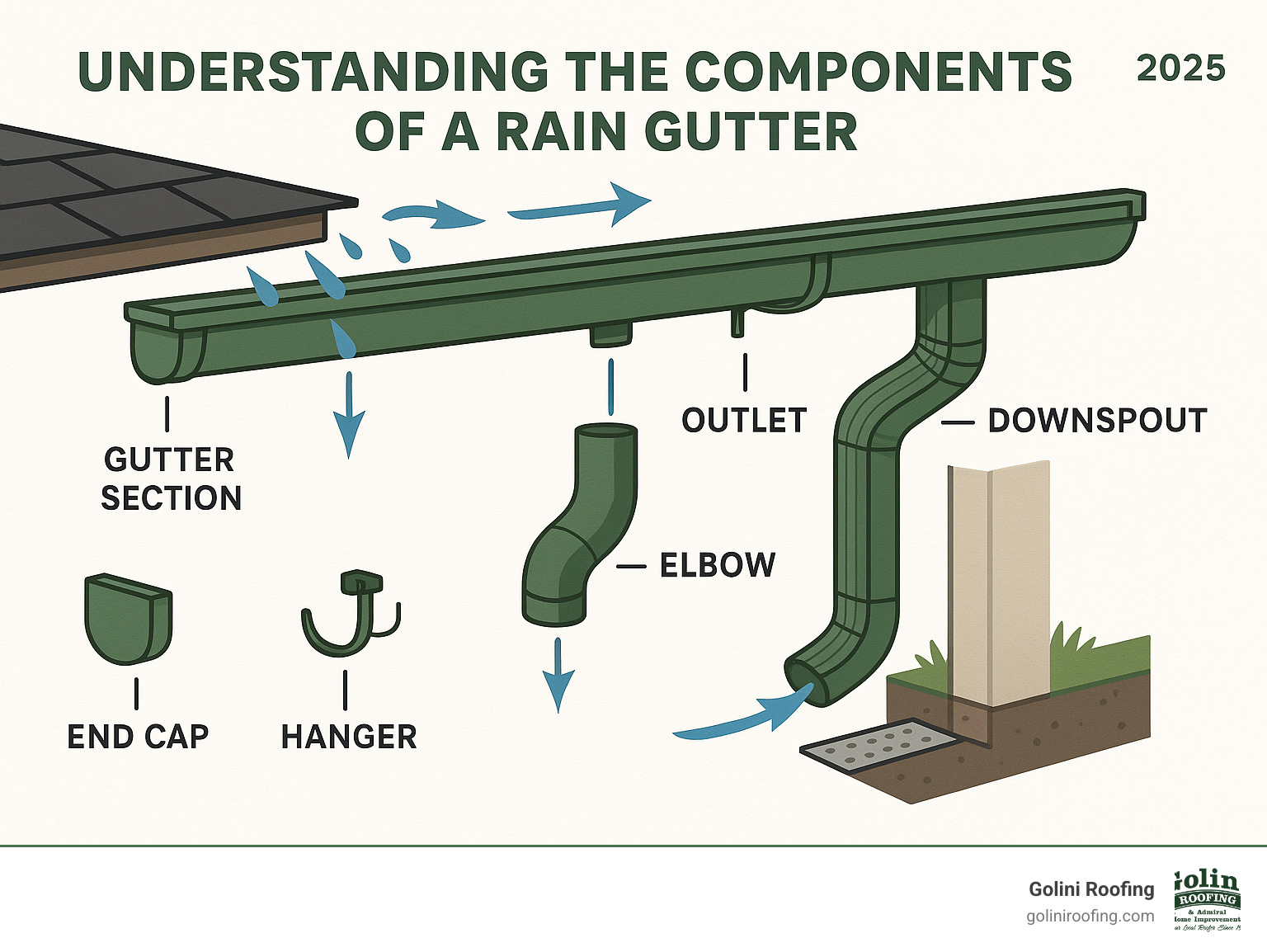
Understanding the Components of a Rain Gutter
A complete rain gutter system is more than just the trough along your roofline. Each part plays a vital role in water management. For more details, see this average cost seamless gutters guide.
- Gutter Sections: The main horizontal channels that collect rainwater from the roof.
- Downspouts: Vertical pipes that carry water from the gutters to the ground.
- Hangers: Brackets that securely fasten the gutters to the fascia board.
- End Caps: Seal the ends of the gutter to prevent water from spilling out.
- Elbows: Curved pieces that help steer corners and direct water flow.
- Outlets: The opening where the gutter connects to the downspout.
Together, these components create an effective system. For a broader look at your home’s exterior, you can explore an illustrated glossary of roofing terms. Neglecting this system can lead to serious issues, so if you notice problems, it’s important to address downspout drainage issues promptly.
Choosing Your Gutter System: Types, Materials, and Costs
When selecting a rain gutter system, you’ll need to balance aesthetics, functionality, and your budget. The right choice complements your home’s architecture while providing effective water management.
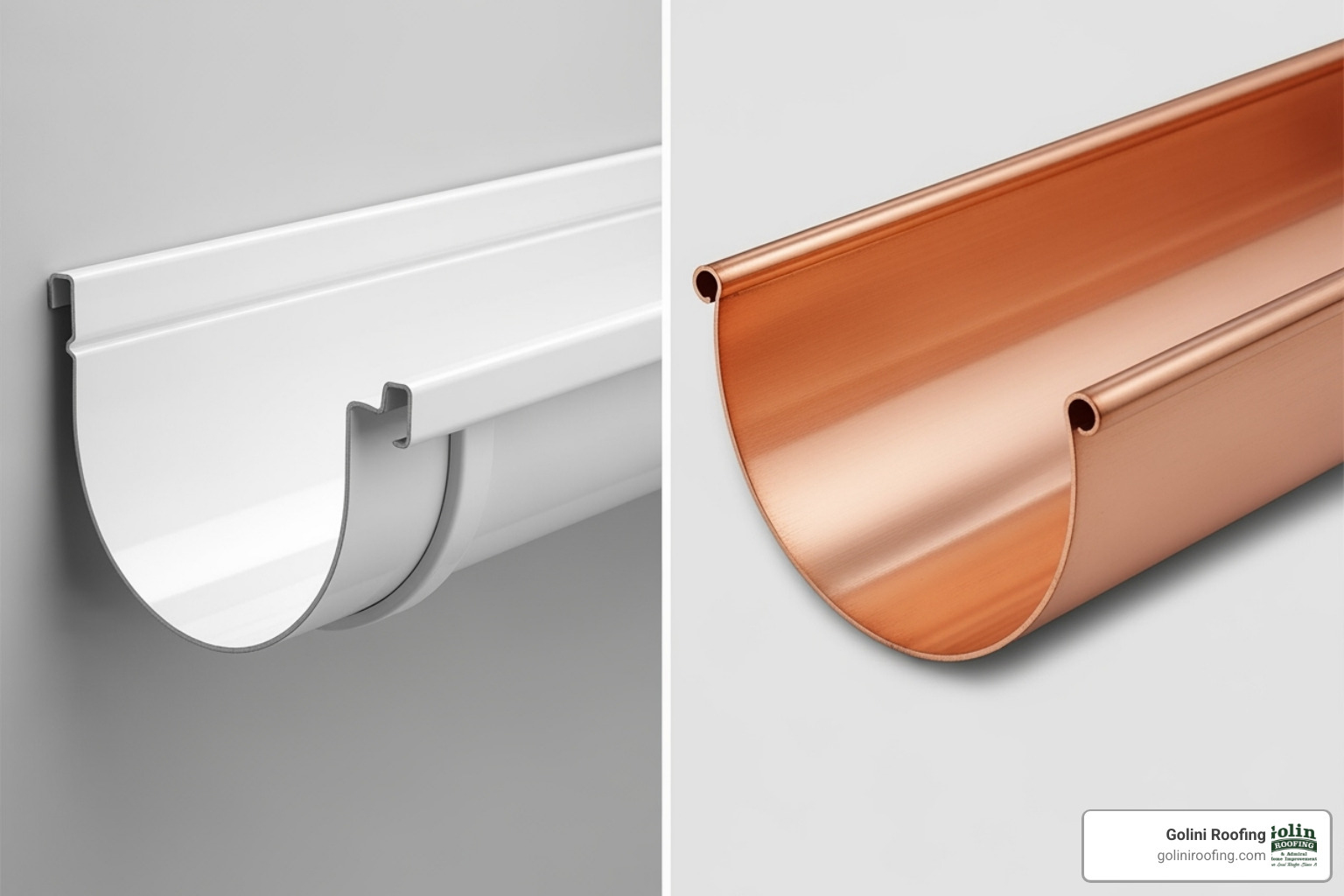
Your choice impacts your home’s curb appeal and its ability to handle rainfall. For a deeper dive into your options, check out More info about types of rain gutters.
Gutter Styles: K-Style vs. Half-Round
The two most common styles are K-style and half-round.
K-style gutters are the most popular choice for residential homes. Their decorative, crown molding-like appearance blends well with modern architecture. A flat back allows for easy installation directly to the fascia board. They are widely available and cost-effective, especially as seamless gutters formed on-site to minimize leaks.
Half-round gutters offer a classic, semicircular look ideal for historical homes. While they may be slightly more expensive, their smooth interior provides excellent water flow, and their timeless aesthetic is a compelling choice for certain architectural styles.
It’s also important to choose between seamless and sectional gutters. Seamless gutters are custom-fit to your roofline, drastically reducing potential leak points. Sectional gutters come in pre-cut pieces and are a common DIY option, but the numerous seams require more maintenance.
Common Materials for a Rain Gutter and Their Lifespan
The material you choose for your rain gutter system will significantly impact its cost, durability, and lifespan.
Here’s a comparison of the most common gutter materials:
| Material | Pros | Cons | Average Lifespan | Cost per Linear Foot (Average) |
|---|---|---|---|---|
| Vinyl (PVC) | – Most affordable | – Less durable than metal | 10-20 years | $2 – $5 |
| – Easy to install (DIY-friendly) | – Can become brittle in extreme temps | |||
| – Lightweight | – Prone to fading/cracking | |||
| Aluminum | – Most common, widely available | – Can dent/bend easily | 20-30 years | $5 – $10 |
| – Lightweight, easy to install | – Can corrode in salty air | |||
| – Rust-resistant | – Paint may chip/fade over time | |||
| – Available in many colors | ||||
| Steel (Galvanized/Galvalume) | – Very strong and durable | – Heavy, harder to install | 20-30 years | $8 – $25 |
| – Good for heavy snow/ice loads | – Galvanized can rust over time | |||
| – Galvalume offers better corrosion resistance | – Paint Grip steel needs painting | |||
| Copper | – Exceptional longevity | – Most expensive upfront cost | 50+ years | $30 – $50+ |
| – Extremely durable, no rust | – Develops a unique patina over time | |||
| – Low maintenance | – Requires specialized installation | |||
| – Adds significant curb appeal |
Note: These are average costs based on internet data and not actual costs for Golini Roofing. Prices can vary widely based on location, supplier, and complexity of installation.
Seamless gutters, if properly installed, can last 30+ years. Copper is a premium choice known for its longevity, often lasting over 50 years and developing a beautiful, protective patina. While the upfront cost is higher, its durability makes it a valuable long-term investment. For more detailed information, see this guide on gutter replacement cost.
Understanding the Cost of a New Gutter System
The total cost of a new rain gutter system depends on several factors:
- Material Costs: This is the primary driver, with vinyl being the most affordable and copper the most expensive.
- Labor Costs: Professional installation ensures the system is correctly sized, pitched, and secured for optimal performance. An average installation takes 6 to 8 hours.
- Installation Complexity: Multi-story homes, complex rooflines, and numerous corners increase labor time and cost.
- Home Size: The total linear footage of gutters required directly impacts both material and labor costs.
- Fascia Condition: Rotted or damaged fascia boards must be repaired before installation, adding to the project cost.
For a comprehensive breakdown, check out More info about how much new gutters cost.
Gutter Installation and Sizing Essentials
Proper installation and sizing are crucial for a high-performing rain gutter system. While some homeowners attempt DIY installation, professional installation guarantees the job is done right. Safety and the use of proper tools are paramount in any installation. For detailed guidance, see More info about gutter installation.
How to Correctly Size Your Gutters
Sizing a rain gutter system correctly ensures it can handle your local weather without being oversized and unnecessarily expensive. Key factors include:
- Roof Pitch & Surface Area: A steeper roof and a larger surface area both increase the volume and velocity of water the gutters must handle.
- Maximum Rainfall Intensity: We size systems based on the heaviest rainfall expected in our Massachusetts climate to prevent overflow during storms.
- Downspout Capacity: A standard downspout can typically drain about 600 square feet of roof area. As a rule, a downspout is needed for every 50 feet of gutter.
- Climate Considerations: In New England, we account for heavy snow and potential ice dams, often recommending larger, more durable gutters.
For technical sizing details, you can refer to Architectural Details: Gutters and Downspouts.
Key Installation and Design Principles
Correct installation is what makes a gutter system last. After 35+ years, I know these principles are non-negotiable:
- Proper Slope: A gentle gutter pitch of about ½ inch per 10 feet is essential to move water efficiently towards the downspouts.
- Fascia Board Condition: We always inspect the fascia and repair any rot or damage before installation. The fascia is the foundation for your gutters.
- Hanger Spacing: We space hangers every 16 inches on center, aligning with rafter tails for maximum support against heavy snow loads.
- Sealing Joints: On sectional gutters, we overlap joints and use high-quality sealant to create durable, watertight connections.
- Downspout Placement: Downspouts are secured with multiple brackets to prevent rattling and are placed to ensure water doesn’t have to flow around corners, which reduces efficiency.
These precise techniques are why many homeowners choose professional installation for peace of mind. To find local expertise, you can search for More info about gutter installers near me.
Enhancing and Maintaining Your Gutters for Longevity
Once your rain gutter system is installed, regular maintenance is the secret to its long-term success. Proactive care ensures peak system efficiency and can significantly extend the lifespan of your investment.
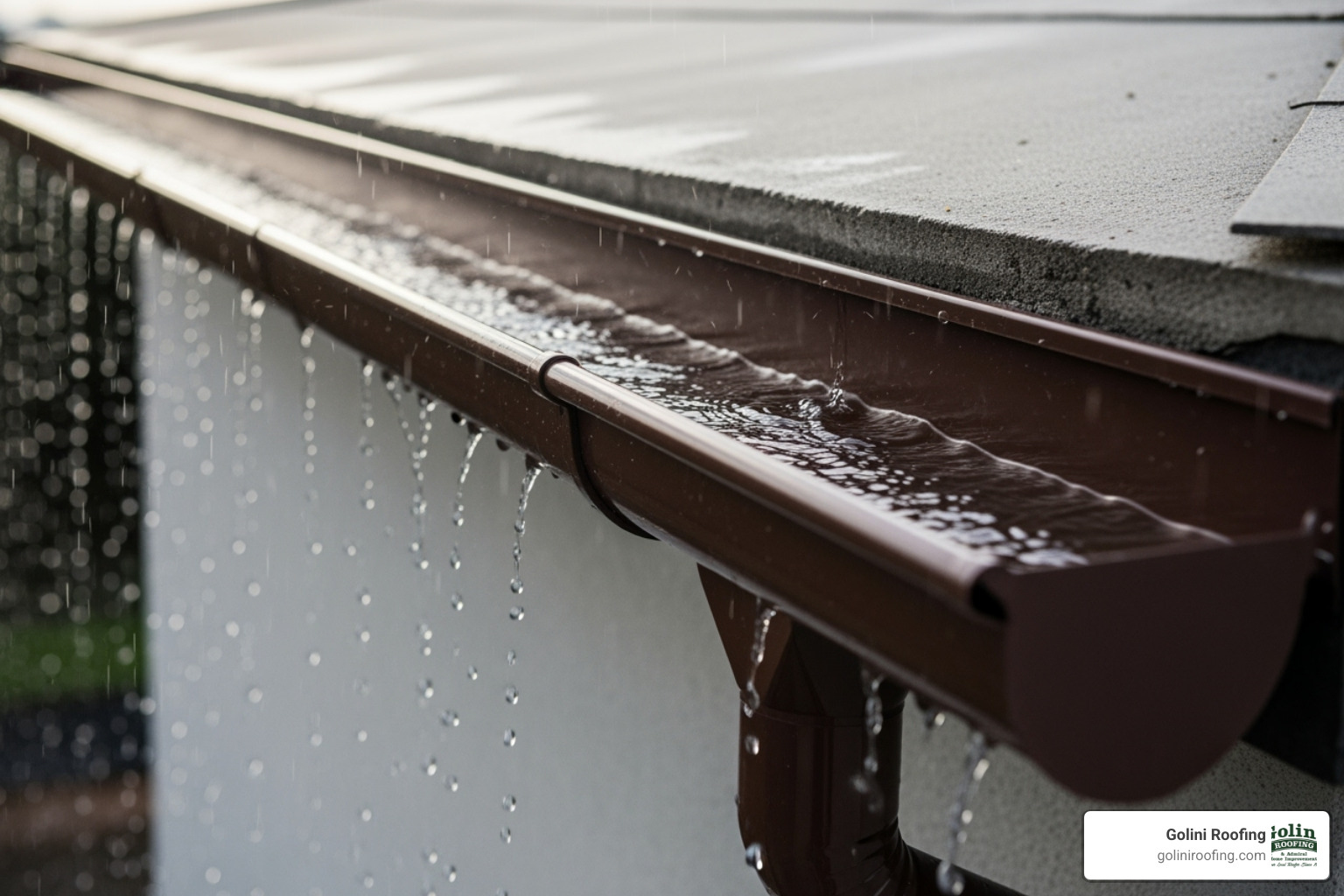
For professional help keeping your gutters in top shape, check out More info about gutter service.
Gutter Guards: Are They Worth It?
For most homeowners, gutter guards are a worthwhile investment. They work on a simple principle: let water in, but keep debris out. This debris prevention leads to reduced cleaning and effective clog prevention.
Common types of gutter guards include:
- Screens & Micro-mesh: Perforated covers that block leaves, pine needles, and other debris.
- Brush & Foam: Inserts that sit inside the gutter, allowing water to flow through while debris rests on top.
- Reverse Curve: Systems that use surface tension to guide water into the gutter while debris falls off the edge.
While no system is 100% maintenance-free, guards can reduce cleaning needs by up to 90%, saving you time and making maintenance safer. If you have existing issues, you might need a gutter repair service.
The Importance of Downspout Extensions
Your rain gutter system collects water, but downspout extensions are what ensure it’s deposited safely away from your home.
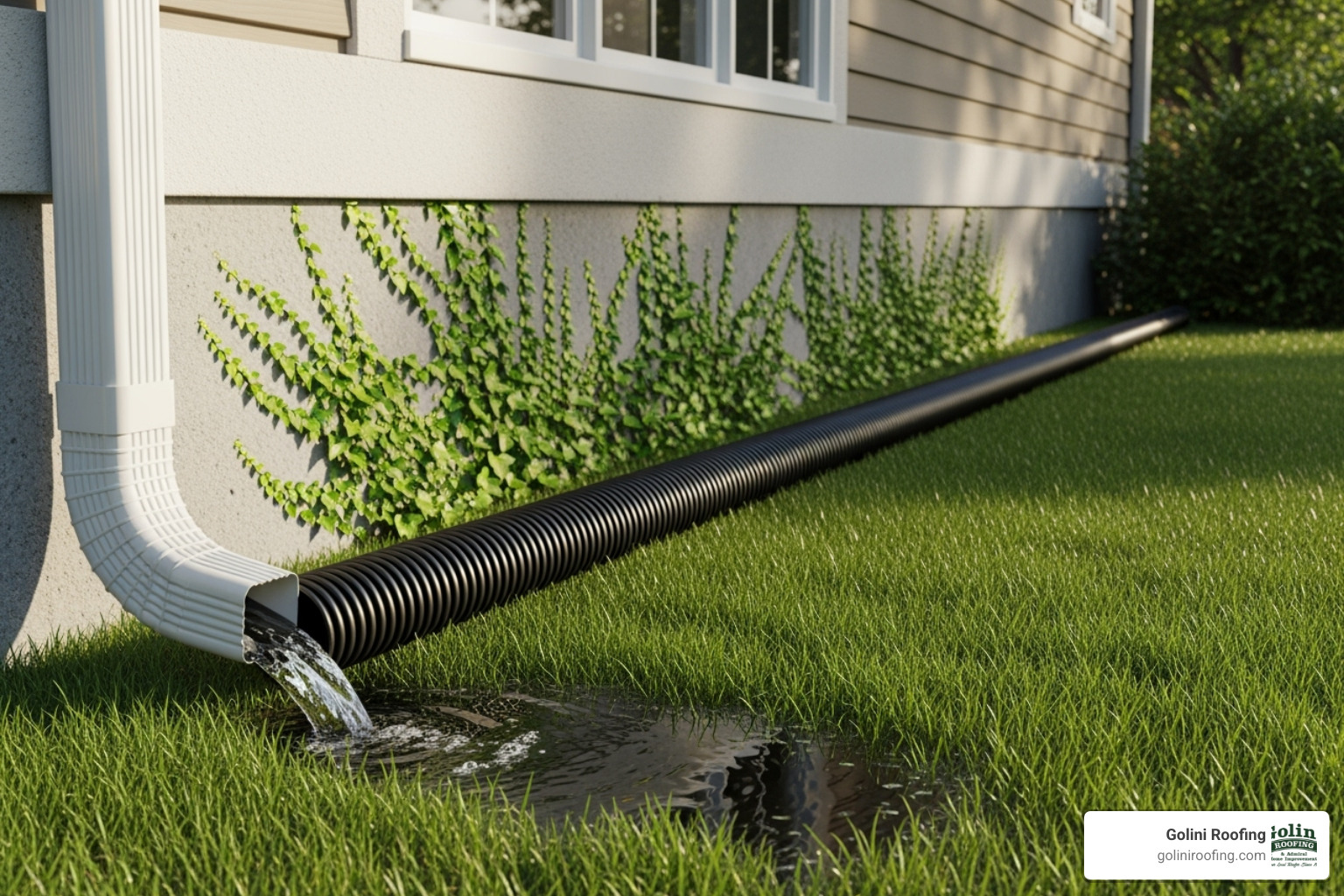
Foundation safety is the primary reason for extensions. They are crucial for water channeling, moving water at least 5-10 feet away from your foundation. This prevents soil saturation, which can lead to cracks, settling, and basement leaks. It’s a simple addition that is vital for preventing soil erosion and protecting your home’s structural integrity. Options range from simple splash blocks to underground drainage systems. For help with your current system, see More info about downspout extension repair.
A Simple Gutter Maintenance Checklist
Regular attention will keep your rain gutter system in excellent condition. Follow this simple checklist:
- Seasonal Cleaning: Clean gutters at least twice a year, in the spring and late fall.
- Debris Removal: Clear all leaves, twigs, and blockages from gutters and downspouts. Flush with a hose to check flow.
- Inspect for Leaks: Look for drips or stains at seams and joints. Seal small leaks promptly.
- Check for Sagging: Ensure gutters have a consistent, gentle slope. Sagging may indicate loose hangers.
- Tighten Fasteners: Check that all hangers and brackets are secure.
This routine will help your gutter system protect your home effectively for years to come.
Frequently Asked Questions about Rain Gutters
Over my decades in the business, certain questions about gutters come up time and again. Here are answers to some of the most common inquiries.
How long do rain gutters typically last?
The lifespan of a rain gutter system depends heavily on the material and maintenance.
- Vinyl gutters are the most affordable and typically last 10-20 years.
- Aluminum and steel gutters are a popular middle ground, offering a 20-30 year lifespan.
- Copper gutters are a premium option that can last 50 years or more with proper care.
Regardless of the material, proper maintenance is absolutely key to reaching the maximum lifespan. Regular cleaning and prompt repairs will help any system last longer.
Can I install gutters myself?
While DIY installation is possible for those with the right tools and experience, it’s a challenging project. It requires precise measurements, proper sloping, and secure attachment to be effective. A small mistake can lead to overflows or standing water.
Professional installation ensures your system is correctly sized, pitched for optimal flow, and built to withstand local weather conditions. For many homeowners, the peace of mind and guaranteed performance outweigh the savings of a DIY project.
Do I need gutters on my entire house?
Not necessarily on every edge, but they are essential in key areas. You absolutely need a rain gutter system on any roof section that slopes down towards your home’s foundation, walkways, patios, or entryways.
The primary goal is to control water runoff to protect your foundation from erosion, prevent basement flooding, and keep siding from being damaged. While you might be able to skip a section that drains into a large, open area far from the house, it’s generally wisest to opt for comprehensive protection for an investment as important as your home.
Conclusion
Your home is your biggest investment, and a rain gutter system is its silent guardian. It serves as the first line of defense against water damage, protecting your foundation, landscaping, and your home’s structural integrity. As we’ve covered, neglecting your gutters can lead to costly repairs from foundation cracks, basement flooding, and rotted siding.
By understanding the different types, materials, and maintenance needs, you are now equipped to make informed decisions to protect your home. Proper installation and care are not just expenses; they are crucial investments in your property’s longevity and value.
For homeowners in Wakefield, MA, and the surrounding communities of Burlington, Lynnfield, North Reading, Reading, Stoneham, Wilmington, and Woburn, you don’t have to manage this alone. At Golini Roofing, we have protected homes like yours for over 35 years. We apply the same meticulous, hand-nailed quality from our roofing work to our gutter installations.
Your home deserves protection that lasts. Our expert rain gutter services are designed to safeguard your home for years to come, giving you peace of mind no matter the weather.
