
The Anatomy of a Roofer’s Job: More Than Just Shingles
A Roofer is a skilled tradesperson who serves as the first line of defense for your home against the weather. The work is physically demanding, often requiring work at heights and in all kinds of conditions to protect your biggest investment.
Their key responsibilities include:
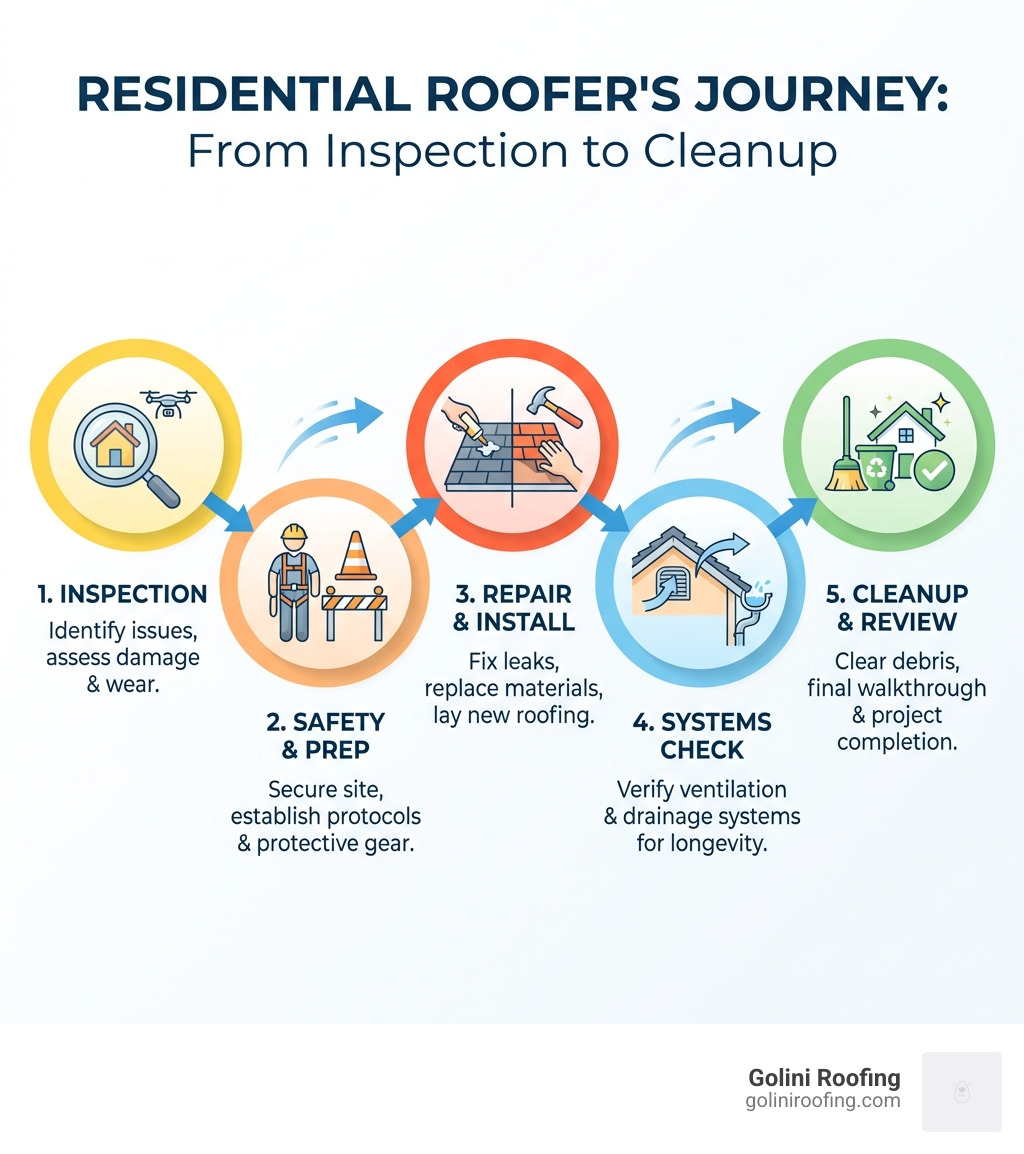
- Inspecting roofs: Identifying damage and potential issues before they become major problems.
- Repairing roofs: Fixing leaks, replacing damaged shingles, and sealing critical areas.
- Installing new roofs: Removing old roofing and installing new materials according to specifications.
- Maintaining roof systems: Ensuring proper ventilation and drainage to extend a roof’s lifespan.
- Ensuring safety: Following strict safety protocols to protect workers and property.
Jack Golini, owner at Golini Roofing, has been a leader in the roofing industry since 1982. As an experienced Roofer near Wakefield, MA, he brings over 35 years of experience to every residential project, ensuring exceptional craftsmanship.
Simple Roofer word guide:
The work of a Roofer is vital, requiring physical strength, technical knowledge, and an eye for detail. This demanding occupation is projected to have steady growth, with thousands of job openings expected each year. While most roofers learn on the job, some enter the profession through apprenticeships.
Signs You Need a Roofer
How do you know when it’s time to call a professional Roofer? Here are tell-tale signs that your roof needs attention:
- Leaking Ceilings or Water Stains: Water marks on your ceiling or walls are the most obvious sign of a roof leak. Even small leaks can lead to significant structural damage and mold, so don’t ignore them.
- Missing Shingles: High winds can tear shingles off, leaving your roof vulnerable to water intrusion. Bare spots are a clear signal for repair.
- Curling or Buckling Shingles: Shingles that are curling or buckling are signs of age or improper installation. They no longer lie flat, which can allow water to seep underneath.
- Granules in Gutters: Asphalt shingles have granules for UV protection. Finding a large amount of these granules in your gutters indicates your roof is nearing the end of its life.
- Roof Age Over 20 Years: Traditional asphalt shingle roofs typically last 20 to 25 years. If your roof is approaching this age, it’s wise to have it inspected, even if you don’t see obvious damage.
If you observe any of these signs, contact a trusted Roofer. Early detection can save you money and headaches. You can learn more on when to get a roof inspection.
Core Roofing Services
A professional Roofer offers specialized services to keep your home’s exterior in top shape. We provide a comprehensive suite of residential roofing solutions to protect your home.
Our core services include:
- Roof Inspections: A professional inspection is the first step. A Roofer examines your roof for damage and wear, identifying small issues before they become costly problems.
- Roof Repair: Roof repair addresses specific problems like leaks or damaged shingles without a full replacement. Our team handles storm damage and wear and tear to restore your roof’s integrity.
- Full Roof Replacement: When repairs aren’t enough, a full replacement is needed. This involves removing old materials, repairing the deck, and installing a new system. It’s a major investment that protects your home and boosts its value.
- New Roof Installation: For new construction, a Roofer provides expert installation of a new roofing system, planned and executed to withstand the local climate.
- Gutter and Downspout Services: Gutters and downspouts are crucial for water management. A Roofer can install, repair, or replace them to divert rainwater away from your foundation, preventing damage.
- Attic Ventilation: Proper attic ventilation is key to roof longevity and energy efficiency. A Roofer can improve your ventilation to regulate temperature, prevent moisture, and extend your roof’s life.
Hiring a professional ensures quality materials, expertise, and safety, saving you time and stress. The process starts with an inspection, followed by a detailed estimate and expert work.
Common Roofing Materials for Homes
Choosing the right roofing material involves balancing aesthetics, durability, and cost. Here are common residential materials we work with, along with their pros and cons:
- Asphalt Shingles: The most popular choice in the U.S. for their versatility and affordability.
- Architectural Shingles (Laminated Shingles):
- Pros: Offer a textured, multi-dimensional look. They are thicker, more durable, and have better wind resistance than 3-tab shingles, with longer warranties (30-50 years).
- Cons: More expensive and heavier than 3-tab shingles, sometimes requiring a stronger roof deck.
- 3-Tab Shingles:
- Pros: The most economical, budget-friendly option. Lightweight and easy to install.
- Cons: Shorter lifespan (15-20 years) and less wind resistance. Their flat appearance can be less appealing.
- Wood Shakes and Shingles: Offer a rustic, natural aesthetic.
- Pros: Eco-friendly with excellent insulation. Durable with proper maintenance, aging beautifully.
- Cons: More expensive and require more maintenance than asphalt. Susceptible to fire, though treatments are available. Lifespan varies with climate and upkeep.
- Slate Tiles: A premium option known for beauty and longevity.
- Pros: Extremely durable (75-150+ years), fire-resistant, and impervious to rot and insects. Offer a timeless, sophisticated look.
- Cons: Very expensive material and specialized installation. Heavy, requiring extra roof support. Brittle and can crack if walked on.
The best material depends on your budget, aesthetic, climate, and home style. We can help you choose the perfect fit. For more details, see our guide to residential roofing types.
Decoding the Estimate: What Goes Into the Cost of Roofing?
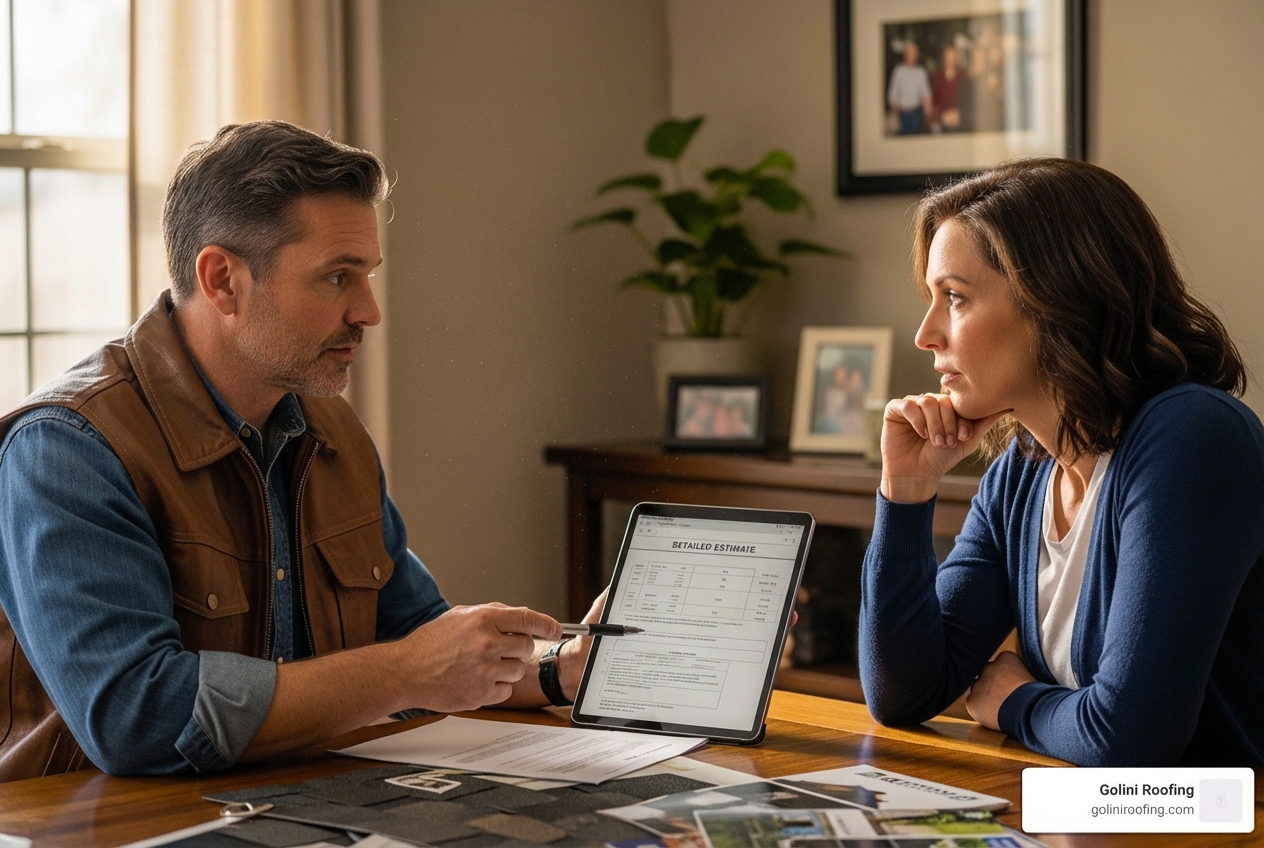
A roofing estimate is more than just a number; it’s a detailed breakdown of the work and materials needed to protect your home. We provide clear, transparent pricing so you understand your investment.
A comprehensive estimate should detail factors such as:
- Roof Size: Larger roofs require more materials and labor.
- Roof Pitch: Steeper roofs require more safety measures and time, increasing labor costs.
- Material Costs: This includes shingles, underlayment, flashing, and other components.
- Labor Costs: This covers wages for the skilled crew.
- Debris Removal: Hauling away old materials and cleaning the worksite.
- Permits: Local permits may be required to ensure code compliance.
- Geographic Location: Costs can vary based on local markets in towns like Wakefield, Burlington, or Lynnfield.
Please note, any prices discussed are general averages and not a quote from Golini Roofing. Costs vary by project. A full roof replacement can range from $10,000 to $30,000 or more, depending on materials and complexity. We always provide a detailed, personalized quote. You can start by getting a free roofing estimate from us.
Factors That Influence Price
Many elements contribute to the final cost of a roofing project beyond just square footage.
- Square Footage: The total area of your roof directly impacts material and labor costs.
- Roof Complexity: A simple roof is less expensive than a complex one with multiple angles, valleys, and dormers. These features require more intricate work, increasing material and labor costs.
- Choice of Materials: The material you choose significantly impacts cost. Asphalt shingles are most affordable, while options like wood shakes or slate are more expensive due to material and installation needs.
- Underlayment Quality: The underlayment is a key waterproofing layer. Upgrading to a higher-quality synthetic or adding an ice and water shield increases cost but provides superior protection.
- Extent of Damage: Repairs for rot, water damage, or structural issues on the roof deck will add to the overall cost. A Roofer will identify these during the inspection.
- Number of Layers: Removing multiple layers of old shingles (a “tear-off”) adds to labor, disposal costs, and project time.
Understanding these factors helps you make informed decisions. We’re happy to explain how each element contributes to your quote. For a more detailed breakdown, explore how much a new roof cost?.
The Value of a Professional Roofer
While a DIY approach or the cheapest bid might seem tempting, the value of a professional Roofer provides long-term savings and peace of mind.
- Expertise vs. DIY: Roofing is complex and dangerous. Professionals have the training, equipment, and experience for safe, efficient work that meets local codes. A DIY error can lead to costly leaks and premature roof failure.
- Long-Term Savings: A professional installation is a long-term investment. A proper job lasts longer, needs fewer repairs, and saves you money on future maintenance and damage.
- Access to Quality Materials: Reputable roofers have access to high-quality materials not always available to consumers and know what works best in your climate.
- Workmanship Warranties: A professional Roofer offers a workmanship warranty, guaranteeing the installation. This protection isn’t available with a DIY project.
- Peace of Mind: Knowing your home is protected by a professional job provides priceless peace of mind.
- Avoiding Cheap Options: The lowest bid isn’t always the best value. Cheap options can mean cut corners, poor materials, and lack of insurance, putting you at risk. Prioritize quality and reputation over price.
Financing Your Project
A new roof is a significant investment, and flexible payment solutions can make it more affordable. While we don’t offer plans directly, homeowners in Wakefield, Reading, Wilmington, and beyond have several options to explore.
Common financing options include:
- Payment Plans: Some roofing companies or third-party lenders offer plans that spread the cost over several months or years.
- Home Improvement Loans: Banks and credit unions offer home improvement loans, often with competitive rates and fixed monthly payments.
- Contractor Financing Options: Many professional roofers partner with financing companies to offer convenient options, sometimes with special promotions.
Exploring these options helps you protect your home without financial strain. A safe roof is essential and should be accessible.
How to Choose the Right Roofer: A Homeowner’s Checklist

Choosing the right Roofer is a critical decision for your home, involving trust, quality, and long-term protection. Here’s a checklist to help you find a reputable contractor in the Burlington, Lynnfield, or Stoneham areas:
- Local Reputation: Look for a Roofer with a strong reputation in your community. Ask for recommendations and check online reviews.
- Years in Business: Longevity often indicates stability and experience. Our founder, Jack Golini, has been in the roofing industry since 1982.
- Customer Testimonials: Pay attention to what past clients say about a contractor’s quality, communication, and professionalism.
- Detailed Contracts: A reputable Roofer provides a clear, comprehensive contract outlining every project detail.
- Communication: A good contractor communicates effectively from the initial estimate to project completion.
Key qualities of a reputable roofer include proven experience, a commitment to quality materials, strong customer service, and proper licensing and insurance.
Verify Credentials and Insurance
Before work begins, verify your chosen Roofer‘s credentials and insurance to protect yourself and the workers.
- State Licensing: Confirm your contractor holds all necessary Massachusetts state and local licenses to operate legally.
- Liability Insurance: Ask for proof of general liability insurance. This protects your property from damage during the project.
- Workers’ Compensation: This is vital. Without it, you could be liable if a worker is injured on your property. Always ask for proof of workers’ compensation insurance.
- Manufacturer Certifications: Certifications from leading manufacturers indicate a Roofer meets high standards for quality and training. These certified contractors can often offer extended manufacturer warranties.
We recommend checking with the Better Business Bureau for any complaints. Choosing local roofers from areas like North Reading, Woburn, or Winchester makes it easier to verify their reputation.
The Importance of a Detailed Contract
Never start work without a signed, detailed contract. It protects you and clarifies expectations for both parties. A thorough contract from your Roofer should include:
- Itemized List of Materials: Specify the brand, type, and color of all materials.
- Scope of Work: A clear description of all work, including tear-off, deck repairs, installation, and cleanup.
- Payment Schedule: Outline the total cost, down payment, and payment milestones. Never pay the full amount upfront.
- Project Timeline: An estimated start and completion date.
- Cleanup Procedures: Detail how debris will be managed and removed.
- Warranty Details: Clearly state both material and workmanship warranties.
A clear contract prevents misunderstandings and protects your interests.
Warranties and Guarantees Explained
A reputable Roofer backs their work with warranties. Understanding them is key to your long-term peace of mind.
- Manufacturer Warranty: This covers materials against manufacturing defects. Terms vary by product, but some improved warranties are only available through certified contractors.
- Workmanship Warranty: This is the Roofer‘s guarantee on the installation itself against issues like leaks from faulty work. A good contractor will offer a warranty of at least 5-10 years.
- Transferable Warranties: Some warranties are transferable to a new owner if you sell your property, which can be a significant selling point.
Always read the fine print of any warranty to understand what is covered, what voids it, and how to file a claim. A strong warranty package is a hallmark of a reliable Roofer.
Safety First: Ensuring a Secure Worksite on Your Property
Roofing has inherent risks, so a professional Roofer prioritizes safety. A secure worksite protects the crew, your family, and your home.
- Fall Protection Systems: To prevent falls, a leading cause of injury, professional crews use fall protection like safety harnesses, lifelines, and guardrails.
- Ladder Safety: Ladders are inspected, secured, and used on stable, level surfaces.
- Proper Training: All workers should be trained in safety hazards, safe work practices, personal protective equipment (PPE) use, and emergency procedures.
- Site Preparation: A responsible Roofer secures the work area by marking off zones, protecting landscaping, and clearing pathways for debris.
- Homeowner Liability: While your Roofer is insured, you can help by keeping children and pets away from the work area and ensuring clear access for the crew.
We adhere to rigorous safety standards, including those set by OSHA, to protect our workers and your property. You can find more details on OSHA guidelines for protecting roofing workers.
Here are some homeowner preparations for a safe roof replacement:
- Clear the driveway and garage access.
- Move vehicles away from the house.
- Remove fragile items from walls and shelves inside.
- Cover or remove patio furniture and grills.
- Trim trees and shrubs that may obstruct access.
- Keep children and pets indoors and away from the work area.
- Inform your Roofer of any underground sprinkler systems.
Frequently Asked Questions About Hiring a Roofer
What are the most common residential roofing problems?
Common roofing problems often stem from age, weather, and poor installation. The most frequent issues we encounter include:
- Leaks: These can come from damaged flashing, cracked shingles, or bad underlayment. Even small leaks can cause major damage and mold if ignored.
- Storm Damage: High winds, hail, and heavy rain can damage a roof. It’s wise to get a professional inspection after a major storm.
- Poor Installation: Installation shortcuts like improper shingle alignment or inadequate fastening can shorten your roof’s lifespan.
- Lack of Maintenance: Neglecting inspections and minor repairs allows small issues to become major. Debris, moss, or algae can cause premature deterioration.
- Aging: Roofs have a finite lifespan. Aging shingles become brittle, lose granules, and are less effective at protecting your home.
Prompt roof repair services can prevent small problems from becoming costly disasters.
How long does a typical roof replacement take?
A typical residential roof replacement on an average-sized home takes 1 to 3 days. Several factors influence this timeline:
- Weather Conditions: Clear, dry weather is essential for roofing work.
- Roof Complexity: A simple roof is quicker to replace than one with many dormers, valleys, and hips.
- Roof Size: Larger roofs require more time.
- Number of Layers: Removing multiple old shingle layers adds time to the project.
- Crew Size: A larger crew can often complete the work more quickly.
Our priority is always quality and safety. We provide a clear timeline in your project quote. You can learn more about the average roof replacement time.
Can I put new shingles over old ones?
While sometimes possible, we generally do not recommend roofing over old shingles (an “overlay”). This practice has several drawbacks:
- Hiding Underlying Damage: It prevents the Roofer from inspecting the roof deck for rot or damage. Covering up problems leads to more severe and costly repairs later.
- Reduced Lifespan: An overlay adds weight and can trap moisture, shortening shingle lifespan. New shingles may not lay flat, making them vulnerable to wind.
- Compromised Aesthetics: The old, uneven surface can show through, creating a bumpy, unappealing finish.
- Invalidated Warranties: Manufacturers may void warranties if shingles are installed over an existing layer.
A complete tear-off allows for a full inspection and repair of the roof deck. This ensures a flat surface for new shingles, leading to a longer-lasting, more reliable roof and providing better value.
Conclusion: Partnering with a Pro for Peace of Mind
A Roofer‘s craft is vital for protecting your home and providing peace of mind. We’ve covered the services they offer, factors influencing cost, and the qualities that define a reputable contractor.
Your roof is your home’s primary defense. Investing in a professional Roofer is an investment in your property’s longevity, safety, and value. The benefits include superior craftsmanship, quality materials, strong warranties, and the assurance that your home is in capable hands.
At Golini Roofing, we exemplify this dedication to quality. For homeowners in the Wakefield, MA area and surrounding communities like Lynnfield, North Reading, and Reading, we bring decades of experience and a commitment to excellence. Our unique selling point, the meticulous hand-nailing of each shingle, is a hallmark of our dedication to durable, high-quality roofs. Choosing a professional contractor is an investment in your home’s future, providing lasting protection and peace of mind.
To learn more about how we can protect your home, please visit our page on residential roofing services.