
Why Asphalt Shingle Repair Is Worth Doing Before It’s Too Late
Asphalt shingle repair is one of the most common — and most manageable — home maintenance tasks you’ll face as a homeowner.
Here’s a quick overview of what the repair process involves:
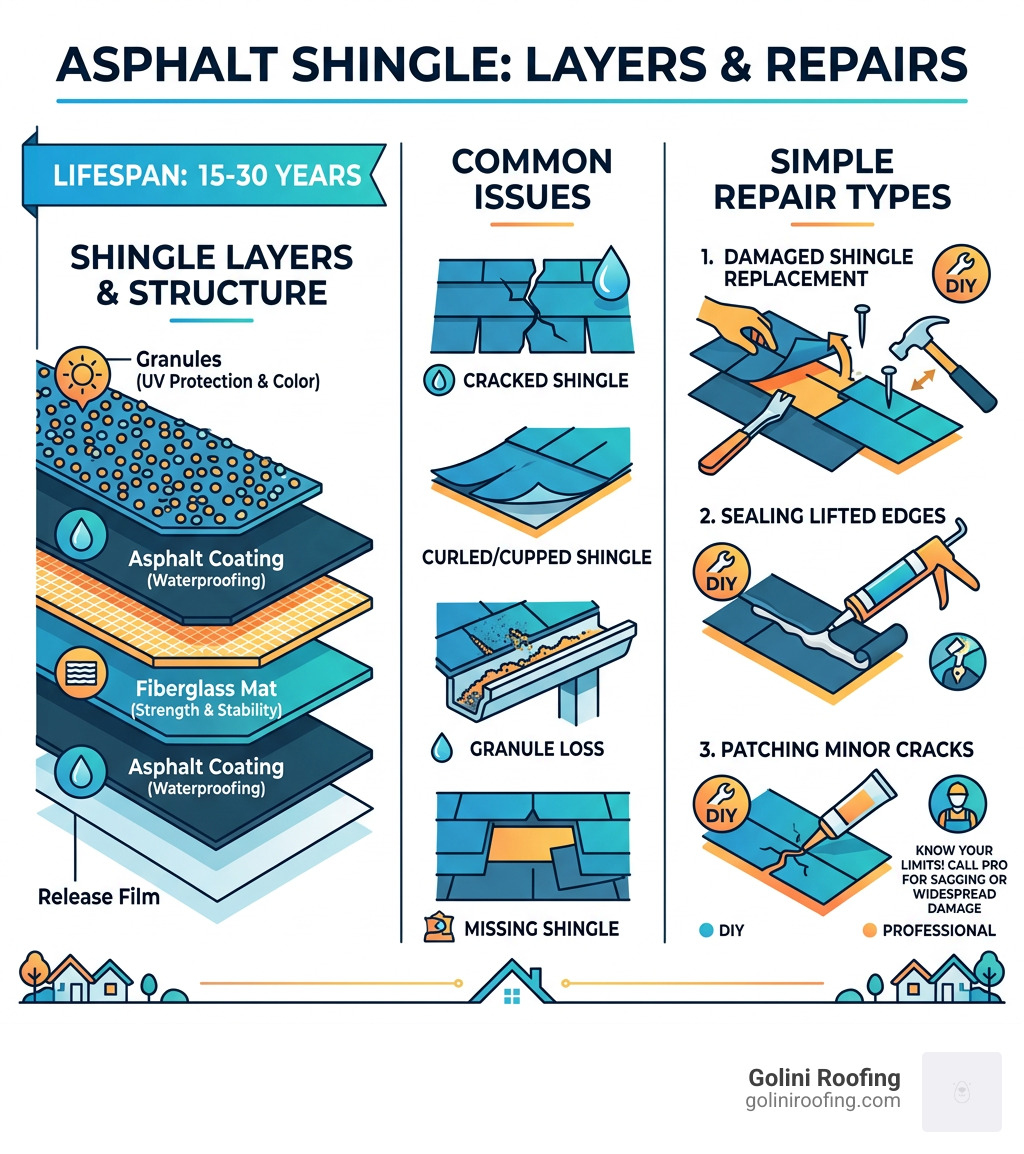
- Identify the damage — Look for curled edges, cracks, missing shingles, or granules collecting in your gutters
- Gather your tools — You’ll need a flat pry bar, roofing hammer, roofing cement, nails, and replacement shingles
- Remove the damaged shingle — Lift surrounding shingles, pull the nails, and slide out the old piece
- Install the new shingle — Slide it in, nail it down, and seal all edges with roofing cement
- Know your limits — Call a pro if you see sagging, widespread damage, or leaks that keep coming back
Asphalt shingles are the most popular roofing material in the region — and for good reason. They’re affordable, durable, and designed to last anywhere from 15 to 30 years. But even a well-installed roof takes a beating over time from UV rays, ice, wind, and New England’s relentless seasonal swings.
The problem? A small crack or a single lifted shingle might not look serious. But left alone, it can let water creep under the roof deck, rot your sheathing, and turn a $50 repair into a $5,000 problem.
The good news: many common shingle repairs are genuinely DIY-friendly with the right guidance.
With decades of hands-on experience in asphalt shingle repair since 1982 — from simple single-shingle fixes to full storm-damage restorations across the North Shore — our team of experts will walk you through exactly what to do, step by step.
Asphalt shingle repair further reading:
Identifying Damage and Essential Tools
Before you climb that ladder, you need to know what you’re looking for. Roofs that are 10 years or older are particularly prone to drying, cracking, and discoloration. In towns like Reading or Stoneham, where the winter winds can be fierce, shingles often take a beating that isn’t visible from the driveway.
Common Signs You Need Asphalt Shingle Repair
The first step is a visual inspection. You don’t always need to get on the roof for this; a good pair of binoculars can save you a trip up the ladder. Keep an eye out for:
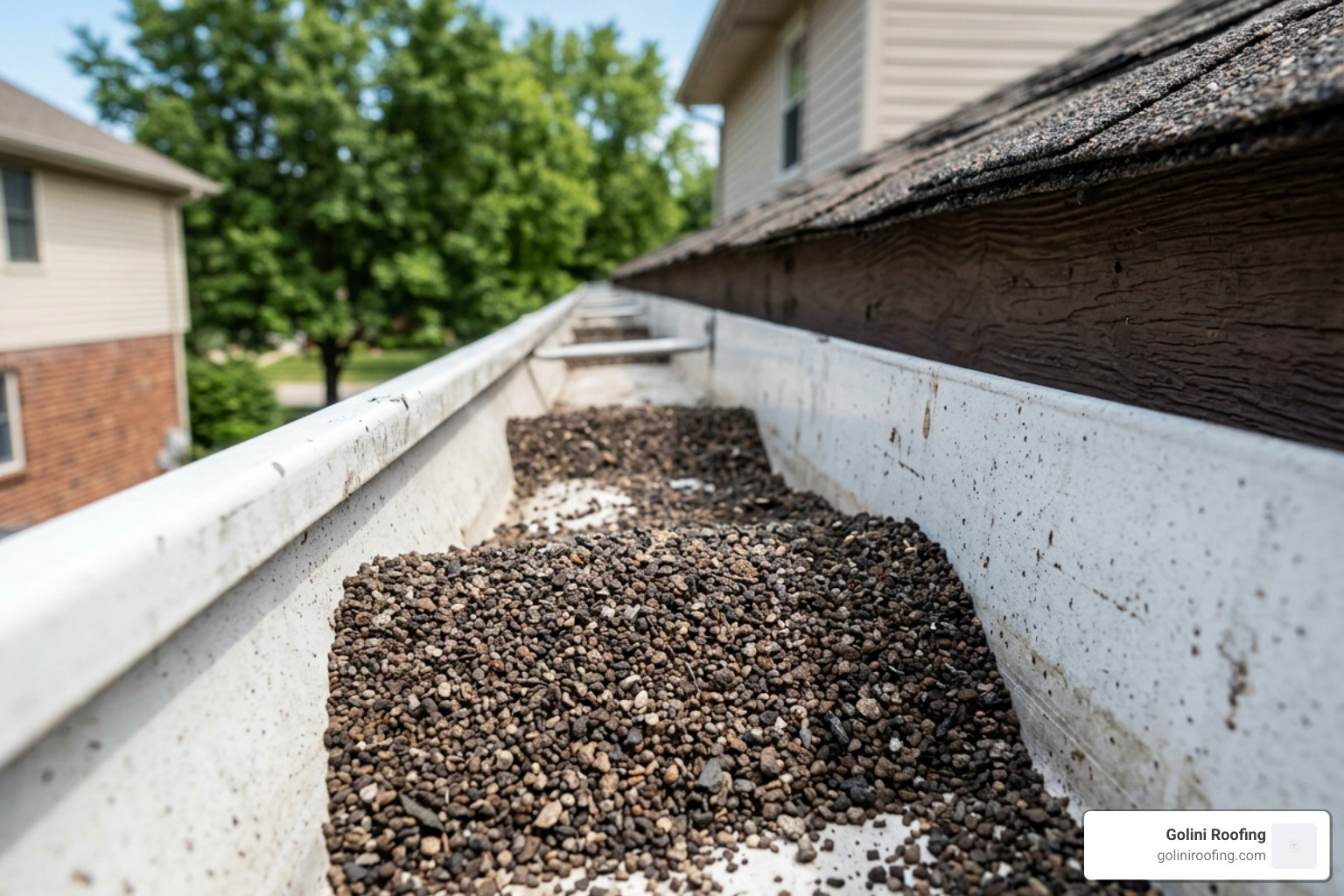
- Granule Loss: Check your gutters. If they look like they’re filled with coffee grounds, those are shingle granules. These granules protect the asphalt from UV rays; without them, the shingle becomes brittle and fails.
- Curled or Cupped Edges: This usually happens due to aging or poor attic ventilation. When the edges turn up, wind can easily catch them and rip them off.
- Cracked Surfaces: Thermal expansion and contraction cause shingles to crack over time. A cracked shingle is essentially an open door for water.
- Bald Spots: Areas where the granules have completely worn away, leaving the dark asphalt mat exposed.
For a deeper dive into what these signs mean, check out our Broken Roof Shingles Ultimate Guide. Even small signs on your roof can signal a need for immediate intervention before the next Nor’easter hits.
The Essential Repair Toolkit
You can’t perform a proper asphalt shingle repair with just a standard household hammer. We recommend having these specific tools ready:
- Flat Pry Bar: Essential for lifting shingles and pulling nails without tearing the surrounding material.
- Roofing Hammer: Designed specifically for driving roofing nails and often includes a shingle-cutting blade.
- Utility Knife: For trimming shingles to fit perfectly.
- Roofing Cement: Your primary sealant for cracks and nail heads.
- Galvanized Roofing Nails: Use 1 1/4 inch nails for most standard repairs.
- Replacement Shingles: Try to match the brand and color of your existing roof.
- Putty Knife: To spread the roofing cement evenly.
Don’t forget safety gear. A sturdy extension ladder, rubber-soled shoes for grip, and a roof harness (if the pitch is steep) are non-negotiable. If you’re unsure about the process, our guide on Asphalt Shingle Roof Repair provides more context on tool selection.
Step-by-Step Guide: How to Perform Asphalt Shingle Repair
Timing is everything. We always tell our clients in Lynnfield and Wilmington to wait for a clear, warm day. Why? Asphalt shingles are made of bitumen, which becomes brittle in the cold. If you try to lift a cold shingle, it will likely snap. A warm day makes the shingles pliable and helps the roofing cement cure properly.
Preparation and Inspection
Start by clearing any debris like leaves or branches. Inspect the underlayment (the material beneath the shingles). If the wood underneath feels soft or looks rotted, a simple shingle swap won’t fix the underlying structural issue. For more on the basics, see our guide on how to Fix Roof Shingles.
Repairing Curled or Cracked Shingles
If a shingle is just curled or has a small tear, you might not need to replace the whole thing.
- Clean the Area: Use a brush to remove dirt from under the curl or crack.
- Apply Cement: Use your putty knife to spread a generous amount of roofing cement under the damaged area.
- Press and Secure: Press the shingle down firmly. For stubborn curls, you can tack the corners down with a roofing nail, then cover the nail head with more cement.
- The “Weight” Trick: Some DIYers use a brick to hold the shingle flat for 24 hours while the sealant sets.
- Granule Camouflage: If you have a visible smear of black cement, grab some loose granules from your gutter and sprinkle them over the wet cement. It blends the repair right in!
For more tips on these quick fixes, read Dont Let Damaged Shingles Get You Down Easy Fixes for Your Roof.
Replacing Damaged or Missing Shingles
When a shingle is missing or too damaged to save, follow these steps:
- Break the Seal: Use your flat pry bar to gently slide under the shingle above the damaged one. You need to break the adhesive seal to reach the nails.
- Remove Nails: There are usually four nails per shingle. You’ll need to remove the nails from the damaged shingle and the ones in the shingle directly above it (which pass through the top of the damaged one).
- Slide Out the Old Shingle: Once the nails are out, the damaged shingle should slide right out.
- Align the New Shingle: Slide the new shingle (perhaps a high-quality asphalt shingle) into the gap. Make sure it aligns with the shingles on either side.
- Nail it Down: We are known for our hand-nailing technique. While many use nail guns, hand-nailing ensures the nail is driven straight and to the correct depth every time. Drive nails just above the sealant strip.
- Seal the Tabs: Apply a small dab of roofing cement under each tab of the new shingle to ensure it stays down during high winds.
Learn more about this process in our Roof Rescue Replace Missing Shingles Like a Pro article.
Fixing Roof Flashing and Seals
Flashing is the metal material found around chimneys, vents, and in roof valleys. It’s the most common place for leaks to start.
- Inspect Step Flashing: These are the “L” shaped metal pieces along walls. If they are rusted or pulling away, they need to be resealed with roofing cement or replaced.
- Check Vent Boots: The rubber seal around pipe vents often cracks after 10 years. You can often buy a “collar” to slide over the old one, but replacing the whole boot is a more permanent fix.
- Seal Chimneys: Ensure the mortar and the flashing around your chimney are intact.
For a comprehensive look at these components, refer to our Shingle Repair Services Complete Guide
Professional vs. DIY: Safety and Complexity
We love a handy homeowner, but roofing is dangerous. Every year, thousands of people are injured in ladder-related accidents. In areas like Winchester or Woburn, where many homes have steep Victorian-style roofs, the “DIY” factor drops significantly.
When to Call a Pro
| Feature | DIY Appropriate | Professional Needed |
|---|---|---|
| Roof Pitch | Low/Flat (e.g., Garage) | Steep/Multi-story |
| Damage Scope | 1-5 Shingles | Widespread/Entire Slope |
| Structural | None | Sagging or Soft Spots |
| Leaks | Single, localized | Multiple or Mystery Leaks |
| Safety | Comfortable on ladders | Fear of heights/No harness |
If you see structural sagging, it means the roof decking is rotting. This is a major safety hazard and requires professional intervention. Furthermore, if you’re dealing with The Real Cost of Repairing Your Shingle Roof, you might find that a professional’s warranty and speed are worth the investment.
The average cost of a professional roof inspection is about $225, typically ranging from $100 to $300. This is a small price to pay for peace of mind before a big winter storm.
Frequently Asked Questions
How much does asphalt shingle repair cost?
Based on internet data, the average cost for minor asphalt shingle repair ranges from $150 to $1,800 or more. Why the wide range? A simple fix on a ranch-style house in North Reading is much cheaper than a complex repair on a three-story home in Wakefield with a steep pitch and custom architectural shingles.
Factors that influence cost include:
- Roof Size and Pitch: Steeper roofs require more safety equipment and labor time.
- Accessibility: If the roofer can’t get a truck near the house, labor costs go up.
- Material Type: Standard 3-tab shingles are cheaper than premium architectural shingles.
For a better understanding of your budget, read Dont Get Nailed How Much to Budget for Missing Shingle Repair.
When is an asphalt shingle repair not enough?
If your roof is over 20 years old and you’re seeing widespread granule loss or multiple leaks, repairs are just a bandage on a larger problem. Roofing Shingles eventually reach a point of “total failure” where the cost of repeated repairs exceeds the cost of a new roof. If you see light peeking through the attic or water stains on multiple ceilings, it’s time for a replacement.
How long do asphalt shingles typically last?
Lifespan depends heavily on the type of shingle:
- 3-Tab Shingles: Usually come with a 25 or 30-year manufacturer warranty but often last 15-20 years in the harsh New England climate.
- Architectural Shingles: These are thicker and more durable, often carrying 30, 40, 50-year, or even lifetime warranties. They can realistically last 25-30 years with proper maintenance.
Quality of installation is the biggest factor. A shingle is only as good as the nail holding it down!
Conclusion
Taking care of your roof doesn’t have to be a daunting task. By staying on top of minor asphalt shingle repair needs, you can easily extend the life of your roof by a decade or more. Whether it’s clearing your gutters, trimming overhanging tree branches to prevent moss, or replacing a few wind-blown shingles, your efforts today prevent massive headaches tomorrow.
Our team has spent over 35 years serving our neighbors in Wakefield, Burlington, Stoneham, and beyond. We believe in the old-school way of doing things — like our signature hand-nailing technique that ensures every shingle is secured with precision. We treat every roof as if it were our own, focusing on the details that other local roofing companies might overlook.
If you’ve looked at your roof and realized the job is a bit bigger than a DIY weekend project, we’re here to help. From minor repairs to full residential replacements, our team brings decades of expertise to every job site.
For more info about roof repairs or to schedule a professional assessment, reach out to us today. Let’s make sure your home stays dry and protected for many years to come!
