
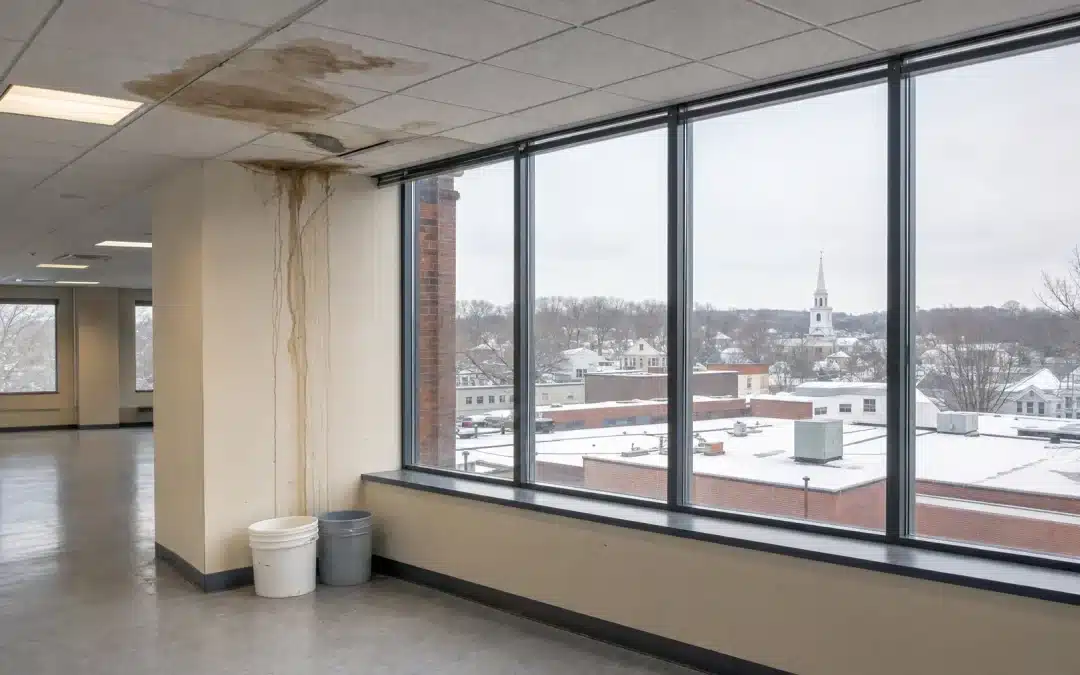
When you notice dripping or a ceiling stain in your commercial building, useful information for a roofer starts with what you can safely observe: where it is, when you noticed it, what has changed and any relevant context. You do not need to locate the source or decide which repair is needed.
Keep observed facts separate from suspected causes. An interior stain alone does not establish that the roof has failed. A concise report can help a professional understand the concern while leaving the diagnosis open.
Put safety before documentation
Stay out of the affected area if water, damaged or sagging ceiling materials, or nearby electrical equipment create a safety concern. Keep others away and notify the person responsible for building safety. If there is immediate danger, seek emergency assistance rather than trying to finish a report.
Note Limit this report to observations available from a safe interior position. Do not climb onto the roof, open the ceiling, touch wet electrical equipment or disturb damaged materials. Leave any detail you cannot safely observe marked “unknown.”
Report the location and immediate concern before completing the paperwork. Provide additional observations afterward if they are safely available; do not postpone seeking help to fill in missing details.
Describe the interior location clearly
Use the room or department name, floor level and fixed landmarks to describe the affected area. Note whether the visible change is on the ceiling, a wall or another surface. A doorway, window or permanent column is a clearer reference than movable furniture.
If several areas are affected, describe each separately and match photographs to those descriptions. Do not assume that separate stains share a source or that the roof entry point is directly above the visible interior damage.
Record what you see and when you noticed it
- Visible observations: Describe the stain, dripping or other visible change you noticed from a safe position.
- First observation: Record when the condition was first noticed, using “approximate” or “unknown” where needed.
- Latest observation: Describe what you saw at that time, keeping it separate from earlier observations.
- Changes and recurrence: Note any changes or previous occurrences you know about. Distinguish your own observations from information reported by someone else.
Add context without declaring a cause
Include weather you observed around the time the problem appeared, such as rain or snowmelt. If you know about recent building work or rooftop-equipment work, identify the work and any available records. Do not go onto the roof to gather this information.
A timing relationship is context, not proof. Report that dripping was noticed during rain rather than concluding that rain entered through a particular roof detail. Likewise, recent equipment work is worth mentioning without assigning blame.
Photographs to include, if safely available
If it is safe, take a view that shows the affected area within the room and a closer view that shows the visible condition. Do not move beneath damaged ceiling materials or use a ladder to get a better image. If a photograph cannot be obtained safely, leave it out.
Label each image with its interior location and when it was taken. Keep older photographs and reports clearly identified as historical records so they are not mistaken for the current condition. If an image’s timing is unknown, mark it as unknown.
Use this compact interior leak report
Copy these fields into an email or building incident record. Fill in what you know, use “unknown” where appropriate and avoid delaying contact while searching for missing details.
- Building and interior location: Address, room or department, floor level, affected surface and fixed landmarks.
- Observation timing: Date and approximate time first noticed; when the latest observation was made; whether the issue has occurred before.
- Observed condition: What is visible now, what has changed and who made each observation.
- Safety concerns: Any water near electrical equipment, damaged ceiling materials or affected areas being avoided.
- Relevant context: Observed weather, known recent work and any suspected connection clearly labeled as unconfirmed.
- Attachments: Safely obtained current photographs, separately labeled older images and relevant prior reports already available.
- Contact person: Name and contact details for someone who can answer questions about the observations.
Hand off the observations, not a diagnosis
Send your report and available attachments with a request for professional assessment. Present your observations as observations, label any suspected cause as unconfirmed and ask what further information is needed. Leave diagnosis and repair recommendations to the professional.
Golini Roofing offers roofing solutions for commercial properties. Learn more about Golini Roofing and its commercial roofing services when preparing to discuss a possible roofing-related concern.
Keep the incident report, attachments and subsequent professional findings with your existing building file. For the separate task of planning ongoing roof care, see the commercial roof repair and maintenance guide. The immediate purpose of this report is narrower: communicate the current concern clearly and safely.