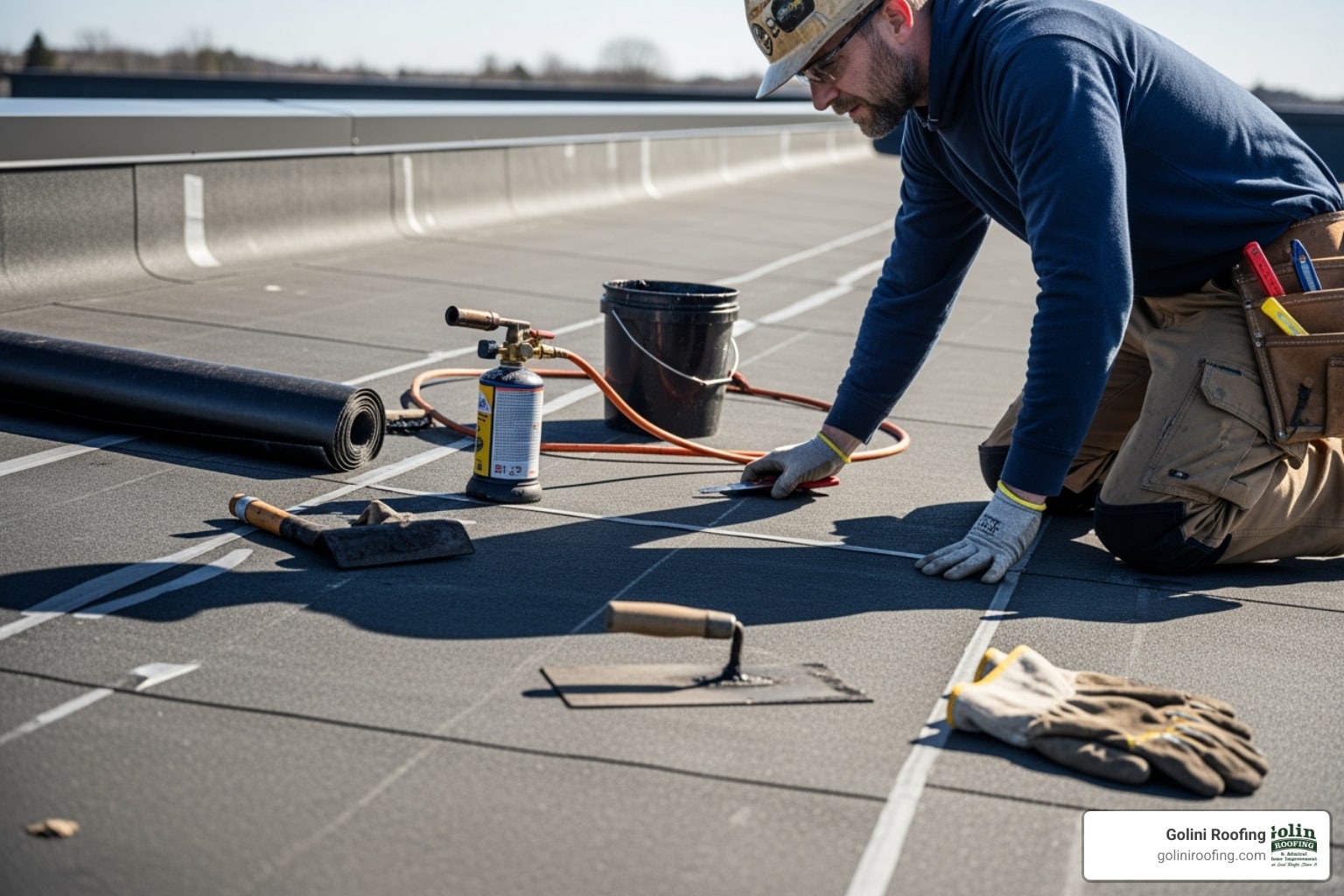
Flat Roof Repair: 3 Simple Steps to Fix Leaks
Why Flat Roof Repair Matters for Homeowners
Flat roof repair is essential for protecting your home from water damage and extending your roof’s life. Here’s what you need to know:
Quick Guide to Flat Roof Repair:
- Locate the leak – Measure interior water stains from two walls, then translate those measurements to the roof exterior.
- Prepare the surface – Clean, dry, and scrape away damaged material.
- Small repairs – Apply roofing cement, embed fiberglass mesh, and cover with more cement.
- Larger repairs – Cut away the damaged membrane and apply two patches with roofing cement between layers.
- Call a professional – For widespread damage, recurring leaks, or ponding water issues.
Water stains on the ceiling or cracks in your roof membrane are common problems. Fortunately, many small flat roof repairs are manageable DIY projects.
While flat roofs offer usable space and lower installation costs, they are prone to ponding water, which accelerates wear. Exposure to UV rays and temperature extremes can also cause cracking and blistering. A typical flat roof lasts 15 to 30 years, but minor issues can appear sooner without proper maintenance.
Catching problems early saves money and prevents major headaches. This guide covers identifying, assessing, and repairing common flat roof issues, from the tools you’ll need to knowing when to call a professional.
I’m Jack Golini, owner of Golini Roofing, and I’ve been working on roofs across the North Shore area since 1982. Over 35 years of experience has taught me that proper flat roof repair techniques and knowing your limitations are key to protecting your home and avoiding costly mistakes.
Before You Begin: Safety, Tools, and Leak Detection
Before starting your repair, proper preparation and safety are paramount. Working on a roof, even a flat one, requires caution.
Safety First—Always
I can’t stress this enough: only work on your roof during dry, sunny weather. A wet or windy roof is a serious hazard.
- Ensure your ladder extends at least three feet above the roofline and is on level ground. Have someone hold it for you.
- Wear non-slip, closed-toe shoes with good tread.
- Be mindful of the roof edge. A fall prevention harness is a wise investment if you’re working near the perimeter.
- If you feel uncomfortable at any point, call a professional. Recognizing your limits is the smartest decision you can make.
Gathering Your Tools and Materials
Having everything ready makes the job smoother. For most basic flat roof repairs, you’ll need a utility knife, a trowel or putty knife, and a caulking gun. For cleaning, have a stiff-bristled broom. Your repair materials will include roofing cement, elastomeric sealant, fiberglass mesh, and a membrane patch material that matches your roof. Don’t forget safety gear like gloves and safety glasses.
For more information about materials used on residential flat roofs, check out our guide on residential flat roof details.
Playing Detective: Finding That Elusive Leak
Water can travel far from the entry point before showing up as a ceiling stain. Your mission is to trace it back to the source.
- Start inside by measuring the water stain’s distance from two nearby walls.
- Go to the roof and use those measurements to find the approximate area above the stain.
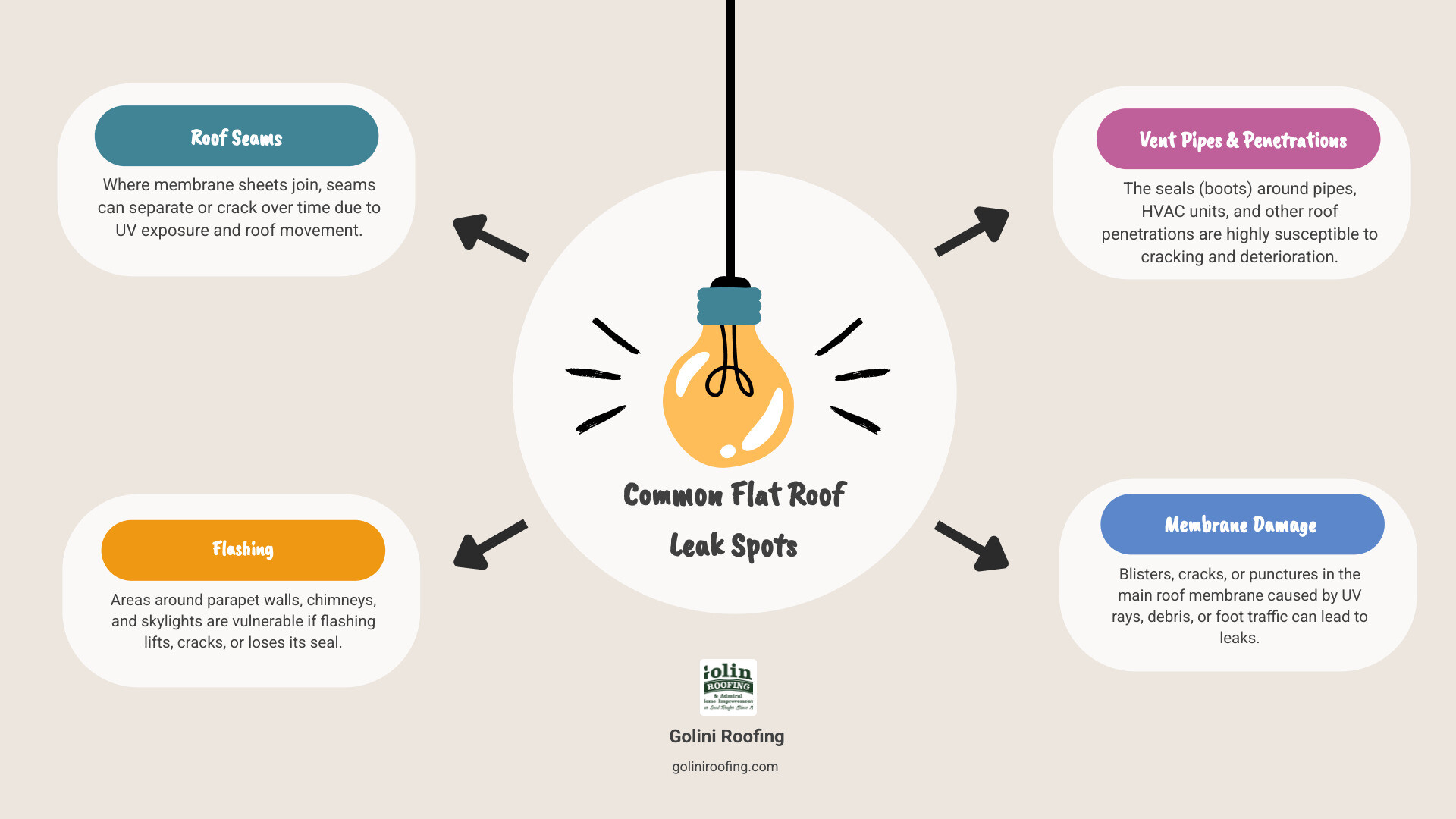
- Check all penetrations first. Leaks often originate where objects pierce the roof. Vent pipes are common culprits; the rubber boot around them degrades over time. You can find replacement vent pipe boots at home improvement stores.
- Inspect skylights for loose flashing or cracked gaskets. Flashing—the material sealing where the roof meets a wall or chimney—is another frequent leak source.
- If you don’t find damage directly above the stain, search upslope. Water flows downhill, so the entry point may be higher up.
While you’re there, look for other signs of wear like peeling edges, blisters, or cracked seams. Fixing them now prevents future leaks.
Your Step-by-Step Guide to DIY Flat Roof Repair
Once you’ve found the leak and have your tools, it’s time to begin. Successful flat roof repair requires patience and precision.
Preparing the Repair Area:
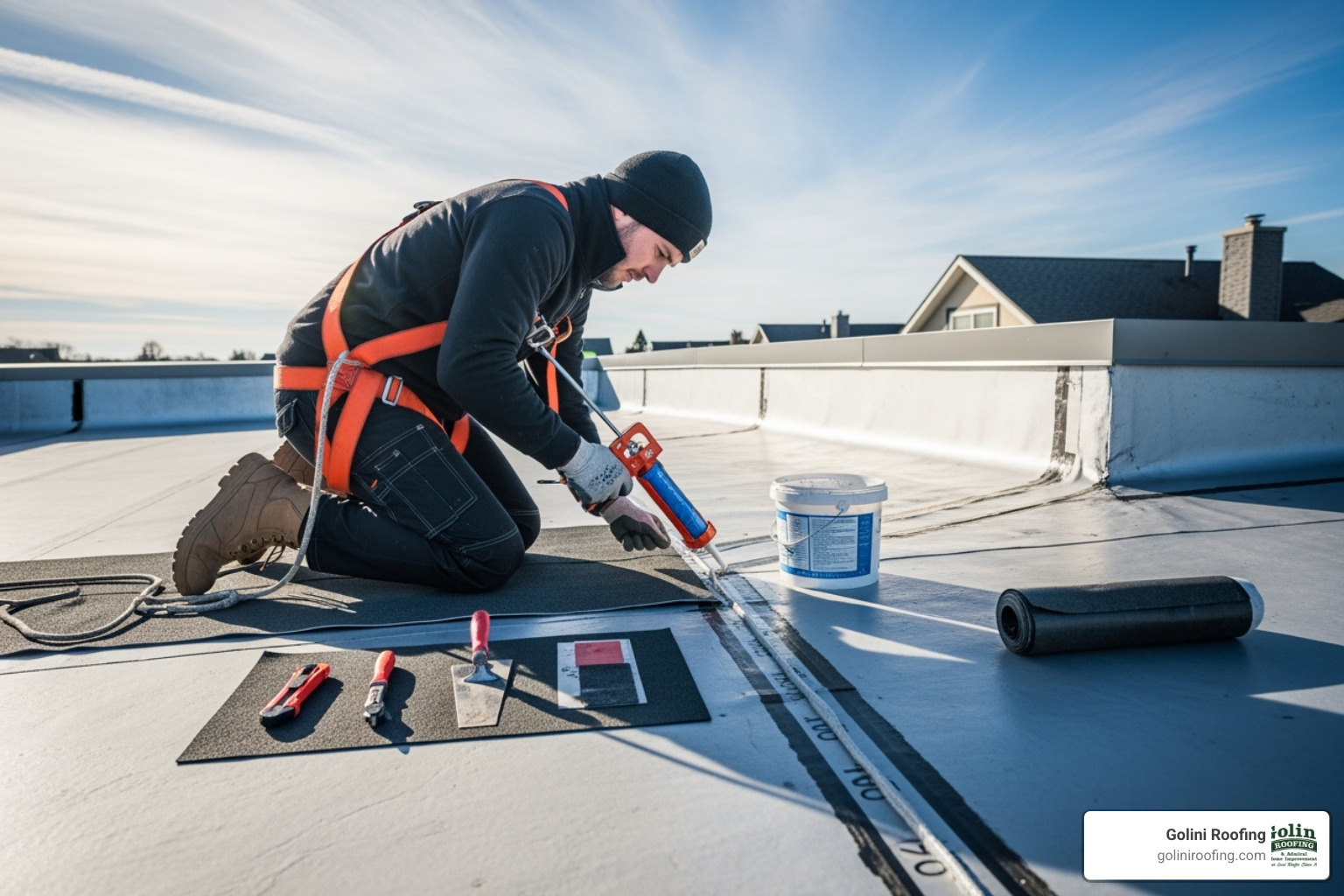
Proper preparation is essential; skipping it is the top reason DIY repairs fail. First, sweep the area to remove all dirt and debris. Next, ensure the surface is completely dry, as trapped moisture will cause the patch to fail. Finally, use a trowel to scrape off any loose gravel or old cement, and carefully cut away any soft or spongy membrane with a utility knife.
How to Patch Small Cracks or Holes
Addressing small issues quickly prevents them from becoming large, expensive problems.
- If you find blisters, cut them open in an X pattern and trim the lifted membrane.
- Spread a 1/8-inch thick layer of roofing cement over the damaged area, extending it at least 6 inches beyond the damage.
- Cut a piece of fiberglass mesh slightly smaller than the cemented area and press it firmly into the wet cement, removing air bubbles.
- Cover the mesh with a second, 1/2-inch thick layer of roofing cement, smoothing it with your trowel. If your roof has gravel, sprinkle some over the patch to protect it from UV rays.
For minor cracks along roof edges, a quality exterior caulk can be an effective fix on a clean, dry surface.
How to Patch a Larger Membrane Leak
For significant damage, a two-patch method provides extra durability.
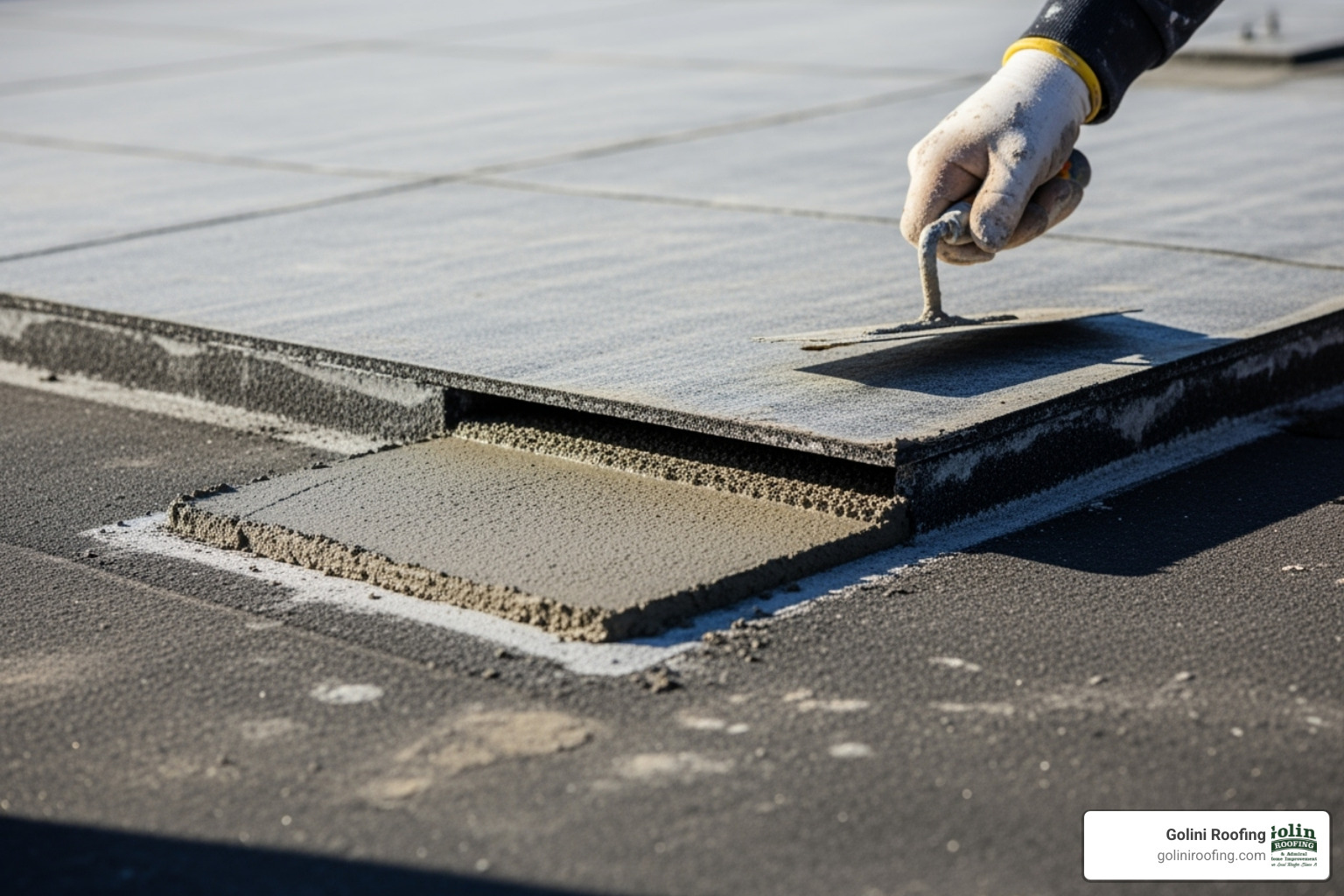
- Cut away all damaged membrane with clean, straight cuts.
- Apply roofing cement into the exposed area and under the edges of the surrounding membrane.
- Cut a membrane patch slightly larger than the hole and press it firmly into the cement.
- Spread another layer of cement over the first patch.
- Apply a second, larger patch (at least 6 inches wider) over the first, pressing firmly.
- Apply a final layer of roofing cement over the second patch, ensuring all edges are sealed. Press gravel into the wet cement for UV protection.
Temporary Fixes for Emergencies
Sometimes you need a quick fix until a permanent repair is possible. For small holes, a liberal application of roofing sealant or caulk can temporarily stop water. For larger damage, a heavy-duty tarp can be secured over the area. Weight it down securely, but be careful not to create new punctures.
These are strictly temporary solutions. Plan for a proper repair as soon as possible. For more details, you can learn about roof leak repair for flat roofs.
Understanding Your Roof: Materials, Lifespan, and Costs
Knowing your flat roofing material is crucial, as it dictates the best repair methods and its expected lifespan. The material on your roof directly affects how you approach flat roof repair.
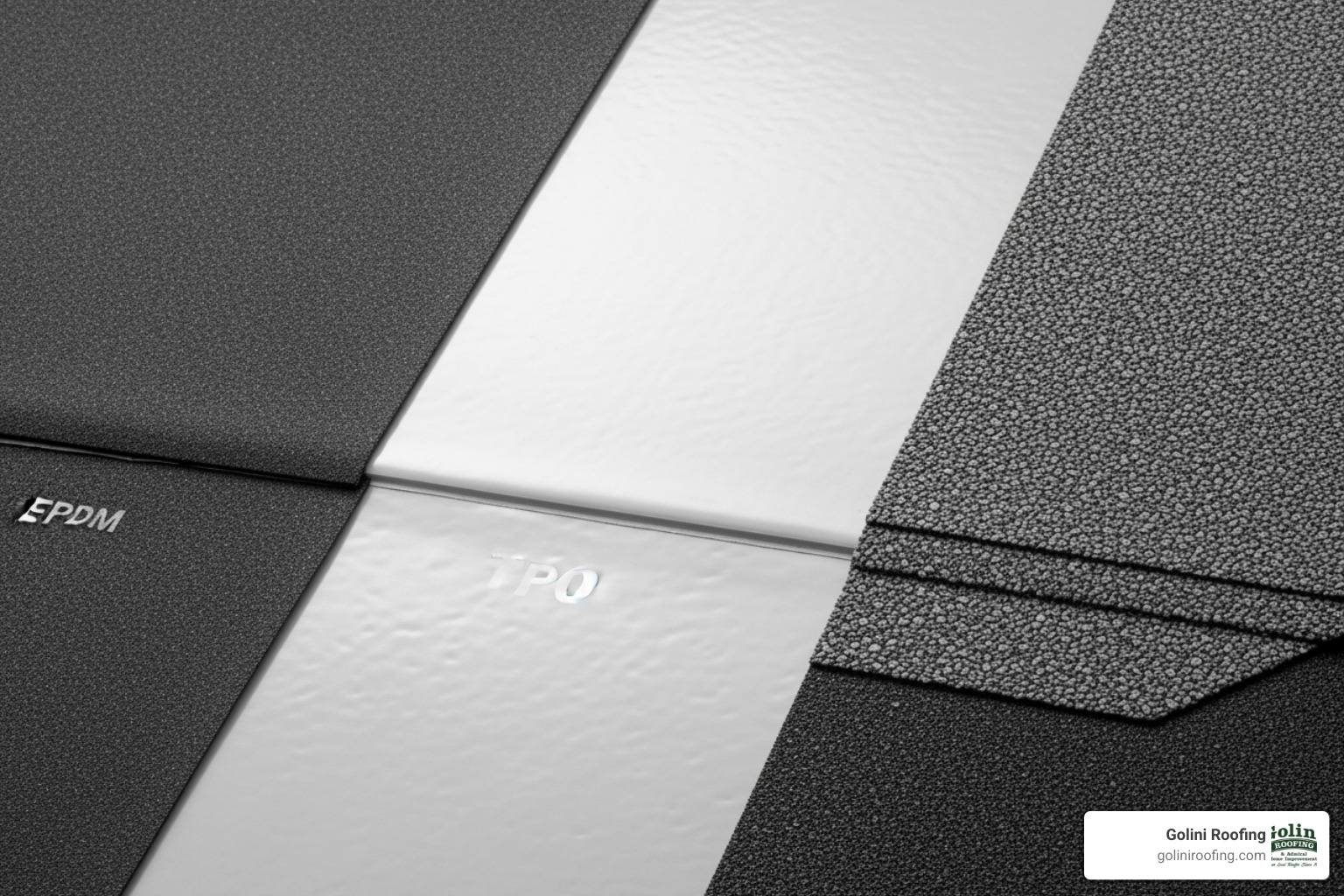
Common Flat Roof Materials and Lifespan
Flat roofs generally have a shorter lifespan than sloped roofs due to issues like pooling water and UV exposure. However, modern materials can last 15 to 30 years with proper installation and maintenance.
- EPDM (Rubber Roofing): A durable, flexible rubber membrane similar to a tire. It handles temperature swings well and resists UV radiation. EPDM roofs typically last 15 to 25 years, with seams being the most common failure point.
- TPO (Thermoplastic Polyolefin): A popular single-ply membrane known for its energy efficiency, often in white or light colors. Its heat-welded seams create a very strong, watertight bond. A quality TPO roof can last up to 20 years or more.
- Modified Bitumen (Mod-Bit): An asphalt-based material improved with rubber polymers for flexibility. It’s installed in multiple layers, creating a robust system with excellent water and wind resistance. It’s one of the most durable options, often lasting 15 to 30 years.
In New England’s demanding climate, with heavy snow, ice dams, and strong winds, TPO and Modified Bitumen are excellent choices. Their flexibility and strong construction stand up well to our region’s weather extremes.
For more information on these materials, check out our guide on residential flat roof details.
Cost Considerations for Flat Roof Repair and Replacement
The cost of flat roof repair varies based on damage, material, and whether you do it yourself or hire a professional.
A small DIY patch might cost under a hundred dollars in supplies. However, professional help can be more economical for larger jobs, avoiding costly mistakes and ensuring a long-term solution.
Based on industry averages, flat roof replacement can range from $250 to $350 per square (100 sq. ft.), though total project costs vary. Modified Bitumen roofs typically cost $4 to $9 per square foot installed, while TPO can range from $4 to $12 per square foot. Individual repairs can run from a few hundred dollars to several thousand for extensive damage.
Factors influencing price include roof size, material type, extent of damage, and accessibility. If your roof is nearing the end of its lifespan (15+ years), has widespread damage, or needs repairs costing over 50% of a replacement, a full replacement is often the smarter long-term investment.
To better understand costs, explore our Flat Roof Repair Cost Guide and our Flat Roof Replacement guide.
When to Call a Professional for Flat Roof Repair
While DIY projects are empowering, there’s wisdom in knowing when a repair is beyond your skill level. A misdiagnosed problem can lead to more expensive fixes down the road.
Signs You Need an Expert:
- Large tears or widespread damage across the roof.
- Recurring leaks despite previous DIY repairs, indicating a deeper issue.
- Significant ponding water that remains 48 hours after rain.
- Soft or spongy spots underfoot, which suggest rotting insulation or decking.
- Damaged flashing around chimneys, skylights, or walls, as these are complex areas to seal properly.
- Widespread signs of aging, like cracking or blistering across large sections of the roof.
Choosing a Reputable Contractor:
When it’s time for professional help, choosing the right team is crucial. Start by asking for local recommendations. Always verify credentials, ensuring the contractor is licensed and insured in Massachusetts. Read online reviews, get written estimates from multiple contractors, and ask for references. Trust your gut and choose a professional you feel comfortable with.
For help finding a professional in areas like Beverly, Boxford, or Ipswich, explore our guide on how to find a qualified flat roofer.
Why Professional Repair Matters
Hiring a pro is an investment in a lasting solution. Key benefits include:
- Workmanship warranties that cover both materials and labor.
- Access to specialized tools and professional-grade materials not available to homeowners.
- Experience to diagnose the root cause of a leak, not just the symptoms.
- Ensured code compliance with local building regulations.
- Proper integration with your existing low slope residential roofing system.
The Dangers of Ponding Water
Ponding water is a flat roof’s worst enemy, causing serious structural threats. It’s often caused by improper drainage, structural settling, or clogged drains. Constant standing water puts immense stress on the roofing membrane, leading to premature aging, blistering, and leaks. It also encourages algae and moss growth, which further degrades the material.
Fixing ponding water is a job for a professional. It requires addressing the underlying drainage problem, which may involve modifying the roof’s slope or installing tapered insulation systems—complex solutions that demand an expert assessment.
Frequently Asked Questions about Flat Roof Repair
After 35 years in the business, we’ve heard just about every question. Here are some of the most common ones we address:
How long does a DIY flat roof repair last?
The honest answer is: it depends. The longevity of a DIY repair is influenced by several factors:
- Material Quality: High-quality roofing cement and patch materials will always last longer.
- Application Quality: A thorough, careful application on a clean, dry surface is critical for a lasting patch.
- Underlying Roof Condition: If the rest of the roof is old and failing, a patch is only a temporary fix before another leak appears.
In reality, a well-executed DIY patch might last for several years, but it’s often a temporary solution. For a multi-year repair you can count on, professional expertise is usually required.
Can I use a reflective coating to stop a leak?
This is a common misconception. Reflective coatings are designed to extend your roof’s life and improve energy efficiency, not to fix active leaks. They protect the membrane from UV rays and can significantly reduce surface temperatures.
However, a coating is not a primary leak fix. Applying a coating over an existing hole or crack might slow a leak temporarily, but it won’t seal it. Think of it like painting over a hole in a wall—you must patch the hole first. All existing damage must be properly repaired and sealed before a reflective coating is applied.
What are the most common causes of flat roof leaks?
Understanding the common causes helps you spot problems early. Flat roofs face unique challenges that lead to leaks:
- Ponding Water: Standing water puts relentless stress on the membrane and exploits any weakness.
- UV Ray Damage: Sun exposure degrades roofing materials over time, making them brittle and prone to cracking.
- Cracked Seams: The joints where membrane sheets meet are vulnerable spots where adhesives can fail.
- Blisters and Bubbles: Trapped moisture or air can cause the membrane to lift and eventually rupture.
- Damaged Flashing: We estimate that half of all flat roof leaks originate from failed flashing around chimneys, skylights, and walls.
- Failing Vent Pipe Boots: The seals around vent pipes deteriorate from sun exposure, creating an easy entry point for water.
- Age and Wear: All roofing materials have a lifespan and will eventually wear out from continuous exposure to the elements.
Conclusion: Protecting Your Home with Proper Repair
Caring for your flat roof is an investment in protecting your entire home. We’ve covered how to find leaks, perform repairs, and know when to call in the experts.
Safety should always be your first priority. Never work on a wet roof, and ensure your ladder is stable. For small DIY repairs, a homeowner with the right tools and patience can often tackle the job, preventing a small issue from becoming a disaster.
However, knowing your limits is crucial. For extensive damage, recurring leaks, ponding water, or structural issues, it’s time to call a professional. Some jobs require the specialized knowledge and tools that only experienced contractors can provide.
Regular maintenance and timely repairs are your best defense against costly water damage. A small crack fixed today prevents a major headache tomorrow.
Here at Golini Roofing, we’ve been serving homeowners across the North Shore area for over 35 years—from Beverly and Boxford to Burlington, Lynnfield, North Reading, Reading, Stoneham, Wakefield, Wilmington, Winchester, and Woburn. We understand the unique challenges that Massachusetts weather throws at flat roofs. Our commitment to meticulous craftsmanship means we treat every flat roof repair project with the utmost attention to detail.
Whether you’ve successfully tackled a DIY repair or you’re ready for a professional assessment, we’re here to help. For a durable, professional solution to your roofing needs, explore our roof repair services. Your home deserves a roof that protects it for years to come.
Like us on Facebook!