
Roof leak repair flat roof: Ultimate Easy 2025 Fix
Why Flat Roof Leaks Demand Immediate Attention
Roof leak repair flat roof issues can quickly escalate from a minor drip to major property damage. Unlike sloped roofs, flat roofs are prone to water pooling, making prompt action essential to prevent membrane failure. A quick fix involves locating the leak, cleaning the area, applying roofing cement, installing a patch, and sealing it to cure.
However, you should call a professional for:
- Multiple leak sources
- Structural damage or sagging
- Specialized materials like TPO or PVC
- Safety concerns
Common leak sources include failed seams, damaged flashing, ponding water, and UV-degraded membranes. While a DIY fix might cost $400-$600, professional service calls often start at $750 or more but prevent recurring leaks and costlier damage.
As Jack Golini, owner of Golini Roofing, I’ve addressed roof leak repair flat roof challenges in Massachusetts since 1982. My experience has shown that proper diagnosis and understanding your roof’s material are crucial for lasting solutions that protect your investment.
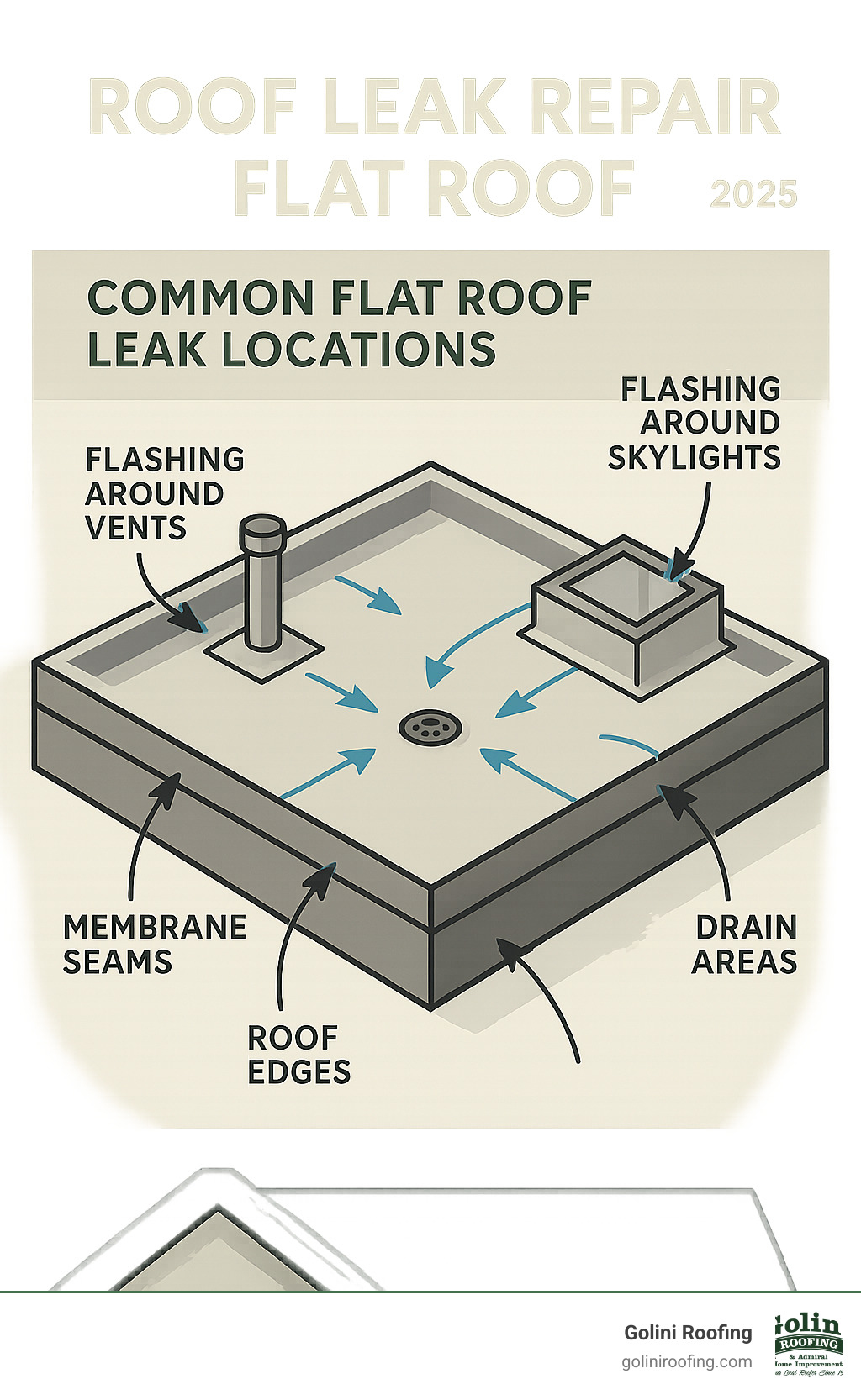
Quick look at roof leak repair flat roof:
First, Pinpoint the Leak: Diagnosis and Inspection
Finding the source of a roof leak repair flat roof problem can be tricky. Water on a flat roof can travel far from the entry point before dripping into your home. A methodical approach is key to tracking down the culprit.
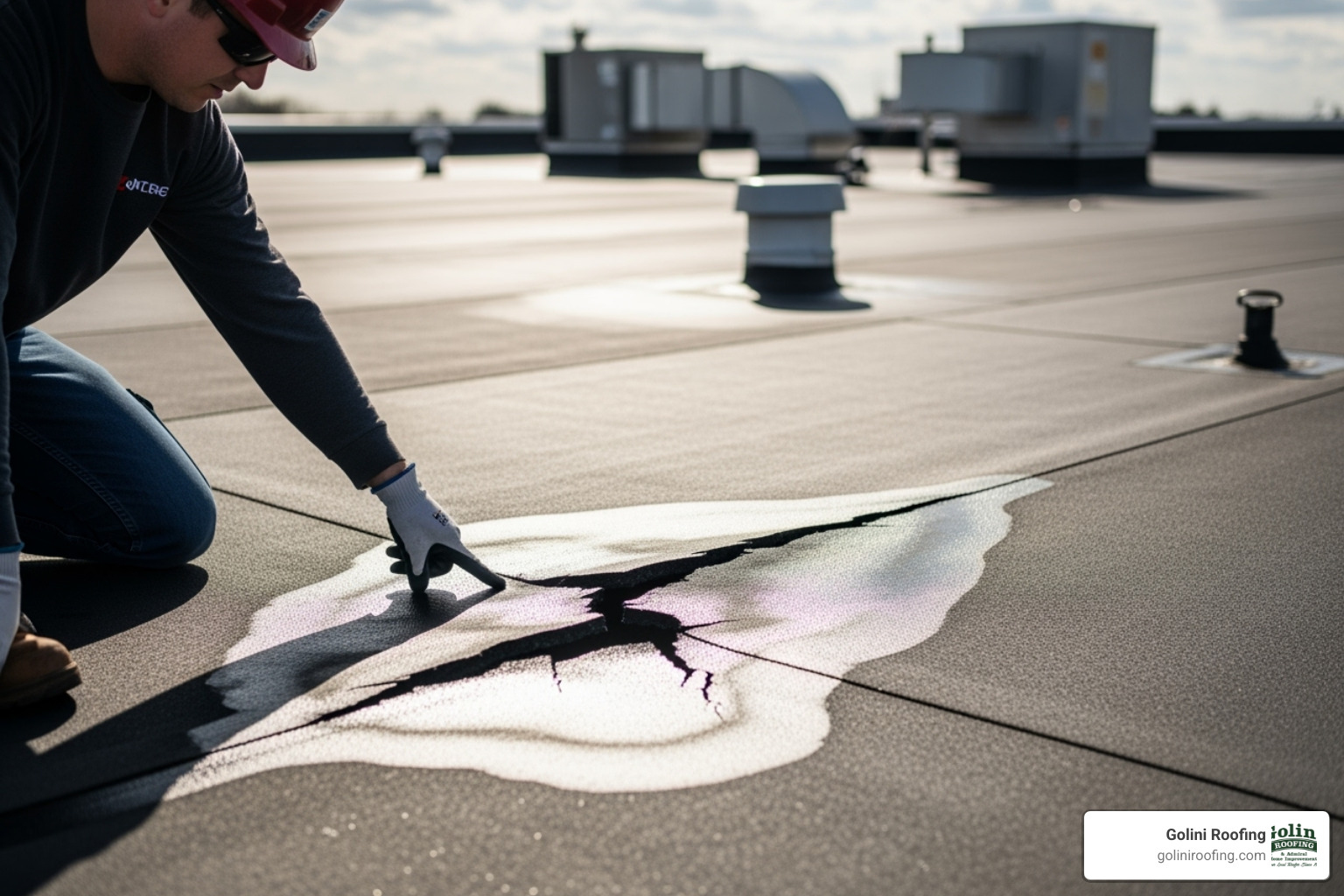
Telltale Signs of a Leaking Flat Roof
Your home provides clues when something is wrong. Look for these signs:
- Interior Signs: The most obvious clues are water stains on ceilings and walls. You might also see peeling paint, bulging drywall, or notice a persistent musty smell, which can indicate hidden mold growth.
- Exterior Signs: On the roof, ponding water that remains for more than 48 hours after rain is a major red flag. Also, look for blisters or bubbles in the membrane, visible cracks or tears, and damaged flashing around vents, skylights, and chimneys.
How to Accurately Locate the Source
Once you’ve spotted signs, it’s time to find the entry point. Start by measuring the location of the interior stain and transferring those measurements to the roof’s exterior. This gives you a general area to inspect.
The hose test method is highly effective. With a helper inside, soak sections of the roof with a garden hose, starting from the lowest point near the suspected leak and working your way up. Your helper can signal you when a drip appears, helping you zero in on the source.
Pay special attention to penetrations like vents, pipes, skylights, and chimneys, as the seals around them are common failure points. Also, ensure drains and scuppers are clear of debris, as clogs can cause water to back up and infiltrate the roof system.
Common Culprits: Why Your Flat Roof is Leaking
Understanding the cause helps prevent future issues. Here are common problems I’ve seen in my 35+ years of roofing in Massachusetts:
- Ponding Water: The number one enemy of flat roofs, standing water constantly stresses the membrane.
- Material Deterioration: UV rays and weather break down materials over time. EPDM may show issues in 8 years, while TPO can last 20.
- Punctures and Failed Seams: Damage from foot traffic, debris, or failed seam adhesives creates direct paths for water.
- Poor Installation: Improperly installed flashing or insufficient slope can cause problems years later.
- Weather Extremes: Heavy snow can stress the roofing structure, and freeze-thaw cycles can widen small cracks.
A thorough diagnosis is the first step to a successful roof leak repair flat roof project. Taking the time to find the true source will save you from repeat repairs.
Your Guide to DIY Flat Roof Leak Repair
For a small, isolated leak, a DIY roof leak repair flat roof project can be a manageable solution. It’s an effective way to stop a drip and buy you time. However, safety must be your top priority. If you’re uncomfortable with heights or if the roof is wet, call a professional.
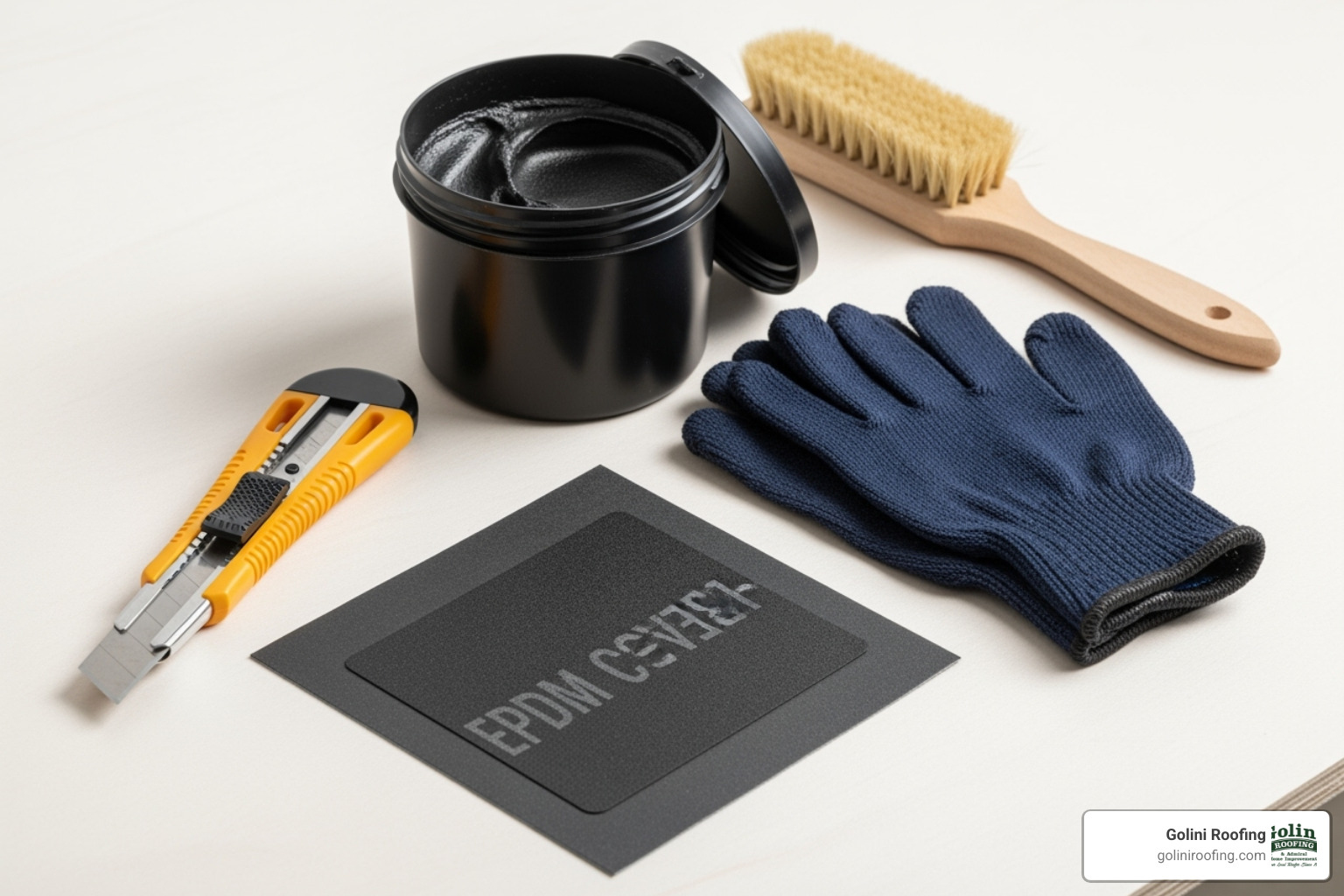
Essential Tools and Materials for the Job
Gather your supplies before you start. You’ll need:
- Safety Gear: Sturdy boots, gloves, and safety glasses.
- Cleaning Supplies: A stiff brush, rags, and a cleaner appropriate for your roof type.
- Tools: A utility knife, putty knife or trowel, and a measuring tape.
- Repair Materials: High-quality sealant or roofing cement compatible with your roof, and reinforcement material like a matching membrane patch or fiberglass mesh.
Step-by-Step: How to Perform a Basic roof leak repair flat roof
A lasting repair depends on proper preparation. Follow these steps carefully:
- Prepare the Surface: This is the most critical step. Sweep the area clean of all dirt and debris. The surface must be completely dry for the sealant to adhere properly.
- Address Damage: Carefully cut open any blisters with a utility knife and trim away loose, damaged material. Scrape away old, failing cement.
- Apply First Sealant Layer: Spread a generous layer of roofing cement over the prepared area, extending it at least 6 inches beyond the damage.
- Embed Reinforcement: Place your membrane patch or fiberglass mesh onto the wet sealant. Press it down firmly, smoothing out any wrinkles or air bubbles.
- Apply Top Coat: Cover the reinforcement with a second layer of sealant, feathering the edges to blend with the roof surface.
- Cure: Allow the patch to dry completely according to the manufacturer’s instructions. Avoid walking on the repair during this time.
A Note on Different Flat Roof Materials
The right repair method depends on your roof type. If you’re unsure, it’s best to consult a professional.
- EPDM (Rubber): Requires specific cleaners, primers, and patches for proper adhesion.
- TPO & PVC: These thermoplastic roofs are best repaired by a professional using specialized heat-welding equipment to ensure a watertight bond.
- Modified Bitumen: Small repairs can be done with asphalt-based cement, but larger areas may require professional torch application.
- Built-Up Roofs (BUR): Repairs involve applying layers of asphalt cement and felt, a process often best left to experts.
For more on different roof types, see our guide on residential flat roof details.
DIY vs. Professional Roof Leak Repair Flat Roof: When to Call for Help
While a DIY approach can work for minor issues, knowing when to call a professional for a roof leak repair flat roof project can save you money and prevent future damage. The decision depends on the scope and complexity of the problem.
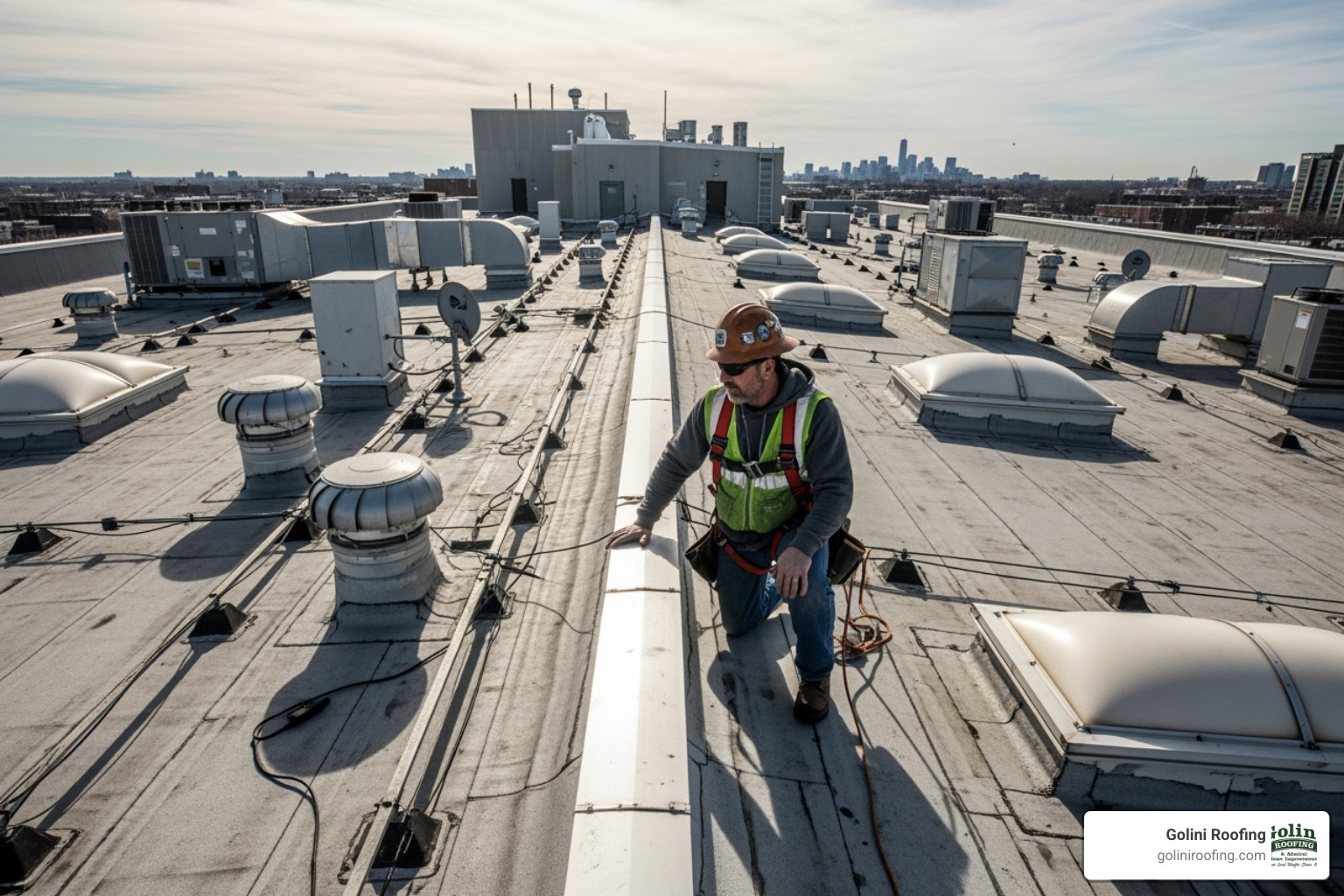
Assessing the Damage: Is DIY a Viable Option?
- Good for DIY: A small, single puncture or minor crack in an easily accessible, safe area.
- Call a Professional: Large tears, multiple leak sources, structural sagging, or widespread material deterioration. Any leak near electrical wiring or a recurring leak also requires an expert.
The Benefits of Hiring a Professional Roofer
Hiring a professional offers significant advantages:
- Expertise: Professionals understand the nuances of all roofing materials (EPDM, TPO, PVC, etc.) and the correct repair methods for each.
- Specialized Tools: We use advanced equipment like moisture meters and heat-welders for TPO/PVC roofs to ensure a durable, seamless repair.
- Safety and Efficiency: Trained roofers follow strict safety protocols and can often complete complex repairs in a fraction of the time it would take a DIYer.
- Guaranteed Workmanship: Reputable contractors provide a warranty, giving you peace of mind that the repair is done right.
For reliable solutions, explore our Flat Roofing Repair services.
Understanding the Cost of Professional roof leak repair flat roof
Cost is a key factor in the DIY vs. pro decision. Based on internet data, professional repairs can vary widely:
- Quick Fixes: For minor, localized issues, costs typically range from $400 to $1,200.
- All-Day Repairs: More extensive work addressing larger areas can range from $1,200 to $3,600 or more.
These are average costs based on internet data and not actual costs for Golini Roofing. While the upfront cost is higher than DIY, a professional repair prevents costly secondary damage from water intrusion, mold, and structural issues, protecting your home’s value in the long run. For more details, see our guide on Flat Roof Repair Cost.
Long-Term Solutions: Prevention and Maintenance
A successful roof leak repair flat roof is just the beginning. Proactive maintenance is the key to extending your roof’s life and preventing future emergencies. Most flat roof problems develop gradually, so regular inspections can catch them early.
Your Biannual Flat Roof Maintenance Checklist
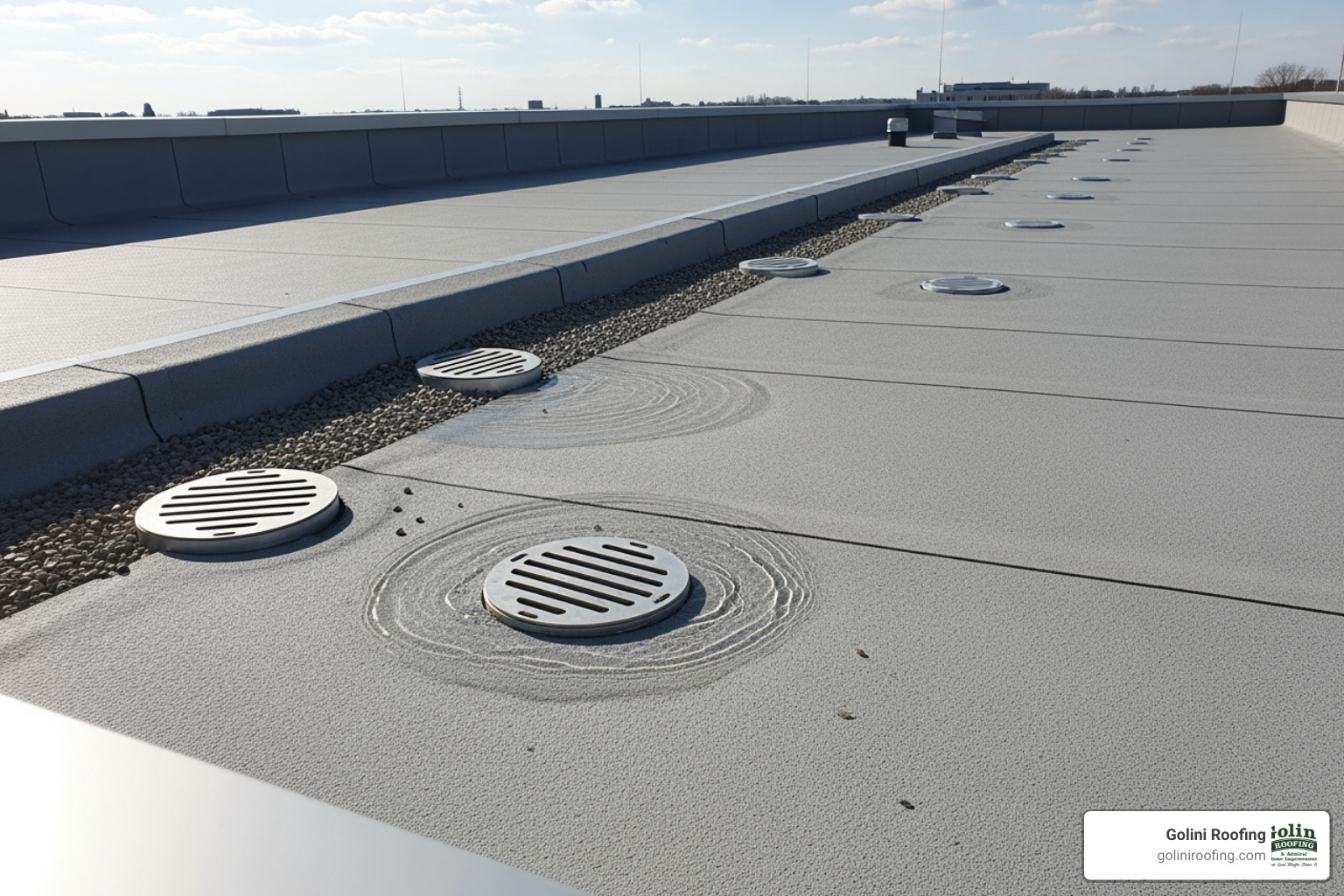
Inspect your roof each spring and fall, and after major storms. Focus on these key tasks:
- Inspect Seams and Flashing: Check for any separation or cracks around vents, skylights, and chimneys.
- Clear Drains and Scuppers: This is the most critical task. Remove all leaves and debris to prevent ponding water.
- Remove Debris: Sweep the entire roof surface clean to prevent moisture retention and organic growth.
- Trim Overhanging Branches: Prevent punctures and scratches from falling or scraping limbs.
- Check for Damage: Look for any new punctures, blisters, or cracks that need immediate attention.
The Role of Roof Coatings and Restoration
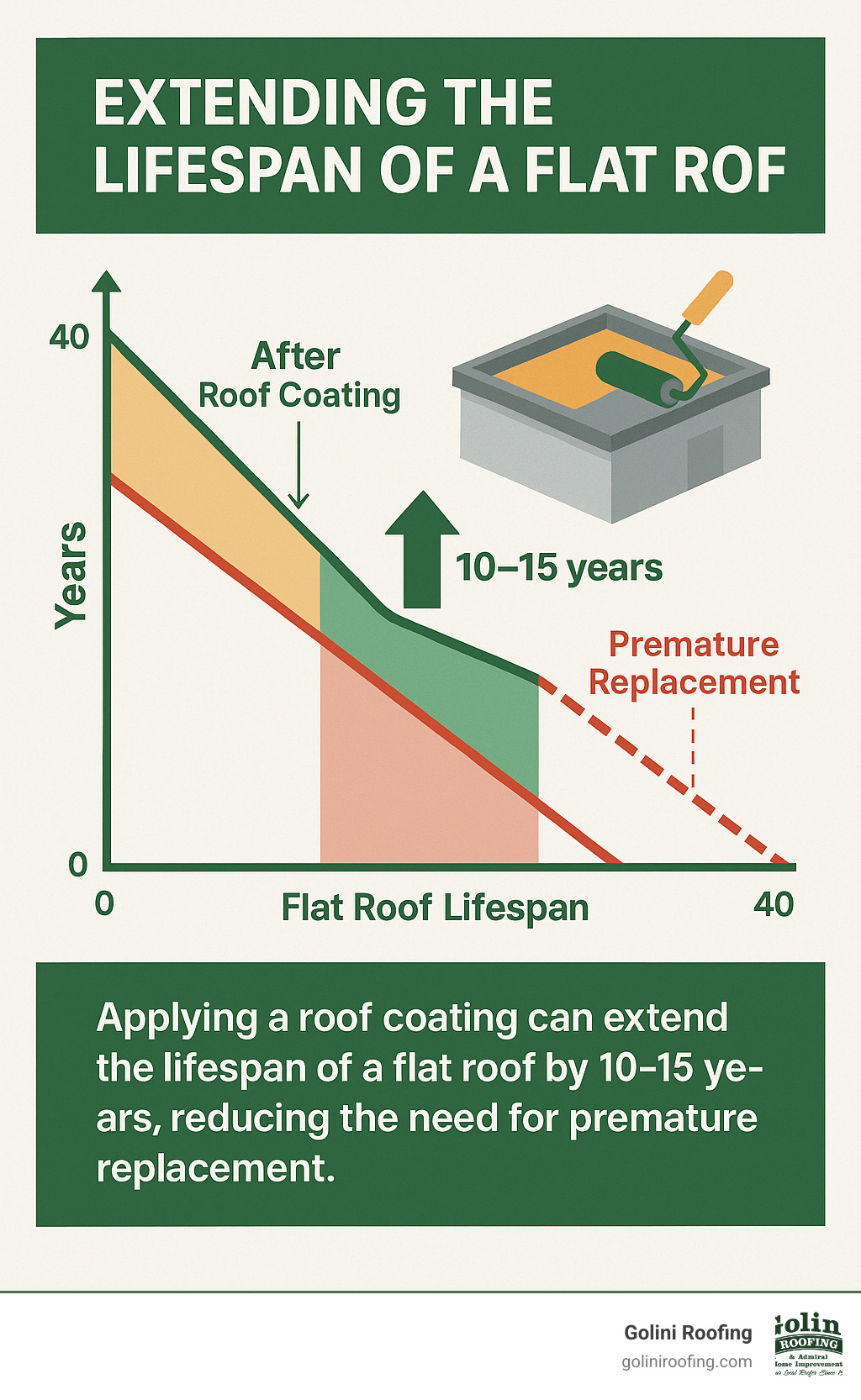
If your roof needs more than a spot repair but isn’t ready for replacement, restoration is an excellent option. Elastomeric or silicone coatings create a seamless, waterproof membrane over your existing roof. This can add 10-15 years to its lifespan by providing superior UV protection and flexibility, often at a fraction of the cost of a full replacement. These coatings also reflect sunlight, which can lower your cooling costs. For more information, see our Commercial Roofing Waterproofing services.
Considering a Full Replacement
Every roof has a finite lifespan. Replacement becomes necessary when repairs are no longer cost-effective.
- When to Repair: If the roof is relatively young and damage is isolated.
- When to Replace: If the roof is over 10-15 years old with recurring leaks, widespread cracking, or extensive damage. When annual repair costs approach 25-30% of the replacement cost, it’s time for a new roof.
A full replacement provides a fresh start with modern materials and a 20+ year lifespan, offering long-term peace of mind. Learn more on our Flat Roof Replacement page.
Frequently Asked Questions about Flat Roof Leaks
After more than three decades of roof leak repair flat roof projects in Massachusetts, I’ve answered countless questions. Here are some of the most common ones.
How long does a flat roof repair last?
The longevity of a repair varies. A professional patch using high-quality, compatible materials can last 5 to 15 years if the rest of the roof is in good shape. In contrast, most DIY fixes are temporary solutions that may only last 6 months to 2 years, as they often don’t address the root cause. The outcome depends on the quality of materials, surface preparation, and the roof’s overall condition.
Can you walk on a flat roof?
While flat roofs are safer to walk on than pitched roofs, it’s best to minimize foot traffic. Walking on the membrane can cause stress, especially on seams, and lead to new leaks over time. If you must go on the roof, wear soft-soled shoes and step carefully, avoiding seams and any soft spots. Limiting foot traffic is a simple way to preserve your roof.
How often should a flat roof be replaced?
Flat roof lifespan depends heavily on the material, installation quality, and maintenance. While some online sources suggest replacement every 10 years, a well-maintained roof can often last 20 to 25 years. Materials like TPO often reach the 20-year mark, while EPDM may need attention or restoration around the 8 to 15-year mark. The key is regular maintenance. When an aging roof requires frequent and costly repairs, replacement becomes the most cost-effective long-term solution.
Conclusion: Protect Your Home with Proper Flat Roof Care
Addressing a roof leak repair flat roof issue is about protecting your entire home. The key takeaway is not to wait. A small stain can quickly become a major problem on a flat roof where water pools instead of running off.
- Be Proactive: Conduct biannual inspections to catch issues early.
- Repair Promptly: A timely fix can prevent thousands in water damage.
- Maintain Regularly: Keep drains clear and the surface free of debris to maximize your roof’s lifespan.
While DIY is an option for minor issues, professional help is crucial for complex problems, recurring leaks, or specialized materials. At Golini Roofing, we’ve provided lasting solutions to Massachusetts homeowners for over 35 years. Our meticulous craftsmanship ensures that when we repair your roof, it’s done right.
Serving Burlington, Lynnfield, North Reading, Reading, Stoneham, Wakefield, Wilmington, Winchester, and Woburn, we are ready to help protect your investment. For an expert assessment and solutions that provide peace of mind, explore our comprehensive roof repair services.
