
Flat Roofer Cost: Ultimate 2025 Budget Guide
Understanding Flat Roof Costs for Your Home
Flat roofer cost can vary significantly, but homeowners typically invest between $4,000 to $16,800 for a complete project. Here’s a quick look at what you can expect:
Average Flat Roof Costs:
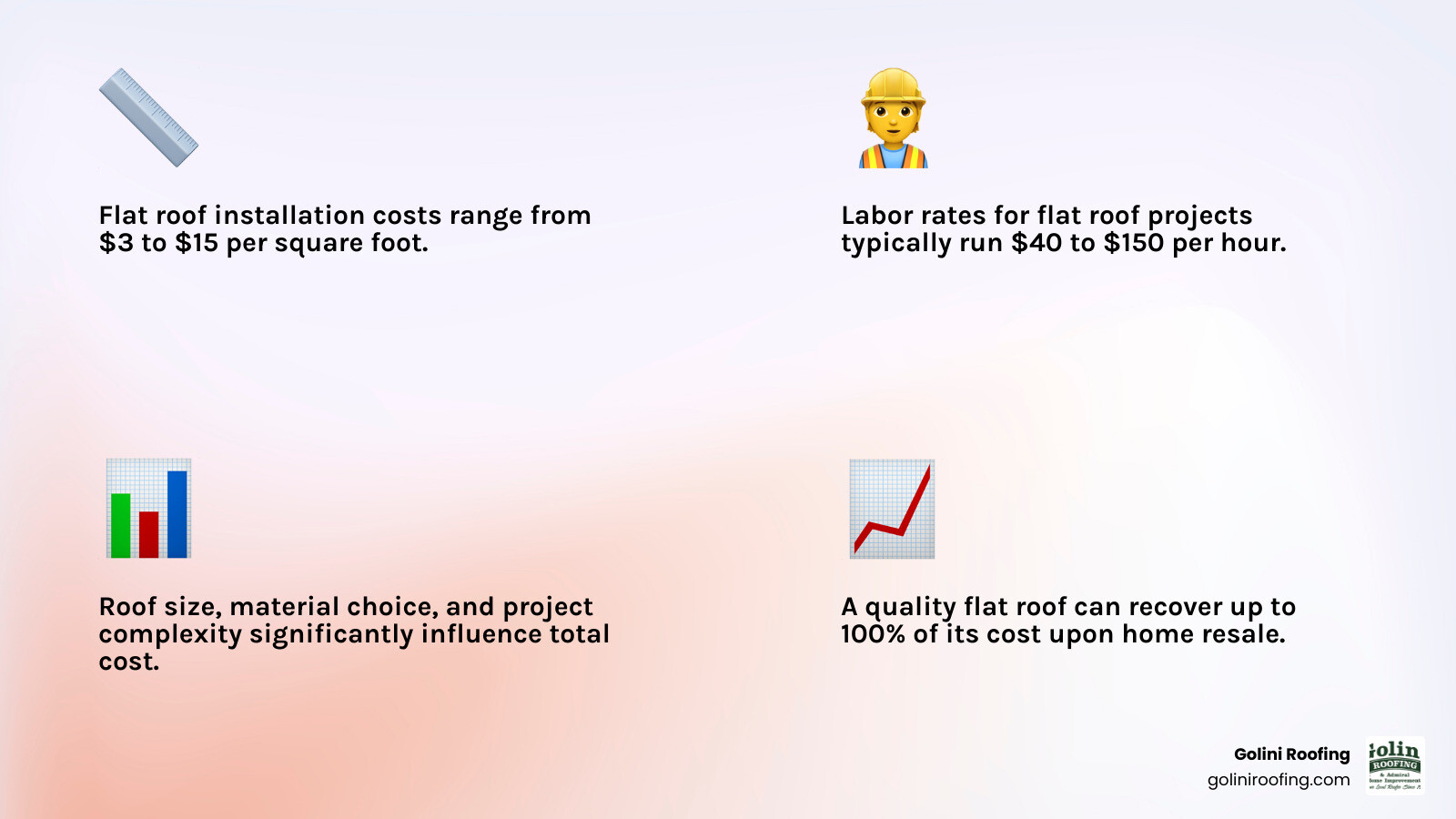
- Cost per square foot: $3 – $15 installed
- Typical home (1,500 sq ft): $4,500 – $22,500
- Material costs alone: $0.15 – $8.00 per sq ft
- Labor rates: $40 – $150 per hour
- Emergency repairs: $300 – $4,000+
Note: These are average costs based on internet data and not actual costs for Golini Roofing.
Understanding the true cost goes beyond the initial price tag. Your investment depends on factors like roof size, material choice, local labor rates, and project complexity. A well-installed flat roof can even recover up to 100% of its cost when you sell your home.
Whether you’re dealing with a leak or planning a full replacement, knowing what drives these costs helps you make an informed decision. From EPDM rubber membranes to premium metal systems, each material offers different benefits and price points.
I’m Jack Golini, and with over 35 years of experience installing and repairing flat roofs in the North Shore area, I’ve learned that while upfront costs matter, choosing quality materials and expert installation saves money in the long run.
Understanding Flat Roof Installation and Replacement Costs
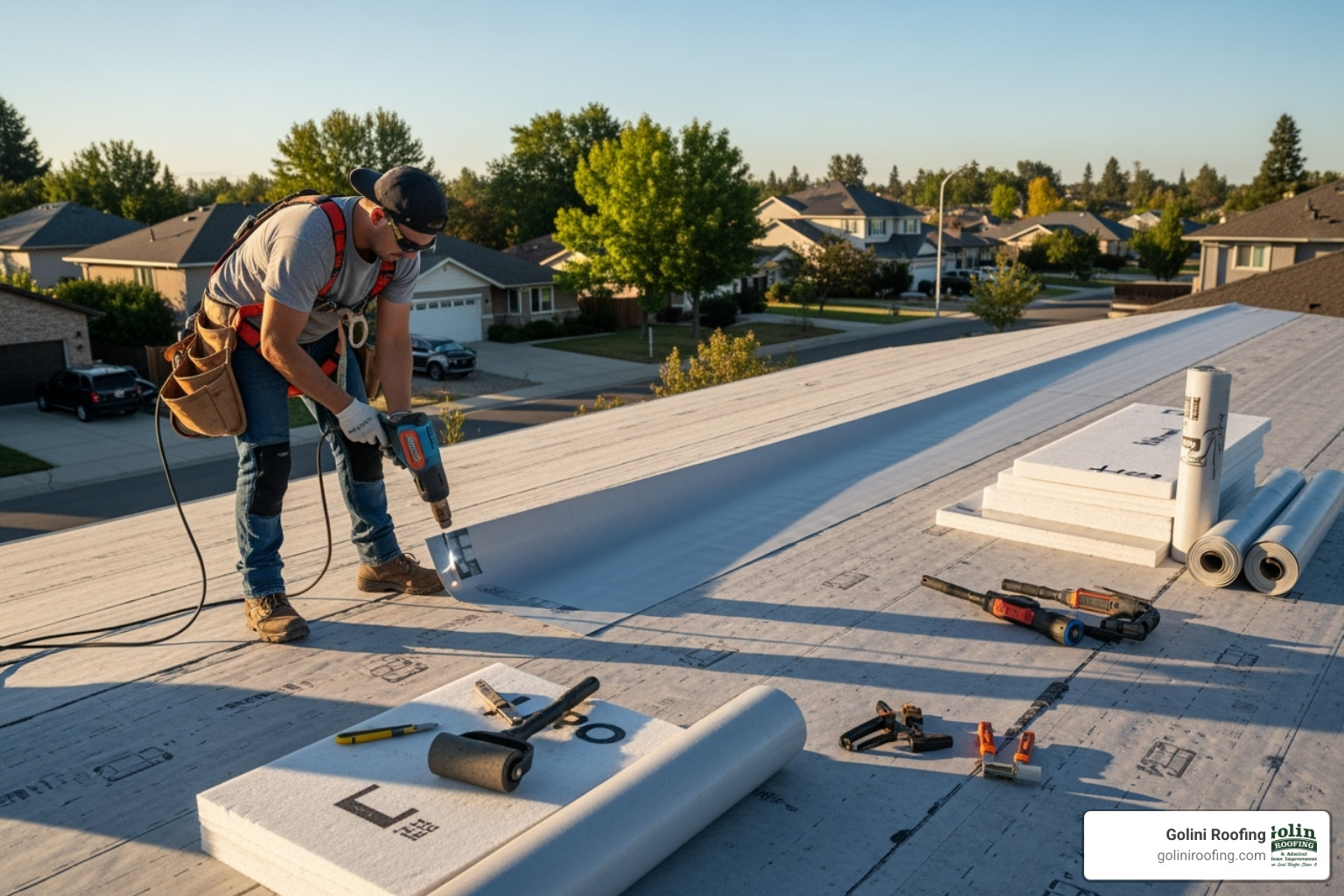
When considering your flat roofer cost, it’s important to distinguish between a new installation and a full replacement. A replacement often costs more because it includes the labor and disposal for removing the old roofing material.
Generally, the average cost to install or replace a flat roof on a home can fall anywhere from $4,000 to $14,400. This wide range accounts for the size of your roof, the materials you choose, and the complexity of the job. For a typical 1,600 square foot flat roof, you might expect costs to be in that same $4,000 to $14,400 bracket. Material costs alone usually range from $2.50 to $9 per square foot.
Note: These are average costs based on internet data and not actual costs for Golini Roofing.
A new roof is a smart investment that can recover up to 100% of its cost when you decide to sell your home. It not only protects your biggest asset but also significantly boosts its value and curb appeal. We’re here to help you find solutions that safeguard your home and contribute to its long-term equity. To get a clearer idea of what your specific project might look like, explore our New Flat Roof Cost Estimate.
Flat Roof Materials: A Cost and Lifespan Comparison
The choice of material for your flat roof is a big decision, and it’s one of the most influential factors in your overall flat roofer cost and how long your roof will last. Each material offers a unique blend of durability, performance, and price. Let’s take a closer look at some common options:
| Material Type | Average Cost per Sq. Ft. (Installed) | Typical Lifespan | Key Pros – | :— | :— | :— | :— |
| EPDM Rubber | $4 – $10 per sq. ft. | 20-30 years | Durable, easy to repair, and cost-effective. – T-PO | $5 – $12 per sq. ft. | 20-30 years | Energy-efficient (especially white), durable, and resistant to punctures. |
| Modified Bitumen | $4 – $8 per sq. ft. | 10-20 years | Easy to repair, good waterproofing, and flexible in cold weather. |
| Built-Up Roof (BUR) | $4 – $10 per sq. ft. | 15-30 years | Extremely durable, low maintenance, and excellent UV protection. |
| Metal | $9 – $25 per sq. ft. | 40-70+ years | Very long-lasting, fire-resistant, and energy-efficient. |
For an even deeper dive into all these material options and their unique characteristics, we invite you to explore our Residential Flat Roof Details.
Average Cost of Flat Roof Replacement in the US
Replacing a flat roof is a significant home improvement, and understanding the costs involved helps you plan wisely. In the US, the average flat roofer cost for a replacement typically hovers around $7,400, with a common range falling between $3,300 to $11,500. For that 1,600 square foot flat roof we mentioned earlier, you’d likely be looking at a replacement cost of $4,000 to $14,400. This broad range accounts for everything from the specific materials chosen to the complexity of your roof and local labor rates.
One factor that heavily influences replacement cost is the removal of your old roof. This process isn’t just about pulling off materials; it includes proper disposal. Old roof tear-off can add an extra $1 to $5 per square foot to your total bill. And if your roof has multiple layers from previous installations, or if there’s hidden damage underneath that needs to be addressed, that removal cost can climb even higher. For instance, each additional roofing layer can bump up removal costs by roughly 30%. It’s definitely something to keep in mind as you set your budget!
We get it – replacing a roof is a big project. But we’re here to guide you through every step of the process, making it as smooth and transparent as possible. For more detailed information on typical replacement costs and what to expect, we encourage you to check out our Flat Roof Replacement Cost guide.
Key Factors That Determine Your Final Flat Roofer Cost

When you’re trying to figure out the exact flat roofer cost for your project, it’s a bit like solving a puzzle with many pieces! So many different things can influence the final price tag. Understanding these pieces will help you prepare your budget and make smart choices.
First up, the obvious one: roof size. A bigger roof simply needs more materials and more time from our team, which naturally increases the cost. But it’s not just about how many square feet your roof covers. Roof complexity plays a huge role too! A simple, flat roof with no obstructions will be less expensive than one with lots of skylights, HVAC units, chimneys, or tricky angles. Each little “extra” or change in the roof’s plane means more detailed work and specialized flashing, all of which add to the overall cost.
Then there are labor rates, which can vary quite a bit depending on where you live and the experience of your chosen contractor. You might find that highly skilled and reputable roofers, like us, have a slightly higher hourly rate. But here’s the secret: their expertise often means a more durable, long-lasting roof, which can actually save you money down the line by avoiding future issues.
Your geographic location also really matters. Roofing costs can be quite different from one state to another, or even between a big city and a quiet rural area within the same state. Major cities, for example, often have higher labor costs because the cost of living is higher.
The material quality you choose directly impacts the cost as well. While going for the cheapest material might save you a little upfront, it often comes with a shorter lifespan and might need more frequent repairs. This can lead to higher costs in the long run. Investing in quality materials provides better durability and much-needed peace of mind.
Finally, roof specifications and your insulation choices also add to the price. Things like the thickness of the roof membrane, the type and amount of insulation you choose (like PolyISO Rigid Foam), and the specific drainage system can all affect the final figure. Good insulation isn’t just about comfort; it’s vital for energy efficiency and can prevent issues like condensation that might damage your roof structure.
How Labor and Location Impact Your Flat Roofer Cost
Labor costs are a big piece of the flat roofer cost puzzle. Typically, the labor and installation for a flat roof can range anywhere from $40 to $80 per hour. These are average costs based on internet data and not actual costs for Golini Roofing. Some sources even suggest that flat roof repair labor might be $50 to $100 per hour. Highly skilled professionals, especially those using specialized techniques, may charge a bit more, but their expertise is often worth every penny.
Where you live significantly affects these rates. For example, labor costs in busy metropolitan areas are generally higher than in more rural regions. In places like Canada, roofing prices are often higher in big cities compared to smaller towns. While we’re proud to be based in Wakefield, MA, serving wonderful communities like Burlington, Lynnfield, North Reading, Reading, Stoneham, Wilmington, and Woburn, we definitely see these kinds of trends across Massachusetts.
Our commitment to quality at Golini Roofing means we focus on meticulous craftsmanship. Our unique approach involves hand-nailing each shingle. While some contractors might use nail guns for speed, we believe our hand-nailing technique, though more labor-intensive, results in superior adhesion and longevity. This means your roof is built to last, reducing the chances of future problems and ultimately saving you from unexpected costs down the line. It’s this attention to detail that sets us apart and ensures your investment is truly protected. If you’re in the Burlington area, you can learn more about our dedicated services at Flat Roofing Burlington MA.
Additional Project Expenses to Consider
Beyond the basic material and labor, there are often a few other expenses that can pop up and influence your final flat roofer cost. It’s super important to know about these so you can budget accurately and avoid any unwelcome surprises!
Here are some potential additional costs you might encounter:
- Old Roof Tear-Off: If you’re replacing a roof, the old one has to go! This removal process can add $1 to $5 per square foot to your bill, depending on the material, how many layers there are, and how easy it is to access the roof.
- Underlayment: Think of this as an extra layer of protection beneath your main roofing material. It’s essential for moisture protection and typically adds $0.75 to $4.00 per square foot when installed.
- Flashing: This is crucial for sealing up vulnerable spots around chimneys, skylights, vents, and edges. Repairing flashing might cost $200 to $500, while replacing and resealing all of it could be $400 to $1,000.
- Vents and Drains: Good ventilation and drainage are key for a flat roof’s long life. Installing or repairing roof drains can cost $70 to $340, and roof vent installation might be $200 to $700.
- Building Permits: Most towns require permits for roof work to make sure everything meets local building codes. These permit fees can range from $150 to $500, sometimes even up to $600.
- Professional Inspections: Beyond our initial look, some projects might need follow-up inspections. These can cost anywhere from $100 to $300.
- Dump Fees: Getting rid of all that old roofing material isn’t free! These disposal fees can add $1 to $2 per square foot.
- Roof Sealant: Applying a sealant or coating can really extend your flat roof’s lifespan. A full coating system can cost anywhere from $400 to $1,600.
- Structural Repairs: If we find water damage or rot in the existing roof deck or underlying structure, repairing things like rafters or decking can add significant costs, ranging from $300 to $2,500 or more, depending on how extensive the damage is.
These additional costs highlight why getting a comprehensive quote that details all potential expenses is so important. For services in the Gloucester area and surrounding towns, we always provide transparent estimates to help you plan effectively. You can learn more at Flat Roofing Gloucester.
How to Potentially Reduce Your Flat Roofer Cost
We totally get it—managing your flat roofer cost is a big deal for every homeowner. While quality and durability are always our top priorities, there are indeed some smart strategies you can consider to potentially reduce your overall expenses without cutting corners on quality.
One great option, if your existing flat roof is in decent shape and just needs a refresh, is roof recovery vs. replacement. This means installing a new layer right over the existing one. This can save you a good chunk of change on tear-off and disposal costs, often $1 to $2 per square foot! However, this is only possible if your current roof is structurally sound and meets all local building codes (usually, only one overlay is permitted).
Choosing materials wisely can also make a difference. While we always advocate for quality, understanding the cost spectrum of different materials can help you make a budget-friendly choice. For example, EPDM rubber is generally more affordable than TPO or PVC. If your budget is a bit tighter, opting for a material that offers good performance at a lower price point can be a viable strategy. You could also consider choosing two thinner layers of insulation instead of one super thick layer; this can sometimes improve energy efficiency and reduce air leakage, potentially saving costs too.
Another clever tip is to consider scheduling your project in the off-season. Depending on where you live, doing your roofing work during less busy times (like late fall or winter in some areas) might lead to lower labor rates since contractors have less demand. Just be sure to chat with your roofer about this, as weather conditions are super important for proper installation.
Regular maintenance isn’t a direct upfront saving, but it’s a HUGE long-term one. Seriously! Getting annual inspections (or after any big storms), keeping your roof clear of debris, and making sure water drains properly can prevent small issues from turning into expensive major repairs. Addressing little problems promptly can save you thousands down the line.
And finally, always get multiple quotes! We recommend getting at least three detailed quotes from different reputable contractors. This allows you to compare pricing, understand exactly what’s included, and potentially even negotiate a better deal. Just be wary of bids that seem unusually low; they might indicate shortcuts or hidden costs that pop up later.
We’re always happy to chat through these options with our clients and help them find the most cost-effective solution that still meets our high standards for quality and durability.
Repair or Replace? Analyzing Costs and Common Issues
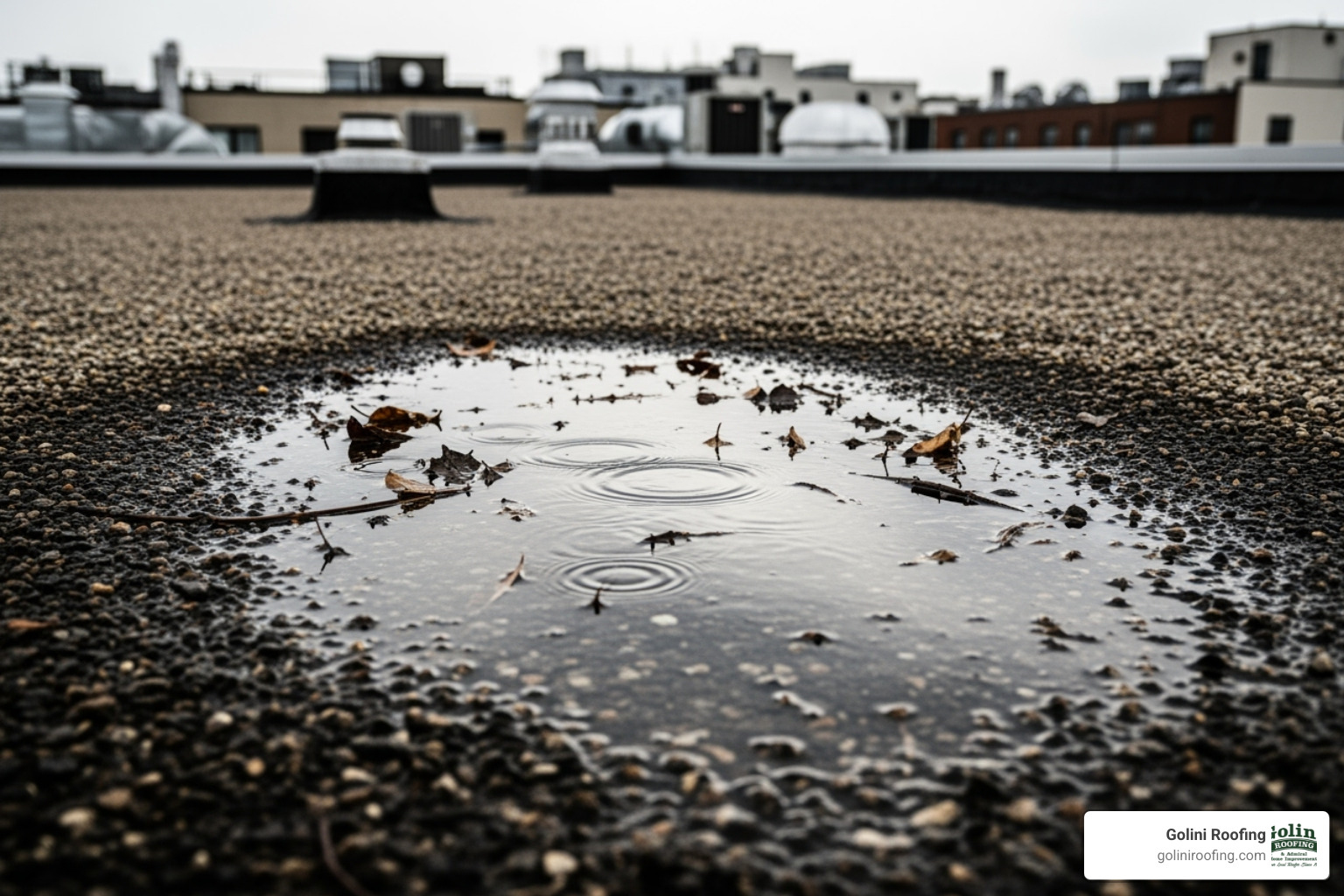
Deciding whether to repair or replace your flat roof is a key question that impacts your budget and your home’s long-term health. Flat roofs have unique challenges, and understanding them can help you make the right choice.
Common issues that signal it’s time for a professional inspection include:
- Leaks: Often caused by cracks, punctures, or failing seams.
- Water Pooling (Ponding): Standing water that doesn’t drain after 48 hours, which accelerates wear and tear.
- Blistering and Cracking: Caused by sun exposure and temperature changes, creating weak spots.
- Membrane Damage: Punctures or tears in the waterproof layer.
- Flashing Issues: Damaged or loose flashing around chimneys, vents, and skylights.
For professional help, visit our own Flat Roofing Repair page.
Comparing the Cost of Flat Roof Repair vs. Replacement
The decision to repair or replace depends on the extent of the damage, the age of your roof, and your budget.
Flat Roof Repair Costs:
- Minor Repairs: For small leaks or cracks, expect to pay between $300 and $1,000.
- Moderate Repairs: For larger tears or more widespread issues, costs can range from $1,000 to $2,500.
- Major Repairs: Extensive damage or structural issues can cost $2,500 or more.
Note: These are average costs based on internet data and not actual costs for Golini Roofing.
On a per-square-foot basis, repairs typically run from $4 to $10 per square foot.
When to Replace:
If your roof is over 15 years old, requires frequent repairs, or has widespread damage, a full replacement is often more cost-effective. A new flat roof installation costs between $3 and $11 per square foot to install (and remember, these are just averages, not our specific prices!), providing a fresh start, a new warranty, and long-term peace of mind. We can help you assess the situation and provide clear estimates for both options. If you’re in the Winchester area, learn more about our services at Flat Roof Repair Winchester.
Pros and Cons of a Flat Roof
Understanding the advantages and disadvantages of a flat roof is key to managing your long-term flat roofer cost.
Pros:
- Lower Initial Cost: Generally cheaper to install than pitched roofs due to simpler construction and fewer materials.
- Usable Space: Can be converted into a rooftop patio, garden, or a place for HVAC units.
- Modern Aesthetic: Offers a sleek, contemporary look.
- Energy Efficiency: Reflective materials can lower cooling costs.
- Wind Resistance: Less susceptible to wind damage than sloped roofs.
- Easier Maintenance: Safer and more accessible for inspections and repairs.
Cons:
- Shorter Lifespan: Typically lasts 15-20 years, which is often less than pitched roofs.
- Drainage Issues: Prone to water pooling if not properly sloped and maintained.
- Frequent Upkeep: Requires regular inspections and cleaning to prevent leaks and damage.
- Leak Potential: If the membrane is punctured, leaks can be difficult to trace and repair.
- No Attic Space: Lacks the built-in storage and insulation space of a traditional attic.
We help our clients weigh these factors to find the best roofing solution for their home and budget.
Frequently Asked Questions about Flat Roof Costs
We often get asked similar questions by homeowners considering a flat roof. It’s totally understandable! Investing in your home’s roof is a big decision, and you want to make sure you’re making the right choices. Here, we address some of the most common inquiries to help you better understand the nuances of flat roofer cost and care.
How long does a typical flat roof last?
A flat roof’s lifespan depends on the material, quality of installation, and maintenance. Generally, you can expect a lifespan of 15 to 20 years, but some materials last much longer.
- EPDM & TPO: 15-25+ years.
- Modified Bitumen: 10-20 years.
- Built-Up Roof (BUR): 15-30 years.
- Metal: 40-70+ years.
Regular maintenance, like clearing debris and ensuring proper drainage, is crucial for maximizing the life of any flat roof.
Are flat roofs more expensive than pitched roofs?
Initially, flat roofs are often less expensive to install than pitched roofs. They require less complex framing and fewer materials, which can reduce labor costs. However, the long-term flat roofer cost can be different. Flat roofs may have a shorter lifespan and require more frequent maintenance to prevent issues like water pooling. While the upfront savings are attractive, it’s important to consider the total cost of ownership, including potential repairs and earlier replacement, when making your decision.
Can I install a flat roof myself to save money?
While DIY projects can be rewarding, flat roof installation is a job best left to professionals. It’s a specialized skill requiring specific tools and a deep understanding of drainage, sealing, and material properties.
Here’s why hiring a pro is the safer, more cost-effective choice in the long run:
- Risk of Costly Errors: Small installation mistakes can lead to major leaks and structural damage, costing far more to fix than the initial savings.
- Specialized Equipment: Proper installation requires tools like heat welders or specific rollers that most homeowners don’t have.
- Safety Hazards: Working on any roof is dangerous. Professionals have the training and safety equipment to prevent accidents.
- Warranty Protection: Most roofing material warranties are voided if not installed by a certified professional.
- Guaranteed Quality: An experienced roofer ensures correct slope, sealed seams, and proper flashing, which are critical for a long-lasting, watertight roof. Our 35+ years of experience guarantee a job done right, providing peace of mind and protecting your investment.
Get a Professional Estimate for Your Flat Roof Project
Understanding the factors that influence flat roofer cost—from materials and labor to roof size and complexity—is the first step toward a successful project. While it’s a significant investment, choosing quality materials and expert craftsmanship is the key to a durable, long-lasting roof that protects your home.
With over 35 years of experience serving Wakefield, Burlington, Lynnfield, North Reading, Reading, Stoneham, Wilmington, Winchester, and Woburn, Golini Roofing is committed to excellence. Our meticulous approach, including hand-nailing each shingle, ensures your roof is built to the highest standards.
Choosing a reputable and experienced roofing contractor is the best way to protect your investment and gain peace of mind. Ready to get started? For a detailed and accurate assessment customized to your project, explore our flat roof repair cost services or contact us today for a personalized quote. We’re here to help you budget wisely and achieve the perfect flat roof for your home.
Like us on Facebook!
