How Long Does a Roof Inspection Take? Top Tips 2024
How long does a roof inspection take? If you’re a homeowner wondering about this, you’re not alone. A typical roof inspection can range from 30 minutes to several hours, depending on factors like the size and complexity of the roof. Generally, you can expect most inspections to last about 45 to 60 minutes. This allows for a detailed assessment, ensuring that any structural or moisture issues are thoroughly evaluated.
Regular roof inspections are vital for maintaining the health of your home. They help extend the lifespan of your roof, save money on future repairs, and improve the energy efficiency of your living space. At Golini Roofing, we understand the significance of these inspections. With over 35 years of experience serving the North Shore area, we pride ourselves on delivering exceptional craftsmanship while minimizing disruptions and ensuring thorough cleanup.
As we dig deeper into the factors that affect inspection duration, you’ll gain a clearer understanding of how these evaluations contribute to home maintenance.
How long does a roof inspection take terms to know:
– are roof inspections free
– commercial roof inspections
– how much does a roof inspection cost
Factors Affecting Roof Inspection Duration
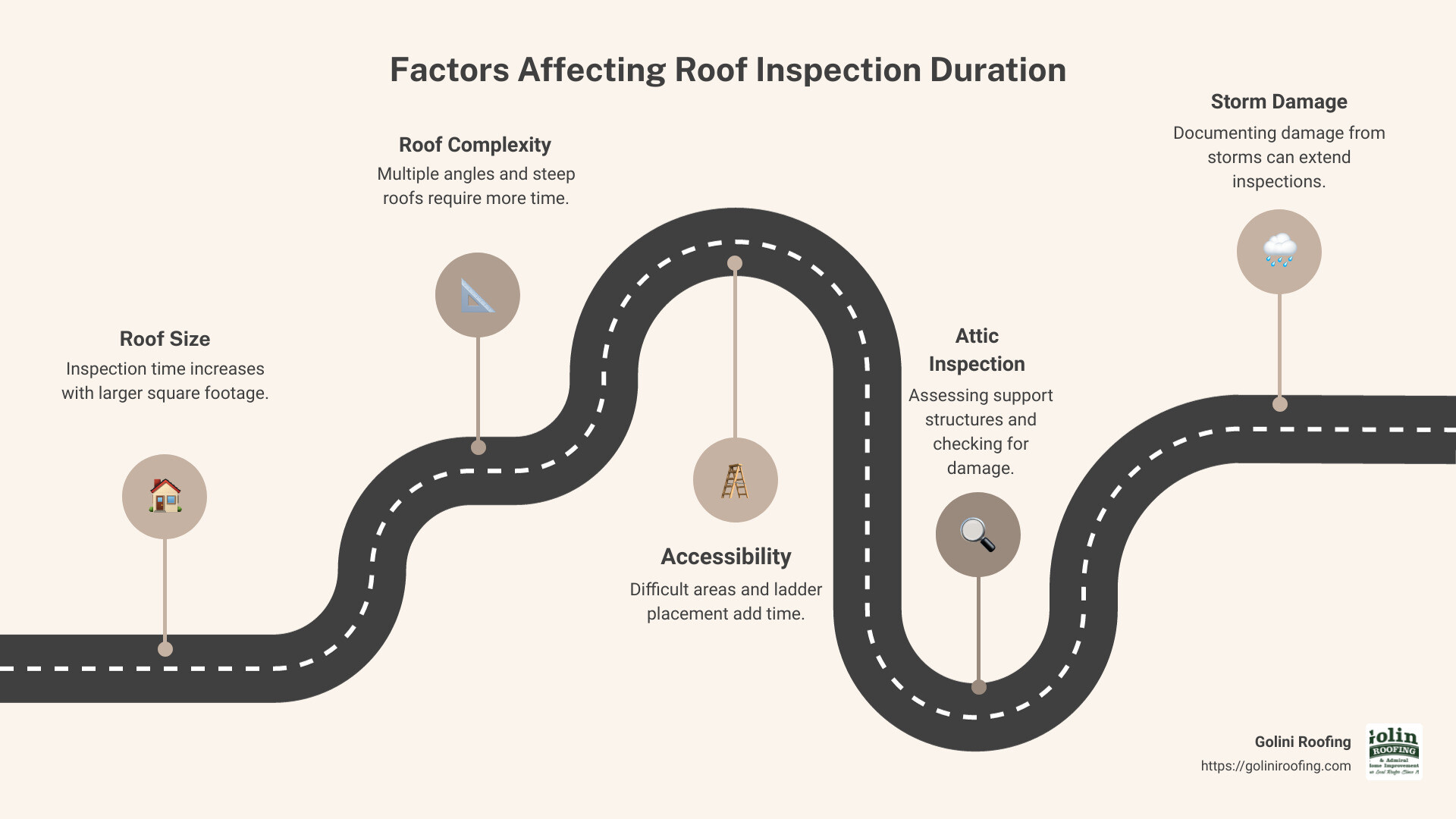
When it comes to understanding how long a roof inspection takes, several key factors come into play. Let’s break down these elements to see how they influence the overall duration of the inspection process.
Roof Size
The size of your roof is a major factor. Larger homes naturally take more time to inspect. A small bungalow might take just about 45 minutes, while a sprawling estate could require up to four hours. The square footage directly impacts the time needed for a thorough evaluation. Inspectors need to walk the entire roof, checking for issues like broken shingles or damaged flashing.
Roof Complexity
The complexity of your roof design can also extend inspection time. Roofs with multiple angles or steep pitches require more careful navigation and safety precautions. For instance, a simple flat roof is quicker to inspect than a two-story home with intricate gables and valleys. Complex roofs demand more detailed inspections to ensure every nook and cranny is checked.
Accessibility
Accessibility is another crucial factor. Some roofs are easier to reach than others. If your roof is surrounded by obstacles or has limited access points, inspectors might need more time to set up ladders and steer around these barriers. Ensuring clear walkways and removing any items blocking access can speed up the process.
Attic Inspection
Including an attic inspection can add to the duration but is often necessary for a comprehensive assessment. Inspectors look for signs of interior damage, such as water stains or mold, which might indicate leaks or poor ventilation. Checking the support structure from inside the attic provides a fuller picture of the roof’s condition.
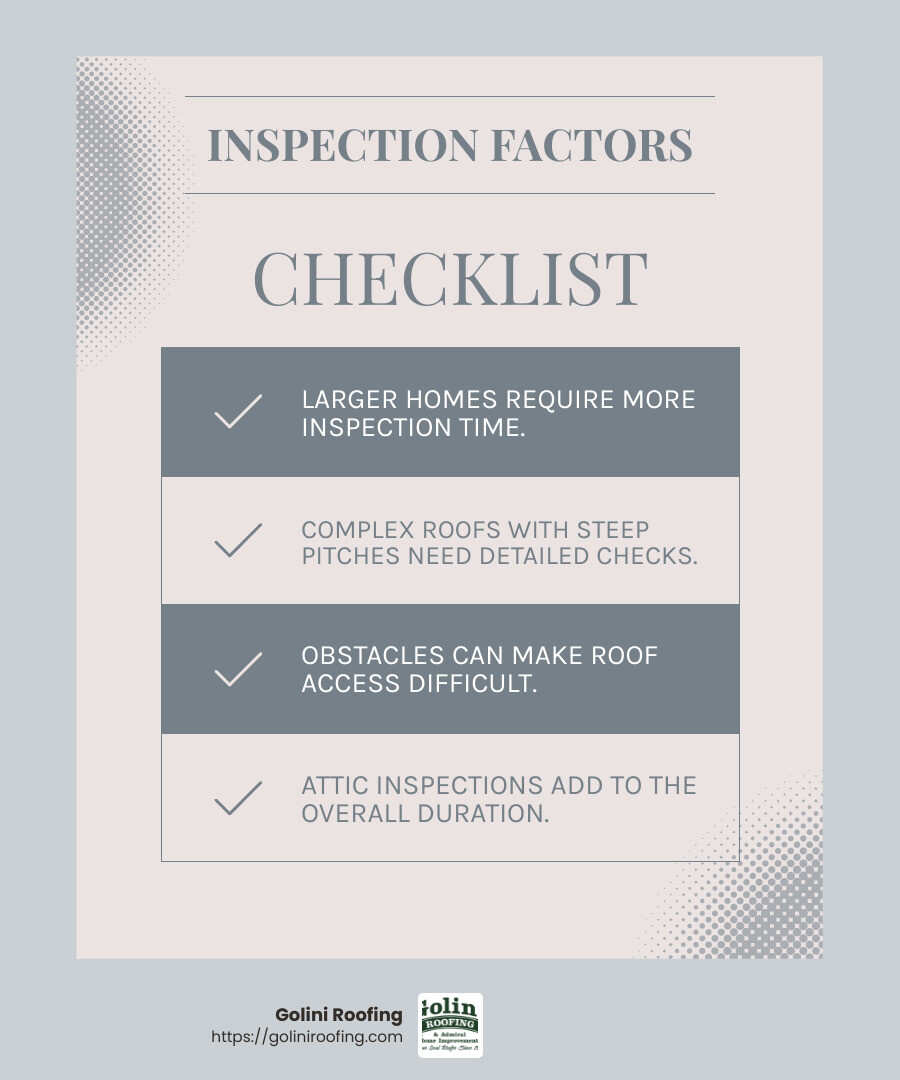
In summary, the time it takes to inspect a roof depends on its size, complexity, accessibility, and whether an attic inspection is included. By understanding these factors, you can better prepare for your next roof inspection and ensure a thorough evaluation of your home’s roofing system.
Next, we’ll explore the different types of roof inspections and how they vary in duration.
How Long Does a Roof Inspection Take?
The duration of a roof inspection can vary widely. Generally, it takes between 1-2 hours, but depending on specific circumstances, it might range from 30 minutes to 4 hours. Let’s explore how different types of roofs and situations can affect inspection time.
Simple Roofs
For homes with simple roofs, like those with an easy up-and-over design and a walkable pitch, inspections are usually quicker. These roofs are straightforward for inspectors to steer, reducing the time needed. In many cases, a simple roof inspection might be completed in just 30 minutes to an hour. This is because there are fewer complexities and safety concerns, allowing inspectors to efficiently assess the roof’s condition.
Complex Roofs
On the other hand, complex roofs require more time. Homes with steep roofs, multiple angles, or two-story designs pose additional challenges. Inspectors must take extra care, often using additional safety equipment. These inspections can take 2-4 hours due to the intricate details and the need for thorough checks in hard-to-reach areas. The additional time ensures that no potential issues are overlooked, especially in areas like roof valleys and steep pitches.
Storm Damage Inspections
Storm damage inspections can extend the inspection duration even further. After a storm, inspectors must document specific damages, including any collateral damage around the property. This detailed documentation process can add significant time to the inspection. Depending on the extent of the damage, these inspections may take longer than standard ones, as inspectors need to assess and record everything carefully to determine the necessary repairs.
In summary, the time it takes to inspect a roof depends on its complexity, design, and any external factors like storm damage. Understanding these elements helps homeowners set realistic expectations for their roof inspection timelines.
Next, we’ll look at what a roofing contractor examines during the inspection process.
What Does a Roofing Contractor Look At?
When a roofing contractor comes to inspect your roof, they don’t just glance at the shingles and call it a day. They conduct a thorough examination of various components to ensure everything is in good condition. Let’s break down what they typically look at during a roof inspection.
Exterior Inspection
Roof Eaves and Soffit & Fascia
The inspection starts with the exterior, focusing on spots where water might sneak in. Contractors check the soffit and fascia for signs of rot or water damage. These areas are crucial because they help protect your roof and attic from the elements.
Gutters and Roof Valleys
Next, they examine the gutters and roof valleys. Gutters should be clear of debris to ensure proper drainage. Roof valleys, where two roof sections meet, are prone to collecting debris and are checked for damage or buildup that might lead to leaks.
Missing Shingles and Roof Condition
Inspectors also look for missing shingles, cracks, or any signs of wear and tear. This helps assess the overall condition of the roof and determine if repairs or replacements are needed.
Interior Inspection
Attic and Insulation
Inside the home, the attic is a key focus. Inspectors check for signs of water leaks, which might appear as stains or mold on the insulation and structural components. Proper insulation is also vital for energy efficiency and preventing moisture buildup.
Structural Components and Mold
Structural components, like beams and rafters, are inspected for any signs of damage or mold. Mold can indicate water intrusion, which might compromise the integrity of the roof structure over time.
Roof Components
Vents, Pipes, and Flashing
Roof inspections also cover essential components like vents, pipes, and flashing. These parts penetrate the roof and need to be sealed correctly to prevent leaks. Flashing, in particular, is inspected for cracks or rust that might allow water to seep in.
Drip Edge and Chimney
The drip edge is another critical component that helps direct water away from the roof and into the gutters. Inspectors ensure it’s securely attached and functioning well. If your home has a chimney, they’ll also check its condition, ensuring that seals and flashing around it are intact to prevent leaks.
By examining these areas, the contractor can provide a comprehensive assessment of your roof’s health and recommend any necessary repairs or maintenance.
Next, we’ll discuss the costs associated with roof inspections and what factors can influence these expenses.
How Much Does a Roof Inspection Cost?
Understanding how much a roof inspection costs can help you plan and budget effectively. The cost can vary widely based on several factors, but let’s break it down into free and paid inspections.
Free Inspections
In some cases, you might not have to pay anything for a roof inspection. If you’re considering a roof replacement, many roofing companies offer free inspections. This is because there’s a potential sale involved, and they want to provide you with an accurate estimate.
Similarly, if you’re planning to sell your home, a free inspection can be a great way to assess the roof’s condition and address any issues before listing the property. This proactive step can improve your home’s value and appeal to potential buyers.
Paid Inspections
On the other hand, paid inspections are common when dealing with roof repairs. Companies may charge a service fee to inspect and diagnose the problem, especially if it involves tracking down a leak or assessing storm damage. These fees typically range from $120 to $400, depending on the roof’s size and complexity.
Moreover, some roofing companies offer maintenance programs. These programs involve regular inspections and minor repairs for a flat fee, helping you keep your roof in top condition and potentially saving money on major repairs down the line.
In summary, whether an inspection is free or paid depends on your specific situation. If you’re considering a roof replacement or selling your home, you might benefit from a free inspection. For repairs or regular maintenance, expect to pay a fee, which is a worthwhile investment in your roof’s longevity.
Next, we’ll explore how often you should schedule a roof inspection to ensure your roof stays in excellent condition.
How Often Should You Get Your Roof Inspected?
Regular roof inspections are essential for maintaining the longevity and integrity of your home. Let’s explore when and why you should schedule these inspections.
Regular Maintenance
Think of a roof inspection like a dental check-up. Just as you wouldn’t skip your regular visits to the dentist, you shouldn’t skip roof inspections. Experts recommend having your roof inspected twice a year—once in the spring and once in the fall. These routine inspections help catch small issues before they become major problems. They are a key part of preventative care that can extend your roof’s lifespan and save you money in the long run.
Post-Storm Inspections
Nature can be unpredictable, and storms can wreak havoc on your roof. After a heavy storm, especially one involving hail or high winds, an immediate roof check is crucial. Storms can cause hidden damage, such as missing shingles or leaks, that might not be visible from the ground. Prompt inspections after such events ensure that any storm aftermath is dealt with quickly, preventing further damage to your home.
Real Estate Transactions
When you’re buying or selling a home, a roof inspection is a necessity. For buyers, knowing the condition of the roof helps avoid unexpected repairs after purchase. For sellers, addressing roof issues before listing can improve your home’s market value. In both cases, a thorough inspection provides peace of mind and can be a decisive factor in closing a deal.
In conclusion, regular inspections, post-storm checks, and inspections during real estate transactions are essential. They help maintain the roof’s health and protect your investment. Up next, we’ll dig into some common questions about roof inspections, like whether roofers need to get on your roof and why they inspect the attic.
Frequently Asked Questions about Roof Inspections
How long does a roof inspection take?
The duration of a roof inspection can vary widely, typically ranging from 30 minutes to 4 hours. But, how long does a roof inspection take really depends on several factors. For a simple roof, like those on single-story homes with easy access, the inspection might be quick, often under an hour. On the other hand, complex roofs with multiple angles or steep pitches can take longer.
For instance, if a storm has recently passed, inspectors might need extra time to document any potential damage. This could extend the inspection duration as they assess both visible and hidden issues. In these cases, expect the process to lean towards the longer end of the spectrum.
Do roofers need to get on my roof?
Yes, in most cases, roofers do need to get on your roof to perform a thorough inspection. While some aspects of the roof can be viewed from the ground or even using drones, a close-up inspection allows roofers to check critical components like shingles, flashing, and gutters. Visual inspections from the roof provide a detailed look at wear and tear that might not be visible from afar.
However, there are exceptions. Some roofers use advanced tools like infrared cameras or drones to inspect roofs, especially if the roof is difficult to access or poses safety risks. While these methods might be more costly, they can be necessary for certain situations.
Why do roofers inspect the attic?
Inspecting the attic is a crucial part of a comprehensive roof inspection. Roofers look inside your attic to spot signs of water damage, mold, or structural issues that might not be visible from the outside. Water stains, mold, and rot in the attic can indicate roof leaks or inadequate ventilation.
Moreover, an attic inspection helps assess the condition of insulation and ventilation systems, which are key to maintaining your home’s energy efficiency and preventing moisture buildup. Ignoring this step can lead to bigger problems down the line, so it’s an essential part of the inspection process.
Conclusion
At Golini Roofing, based in Wakefield, MA, we pride ourselves on delivering exceptional craftsmanship and ensuring customer satisfaction. With over 35 years of experience, we have built a reputation for meticulous attention to detail, particularly with our unique hand-nailing technique. This method ensures that every shingle is precisely placed, contributing to the durability and longevity of your roof.
Our commitment to quality goes beyond just roofing services. We understand the importance of a thorough roof inspection, which is why we offer comprehensive inspections that cover every aspect of your roof—from the exterior shingles to the interior attic space. Our inspections are designed to identify potential issues early, saving you from costly repairs in the future.
Customer satisfaction is at the heart of our operations. We believe in transparent communication and providing our clients with detailed insights into their roofing systems. Whether it’s a routine inspection or a complex roof repair, our goal is to exceed your expectations and ensure your home remains safe and sound.
For more information about our roofing services and to schedule your next roof inspection, visit our Roofing Services page. We’re here to help you maintain the integrity of your roof and provide peace of mind for you and your family.
