
Patching a Roof: 5 Easy Fixes 2025
Why Acting Fast on Roof Leaks Saves Your Home
Patching a roof becomes necessary when you spot warning signs like water stains or missing shingles. A small drip can quickly escalate, leading to rotted wood, mold growth, and costly structural repairs. Here’s what you need to know:
Quick Answer: Key Steps to Patch a Roof
- Identify the damage – Look for missing/cracked shingles, water stains, or holes.
- Assess if it’s DIY-safe – Minor damage on single-story homes may be suitable.
- Gather materials – You’ll need shingles, roofing nails, sealant, and safety gear.
- Remove damaged shingles – Carefully pry up and remove old shingles and nails.
- Install new shingles – Slide new shingles into place, nail them, and seal the edges.
- Call a professional – For extensive damage, steep roofs, or leaks near wiring.
While many minor leaks can be patched by homeowners with DIY skills, working on a roof carries real risks. Falls are common, and improper repairs can void your warranty or worsen the damage. It’s crucial to honestly assess the damage and your capabilities before starting.
I’m Jack Golini, and I’ve been patching a roof for homeowners in the Wakefield area since 1982. With over 35 years of experience, I’ve learned that while some patches are straightforward, many require professional expertise to ensure a lasting repair that protects your home.
Is That Drip a Drip? Signs Your Roof Needs a Patch
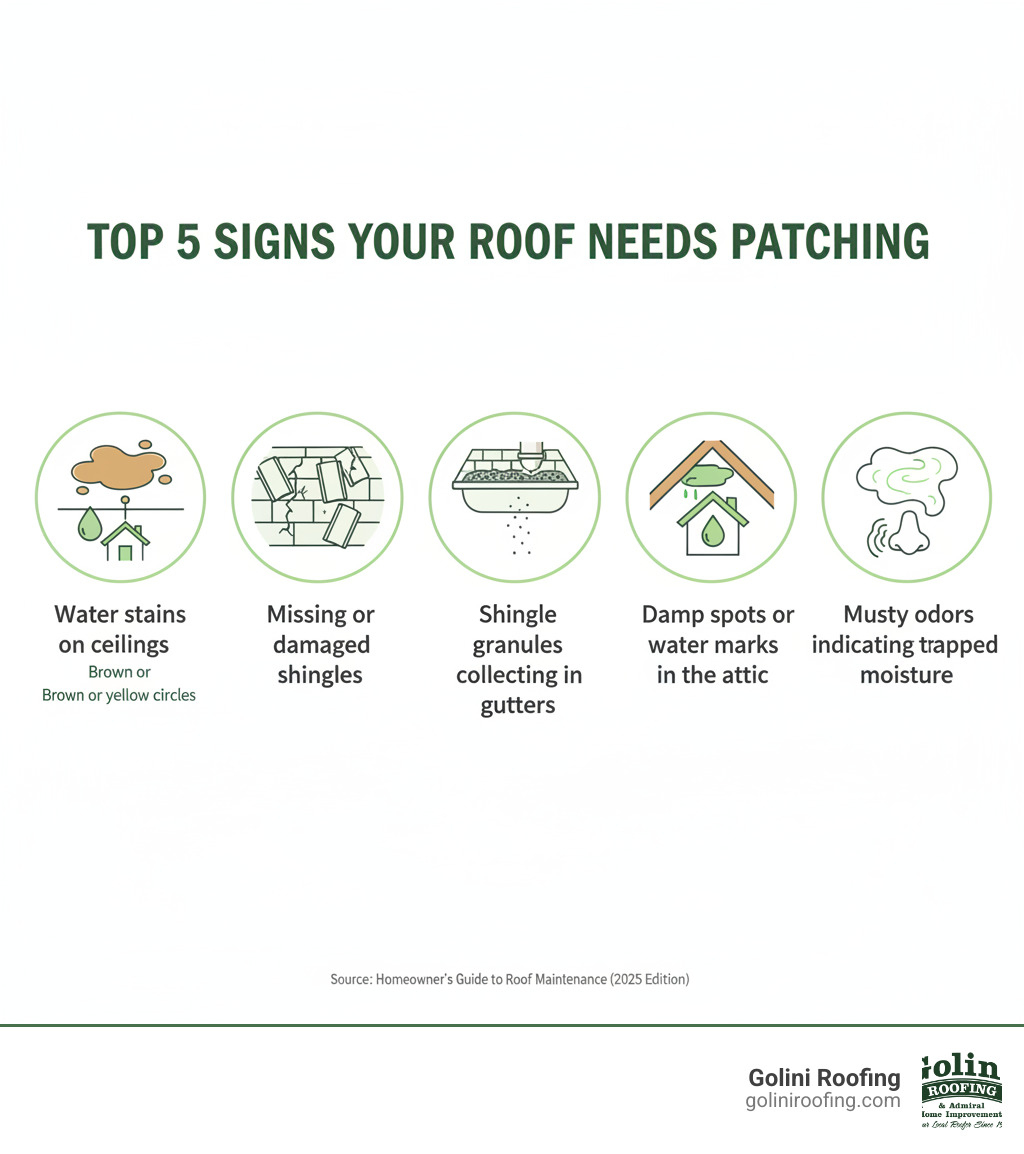
Roof leaks often start with subtle hints. Spotting these warning signs early can save you from major headaches. Here’s what to look for:
- Interior Signs: The most obvious clue is water stains on your ceiling, which typically appear as brownish or yellowish circles. You might also notice sagging or bulging drywall, indicating collected water.
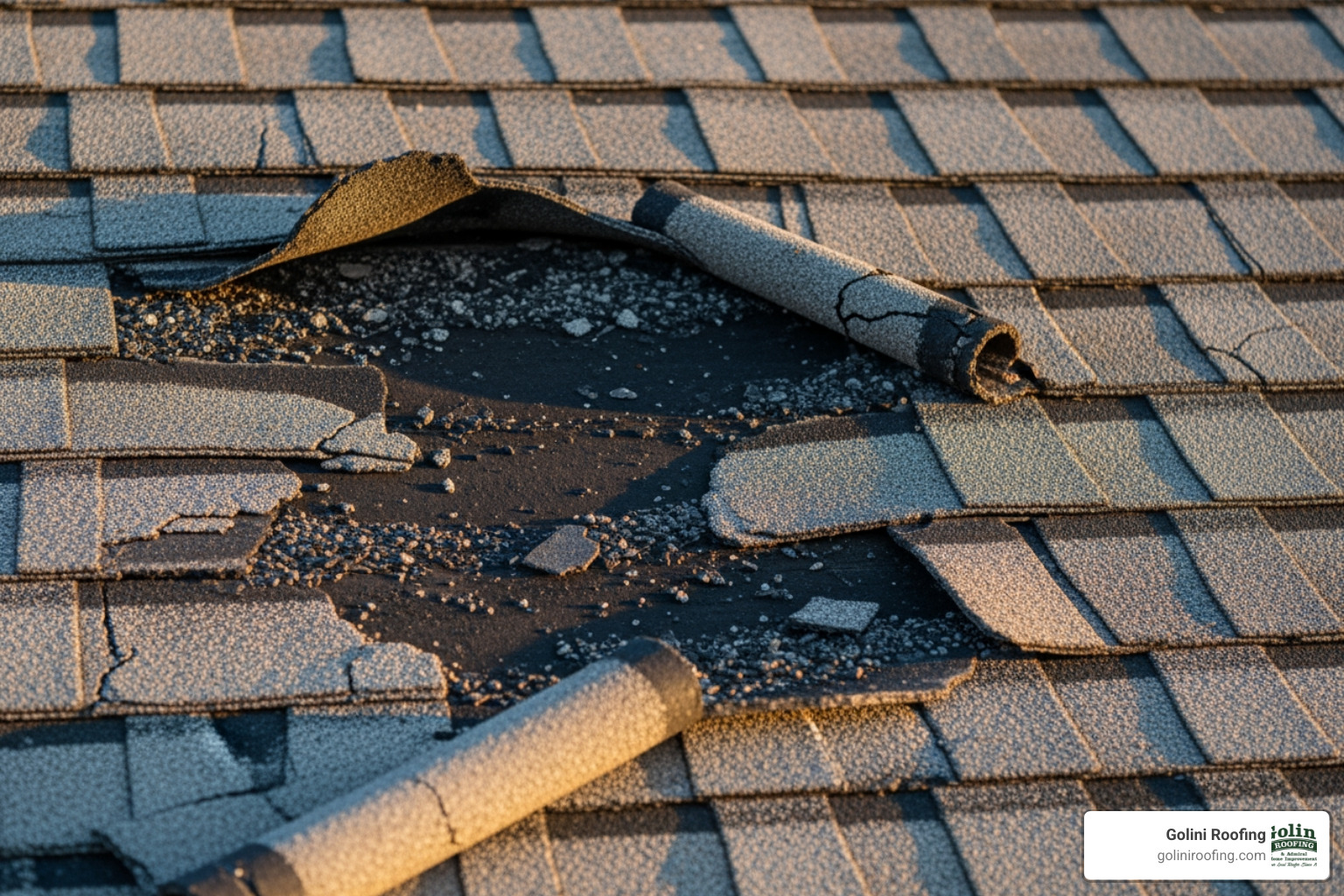
- Exterior Signs: Look for missing, cracked, or curled shingles, which leave your roof vulnerable. Also, check for visible holes or gaps in the roofing material.
- Gutter Clues: Finding excessive shingle granules in your gutters is a sign that your shingles are aging and losing their protective layer.
- Attic Inspection: If you can safely access your attic, use a flashlight to search for damp spots on the roof’s underside or wet insulation.
- Unusual Odors: A musty odor in your attic or upper floors often points to hidden moisture and potential mold growth.
If you notice any of these signs, patching a roof quickly—or calling a professional—is crucial to prevent a minor issue from becoming a disaster. For an expert assessment, check out our roof repair services.
DIY vs. Calling a Pro: Weighing the Risks and Rewards
There’s satisfaction in DIY fixes, and for a simple patch, you might only spend under $100 on materials. However, those savings come with significant risks.
First is safety. Working at heights can lead to serious falls, and professionals have specialized safety equipment and training that most homeowners lack.
Second is quality. An improper patch can trap moisture, leading to wood rot and mold growth. A small DIY fix can quickly turn into a major structural problem. Furthermore, DIY repairs often void your existing roof warranty, as most manufacturers require work to be done by certified professionals.
Professional roofers can accurately diagnose the true cause of a leak—which may be hidden issues like damaged flashing or underlayment—and provide a warrantied, long-lasting repair. This offers genuine peace of mind.
Here’s a straightforward comparison:
| Feature | DIY Roof Patching | Professional Roof Patching |
|---|---|---|
| Cost (materials & labor) | Typically $100-$500 for materials only | $200-$1,000+ for shingle repairs (average costs based on internet data; actual costs vary) |
| Time Investment | Several hours to a full day, depending on your skill level | Usually completed within a day for minor repairs |
| Safety | High risk of falls; most homeowners lack proper safety equipment | Professionals use specialized harnesses, equipment, and training |
| Warranty | DIY repairs typically void manufacturer warranties | Reputable professionals offer warranties on workmanship and materials |
| Longevity | Often temporary; may miss underlying issues | Addresses root causes for lasting solutions |
When is DIY Patching a Roof a Good Idea?
A DIY approach can work if you have a single-story home with a low-slope roof and the damage is minor, like a few cracked shingles. You should be comfortable working at heights, confident with tools, and able to work on a clear, dry day.
When Should You Call a Professional Roofer?
Always call a professional in these situations:
- Your roof is steep or your home is multi-story.
- The damage is extensive (affecting more than a small area).
- You see leaks near electrical wiring—a serious safety hazard.
- There are signs of structural rot or sagging in the roof deck or attic.
- You can’t pinpoint the leak’s source.
- A previous DIY patch has failed.
For comprehensive solutions, from minor repairs to complete replacements, explore our full range of roofing services. We can help you make the right decision for your home.
Your Step-by-Step Guide to Patching a Roof
For minor, DIY-friendly repairs, safety is the top priority. Always work on a clear, dry, and calm day. Never work alone, use a stable ladder, and consider a safety harness.
Essential Tools and Materials for Patching a Roof
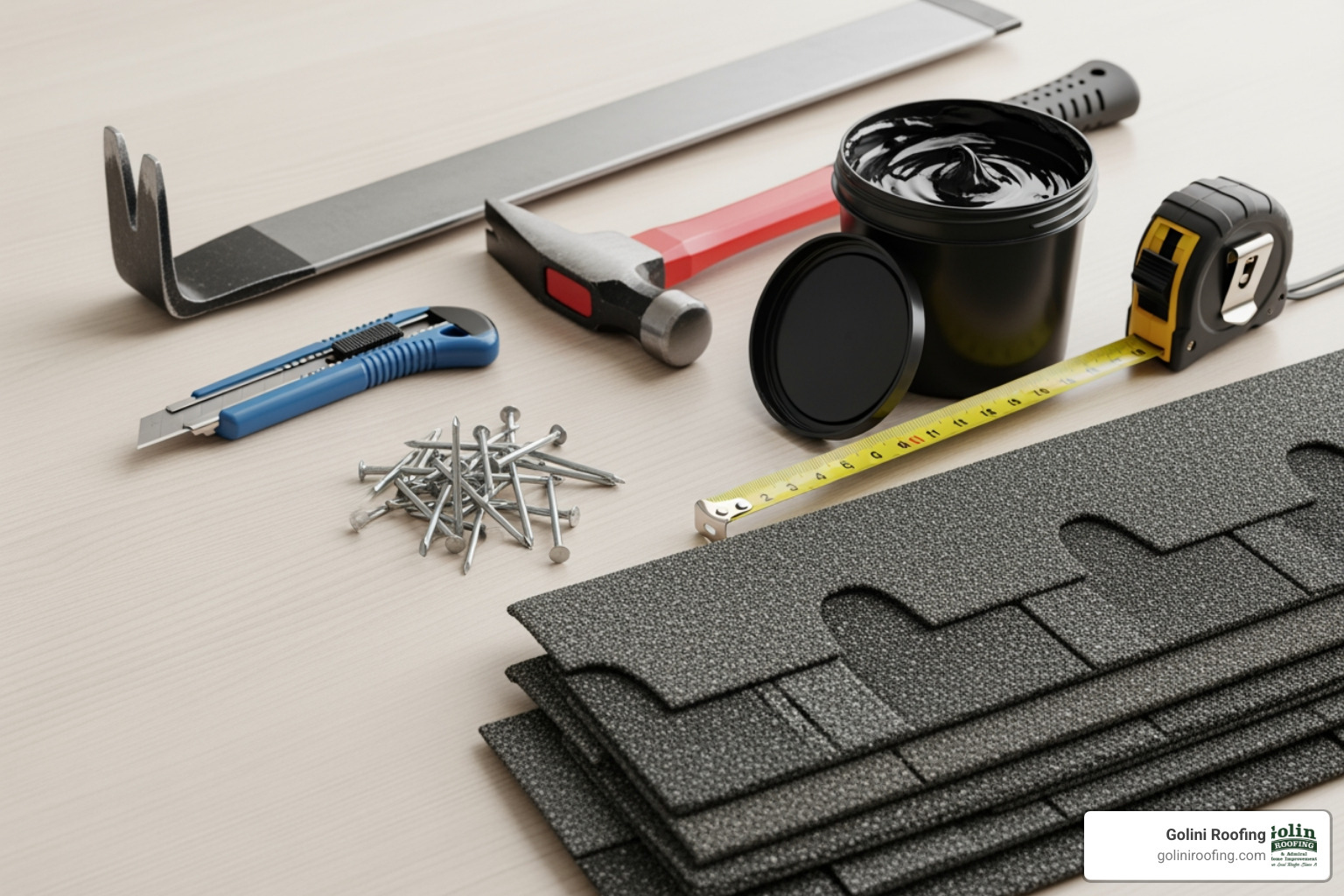
Gather these items before you start:
- Tools: A flat bar, utility knife, hammer, and a caulk gun.
- Materials: High-quality roof sealant, galvanized roofing nails, and new shingles that match your existing roof.
- Safety Gear: A safety harness, gloves, goggles, and non-slip shoes.
The Process for Patching a Roof with Asphalt Shingles
Take your time with each step to ensure a proper seal.
Step 1: Loosen surrounding shingles. Gently use your flat bar to break the adhesive seal on the shingles above and around the damaged one. Be careful not to cause new damage, especially in very hot or cold weather.
Step 2: Remove damaged shingles. Pry up and remove the damaged shingle. Clean the area of any debris or old cement to create a clean surface for the patch.
Step 3: Remove old nails. Use your flat bar or hammer to pull out any nails left behind from the old shingle.
Step 4: Slide new shingle into place. Position the new shingle in the gap, ensuring it aligns with the surrounding shingles and slides under the shingle above it.
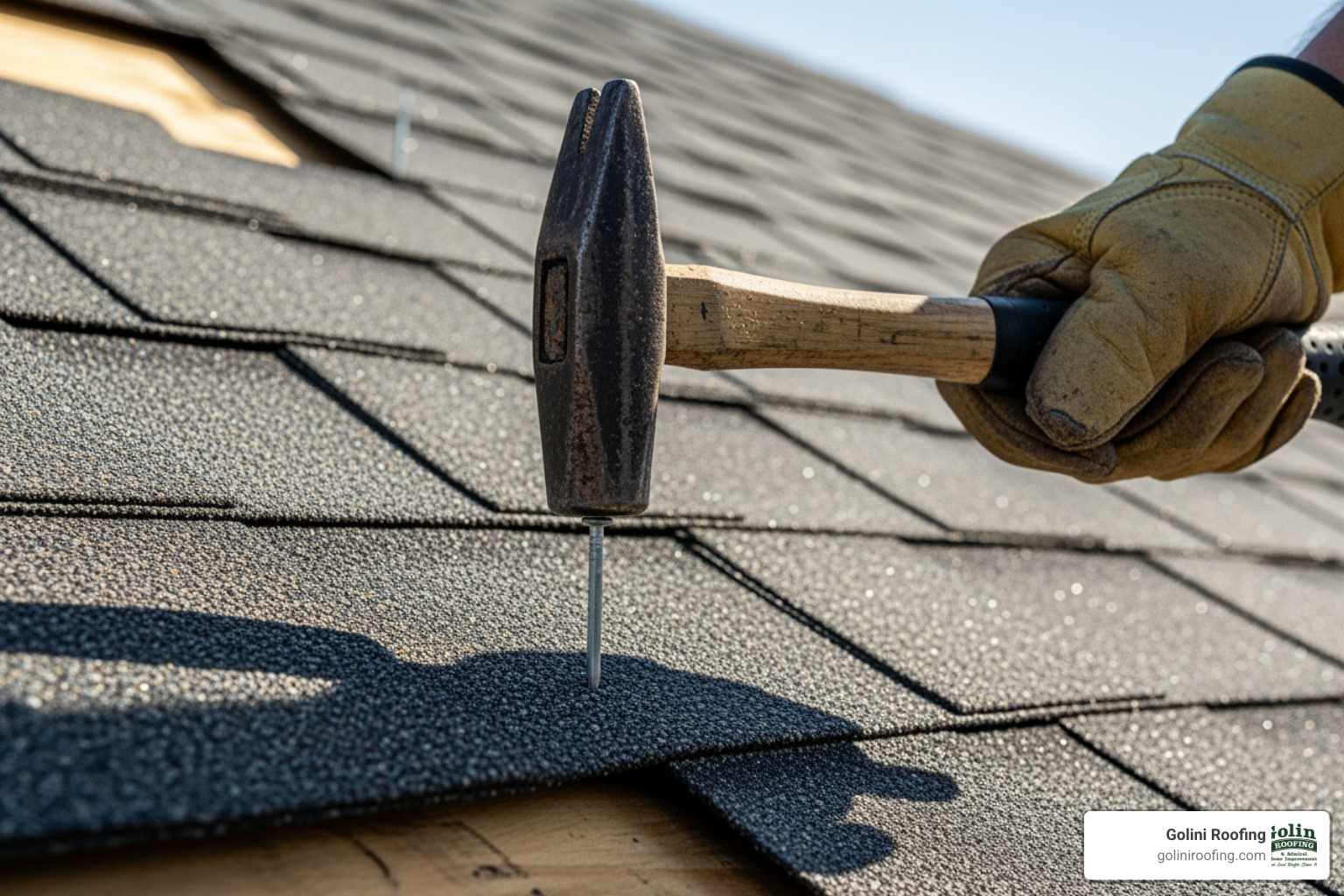
Step 5: Secure the new shingle with roofing nails. Lift the tab of the shingle above and drive galvanized roofing nails through the new shingle, just above its adhesive strip. Nail heads should be flush with the surface, not overdriven.
Step 6: Seal the nail heads and shingle edges. Apply roof sealant over each nail head. Also, apply sealant under the edges of any loosened neighboring shingles to re-adhere them and along the edges of the new patch for extra protection.
Beyond the Shingles: Common Leak Hotspots
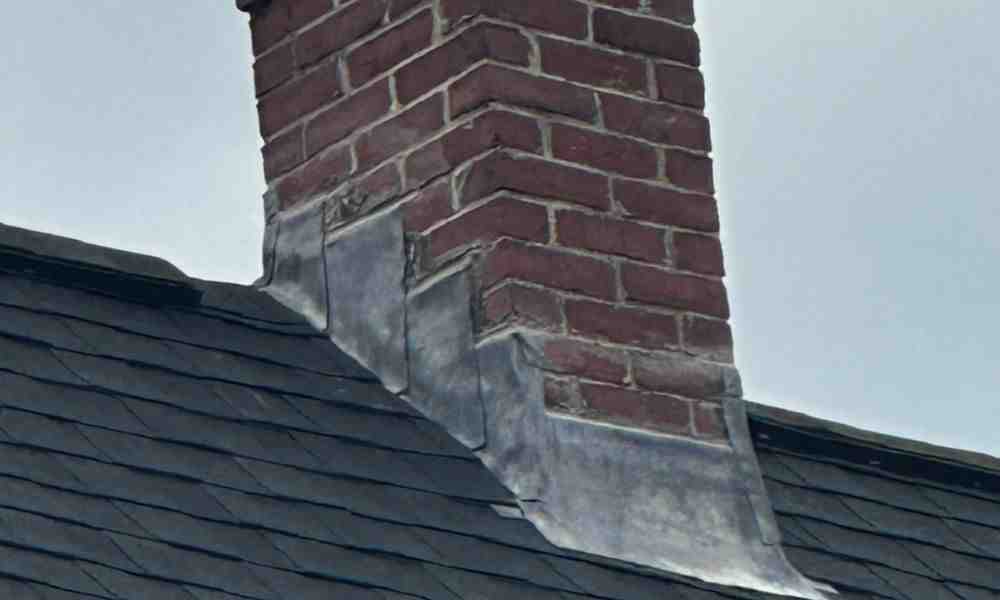
Damaged shingles aren’t the only cause of leaks. Water often enters through penetrations—anywhere something breaks the roof’s surface, like chimneys, vents, and skylights. These spots are protected by flashing, thin metal pieces that direct water away.
Over time, flashing can crack, corrode, or loosen. Another common failure point is the vent boot, the rubber seal around plumbing pipes, which can deteriorate from sun exposure. Many leaks we fix in the Wakefield area stem from failed flashing or vent boots. For more guidance, see our page on how to fix roof shingles.
How to Address Leaks Around Vents and Flashing
When patching a roof near penetrations, start with a careful inspection. Look for cracks, gaps, or rust on flashing.
- Minor Flashing Gaps: For small cracks, a high-quality roof sealant can provide a temporary fix. Clean and dry the area thoroughly before applying a generous bead of sealant.
- Replacing a Damaged Vent Boot: This is a common repair. Carefully pry up the surrounding shingles to access the old boot. Remove it, apply sealant to the underside of the new vent boot, and slide it over the pipe. Position it under the upper shingles and secure it with galvanized roofing nails, preferably nails with neoprene washers for a better seal.
- Damaged Step Flashing: For flashing along walls or dormers, you may need to replace bent or corroded sections. This involves prying up shingles and siding to access the piece. Ensure each new piece of flashing overlaps the one below it and is sealed underneath.
Working around penetrations is more complex than replacing a shingle. If you’re unsure, it’s wise to call a professional to fix these tricky leak sources correctly.
The Dangers of Delay: Why Proper Patching and Maintenance Matter
Small roofing problems don’t stay small. Delaying repairs or using an improper patch can lead to significant trouble. We’ve seen countless times how a quick fix fails, resulting in a much larger problem later.
The real danger of a poorly patched roof is trapped moisture, which leads to wood rot in your roof deck and rafters, compromising your home’s structural integrity. What could have been a simple repair can turn into a full roof replacement.
Trapped moisture also invites mold and mildew, which can spread through your home and pose health risks, especially for those with allergies or respiratory issues. The financial cost of a failed patch can be immense, including structural repairs, mold remediation, and fixing damaged interiors. It’s often cheaper to call a professional from the start.
Preventing these issues is straightforward with regular maintenance:
- Clean your gutters and downspouts at least twice a year to prevent water from backing up under shingles.
- Trim overhanging branches to prevent them from scraping shingles or breaking and causing direct damage.
- Schedule annual professional inspections to catch minor issues like cracked flashing or deteriorating vent boots before they become emergencies.
For help with maintenance, check out our gutter services page. A little attention now can save you from major expenses later.
Frequently Asked Questions about Roof Patching
Here are answers to the most common questions we hear from homeowners about patching a roof.
How much does it cost to patch a roof?
Cost varies significantly. A minor DIY repair might cost under $100 for materials. Professional repairs, which include expertise, a proper diagnosis, and a warranty, are different. Based on general industry averages (not our specific pricing), shingle repairs often range from $200 to $1,000. More complex jobs involving structural issues or difficult access can cost $400 to $2,000 or more.
Factors influencing the final price include the extent of the damage, roof accessibility (a steep roof costs more to work on), and the type of roofing material. These are general market averages; we always recommend a professional inspection for an accurate quote.
How long will a roof patch last?
The lifespan of a patch depends on the method and materials.
- Temporary Tarps: These are for emergencies and may last a few weeks to a few months.
- Sealant Patches: For small cracks, these might last a year or two but are considered short-term fixes.
- Proper Shingle Replacement: When a damaged shingle is correctly removed and replaced with matching materials, the patch can last for several years, sometimes for the remaining life of the roof.
A patch is only as good as the roof around it. A patch on an old, worn roof won’t last as long as one on a newer roof. Quality materials and proper installation are key to longevity.
What is the best season to fix a roof?
Fall is the ideal season for roof repairs. The moderate, dry weather is perfect for sealants and adhesives to cure properly. Summer can be too hot, making shingles soft and prone to damage during repair. Spring often brings rain, which can cause delays as the roof surface must be completely dry for most patches.
However, if you have an active leak, don’t wait for the perfect season. Address the problem as soon as you find it to prevent further water damage. For non-urgent repairs or maintenance, aim for the fall.
Protect Your Home with a Proper Roof Repair
When it comes to patching a roof, a small repair done right and done quickly can save you from thousands of dollars in future damage. Acting fast when you spot warning signs is key to preserving your home’s integrity.
It’s equally important to know your limits and prioritize safety. While we encourage the DIY spirit for very minor fixes, we strongly recommend calling a professional for anything more complex, especially on steep roofs or when the damage seems extensive.
For a durable, professional repair in the Wakefield, MA area and surrounding communities like Burlington, Lynnfield, Stoneham, North Reading, Reading, Winchester, Woburn, and Wilmington, we’d be honored to help. At Golini Roofing, we’ve built our reputation on meticulous hand-nailing—no shortcuts. It’s the craftsmanship that ensures a high-quality, watertight repair every time.
We offer free, no-pressure inspections to give you an honest assessment of your roof’s condition. Contact us for your roof repair needs today and gain the peace of mind that comes with a job done right.
