Why Your Attic Holds the Key to Home Energy Efficiency
Roof and attic inspection for efficiency is the process of evaluating your attic’s insulation, ventilation, structure, and moisture levels to find problems that waste energy and drive up utility bills.
Here’s a quick summary of what it covers and why it matters:
| What Gets Inspected | Why It Matters |
|---|---|
| Insulation depth and condition | Poor insulation can raise energy bills by 20-30% |
| Ventilation (soffit and ridge vents) | Blocked airflow causes heat buildup and moisture damage |
| Structural framing | Damaged joists or rafters compromise roof integrity |
| Moisture and roof leaks | Unchecked leaks lead to mold and costly repairs |
| Pest activity | Infestations can destroy insulation and wiring |
| HVAC ducts | Leaky or uninsulated ducts force your system to work harder |
Most homeowners never think about their attic — until something goes wrong. But the attic is one of the biggest drivers of energy loss in a home. Heat escapes through it in winter. It traps blistering heat in summer. And problems up there often stay hidden for months or years before anyone notices.
The good news? A single inspection can reveal exactly where your home is losing money — and what to fix first.
With over 35 years of residential roofing experience in Wakefield, MA, our team has seen how a proper roof and attic inspection for efficiency can save homeowners thousands in energy costs and prevent major structural damage. In this guide, we’ll walk you through everything you need to know to inspect your attic like a pro.
Roof and attic inspection for efficiency vocabulary:
Why a Roof and Attic Inspection for Efficiency is Essential
In home maintenance, the attic is often “out of sight, out of mind.” However, this space acts as the thermal envelope of your home. It is the primary barrier between your cozy living room and the harsh Massachusetts winters in towns like Lynnfield and Reading. Without a proper roof and attic inspection for efficiency, you are essentially leaving your front door wide open to energy waste.
The Thermal Envelope and Heat Transfer
Heat naturally moves from warm areas to cold areas. In the winter, the heat you pay for in your living spaces wants to rise into the attic and escape through the roof. In the summer, the sun beats down on your shingles, turning your attic into an oven that radiates heat back down into your bedrooms. According to Energy Star estimates, homeowners can save up to 15% on heating and cooling bills by properly insulating and air-sealing their attics.
Reducing HVAC Strain
When your attic is inefficient, your HVAC system has to run marathons just to keep your home comfortable. This constant cycling doesn’t just lead to utility bill spikes; it wears out your furnace and air conditioner prematurely. If you’ve noticed your AC running non-stop on a humid July day in Woburn, you might find yourself asking, “do i need a roof inspection?” The answer is often found in the attic.
Protecting Your Roof’s Lifespan
Efficiency isn’t just about the monthly bill; it’s about the longevity of your assets. An overheated attic in the summer can literally cook your shingles from the inside out, causing them to become brittle and lose granules. In the winter, poor insulation allows heat to melt snow on the roof, which then refreezes at the cold eaves, creating ice dams. These dams back up under shingles and rot your roof deck. This is why professional roof inspections always include a deep dive into the attic space.
Key Components of a Professional Attic Evaluation
When we perform a certified roof inspector evaluation, we aren’t just glancing around with a flashlight. We are looking at a complex system where every part must work in harmony.
Insulation Depth and R-Value
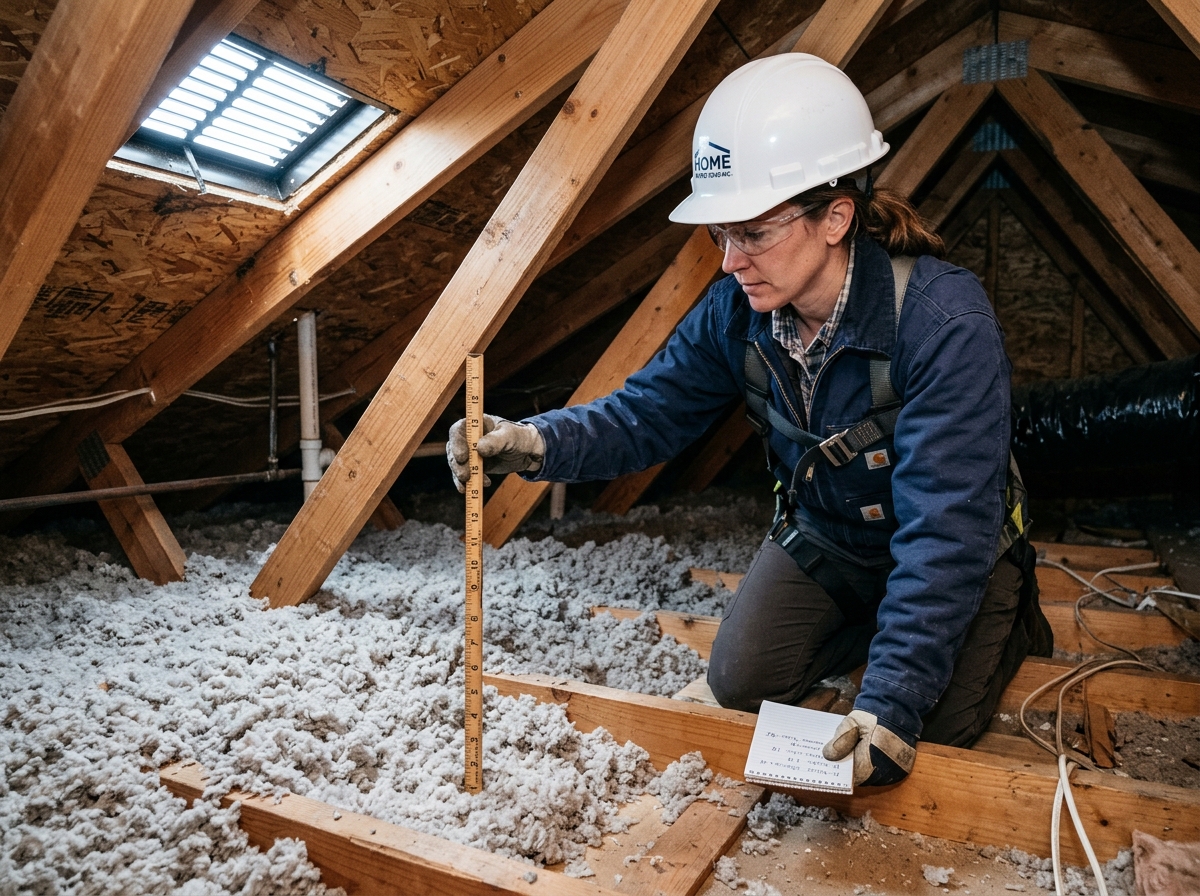
The first thing to check is your insulation. Is it level with the floor joists? If so, you likely don’t have enough. For our climate in Massachusetts, the goal is often an R-value of R-49 to R-60. You can learn how to check your home’s attic insulation level by measuring the depth. For example, 15 to 20 inches of blown-in cellulose is typically required to hit those high-efficiency targets. If your insulation has settled by 20-30% over the years—which is common—you’ve lost your thermal defense.
Ventilation Balance
A professional attic inspection near me focuses heavily on “intake” and “exhaust.” You need cool air coming in through the soffits (the underside of your eaves) and hot, moist air escaping through the ridge vent at the peak. If this balance is off, moisture builds up. We check for blocked soffit vents—often caused by DIY insulation projects where the homeowner accidentally covered the vents—which is a leading cause of attic mold.
Structural and Moisture Checks
We look at the “bones” of the roof. Are the rafters sagging? Are there “rusting nail tips” on the underside of the roof deck? Believe it or not, rusty nails are a huge red flag for high humidity and poor ventilation. We also look for water stains or “trails” on the rafters that indicate a slow leak that hasn’t quite made it to your ceiling yet.
Identifying Common Problems During a Roof and Attic Inspection for Efficiency
During an inspection, we often find a “rogue’s gallery” of issues that quietly sap your home’s performance.
- Pest Infestations: Approximately 25% of attic inspections reveal evidence of pests. Mice and squirrels love to tunnel through insulation, which compresses the material and destroys its R-value.
- Attic Mold: If you smell something musty, it’s time for an attic mold inspection. Mold usually grows on the north side of the roof deck first because it stays cooler and wetter.
- Compressed Insulation: Insulation works by trapping air. If you’ve been using your attic for heavy storage and squashing the fiberglass batts, they are no longer doing their job.
| Insulation Type | R-Value per Inch (Approx) | Efficiency Notes |
|---|---|---|
| Blown-in Cellulose | 3.2 – 3.8 | Excellent for filling gaps; eco-friendly. |
| Fiberglass Batts | 2.2 – 2.9 | Common but prone to gaps if not cut perfectly. |
| Spray Foam (Closed Cell) | 6.0 – 7.0 | Highest efficiency; also acts as an air seal. |
| Mineral Wool | 3.0 – 3.3 | Fire resistant and great for sound dampening. |
Warning Signs That Indicate an Immediate Roof and Attic Inspection for Efficiency
You don’t always have to wait for a scheduled visit. Your home often “talks” to you when it’s struggling.
- Ice Dams: If you see giant icicles hanging from your gutters in Winchester or Stoneham, your attic is leaking heat.
- Uneven Temperatures: If the upstairs is 10 degrees warmer than the downstairs in the summer, your attic insulation is failing.
- Musty Odors: This almost always points to moisture trapped in the attic, which can lead to wood rot.
- Spiking Utility Bills: If your heating costs jumped 20% compared to last year (and the weather was similar), your insulation might have settled or been damaged by pests.
- Post-Storm Issues: After a heavy Nor’easter, it’s wise to check for hail damage roof inspection signs or displaced insulation. You can follow our guide on storms over now what a guide to post storm roof inspections for more details.
DIY vs. Professional Inspection Methods
Can you check your attic yourself? Absolutely. Should you rely only on a DIY check? Probably not.
The DIY Approach
For a basic check, you’ll need a sturdy ladder, a high-powered flashlight, a dust mask (N95), and a ruler. Stay on the joists! One wrong step and you’ll be starring in a real-life version of a slapstick comedy as your leg goes through the living room ceiling. Look for visible light peeking through the roof boards, measure your insulation depth, and check for the smell of mold. This is a great way to stay on top of things between professional visits.
The Professional Advantage
When we perform professional roof inspection services, we bring tools that the average homeowner doesn’t have.
- Thermal Imaging: We use infrared cameras to see exactly where heat is leaking out. This “sees” through walls and insulation to find hidden gaps.
- Moisture Meters: We can test the actual moisture content of your rafters to ensure they aren’t at risk of rot.
- Blower Door Tests: While often part of a larger energy audit, this helps identify exactly how much air is leaking between your living space and the attic.
- Expert Eye: We know the difference between “old house dust” and “termite frass.” We can spot the subtle signs of a roof leak that a DIYer might mistake for a simple water stain.
If you are planning an upgrade, check out our attic insulation installation replacement near me your hiring handbook to ensure you get the best ROI.
When to Schedule Your Inspection and Maintenance Tips
Timing is everything. We recommend a roof and attic inspection for efficiency at least once a year.
- The Best Time: Spring and fall are ideal. You want to ensure your attic is ready for the extreme temperatures of summer and winter before they arrive.
- How Long Does It Take? A thorough how long does a roof inspection take is usually about 45 to 90 minutes for the attic portion.
- Maintenance Tip – Baffles: Ensure you have “baffles” installed. These are plastic channels that keep your insulation from sliding down and clogging your soffit vents.
- Maintenance Tip – Gutters: Clean gutters are essential. If gutters are clogged, water can back up under the roof edge and soak your attic insulation.
For those in our service area, you can often find a free attic inspection near me or a free roofing inspection to get a baseline on your home’s health. You can also use a Attic Inspection Checklist: What the Pros Look For to follow along during the process.
Maximizing ROI with a Roof and Attic Inspection for Efficiency
Is the how much does a roof inspection cost worth it? (Note: Average costs for inspections can range from $150 to over $600 depending on the scope and location, based on general internet data).
The ROI is actually quite impressive:
- Energy Savings: A 15-20% reduction in utility bills pays for the inspection and minor repairs within a year or two.
- Resale Value: A well-documented, efficient attic is a huge selling point for buyers in North Reading or Wilmington.
- Prevention: Catching a $200 leak today prevents a $10,000 structural repair or mold remediation project three years from now.
- Tax Credits: Many energy-efficiency upgrades (like air sealing and insulation) qualify for federal tax credits of up to 30%.
Frequently Asked Questions about Attic Efficiency
How often should I have my attic professionally inspected?
We recommend a professional check once a year. However, if you live in an older home (built before 1980), you should check it every six months. Older homes are more prone to insulation settling and ventilation failures.
What is the ideal R-value for insulation in Massachusetts?
In our region, the Department of Energy recommends an R-value between R-49 and R-60. This usually translates to about 16-20 inches of insulation, depending on the material used.
Can poor attic ventilation cause my roof to fail prematurely?
Yes, absolutely. Without proper airflow, heat builds up to over 150°F in the summer, which “bakes” your shingles. In the winter, trapped moisture causes the plywood roof deck to delaminate and rot. Proper ventilation is the “breathing” the house needs to stay healthy.
Conclusion
Your attic shouldn’t be a mystery. By staying proactive with a roof and attic inspection for efficiency, you are protecting your wallet, your comfort, and your home’s structural integrity. Whether you are checking for roof-inspection needs after a storm or just trying to lower your monthly bills, the attic is the place to start.
Our team has spent over 35 years serving the Wakefield, MA community and surrounding areas like Burlington and Wilmington. We believe in doing things the right way—which is why we still hand-nail every shingle for maximum durability. If you’re worried about your home’s efficiency or suspect your attic might be hiding some secrets, we’re here to help.
Ready to see how your attic measures up? Schedule your free attic inspection near me today and let us help you keep your home efficient and protected for years to come.
