
Residential roof estimate: 2025 Ultimate
Why Understanding Your Residential Roof Estimate is Critical
A residential roof estimate can feel overwhelming, with costs ranging from $7,000 to $30,000 for a typical home. Here’s what you need to know:
Key Components of a Residential Roof Estimate:
- Materials (40%): Shingles, underlayment, flashing, and ventilation
- Labor (60%): Professional installation, tear-off, and cleanup
- Additional Costs: Permits ($100-$500), disposal fees ($1,000-$3,000)
- Size Factor: Cost ranges from $3-$25 per square foot depending on materials
Average Cost Ranges (based on internet data, not actual Golini Roofing prices):
- Small homes (under 2,000 sq ft): $6,000-$30,000
- Medium homes (2,000-3,000 sq ft): $10,000-$45,000
- Large homes (3,000+ sq ft): $15,000-$60,000+
Your roof is your home’s first line of defense. Understanding your estimate helps you make smart decisions and avoid costly surprises. A quality roof replacement is one of the best investments for your home’s value and your family’s protection.
I’m Jack Golini, and I’ve helped Massachusetts homeowners with their residential roof estimate decisions since 1982. With over 35 years of experience on the North Shore, I know that understanding costs upfront leads to better outcomes.
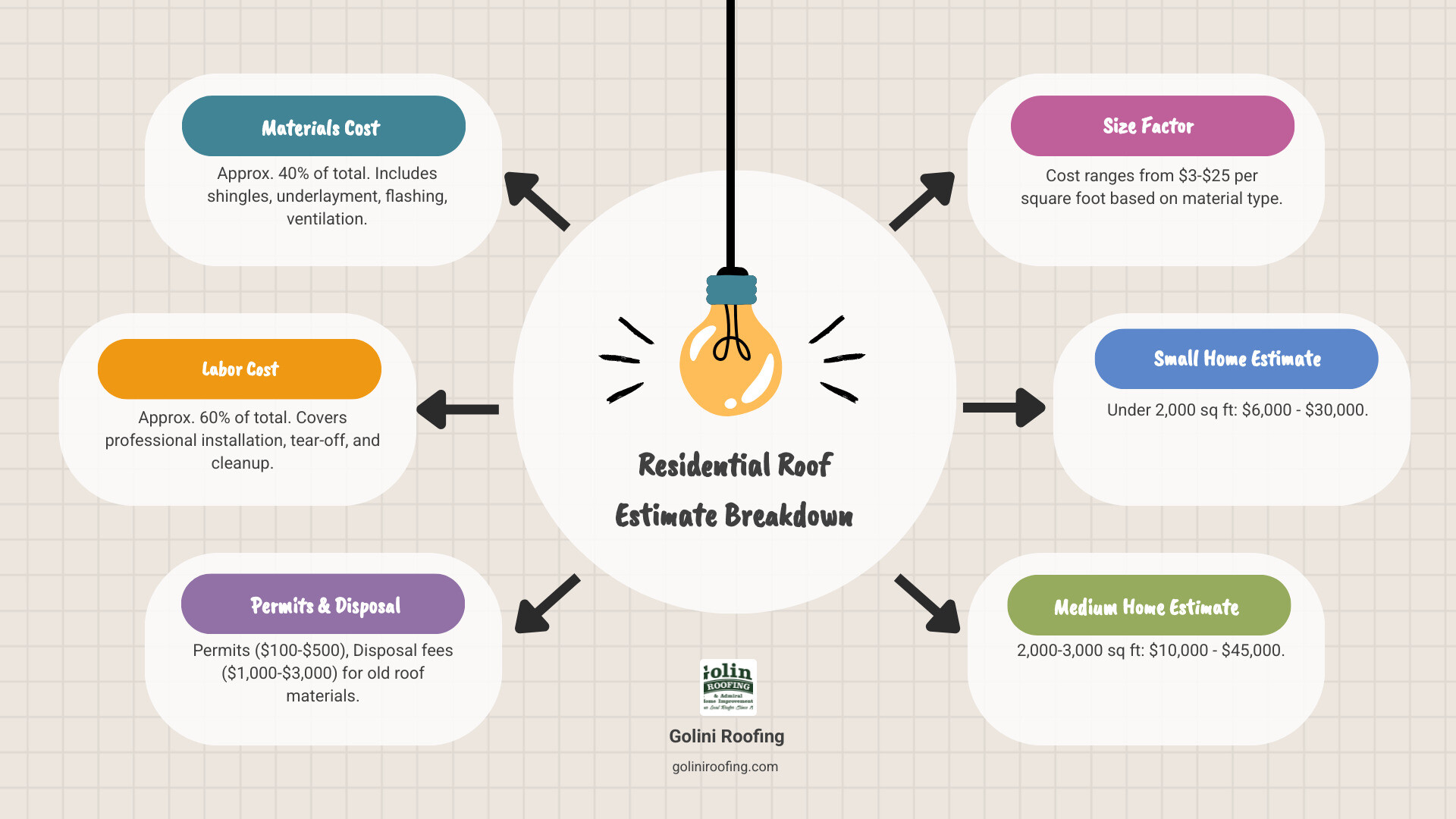
Residential roof estimate basics:
Deconstructing Your Residential Roof Estimate
Your residential roof estimate is more than a final price; it’s a detailed recipe for your new roof. The two main ingredients are materials and labor. It surprises many homeowners that labor typically makes up about 60% of the total cost, with materials accounting for roughly 40%. This split reflects the skill, safety, and time required for a proper installation.
Understanding this breakdown shows you where your money goes. A suspiciously low bid usually means corners are being cut on one of these essential components.
For a deeper dive into overall roofing expenses, check out our guide on the Average Cost of New Roof.
Understanding Your Residential Roof Estimate for Materials
The material choices you make will significantly impact your residential roof estimate. While options like slate or cedar exist, most Massachusetts homeowners choose asphalt shingles for their excellent protection, style variety, and value.
Not all asphalt shingles are the same. You’ll encounter two main types: 3-tab shingles and architectural shingles (also called dimensional shingles).
3-tab shingles are the economical, no-frills option. They are flat, single-layer, and get the job done. Architectural shingles are the popular upgrade. They’re thicker, multi-layered, and create a beautiful dimensional look that mimics natural slate or wood shakes.
Here’s how they stack up:
| Feature | 3-Tab Shingles | Architectural Shingles |
|---|---|---|
| Cost | $3.50 to $5.00 per square foot installed | $4.00 to $8.50 per square foot installed |
| Lifespan | 15-20 years | 25-30 years (premium up to 50 years) |
| Warranty | Typically 20-25 years | Often 30 years to Lifetime limited transferable |
| Appearance | Flat, uniform, classic look | Dimensional, textured, natural material look |
(These are average costs based on internet data, not actual Golini Roofing prices)
The longevity factor is huge. While architectural shingles cost more upfront, they often provide better long-term value. Their aesthetic appeal can also dramatically boost your home’s curb appeal and resale value.
For specific pricing on asphalt shingle projects, explore our Asphalt Shingle Roof Estimate page. Major manufacturers often provide homeowner guides with excellent insights into roofing systems and material choices.
The Cost of Professional Labor
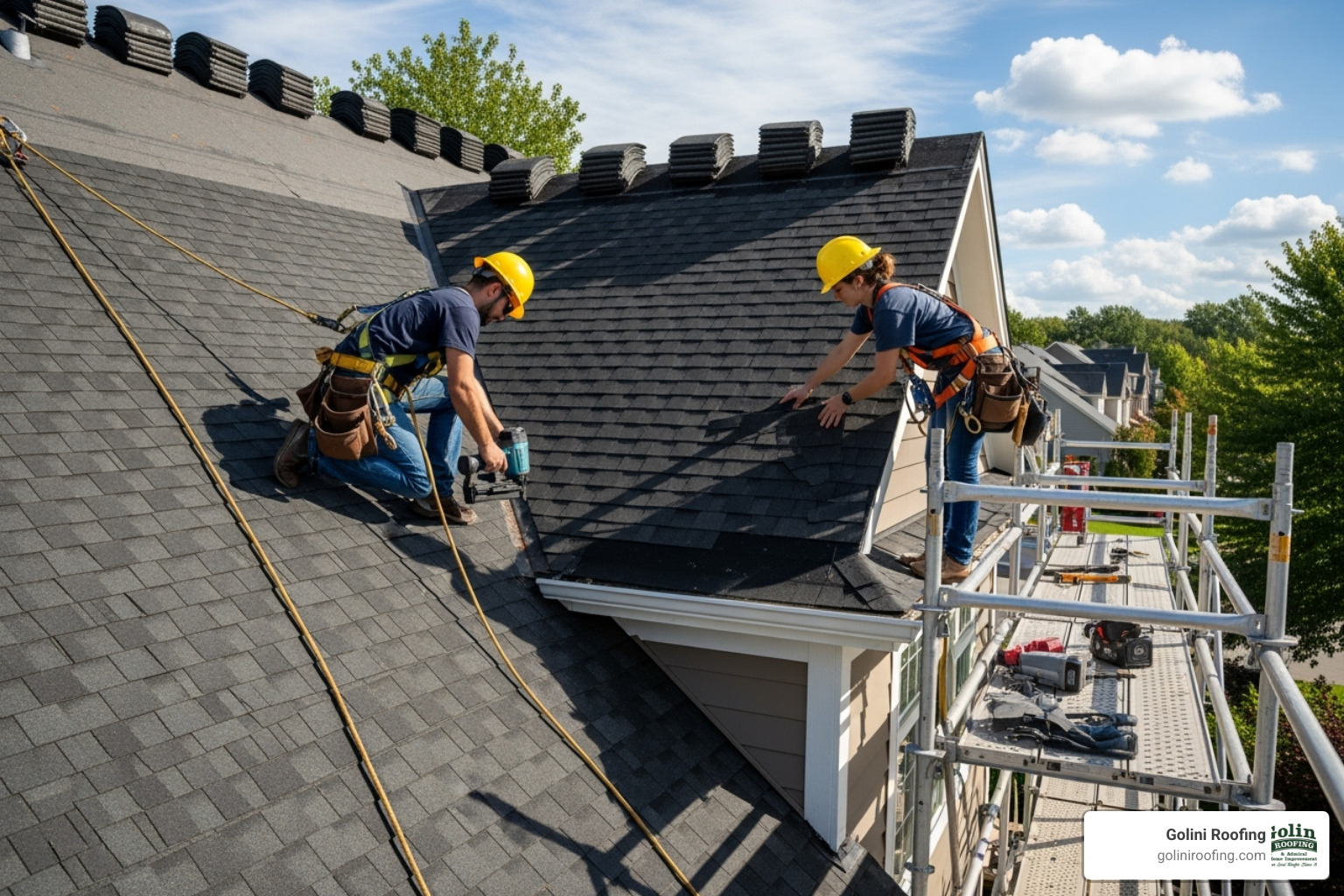
Labor typically represents 40% to 60% of your residential roof estimate. Before you consider a DIY approach, understand what you’re paying for.
Skilled craftsmanship is the foundation of a lasting roof. Professionals know how to handle tricky areas like chimneys, ensure proper ventilation, and install flashing that keeps water out. Safety equipment and protocols are also major factors, protecting workers and your property.
The installation time is often underestimated. Experienced crews can complete a job in days that might take a DIYer weeks, minimizing disruption and weather risks.
At Golini Roofing, we take pride in our hand-nailing approach. While many contractors use pneumatic nail guns for speed, we hand-nail every shingle. This ensures each fastener is placed perfectly and driven to the correct depth. It’s old-school craftsmanship that creates roofs built to withstand New England weather.
Professional installation also keeps manufacturer warranties intact, meets building codes, and includes workmanship guarantees. For more details, visit our Residential Roof Installation page.
How Roof Size and Complexity Impact the Final Price
Two homes of the same size can have dramatically different residential roof estimate costs. The reason? The size and complexity of their roofs.
Replacing the roof on a simple ranch home is far less complex than working on a Victorian with multiple dormers and chimneys. One demands significantly more time, materials, and expertise.
Calculating Roof Size and Square Footage
The foundation of every residential roof estimate is the roof’s surface area. Roofers measure in “squares,” where one roofing square equals 100 square feet of roof surface.
So if your roof measures 2,000 square feet, that’s 20 squares of material and labor.
Here’s a key point: your roof’s surface area is almost always larger than your home’s footprint due to overhangs and slope. A 1,500 square foot ranch might have 1,800 square feet of roof surface once you account for pitch.
Online calculators using ground-level measurements only provide a rough ballpark. A professional residential roof estimate requires measuring the actual roof surface, which contractors do with satellite imagery, drones, or by hand.
This precision matters because every extra square foot adds to material and labor costs. For details on how roof size translates to pricing, see our guide on Roofing Price Per Square.
The Role of Roof Pitch and Complexity
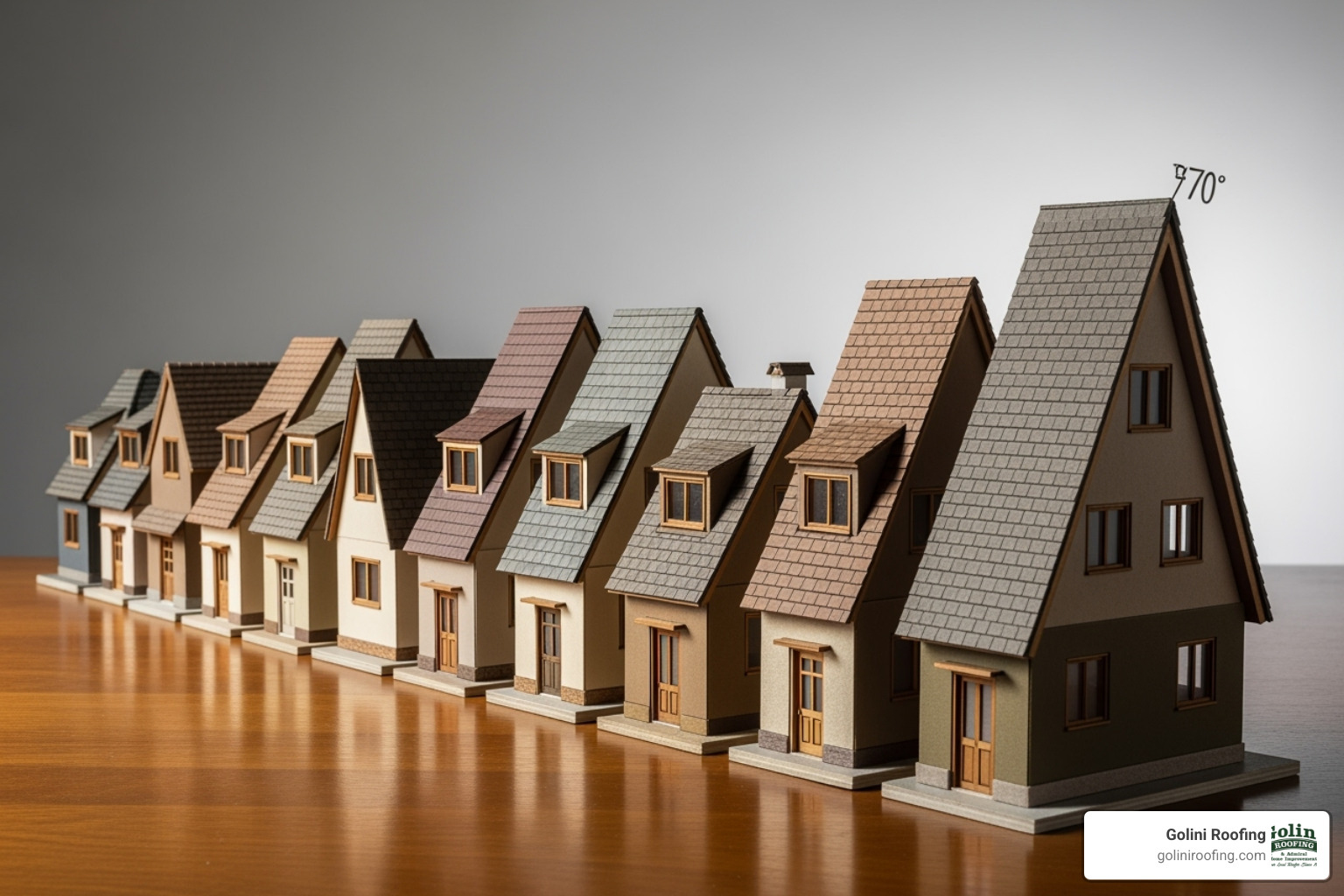
Roof pitch, or slope, significantly affects cost. It’s expressed as a ratio, like 6/12 (the roof rises 6 inches for every 12 inches of horizontal run). Low-pitch roofs (2/12 to 4/12) are easier and safer to work on.
Steep-pitch roofs (7/12 and higher) are a different story. A 12/12 pitch is a 45-degree angle, requiring specialized equipment, extra safety precautions, and more time for workers to steer safely.
Beyond pitch, architectural features drive costs. Dormers, valleys (where roof sections meet), skylights, and chimneys all add complexity.
Each feature requires custom flashing, precise cutting, and careful sealing to prevent leaks. This complexity doesn’t just add materials—it significantly increases the skilled labor time required, which directly impacts your residential roof estimate.
A simple roof might take a crew three days, while a complex roof on the same-sized home could take a week or more. Understanding your roof’s unique characteristics is essential for realistic budgeting.
Additional Costs to Factor Into Your Budget
Beyond materials and labor, your residential roof estimate includes other essential costs. These aren’t surprises, but key investments in your home’s protection and peace of mind.
Old Roof Removal and Disposal
Before new shingles go on, the old roof must come down. This tear-off process is critical.
Removal and disposal costs typically range from $1,000 to $5,000, or about $1 to $5 per square foot (based on internet data, not actual Golini Roofing prices). Several factors influence these costs.
The number of existing layers makes the biggest difference. If previous owners layered new shingles over old ones, the crew will spend more time stripping everything to the deck. Each layer means more debris, labor, and disposal fees.
Dumpster rental and landfill fees are unavoidable. A typical roof generates several tons of heavy, bulky waste that requires proper disposal.
Proper tear-off is almost always worth it. Leaving old layers can void warranties and hide deck damage that could lead to expensive repairs later.
Permits, Inspections, and Warranties
These administrative costs protect your investment for years to come.
Building permits cost between $100 and $500 in most areas (based on internet data). Permits ensure your roof meets local building codes and safety standards, which protects your home’s resale value.
Municipal inspections follow the permit process, verifying that your new roof meets code. This is quality control from an independent third party.
Manufacturer warranties cover defects in the materials, often for 25 to 50 years. Workmanship warranties are where your contractor’s reputation shines. At Golini Roofing, our meticulous hand-nailing and 35+ years of experience back our commitment to quality. A solid workmanship warranty means your contractor stands behind their craft.
Essential Upgrades: Gutters, Flashing, and Ventilation
Your roof is a complete water management system, not just shingles. These supporting components are vital.
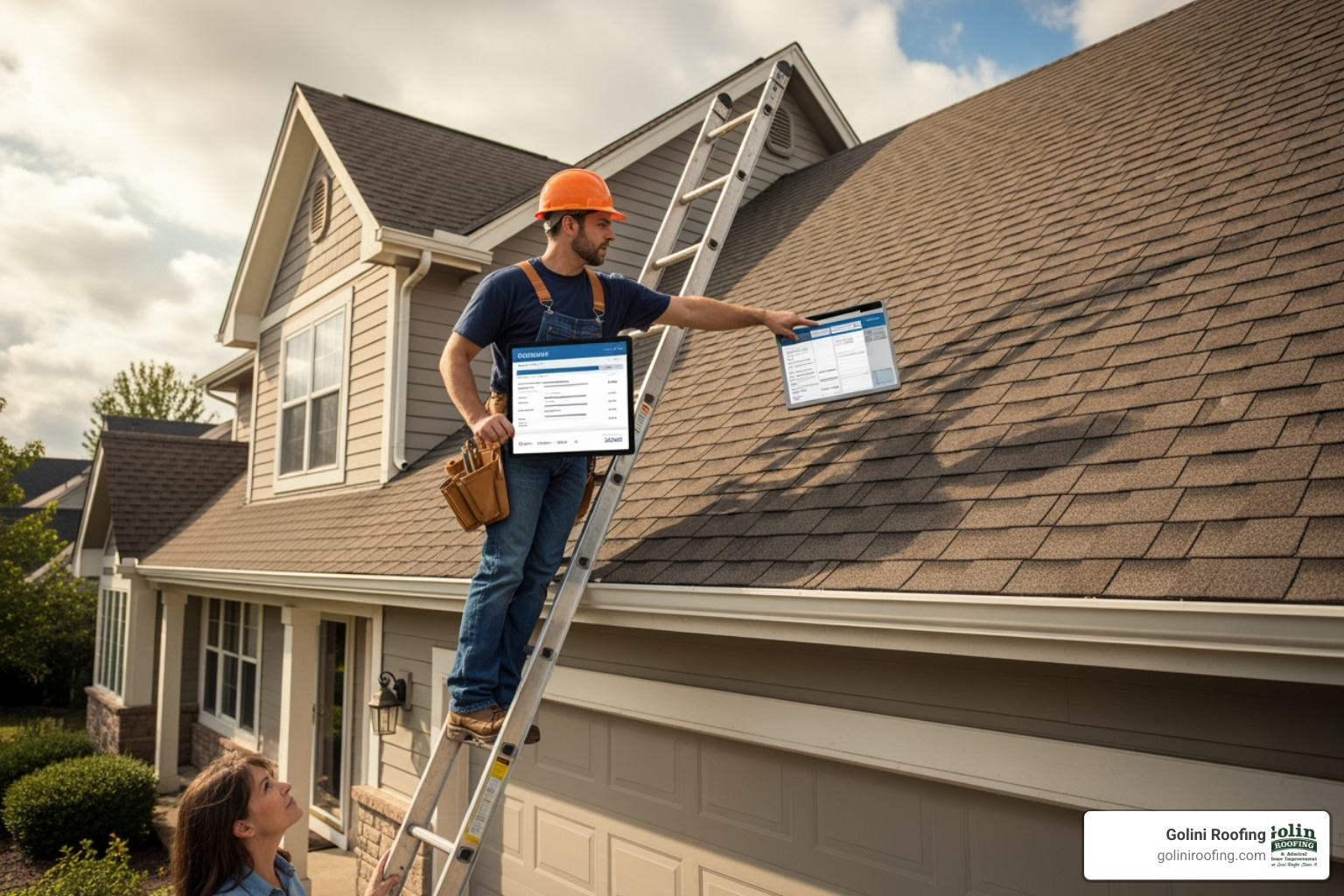
Flashing replacement is essential. These metal pieces create watertight seals around chimneys, vents, and skylights. Old flashing is a common source of leaks.
Underlayment and ice & water shield are a second line of defense. In Massachusetts, ice and water shield along eaves and valleys prevents water from backing up under shingles and rotting your roof deck.
Gutter systems channel water away from your foundation. New seamless gutters typically cost $10 to $20 per linear foot (based on internet data) and are crucial for protecting your entire home.
Attic ventilation is incredibly important. It regulates temperature and moisture, preventing ice dams in winter and extending shingle life by reducing heat buildup in summer. This also lowers energy bills.
Skimping on any one of these components can compromise your entire roof. For ongoing maintenance, explore our Residential Roof Repair services.
How to Get the Best Value for Your New Roof
A new roof is a significant investment. Getting the best value isn’t about finding the cheapest price—it’s about making smart decisions that protect your family and wallet for decades.
DIY vs. Hiring a Professional Roofer
Seeing a high residential roof estimate can make DIY roofing tempting. However, trying to save money this way often costs more in the long run.
Safety is the biggest concern. Professional roofers have the training, equipment, and insurance to work safely at heights. Expertise is another factor. A quality installation requires understanding materials, ventilation, and building codes. Our hand-nailing technique at Golini Roofing, for example, comes from decades of experience ensuring maximum durability.
Warranty protection is also crucial. Most manufacturer warranties are voided if materials aren’t installed by certified professionals. You also won’t have a workmanship warranty to fall back on.
The potential savings from DIY disappear quickly when you factor in tools, disposal, permits, and mistakes that lead to leaks and premature replacement.
How to Get the Best Value from a Residential Roof Estimate
Getting the best value requires being a smart shopper. The goal is finding the sweet spot between quality, fair pricing, and excellent service.
Start by gathering multiple detailed quotes from at least three local roofing companies to get a realistic picture of market pricing.
Compare the details, not just the bottom line. Each estimate should break down costs for materials, labor, tear-off, disposal, and permits. This allows for true apples-to-apples comparisons.
Do your homework on each contractor. Verify licenses and insurance. Check online reviews on Google and the Better Business Bureau, and ask for references.
Ask the right questions about their installation methods, crew experience, project timeline, and cleanup process. Find out what warranties they offer.
Be wary of unusually low bids. They often signal subpar materials, inexperienced crews, or missing insurance. When it comes to roofing, you get what you pay for.
For more guidance on choosing the right contractor, visit our page on Residential Roofing Companies.
Financing Your Roof Replacement
A quality roof replacement is a major investment, and financing can make it manageable. Several options can help you get the roof your home needs without emptying your savings.
Many roofing companies offer in-house financing through lending partners. Traditional bank loans and credit union financing are also solid options. For larger projects, a Home Equity Line of Credit (HELOC) is often cost-effective, as you borrow against your home’s equity. You can learn more about HELOC options and how they work.
Don’t overlook potential government or utility rebates for energy-efficient roofing. Explore your options early so financing doesn’t become a roadblock.
Frequently Asked Questions about Roof Replacement Costs
Over the years, I’ve answered thousands of questions about residential roof estimate costs. Here are the most common ones.
When is a full roof replacement necessary versus a repair?
This decision can save or cost you thousands. It usually depends on your roof’s age and the extent of the damage.
You need a full roof replacement when your roof shows widespread damage. If you have curled, cracked, or missing shingles in several spots, your roof is likely at the end of its life. Most asphalt shingle roofs last 15-20 years, and constant repairs on an old roof are often a waste of money.
Multiple leaks are another red flag. One leak might be fixable, but several indicate systemic failure.
Repairs make sense when you have localized damage on a relatively young roof, such as from a fallen branch. A targeted repair can buy you years of additional life.
A good contractor will honestly tell you when a repair is sufficient.
How long does a typical asphalt shingle roof last?
The lifespan of an asphalt shingle roof is generally 15 to 30 years. The wide range is due to several factors.
3-tab shingles typically last 15-20 years, while architectural shingles can last 25-30 years. Some premium options have warranties for 50 years or more.
Installation quality is critical. Our hand-nailing approach at Golini Roofing creates a more durable attachment than nail guns. Climate also plays a major role; New England’s weather takes a toll. Proper attic ventilation prevents heat and moisture buildup that ages shingles prematurely. Finally, regular maintenance can add years to your roof’s life.
Can I put a new roof over my old one?
Installing new shingles over existing ones (an overlay) is generally not recommended and often prohibited by local building codes.
Most areas limit roofs to two layers maximum. Even when allowed, there are serious drawbacks.
Hidden damage is the biggest concern. You can’t inspect the roof deck for rot or mold. These problems will only get worse under a new layer. Manufacturer warranties are also typically voided if their products aren’t installed on a clean surface.
The added weight can stress your home’s structure, and trapped moisture can cause the new shingles to fail prematurely. A proper tear-off gives your new roof the best foundation for a long, trouble-free life and is a better investment.
Conclusion: Ensuring a Quality Investment for Your Home
Understanding your residential roof estimate is easier when you break it down. You now know that materials are about 40% of the cost, while skilled labor is the remaining 60%. You’ve also learned how roof size, pitch, and complexity affect pricing, and why costs like permits and disposal are essential investments in your roof’s long-term performance.
A quality roof replacement is one of the smartest investments for your home. It protects your family, improves energy efficiency, and boosts property value. Choosing the right contractor makes all the difference between a roof that lasts 15 years and one that protects your home for 30 or more.
Quality craftsmanship isn’t negotiable. Techniques like hand-nailing each shingle create stronger, more durable installations that stand up to New England’s weather.
For over 35 years, Golini Roofing has provided Massachusetts homeowners with meticulous, hand-nailed roof installations for durability and peace of mind. We know that proper installation and attention to detail create roofs that exceed expectations.
Your home is your most valuable asset. Don’t let uncertainty about costs prevent you from getting the protection your family needs. Get your free, detailed roof quote today and find how a quality roof installation can provide decades of worry-free protection.
