
Roofing Installations: 7 Powerful Steps for Success 2025
Understanding the Roofing Installation Process
When you’re ready to give your home a fresh layer of protection, understanding what happens during roofing installations can make all the difference in your peace of mind. Think of your roof as your home’s first line of defense against everything Mother Nature throws at it – getting it right matters!
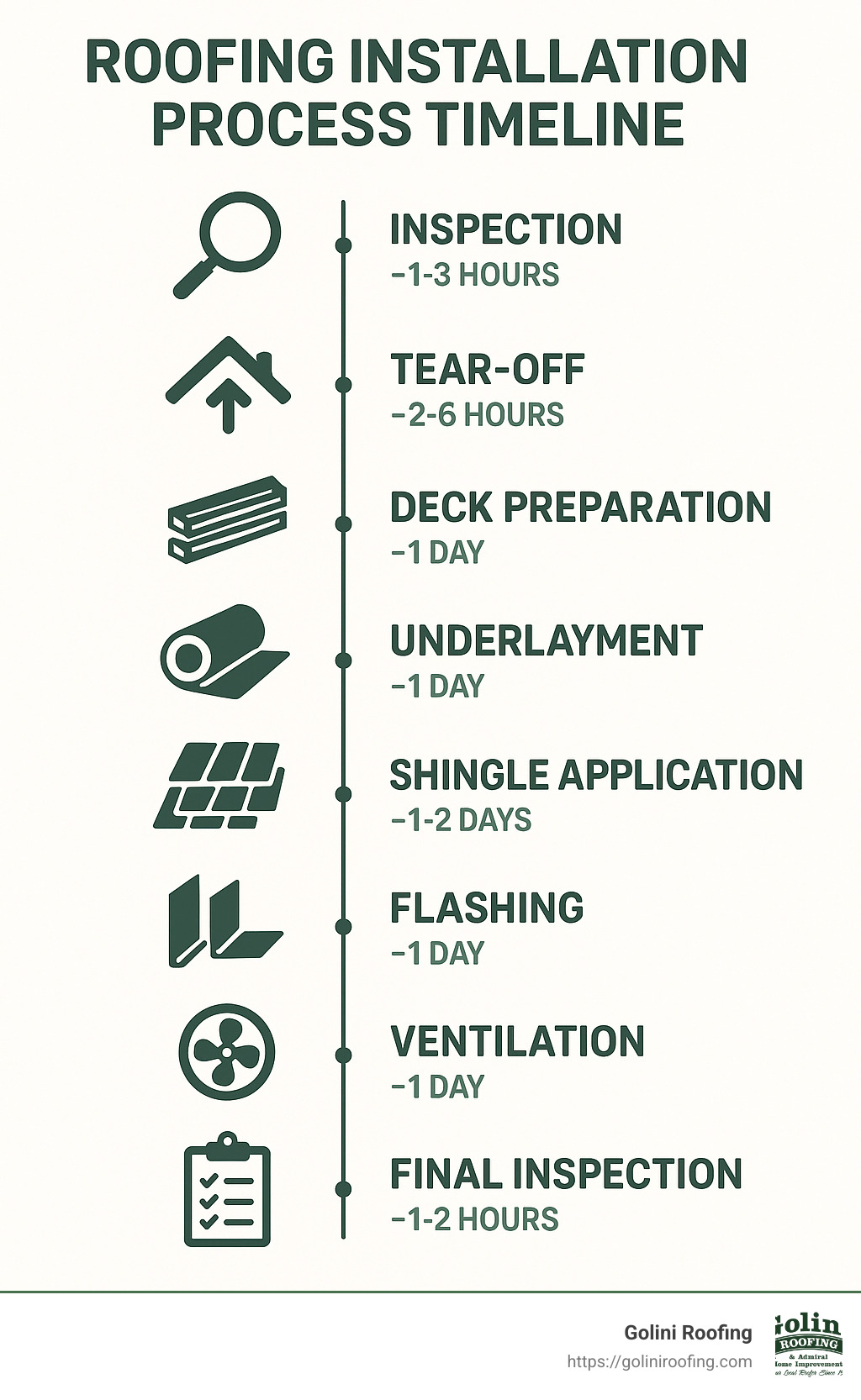
I’ve seen thousands of roofs transformed over my 35 years in this business, and I can tell you that a proper installation follows a careful sequence. We start by removing those tired old shingles, then thoroughly inspect the roof deck for any hidden damage. Next comes the critical underlayment that acts as your secondary water barrier, followed by properly installed flashing around all vulnerable areas. Finally, we secure your chosen roofing materials with precision and care.
Most homeowners are surprised to learn that a typical residential roofing installation only takes about 1-3 days for completion. Of course, this depends on your home’s size and any complexities we might encounter along the way. Those few days of minor inconvenience bring years of protection and peace of mind.
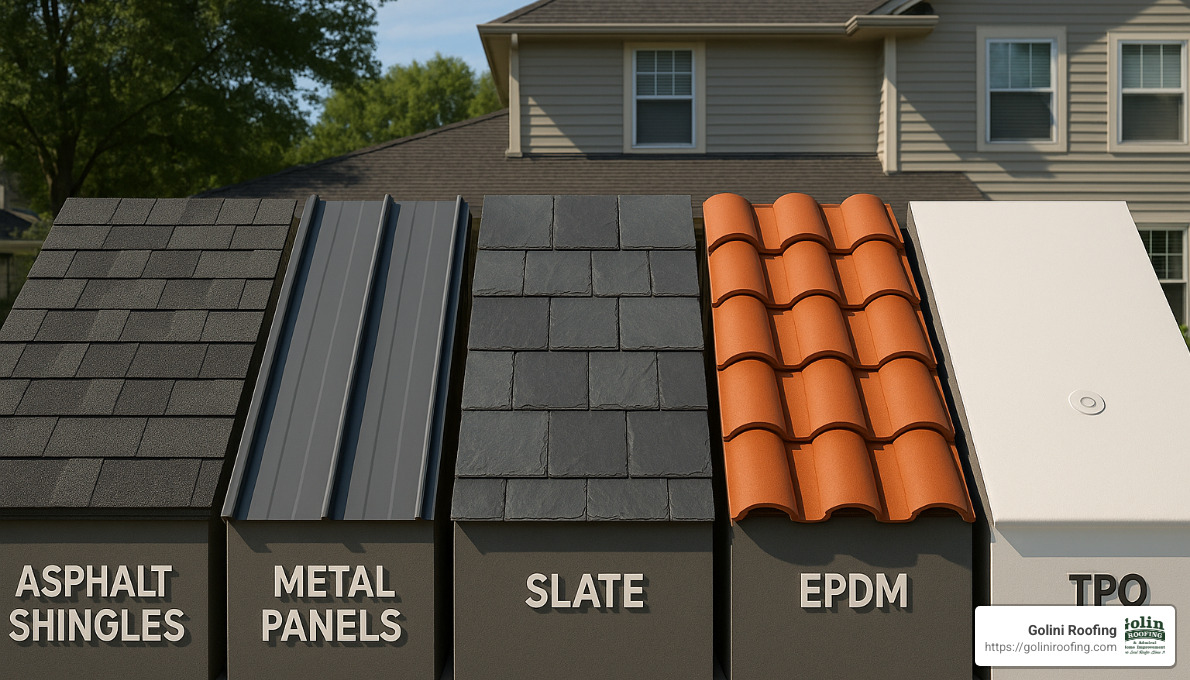
When it comes to materials, asphalt shingles remain the most popular choice, covering about 80% of American homes. They offer that perfect balance of durability and value. That said, we also work with beautiful metal panels, classic slate, neat tile, and specialized membrane options for flat or low-slope sections.
As for investment, average internet data suggests most standard homes fall in the $7,000-$12,000 range for a complete roofing installation, though premium materials and complex roof structures can push that figure up to $30,000 or more. These are industry averages, not specific Golini Roofing pricing.
While some handy homeowners consider the DIY route, professional installation brings crucial advantages: manufacturer warranties that actually protect you, proper permits that keep you legal, and specialized expertise that ensures everything is done right the first time. When you consider that your roof protects literally everything you own, professional installation simply makes sense.
I’m Jack Golini, and at Golini Roofing, my team and I have completed thousands of successful roofing installations across Massachusetts over the past 35 years. We’re not just putting shingles on your home – we’re protecting your family’s comfort and your home’s value with exceptional craftsmanship, careful property protection during the work, and thorough cleanup when we’re done.
Key roofing installations vocabulary:
– roofing specialist
– roof installation boxford ma
– roofing process step by step
Roofing Installations: Planning, Codes & Safety
Before the first nail goes in, there’s a whole world of preparation that happens behind the scenes of your roofing installation. At Golini Roofing, we handle this complex planning phase for our customers, but understanding what goes into it helps you appreciate the thoroughness of the process.
Let’s talk permits first – they’re not optional! Most Massachusetts towns require building permits for complete roof replacements, typically running between $250-$500 depending on your location and roof size. While a quick repair might fly under the radar, a full roofing installation almost always needs proper documentation. And if you’re part of an HOA community, you’ll need their blessing before we can even think about unloading our trucks.
Building codes are like the rulebooks that keep us all safe. They vary by town but generally cover essentials like minimum roof pitch requirements, how many layers of roofing you’re allowed (usually no more than two), ice and water shield requirements (crucial for our Massachusetts winters!), proper ventilation standards, and specifications for wind resistance. At Golini Roofing, we’ve mastered the specific requirements for communities throughout Massachusetts including Burlington, Lynnfield, North Reading, and surrounding areas.
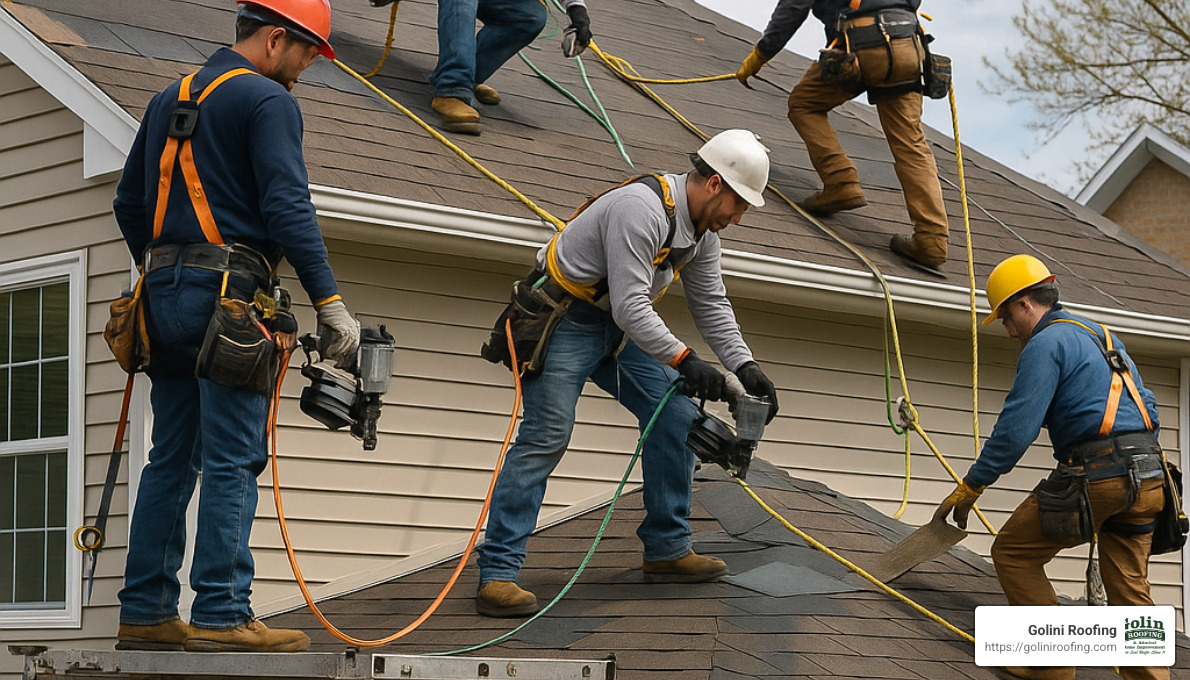
Safety isn’t just a priority – it’s our foundation. Professional roofers follow OSHA regulations religiously because, frankly, roofing is dangerous work. These safety protocols include proper fall protection systems, secure ladder positioning (never on uneven ground!), careful tool handling, and constant weather monitoring. We never gamble with safety by working in rain, snow, high winds over 25 mph, or temperatures below 40°F where materials won’t seal properly.
The Roof Wind Designer is a fantastic free online tool from the National Roofing Contractors Association that helps us determine exactly what wind resistance specifications your roof needs based on your location. It’s the kind of professional tool that makes a real difference in how your roof performs in those nor’easters that blow through.
When we arrive for your roofing installation, we come armed with specialized equipment: roofing nailers (though at Golini, we’re famous for our hand-nailing technique), pry bars for careful removal of old materials, utility knives, chalk lines for precise measurements, and all the necessary safety gear including harnesses, helmets, and gloves. This isn’t a job for a basic toolbox!
Roofing Installations Safety Checklist
I’ve seen too many DIY disasters in my 35+ years in this business. That’s why at Golini Roofing, we’re meticulous about safety. Our crews use Personal Fall Arrest (PFA) systems that include full-body harnesses distributing fall forces across the body, shock-absorbing lanyards, and anchor points rated for 5,000 pounds per worker. As roofing expert David Bitan wisely notes, “Installing roofing on a pitched roof solo is highly inadvisable.” There’s wisdom in numbers – and in professional expertise.
Debris management isn’t just about tidiness – it’s another crucial safety component. We protect your property with carefully positioned tarps over landscaping and outdoor furniture, strategic placement of dump trailers to catch debris, and thorough magnetic sweeps for nails after completion. Your children and pets shouldn’t have to worry about stepping on roofing debris weeks after we’ve finished.
Weather watching becomes second nature to professional roofers. We constantly monitor conditions because a sudden rainstorm doesn’t just delay work – it creates dangerous conditions. Lightning in the area? We’re packing up immediately. High winds? We’ll reschedule. Your roof will be there tomorrow, and we want our team to be too.
The preparation phase of roofing installations might seem tedious, but it’s this attention to planning, codes, and safety that separates professional results from risky shortcuts. At Golini Roofing, we’ve refined these processes over decades to ensure your project starts on the right foot – with proper permits, code compliance, and safety measures firmly in place.
Roofing Installations 101: Materials & Selection
When it comes to protecting your home, choosing the right roofing material isn’t just about looks—it’s about finding the perfect balance of durability, aesthetics, and value for your specific situation. As we’ve learned from helping Massachusetts homeowners over the past 35 years, the right choice makes all the difference in how your roof performs through harsh New England seasons.
Asphalt shingles remain the most popular choice for good reason, covering about 80% of American homes. They offer remarkable versatility at an accessible price point. The humble 3-tab shingle provides basic protection at the most economical price, while architectural (dimensional) shingles add texture and visual interest with improved durability. For homeowners wanting something special, premium designer shingles can beautifully mimic the look of slate or wood shake without their hefty price tags.
Metal roofing has been gaining tremendous popularity, and we’re installing more every year. The clean, modern lines of standing seam panels offer exceptional longevity with hidden fasteners that reduce leak potential. For budget-conscious projects, corrugated panels provide similar durability at a lower price point, though with exposed fasteners. Metal shingles give you the best of both worlds—traditional appearance with metal’s impressive 40-70 year lifespan.
Nothing quite matches the timeless elegance of slate roofing. Natural slate can literally outlive the homeowner with potential lifespans exceeding 100 years, though it comes at a premium price and requires specialized installation expertise. Synthetic slate alternatives have emerged as excellent options, providing similar beauty at reduced weight and cost.
For distinctive architectural styles, clay or concrete tiles create unmistakable character. The classic curved Spanish tiles evoke Mediterranean charm, while flat profile options can resemble slate. These materials excel in hot climates but require additional structural support due to their weight.
For flat or low-slope applications, EPDM rubber membranes and TPO thermoplastic systems provide reliable protection. TPO’s white surface reflects sunlight, making it particularly energy-efficient for commercial applications.
| Material | Average Cost (per sq ft) | Lifespan | Best Climate Fit | Maintenance Level |
|---|---|---|---|---|
| 3-Tab Asphalt | $1-$3 | 15-20 years | All-purpose | Moderate |
| Architectural Shingles | $3-$7 | 25-30 years | All-purpose | Low-Moderate |
| Metal Panels | $7-$20 | 40-70 years | Snow, Rain, Sun | Very Low |
| Natural Slate | $15-$30 | 75-100+ years | All-purpose | Low |
| Clay Tile | $10-$25 | 50-100 years | Hot, Dry | Low |
| EPDM Rubber | $3-$9 | 20-30 years | All flat roofs | Moderate |
| TPO Membrane | $5-$12 | 20-30 years | Hot, Sunny | Low |
At Golini Roofing, we’ve found architectural shingles and metal roofing systems provide the best combination of performance and value for most Massachusetts homes, though we’re experienced with all major roofing types.
Climate-Smart Roofing Choices
Living in Massachusetts means your roof faces a gauntlet of weather challenges—from January blizzards dropping feet of snow to summer heat waves and the occasional hurricane remnant. Making climate-appropriate choices isn’t just smart; it’s essential for lasting roofing installations.
Heavy snow loads demand special consideration. We typically recommend architectural shingles or metal roofing with sufficient structural integrity to handle the weight. A proper roof pitch (at least 4:12) helps shed snow naturally, while improved structural support may be necessary in areas prone to extreme accumulation. Most critically, ice barrier underlayment should extend at least 24 inches inside your home’s heated wall line to prevent moisture intrusion.
Ice dams—those problematic ice ridges that form at your roof’s edge—require a multi-faceted approach. Proper attic insulation and ventilation create consistent roof temperatures that prevent the freeze-thaw cycle causing these dams. We install ice and water shield membrane extending 3-6 feet up from all eaves, with careful attention to flashing details around chimneys, vents, and valleys.
Massachusetts summers might be milder than the South, but UV damage is still a concern. Lighter colored shingles reflect heat rather than absorb it, while quality materials with UV-resistant granules resist deterioration. Proper ventilation plays a dual role, reducing both winter moisture and summer heat buildup in your attic.
When coastal storms bring hurricane-force winds, your roof’s installation details make all the difference. Our hand-nailing approach (rather than pneumatic guns) allows for precise nail placement—a seemingly small detail that dramatically impacts wind resistance. We use six nails per shingle instead of the standard four in high-wind zones, with properly secured starter strips at eaves and rakes, and wind-rated ridge and hip caps.
As roofing expert David Bitan wisely notes, “The best thing you can do is make sure your gutters are cleaned out. Having gutters that are clogged causes water and debris to pool in certain areas of your roof,” potentially leading to leaks and premature deterioration.
Budget vs Performance Breakdown
Your roof is a long-term investment, and finding the sweet spot between initial cost and lasting value requires understanding what you’re getting at each price point. Here’s how the different tiers compare:
Entry-Level (Economy) options center around basic 3-tab asphalt shingles. With expected lifespans of 15-20 years and limited color options, they provide fundamental protection at the most accessible price point—typically $3.50-$5.50 per square foot installed (based on internet data, not actual Golini Roofing pricing). These make sense for rental properties, temporary solutions, or when budget constraints are the primary concern.
Mid-Range (Value) choices feature architectural (dimensional) shingles that dramatically improve both appearance and performance. Their 25-30 year expected lifespan, expanded style options, and better warranty protection justify the modest price increase to $5.50-$8.50 per square foot installed. This sweet spot works perfectly for most homeowners seeking balance between upfront cost and long-term performance—which is why it’s our most popular category.
Premium (Performance) materials like designer asphalt shingles or standing-seam metal offer exceptional durability with 30-50+ year lifespans. Their distinctive appearances, comprehensive warranties, and superior weather resistance come at $8.50-$15.00 per square foot installed. These options make sense for long-term homeowners, distinctive architectural styles, and locations facing particularly harsh weather conditions.
Ultra-Premium (Specialty) systems include solar-integrated roofing, natural slate, and copper. With potential lifespans of 50-100+ years, these materials represent the pinnacle of roofing performance and aesthetic distinction. Their $15.00-$30.00+ per square foot pricing reflects not just material costs but the specialized installation expertise they require. They’re ideal for luxury homes, historic properties, and eco-conscious homeowners looking to make a statement.
After three decades of roofing installations across Massachusetts, we’ve found that architectural shingles hit the value sweet spot for most homes. Their dimensional appearance and extended durability justify the modest premium over basic 3-tab shingles. For homeowners planning to stay put for decades, standing-seam metal offers exceptional long-term value despite higher initial costs—its minimal maintenance requirements and 40+ year lifespan often make it the most economical choice over time.
For a deeper dive into residential roofing material options and what might work best for your specific situation, check out our detailed guide on what is the best residential roofing material.
Step-by-Step Roofing Installation Process
There’s something special about watching a roofing installation unfold – it’s like a carefully choreographed dance that transforms your home in just a day or two. At Golini Roofing, we’ve refined this process over our 35 years in business, and I’d love to walk you through what happens when we replace your roof.
The journey begins with thorough preparation. Our crew arrives early, carefully covering your landscaping with tarps and positioning our debris containment systems. Your property’s protection is our first priority – we treat your home as if it were our own.
Next comes the tear-off phase, where we completely remove all existing roofing materials. This step is crucial because, as one of my industry colleagues puts it, “It is not at all advisable to apply the new layer on top of the old decaying one.” Stripping everything down to the bare deck allows us to see what’s really going on underneath.
Once exposed, we conduct a meticulous deck inspection. Our team examines every inch of your roof sheathing (typically plywood or OSB) for signs of water damage, rot, or structural weakness. Any compromised sections get replaced immediately – this is the foundation everything else rests on, so it must be solid.
The underlayment installation follows, creating a critical water-resistant barrier. Here in Massachusetts, we always install ice and water shield along the eaves (extending at least 24″ past the warm wall line), in valleys, and around all penetrations. The rest of the deck gets covered with high-quality synthetic underlayment. This double layer of protection is your home’s insurance policy against our unpredictable New England weather.
Then comes drip edge installation – those clean metal edges that prevent water from sneaking behind your fascia boards while giving your roof a finished look. Proper flashing installation follows at all vulnerable transition points: chimneys, walls, skylights, and any pipes poking through your roof. These seemingly small details are actually your roof’s first line of defense against leaks.
With the foundation work complete, we install starter strips along the eaves and rakes. These specialized shingles create a secure base for the main shingle courses and improve wind resistance – particularly important during our blustery coastal storms.
Now for the main event – shingle installation. This is where Golini Roofing truly shines. While many contractors use pneumatic nail guns to speed through this step, we insist on hand-nailing every single shingle. It takes longer, but ensures perfect nail placement and depth. We can feel when a nail hits solid wood versus an empty space, something nail guns simply can’t detect.
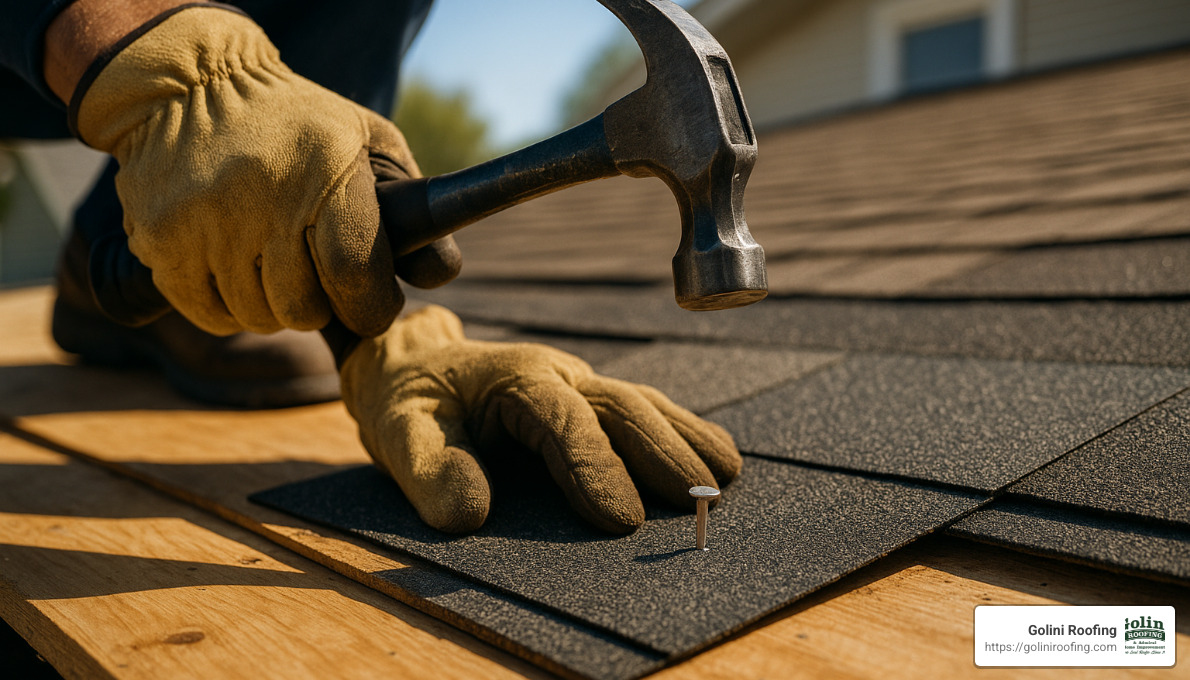
After the field shingles are in place, we install specialized ridge and hip caps to protect these highly exposed areas while creating a finished appearance. Proper ventilation comes next – either ridge vents or individual roof vents that help extend shingle life and improve your home’s energy efficiency.
Every roofing installation concludes with a comprehensive quality inspection. I personally check all the details – nail placement, flashing installation, proper shingle alignment – before declaring the job complete. Finally, we conduct a thorough cleanup, using magnetic sweepers to collect any stray nails and leaving your property cleaner than we found it.
For a more detailed explanation of our process, visit our Roof Installation Process page.
Roofing Installations Timeline: What to Expect
One question I hear constantly is “How long will this take?” Understanding the timeline for your roofing installation helps you plan accordingly and sets realistic expectations. Here’s what a typical schedule looks like for a standard home:
The process actually begins 1-2 days before your installation date. That’s when we deliver all materials – your shingles, underlayment, and accessories – and position the dumpster or debris containment system. We take final measurements and make sure everything’s ready for a smooth start.
On the primary installation day, our crew typically arrives between 7:00-8:00 AM. We set up property protection measures, then dive into the tear-off phase, usually completing it by mid-morning. The deck inspection and any necessary repairs happen before lunch.
After a quick break, we install the underlayment and drip edge, then begin the shingle installation. By day’s end, we conduct a thorough cleanup of the day’s debris, making sure your property remains safe overnight.
For larger homes or more complex roofs, we continue on day two, finishing the shingle installation by early afternoon. Ridge and hip cap installation follows, then ventilation components. We wrap up with a final cleanup and inspection, typically finishing between 5:00-6:00 PM.
But our work isn’t quite done yet. Within a week after completion, we schedule any required building inspector visits, conduct a final walkthrough with you, and deliver all your warranty documentation. This post-installation phase ensures your complete satisfaction and protects your investment.
Weather can throw a wrench in even the best-laid plans. As professionals, we closely monitor forecasts and may need to reschedule if conditions could compromise safety or installation quality. Rain, high winds, extreme cold (below 40°F), and extreme heat can all necessitate adjustments to the timeline.
For most average-sized homes (1,500-2,500 sq ft), we can complete the actual installation in just 1-2 days. Larger homes, complex roof designs with multiple levels, or specialty materials might require additional time.
As Rick, one of our GAF roofing customers, shared: “Look fantastic! Best decision we ever made was going with GAF shingles and a great installer to ensure that our home not only looks great but is going to perform well.” His experience highlights what we believe – that beautiful, lasting results come from combining quality materials with professional installation.
Budget, Warranties & Choosing Pros
Let’s talk money – because understanding what goes into the cost of roofing installations helps you make smarter decisions for your home and wallet.
For most American homeowners, a new roof typically costs between $7,000 and $12,000 for standard asphalt shingles on an average-sized home. However, when you start exploring premium materials or have a larger or more complex roof structure, that price can climb significantly – sometimes reaching $30,000 or even $45,000 for high-end options like genuine slate or standing-seam copper.
What exactly drives these costs? Think of your roof project like an equation with several variables:
Your roof’s size and complexity matter tremendously. Those charming dormers and skylights that make your home unique? They require special attention during installation, increasing both time and expertise needed. A simple rectangular roof will always cost less than one with multiple angles and penetrations.
Material choice is another major factor. As we explored earlier, the jump from basic 3-tab shingles to architectural shingles to premium materials like metal or slate creates substantial price differences. At Golini Roofing, we’ve seen how investing in quality materials often pays dividends through extended roof life and improved home value.
When we break down a typical roofing budget, it generally falls into three categories:
– Materials typically account for 40-45% of your total cost
– Labor represents about 45-50%
– Overhead and contractor profit makes up the remaining 10-15%
Many homeowners are surprised to learn that proper installation is equally important as material quality. That’s why at Golini Roofing, we invest in proper training and techniques like hand-nailing – it might take a bit longer, but the precision pays off in roof performance and longevity.
Financing options can make quality roofing more accessible. Many homeowners use home equity loans, specialized roofing financing programs, or even manufacturer financing options to spread costs over time. Just be sure to compare interest rates and terms carefully.
When it comes to warranties, you’ll encounter two distinct types that protect different aspects of your investment:
Manufacturer warranties cover the roofing materials themselves against defects. These typically range from 25 years to “limited lifetime” coverage depending on the product line. Premium shingles from trusted names like GAF, CertainTeed, and Owens Corning often come with improved warranty options when installed by their certified contractors – which we proudly are at Golini Roofing.
Workmanship warranties specifically protect against installation errors. This is where choosing the right contractor becomes crucial. At Golini Roofing, we back our craftsmanship with comprehensive workmanship guarantees because we trust our installation methods and stand behind our work.
For more detailed information about roofing costs specific to your situation, check out our guide on how to estimate the cost of a new roof.
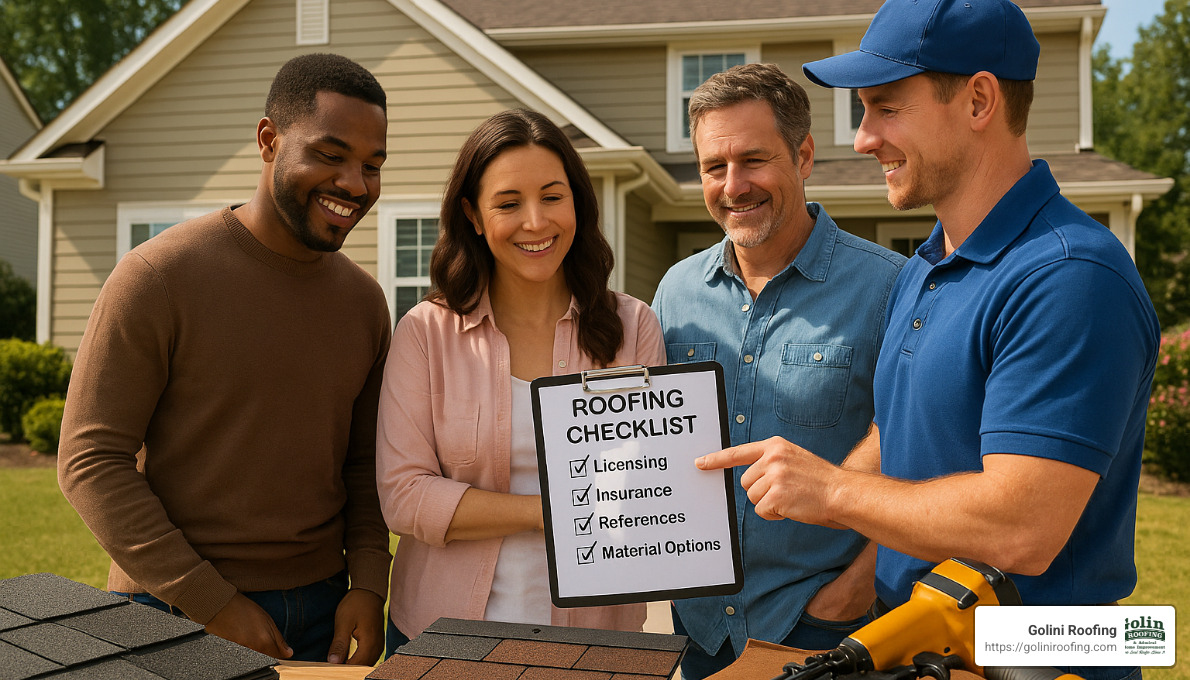
Roofing professionals stay current with industry developments through publications like Professional Roofing from the National Roofing Contractors Association – just one way we ensure we’re bringing you the latest innovations and best practices.
DIY vs Professional: Pros & Cons
The DIY approach tempts many homeowners with potential cost savings, but before grabbing that ladder and nail gun, let’s honestly weigh the full picture:
DIY roofing might save you 45-50% on labor costs, give you complete control over your project timeline, and yes – there’s certainly satisfaction in completing a major home improvement yourself. I’ve met many handy homeowners who take pride in their self-sufficiency.
However, the downsides often outweigh these benefits. Roofing consistently ranks among the most dangerous home improvement projects, with falls causing serious injuries every year. The tool investment alone can be substantial – professional-grade ladders, safety harnesses, roofing nailers, and specialized tools add up quickly.
Beyond safety concerns, DIY roofing typically lacks warranty protection. Many manufacturers actually void material warranties when not professionally installed. Building code compliance can be challenging for non-professionals, potentially leading to inspection failures or future resale issues.
There’s also the time factor – what takes our professional crews 1-2 days often extends to 5-7 days for DIY installations, leaving your home vulnerable to weather damage during that extended period.
As one of our industry colleagues bluntly puts it: “Installing roofing on a pitched roof solo is highly inadvisable.” This isn’t just professionals protecting their business – it’s genuine concern for homeowner safety.
At Golini Roofing, we’ve received many emergency calls from homeowners who started DIY projects only to realize midway through that they were in over their heads. Unfortunately, correcting improper installation often costs more than professional installation would have initially.
Hiring a Reputable Contractor
Finding the right professional for your roofing installation requires some homework, but the peace of mind is worth it. Here’s what to look for:
Proper licensing and insurance should be non-negotiable. Any reputable contractor should readily provide their Massachusetts Home Improvement Contractor (HIC) registration number and certificates of insurance covering both general liability and workers’ compensation. This protects you from liability if accidents occur on your property.
Local reputation matters enormously. At Golini Roofing, our 35+ years serving Massachusetts communities means we’re deeply invested in our reputation. We’ll be here tomorrow and for years to come. Be wary of “storm chasers” who appear after severe weather and disappear once paid.
Verified references tell the real story. While online reviews provide some insight, speaking directly with recent customers gives you unfiltered feedback about a contractor’s work quality, communication, and reliability. Ask specifically about how they handled unexpected challenges – that’s when a contractor’s true character shows.
Installation methods vary significantly between contractors. Our hand-nailing approach at Golini Roofing ensures precise nail placement and proper depth, unlike pneumatic nailers that can overdrive nails and damage shingles. Don’t hesitate to ask potential contractors about their specific installation techniques.
Clear, detailed contracts protect everyone involved. Your roofing contract should specifically outline materials (with brand names and product lines), timeline, payment schedule, warranty terms, and cleanup procedures. If a contractor seems reluctant to put details in writing, consider it a serious red flag.
Manufacturer certifications indicate additional training and quality standards. As certified installers for major manufacturers, we can offer improved warranty options that aren’t available through non-certified contractors.
For more information about our installation approach, visit our Roof Install page.
As one industry expert wisely notes, “The bitterness of poor quality remains long after the sweetness of low price is forgotten.” Your roof protects everything you own – it’s worth investing in proper installation by qualified professionals.
Caring for Your Roof & Future Innovations
After investing in a professional roofing installation, proper maintenance becomes your best friend for getting the most out of your investment. Think of your roof like a car – with regular check-ups and care, it can run smoothly for years beyond its expected lifespan.
Your roof faces everything Mother Nature throws at it – scorching sun, pounding rain, heavy snow, and howling winds. That’s why regular attention is so important. Most homeowners are surprised to learn that simple maintenance can add 5-10 years to their roof’s life!
Start with routine inspections – ideally every 1-2 years and after major storms. At Golini Roofing, we offer professional inspection services that can catch small issues before they become expensive headaches. Our trained eyes spot problems that most homeowners miss until water is dripping through their ceiling.
Keep those gutters clean! As roofing expert David Bitan points out, “The best thing you can do is make sure your gutters are cleaned out. Having gutters that are clogged causes water and debris to pool in certain areas of your roof.” This pooling water can work its way under shingles and cause serious damage over time.
In Massachusetts, moss and algae love to grow on shaded roof areas, especially on north-facing slopes. These unwanted guests aren’t just unsightly – they trap moisture against your shingles and accelerate deterioration. Zinc or copper strips installed near the ridge can create a natural barrier that prevents this growth.
Don’t forget about those trees! While they provide welcome shade, branches that hang over your roof can scrape against shingles during windy days and drop leaves and debris that hold moisture. Keep branches trimmed back at least 10 feet from your roof line for best results.
Your attic plays a surprising role in roof health too. Proper ventilation allows heat and moisture to escape, preventing premature aging of your shingles from below. During your maintenance routine, make sure attic vents remain unobstructed and functioning properly.
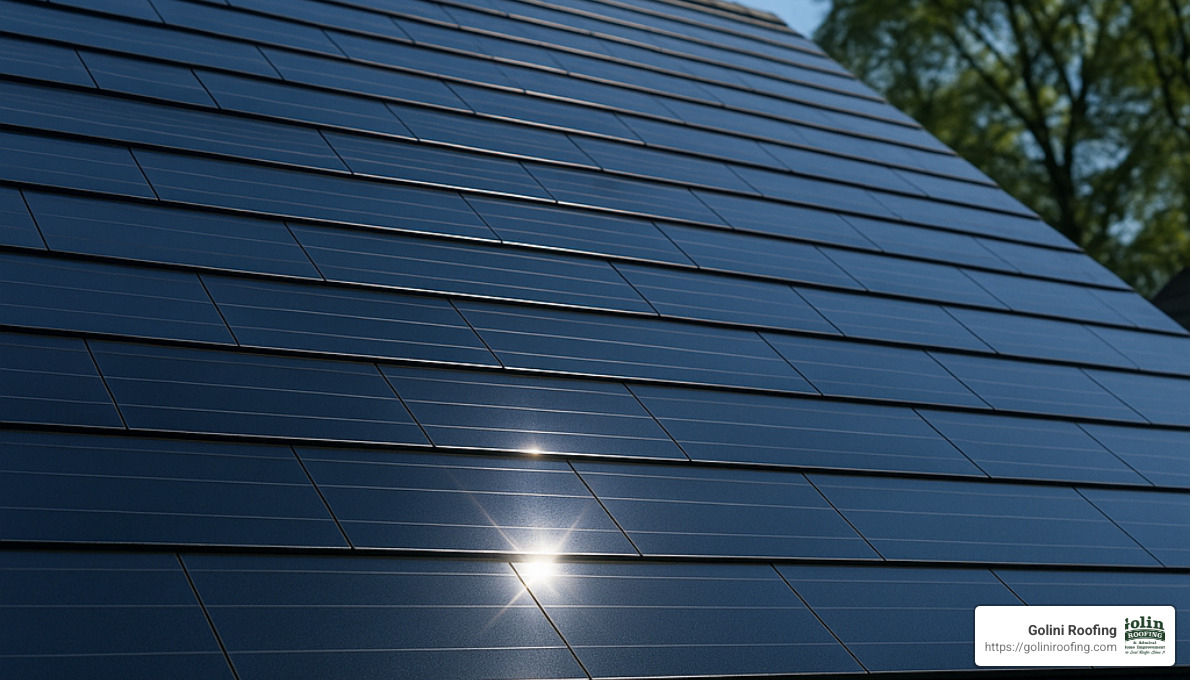
The roofing industry is constantly evolving with exciting innovations that improve performance and efficiency. Reflective shingles now use advanced granule technology to bounce back solar energy, keeping your home cooler and reducing air conditioning costs. Integrated solar solutions like GAF’s Timberline Solar™ seamlessly blend energy production into your roofing material – no more bulky panels!
Cool roof coatings offer an affordable way to improve energy efficiency on existing roofs, while smart ventilation systems automatically adjust airflow based on temperature and humidity conditions. For environmentally conscious homeowners, sustainable materials made from recycled content reduce environmental impact while maintaining excellent performance.
At Golini Roofing, we stay current with these innovations while maintaining our commitment to time-tested installation methods like hand-nailing that ensure maximum durability regardless of the material chosen.
Signs You Need Repair or Replacement
Your roof sends clear signals when it needs attention – if you know what to look for. Curling or buckling shingles have lost their ability to shed water effectively and need prompt attention. When shingles start to curl at the edges or develop a wavy, buckled appearance, they’re telling you their protective days are numbered.
Check your gutters for excessive granule loss – finding large amounts of gritty black granules in your gutters or downspouts indicates advanced shingle wear. These granules are your roof’s sunscreen, protecting the asphalt from harsh UV rays. Once they’re gone, deterioration accelerates quickly.
Water stains on your ceilings or walls are obvious red flags. As one industry source notes, “Ceiling and wall stains from roof leaks leading to mold risk” are serious concerns requiring immediate attention. Even small leaks can lead to big problems with mold and structural damage if ignored.
Head up to your attic on a sunny day and look for daylight visible through the roof boards. If light can get in, so can water! While you’re up there, check for dark water stains or damp insulation – these are telltale signs of existing leaks.
Age remains one of the most reliable indicators. If your asphalt shingle roof is approaching 20-25 years old, it’s likely nearing retirement age, even if it still looks relatively good from the ground. Modern materials often perform better, so an upgrade might be worth considering.
Any sagging areas on your roof surface require immediate professional evaluation – they indicate potential structural issues that shouldn’t be ignored. Similarly, blistering or peeling exterior paint near the roofline often points to poor attic ventilation, which can significantly reduce your roof’s lifespan.
If you notice any of these warning signs, don’t wait – contact us at Golini Roofing for a professional assessment. Early intervention can often extend your roof’s life through targeted repairs rather than complete replacement.
Maintenance Schedule to Maximize Lifespan
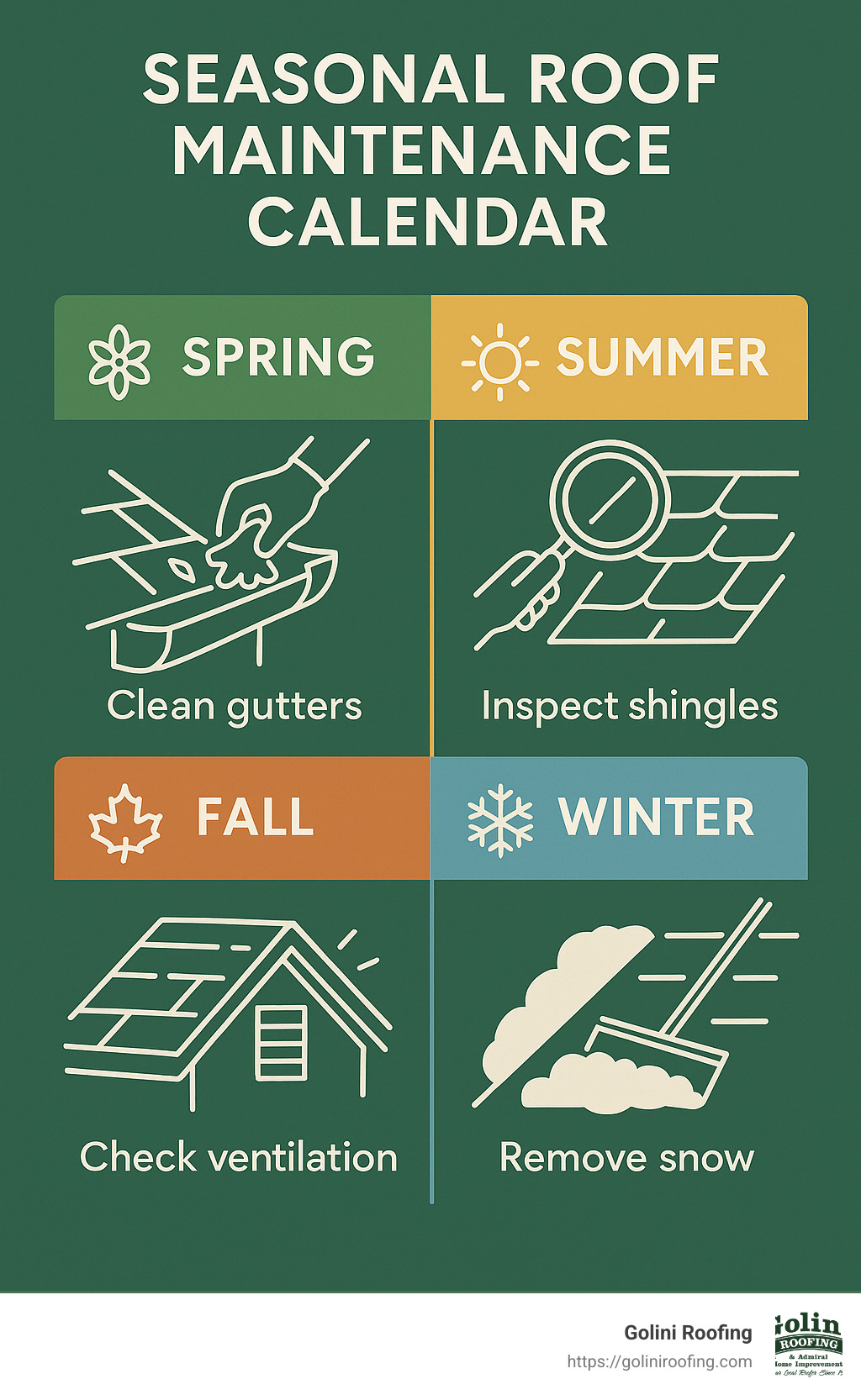
Following a seasonal maintenance schedule is the secret to getting maximum life from your roofing installation. Here’s the approach we recommend to our Golini Roofing customers:
Spring (March-May) is cleanup time after winter’s assault. Clear away debris, check for shingles damaged by winter weather, inspect flashing around chimneys and vents, look for signs of ice dam damage, and trim those overhanging branches before they leaf out and become harder to manage.
Summer (June-August) is the perfect time to venture into your attic on a hot day to check temperature and ventilation. A properly ventilated attic shouldn’t be significantly hotter than the outside air. Also inspect for storm damage after summer thunderstorms and look for unwelcome animal visitors who might be making homes in your roof space.
Fall (September-November) means preparing for winter’s challenges. Remove leaves and pine needles before they become soggy masses that trap moisture against your shingles. Check and seal any gaps around roof penetrations, inspect ridge vents and other ventilation components, and ensure gutters and downspouts are securely fastened before winter’s heavy snow and ice arrive.
Winter (December-February) is the time to monitor for ice dam formation after snowfalls. These ice ridges at your roof’s edge can force water underneath shingles. Also check your attic insulation effectiveness – if snow melts quickly from your roof while your neighbors’ roofs remain snow-covered, you’re losing valuable heat through your roof.
Professional inspections should supplement this homeowner maintenance schedule. At Golini Roofing, we recommend a professional inspection every 1-2 years for newer roofs and annually for roofs over 15 years old. Think of it as a physical for your roof – catching issues early almost always means simpler, less expensive fixes.
When was the last time you showed your roof some love? A small investment in regular maintenance can pay big dividends by extending your roof’s life and protecting everything underneath it. Your home is likely your biggest investment – and your roof is what keeps it safe and dry through everything New England weather can throw at it.
Frequently Asked Questions about Roofing Installations
How much does a new roof really cost?
When homeowners ask me about costs, I always explain that roofing installations vary widely based on several key factors. For a typical Massachusetts home (around 1,500-2,000 square feet), here’s what you can generally expect to invest:
For basic asphalt shingles, most homeowners spend between $7,000-$12,000. If you’re looking at premium architectural shingles with improved warranties and appearance, that range typically jumps to $12,000-$20,000.
Metal roofing, with its exceptional longevity, generally runs between $15,000-$40,000, while premium materials like genuine slate can range from $25,000-$75,000 depending on the specific product and complexity of your roof.
These figures represent average costs based on internet data and not actual costs for Golini Roofing. Your specific project cost will depend on several factors including your roof’s size and complexity, the condition of your existing roof, accessibility challenges, material quality, and any additional elements like improved ventilation systems or skylight installations.
At Golini Roofing, transparency is important to us. That’s why we provide detailed quotes that break down all costs so you understand exactly where your investment is going. We also offer financing options because we believe quality shouldn’t be compromised due to budget constraints.
How long will the installation disrupt my daily routine?
Good news! Most roofing installations wrap up faster than many homeowners expect—typically within 1-3 days for most residential projects.
During this time, you’ll definitely notice some activity around your home. The noise level is most noticeable during the tear-off phase and when we’re securing new materials. There’s no way around it—hammering and removal work creates noise, but it’s temporary.
Your driveway may be partially occupied by our equipment and material deliveries. We always work with you in advance to coordinate this so you maintain necessary access to your home. For safety reasons, we strongly recommend keeping children and pets away from the work area—falling debris is a real concern during roof work.
The good news is that you can absolutely remain in your home during the entire process. As a precaution, we suggest removing fragile items from walls and shelves to prevent any issues from normal construction vibrations.
To make things go as smoothly as possible, consider:
– Planning to be away during work hours if you’re sensitive to noise or work from home
– Moving vehicles from the driveway before our team arrives
– Giving neighbors a friendly heads-up about the upcoming project
– Securing any loose items in your yard before work begins
As one of our recent customers shared: “Hard-working guys and didn’t cut corners. Will be using them for other projects in the future.” Our goal is always to complete your roof with minimal disruption to your daily life.
What paperwork should I receive after the job is done?
After your roofing installation is complete, proper documentation is crucial for protecting your investment. Here’s what you should expect to receive from any quality roofing contractor:
First and foremost, you’ll get a manufacturer’s warranty certificate that covers the roofing materials themselves. Depending on the products you’ve selected, this typically ranges from 25 years to limited lifetime coverage.
Equally important is the workmanship warranty from your contractor, which specifically covers the quality of installation. At Golini Roofing, we stand firmly behind our craftsmanship with a comprehensive workmanship warranty—we’re confident in our hand-nailing technique and attention to detail.
You should also receive a final invoice and payment receipt documenting the completed work and your payment. This becomes important for tax purposes and if you ever sell your home.
If permits were required for your project (which is common for full roof replacements), you should receive copies of the building permit and final inspection documentation proving your roof meets all local code requirements.
To help you protect your investment, reputable contractors provide maintenance guidelines with specific recommendations for your new roof system. At Golini Roofing, we also include detailed product information about the specific materials we installed, including colors, styles, and model numbers—this becomes invaluable if you ever need repairs years down the road.
Finally, you should receive an insurance certificate confirming that your contractor maintained proper liability and workers’ compensation coverage during your project.
We organize all these documents in a project completion folder for easy reference. I always recommend storing these papers with your other important home documents—they’re particularly valuable when selling your home, as they verify the roof’s age and warranty status to potential buyers.
Conclusion
A quality roofing installation is one of the most significant investments you can make in your home’s protection and value. When done right, your new roof becomes the first line of defense against New England’s challenging weather while enhancing your home’s appearance and energy efficiency.
Throughout this guide, we’ve walked through every aspect of the roofing process—from initial planning and material selection to installation techniques and long-term maintenance. This comprehensive approach reflects our philosophy at Golini Roofing, where we believe informed homeowners make better decisions about protecting their most valuable asset.
While most homeowners will only purchase 1-2 roofs in their lifetime, our team has installed thousands across Massachusetts during our 35+ years in business. This experience has taught us that seemingly small details make an enormous difference in roof performance. That’s why we insist on hand-nailing each shingle for perfect placement, ensuring proper ventilation, and conducting meticulous cleanup after each project.
Beyond the obvious protection a new roof provides, you’ll enjoy several additional benefits that many homeowners don’t initially consider. A properly installed roof with adequate insulation and ventilation can reduce energy costs by 15-20%, putting money back in your pocket each month. You’ll also gain invaluable peace of mind, knowing your family and possessions are protected from the elements—no more watching weather forecasts with anxiety about potential leaks.
The visual change can be equally rewarding. “Just replaced the roof and I am amazed with the difference GAF products made to our home. UHDZ shingles have people stopping and admiring our roof,” shares one satisfied GAF customer. We hear similar reactions from our clients, who are often surprised by how dramatically a new roof improves their home’s curb appeal, particularly with today’s architectural shingles that offer dimension and character.
From a financial perspective, a new roof typically returns 60-70% of its cost in increased home value—making it not just a necessary repair but a sound investment in your property’s future.
Whether you’re considering a roof replacement due to age, damage, or simply to upgrade your home’s appearance, we hope this guide has provided valuable insights into the roofing installation process. Our team at Golini Roofing is always available to answer questions about your specific situation and provide the professional guidance you deserve.
For more information about our complete range of services, visit our roofing services page or contact us directly to schedule a consultation. After 35 years of protecting Massachusetts homes, we’re still as passionate as ever about delivering roofing excellence through project‑recap, energy‑savings, and peace‑of‑mind with our signature 35‑year craftsmanship guarantee.
