
What Factors Influence Emergency Roofing Response Times in Massachusetts?
When your roof is compromised, every minute counts. However, the actual time it takes for a crew to arrive at your Massachusetts property depends on several critical variables. Understanding these factors can help you set realistic expectations and make informed decisions when contacting 24 Hour Roofers Near Me.
1. Severe Weather and Seasonal Storms
The single greatest factor affecting response times is the weather itself. In Massachusetts, we experience highly volatile seasonal patterns. Widespread regional events—such as intense coastal Nor’easters, severe summer thunderstorms, or winter blizzards that cause heavy snow accumulation and ice dams—create major surges in service demand.
During a major weather event, emergency requests are triaged based on safety risk, structural exposure, and active water intrusion. Active storms with lightning, high winds, or torrential downpours can also make roof access unsafe, delaying exterior stabilization until conditions permit safe work.
2. Geographic Proximity and Local Traffic
Your physical location relative to dispatch routes plays a major role in how quickly a crew can reach you. Properties in Massachusetts communities such as Wakefield, Burlington, Beverly, Reading, and Woburn may experience different arrival windows depending on weather, traffic, and road access.
Congested corridors like Route 128 and Interstate 95 can affect travel times during morning and evening rush hours. Clear access to the driveway, loading area, and affected roof section can help reduce delays once the crew arrives.
3. Severity of the Damage
Emergency calls are prioritized based on the severity of the threat to life, safety, and property structure. A hole in a roof caused by a fallen tree limb or a partial structural collapse will always be prioritized over a slow, localized drip around a chimney flashing. When you call for emergency services, dispatchers use a triage framework to allocate crews to the most critical situations first.
4. Crew Availability and Dispatch Systems
Emergency response efficiency depends on crew availability, after-hours dispatch coordination, material readiness, and safe travel conditions. Dedicated emergency communication, clear job intake, and accurate damage descriptions help crews mobilize quickly with the right equipment for residential or commercial roof stabilization.
How Do the 5 Emergency Roofing Response Phases Compare?
Emergency roofing response is best understood as a sequence of professional phases. Each phase affects the overall timeline from the first call to temporary stabilization and permanent repair planning.
| Response Phase | Average Response Time Impact | Purpose | Key Considerations | Ideal Use Case |
|---|---|---|---|---|
| 1. Live Intake and Triage | Minutes to 1 Hour | Identify safety risks, active leaks, and structural exposure | Accurate photos, videos, and damage descriptions help prioritize dispatch | Any active residential or commercial roof emergency in Massachusetts |
| 2. Crew Mobilization and Routing | 1–2+ Hours | Assign crew, load materials, and route to the property | Weather, traffic, and access conditions can extend arrival time | Emergency roof leaks, storm damage, and exposed decking |
| 3. On-Site Stabilization | Same Day When Safe | Stop or reduce water intrusion with temporary protective measures | Roof pitch, height, wind, rain, and structural condition affect safe access | Tarping, temporary seals, and debris-related roof openings |
| 4. Permanent Repair Assessment | 24–72 Hours After Stabilization | Determine repair or replacement scope | Moisture mapping, decking condition, and material matching may be required | Storm damage roof repair, leak correction, and replacement planning |
| 5. Documentation and Follow-Up | Ongoing | Support records for property owners, managers, and insurance documentation | Photos, invoices, and written scope help maintain a clear project record | Residential homes, commercial buildings, and managed properties |
1. Live Intake and Emergency Triage
The emergency response process begins with clear, professional intake. During the first call, the team gathers information about the property type, roof system, active leaks, visible structural damage, and any immediate safety concerns.
For properties in Wakefield, Burlington, Beverly, Reading, and Woburn, accurate triage details help determine the most appropriate response plan based on conditions in the field. Useful information includes whether water is actively entering the building, whether the leak is near electrical systems, whether shingles or membrane sections are missing, and whether a tree or heavy debris has punctured the roof.
At Golini Roofing, quality remains central throughout the process. For shingle work, we meticulously hand-nail every shingle we install. Unlike pneumatic nail guns, which can over-drive or under-drive nails, hand-nailing supports precise placement, correct depth, and strong wind resistance. This craftsmanship is important when temporary stabilization transitions into permanent repair. If you need immediate, high-quality local assistance, contact Roof Repair Specialists Near Me.
2. Crew Mobilization and Routing in Massachusetts
Once the emergency is triaged, the next phase is crew mobilization. This includes assigning the right personnel, preparing safety equipment, loading tarps or temporary repair materials, and routing the crew to the property.
Mobilization time can vary based on storm intensity, traffic, road closures, nighttime access, and whether specialized materials are required for the roof system. Commercial buildings, steep-slope homes, and complex rooflines may require additional equipment to ensure safe access and proper stabilization.
Clear site instructions help improve efficiency. Property owners or managers should provide gate codes, parking details, roof access points, and any known hazards before the crew arrives.
3. On-Site Stabilization for Residential and Commercial Roofs
On-site stabilization focuses on reducing active water intrusion and protecting the structure until permanent repairs can be completed. Depending on the roof type and weather conditions, this may include professional tarping, temporary sealing, debris removal from the affected area, or interior water diversion where exterior access is not yet safe.
Commercial roof systems may require different stabilization techniques than steep-slope residential roofs. EPDM, TPO, PVC, modified bitumen, asphalt shingles, and other materials each require a professional assessment before temporary measures are applied.
Safety remains the first priority. Crews cannot access a roof during lightning, extreme wind, unsafe snow or ice accumulation, or conditions that create an unacceptable fall risk.
4. Permanent Repair Planning and Replacement Scope
After the roof is stabilized, the next step is determining the permanent repair or replacement scope. This assessment may include reviewing damaged shingles or membrane, checking flashing systems, inspecting roof decking, identifying moisture intrusion, and evaluating whether gutters or drainage components were affected.
For residential properties, permanent work may involve shingle replacement, flashing repair, decking correction, or full roof replacement when damage is widespread. For commercial properties, the scope may involve membrane repair, seam correction, insulation replacement, drainage improvements, or roof system replacement depending on the extent of damage.
This planning phase helps ensure the final solution is durable, code-compliant, and appropriate for Massachusetts weather conditions.
5. Documentation, Insurance Support, and Follow-Up
Documentation is a critical part of a professional emergency roofing response. Photos, written observations, temporary repair notes, and invoices help create a clear record of the condition of the roof, the stabilization performed, and the recommended permanent work.
Property owners and managers should retain all emergency service records, interior damage photos, exterior damage photos taken from a safe location, and any written communication related to the roofing event. This information may be useful for insurance coordination and future maintenance planning.
Follow-up service is also important. Temporary tarping and stabilization are not permanent roof repairs. A timely transition to permanent repair, roof replacement, or gutter correction helps protect the building envelope and reduce the risk of recurring water intrusion.
What Qualifies as a True Roofing Emergency Requiring Immediate Dispatch?
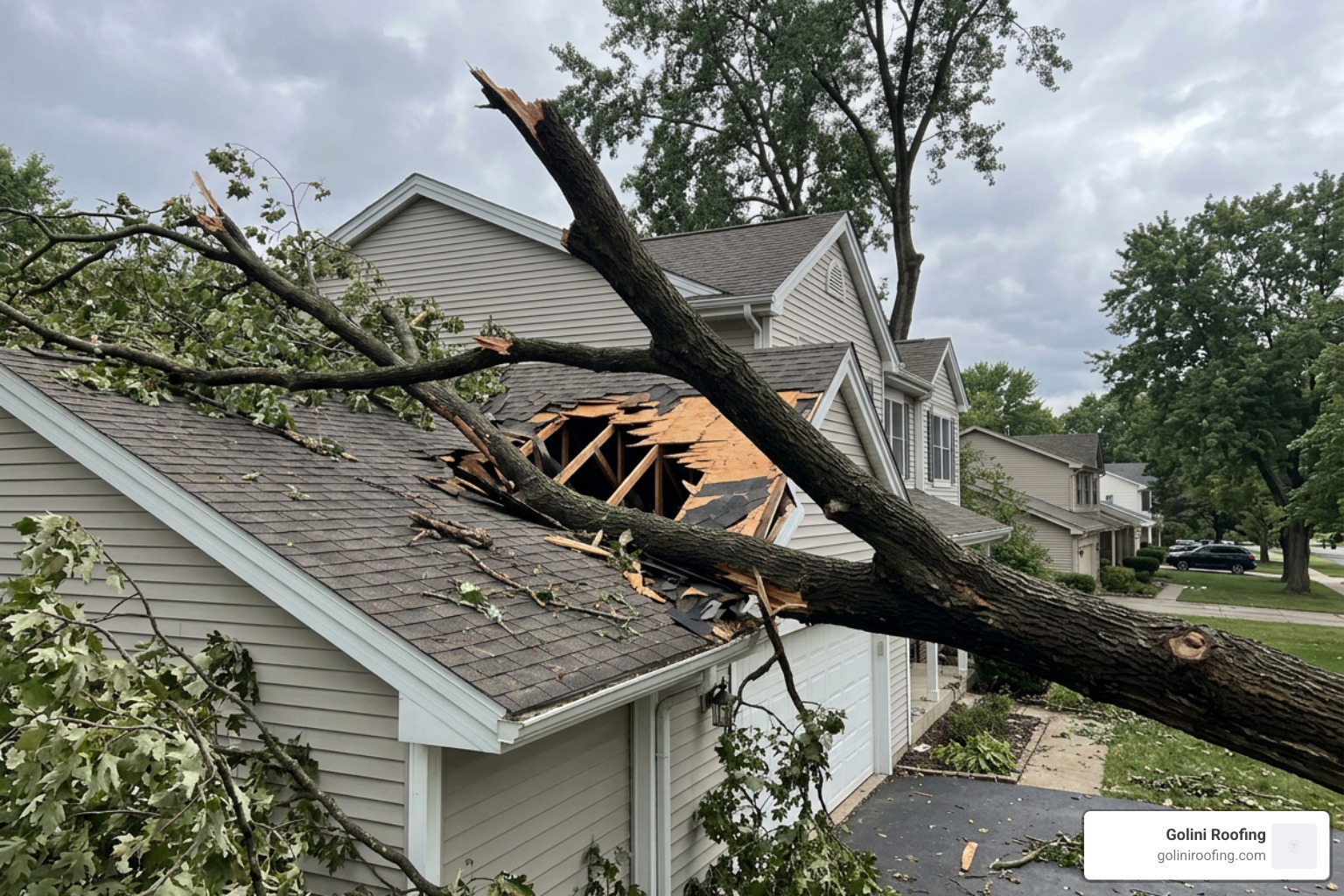
When storm damage occurs, it is important to distinguish between an urgent repair that can be scheduled during normal business hours and a true emergency that requires immediate, after-hours dispatch. Triage guidelines help prevent property owners from paying unnecessary after-hours premiums for issues that can safely wait 24 to 48 hours.
True Roofing Emergencies
A true roofing emergency exists when there is an active, immediate threat to the structural integrity of the building, the safety of its occupants, or when massive water intrusion is actively destroying the interior living space. Key indicators include:
- Active, Severe Water Intrusion: Water pouring or heavily dripping into living spaces, particularly if it is pooling on ceilings, causing drywall to sag, or running near electrical fixtures, outlets, or breaker panels.
- Structural Compromise: A roof deck that is visibly sagging, cracked rafters, or a partial collapse of any section of the roof structure.
- Large Exposed Areas: Large sections of shingles, underlayment, or commercial membrane that have been completely blown off, leaving the bare wood decking exposed to forecasted rain or snow.
- Impact Damage from Debris: A fallen tree, heavy limb, or utility pole that has punctured the roof envelope, creating an open hole into the attic or living space.
Urgent but Non-Emergency Situations
Many roofing issues are urgent but do not require immediate, middle-of-the-night dispatch. These can typically be scheduled for the following morning, saving you significant emergency labor surcharges:
- Minor, Localized Drips: A slow, manageable drip in an attic that can be contained with a bucket and does not threaten living spaces or electrical systems.
- A Few Missing Shingles: Losing five or six shingles during a high-wind event is urgent, but if the underlying water-resistant underlayment is intact and no rain is immediately forecast, it does not require emergency dispatch.
- Damaged Gutter Sections: A sagging or detached gutter is a safety hazard and needs repair, but it does not constitute an active roof leak emergency.
If you are facing storm-related damage and are unsure of the severity, contact a professional to assess your options for Storm Damage Roof Repair.
What to Do While Waiting for the Emergency Crew
While you wait for our emergency crew to arrive on-site, there are several critical mitigation steps you should take to protect your property and ensure your safety.
- Contain the Water Inside: Place buckets, plastic bins, or heavy-duty trash cans under active drips. If water is pooling behind ceiling drywall and causing it to bulge, place a bucket underneath and use a small screwdriver to carefully puncture the center of the bulge. This drains the water safely into the bucket, relieving pressure and preventing a sudden, catastrophic ceiling collapse.
- Move Valuables and Furniture: Drag furniture, electronics, rugs, and valuable personal items away from the wet area. Cover stationary items with plastic drop cloths or heavy-duty trash bags.
- Document Everything Thoroughly: Take clear, timestamped photos and videos of the roof damage from ground level, as well as all interior water damage, active leaks, and damaged personal property. This documentation is vital for your insurance claim.
- Shut Off Affected Electrical Circuits: If water is leaking near light fixtures, ceiling fans, wall outlets, or electrical panels, immediately shut off the power to those specific zones at your home’s main breaker panel.
- STAY OFF THE ROOF: Under no circumstances should you attempt to climb onto a wet, steep, or storm-damaged roof to apply a DIY tarp. Slippery shingles, structural instability, and high winds present extreme, life-threatening fall hazards. Always leave stabilization work to licensed professionals who possess the proper OSHA-compliant fall protection equipment.
For ongoing leak management tips, read our guide on Leaking Roof Repair Near Me.
How Much Do Emergency Roofing Services Cost in 2026?

When facing unexpected roof damage, understanding the financial aspect of emergency mitigation is critical for residential and commercial properties.
Pricing Disclaimer: All prices mentioned below are average costs sourced from publicly available internet data and industry averages and are not the actual prices of Golini Roofing. These figures do not reflect Golini Roofing rates, quotes, or guarantees.
Average Cost Ranges
Emergency stabilization, debris removal, and professional tarping vary widely depending on roof pitch, height, accessibility, storm conditions, material requirements, and the severity of the damage.
When public online data suggests an average baseline cost for a simple emergency mitigation item, a responsible planning range should be much wider: the low end should be at least 2x the stated average, and the high end should be at least 5x the stated average to account for industry variability. For example, if an online average baseline is approximately $1,000, a broad planning range would be $2,000 to $5,000+, with complex or hazardous emergency conditions potentially reaching $10,000 or more.
Understanding Labor Premiums and Call-Out Fees
Emergency roofing services carry premium labor rates because crews must be dispatched outside of standard business hours or during high-demand storm periods. Property owners can expect the following cost factors:
- Emergency Call-Out Fees: Some emergency roofing work includes a dispatch or diagnostic fee to cover immediate mobilization.
- After-Hours Labor Premiums: Labor rates for nights, weekends, and holidays are often higher than standard daytime rates.
- Material Surcharges: Heavy-duty reinforced tarps, fasteners, wood batten frames, temporary sealants, and specialized safety equipment can contribute to the overall stabilization cost.
Navigating Insurance Coverage and Claims
Many standard residential and commercial property insurance policies may cover sudden, accidental roof damage caused by covered perils such as windstorms, hail, fallen trees, or the weight of snow and ice. Coverage depends on the policy, deductible, exclusions, and the cause of loss.
- Duty to Mitigate: Property policies commonly require the insured party to take reasonable steps to prevent additional damage after a covered loss. Professional emergency tarping may help reduce secondary water damage while permanent repairs are being evaluated.
- Save All Receipts: Keep detailed records of emergency service invoices, material receipts, photos, and correspondence. These records may be needed for claim review.
- Coordinate Professionally: Work with a qualified, properly insured roofing team that can provide written documentation, photos, and a clear repair or replacement scope for the affected roof system.
For more information on how insurance claims work for roof damage, the Insurance Information Institute provides helpful resources on understanding homeowners insurance coverage and the claims process.
Frequently Asked Questions About Emergency Roof Repairs
How long does an emergency roof tarp last?
A professional emergency tarp installation utilizes heavy-duty, industrial-grade 12-mil reinforced tarps. When properly secured to the roof deck using screwed 2×4 wood batten frames (rather than simple nails or staples), a tarp can safely protect a roof from water intrusion for several weeks.
However, a tarp is strictly a temporary stabilization measure. It is highly recommended to schedule permanent repairs within 7 to 14 days to prevent long-term exposure issues, wind displacement, or UV degradation of the tarp material. For seamless transitions from temporary tarps to permanent fixes, explore our services for Roof Repair and Replacement.
Can emergency roof repairs be performed during an active storm?
For safety and liability reasons, roofing crews cannot perform physical work on a roof during active lightning, high winds, or torrential downpours. Climbing onto a wet, slippery roof under these conditions poses extreme, life-threatening risks.
During an active storm, a professional crew will dispatch to your property to perform immediate interior containment—such as setting up water diversion systems in your attic or ceiling—and will stabilize the exterior roof deck with tarps or temporary seals the moment weather conditions permit safe access.
Does homeowners insurance cover the cost of emergency tarping?
Yes. Standard homeowners and commercial property insurance policies cover the cost of professional emergency tarping and stabilization. Because property owners have a policy obligation to mitigate further damage after a loss, insurance companies view emergency tarping as a necessary step to prevent expensive secondary water damage and mold remediation. Always take photos of the damage before the tarp is installed and submit all contractor receipts to your insurance adjuster.
How Can Golini Roofing Resolve Your Emergency Roof Damage?
When a roofing emergency strikes, you need a rapid, professional response focused on safety, temporary stabilization, and durable long-term repair. Protecting your home or commercial building’s structural integrity requires experienced roofing support from a team you can trust.
At Golini Roofing, we bring over 35 years of dedicated local experience to every project. Based in Wakefield, MA, we serve Massachusetts communities including Wakefield, Burlington, Beverly, Reading, and Woburn.
Our commitment to quality sets us apart: we meticulously hand-nail each and every shingle we install. This time-honored technique supports precise nail placement, correct depth, and maximum wind resistance, providing a high level of durability for New England weather. Whether you need immediate emergency stabilization, a comprehensive storm damage assessment, roof repair, roof replacement, or gutter service, our family-owned team is here to deliver exceptional craftsmanship and peace of mind.
Don’t leave your property’s safety to chance. Contact us today:
- Request a Quote: Quote Form
- Explore Our Solutions: Visit our comprehensive Roofing Services, Gutter Services, and Roof Repairs pages to learn how we can protect your property for the long term.
