
Hail Damage Roof Inspection: Top Tips for 2024 Success
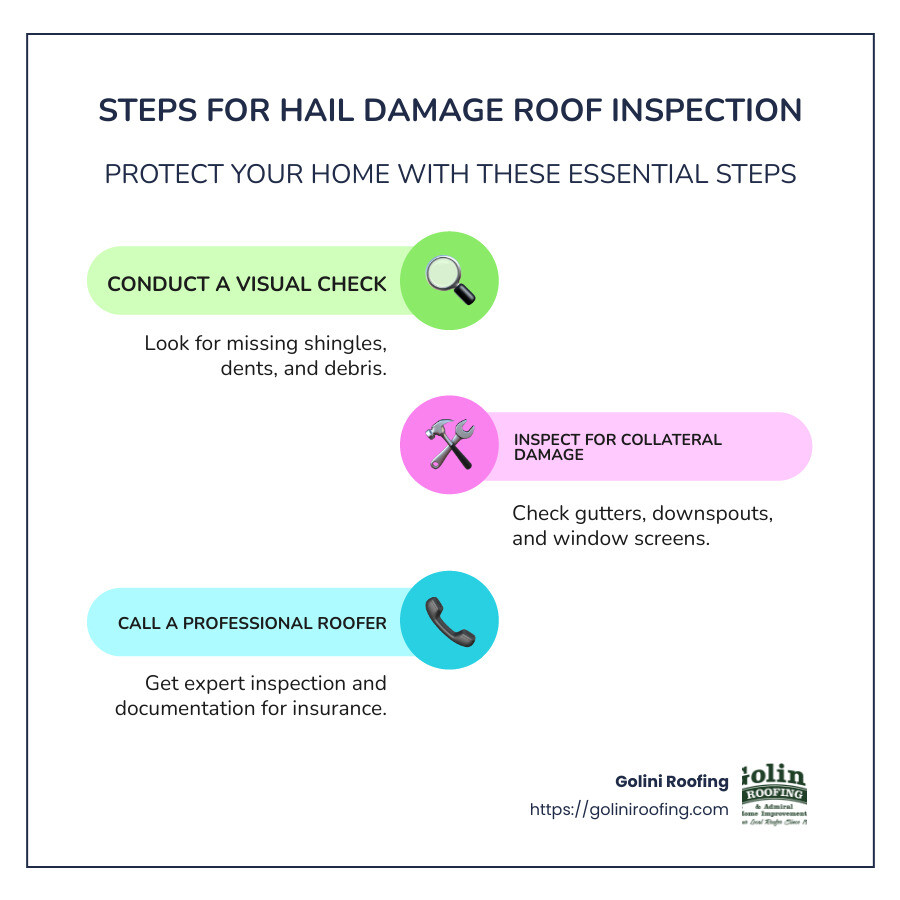
Hail damage roof inspection is critical for maintaining the safety and longevity of your home after a storm. Here’s what you should do immediately:
- Conduct a visual check: Look for missing shingles, dents in roof accessories, and debris from the storm.
- Look for collateral damage: Inspect gutters, downspouts, and window screens for dents or marks.
- Call a professional roofer: Get an expert inspection to assess the full extent of the damage and document it for insurance purposes.
When the skies clear after a storm, the last thing you want is to find damage to your roof. Hail storms can cause significant issues, from minor dings to critical structural damages. Prompt and thorough inspection post-storm can save you headaches and costs down the line. At Golini Roofing, our commitment is to provide accurate and timely assessments, ensuring your roof stays durable against New England’s harsh weather.
My name is Jack Golini, and with over three decades in the roofing industry, my team and I at Golini Roofing are your trusted partners for hail damage roof inspection. Our expertise guarantees precise evaluations, guiding you effectively through any repair process.
Hail damage roof inspection terms made easy:
– do i need a roof inspection
– how long does a roof inspection take
– commercial roof inspections
Determine the Severity of the Hailstorm
Understanding the severity of a hailstorm is key to assessing potential damage to your roof. This involves examining three main factors: hail size, wind intensity, and local weather reports.
Hail Size
Hailstones come in various sizes, and their impact on your roof can differ dramatically. Hail smaller than 1/2 inch may cause minor cosmetic damage. In contrast, hailstones larger than 1 inch, especially when combined with strong winds, can lead to significant structural damage. Picture a golf ball or even a tennis ball-sized hail; these can wreak havoc on your roof’s integrity.
Wind Intensity
Wind plays a crucial role in the damage caused by hail. Strong winds can drive hailstones with more force, increasing the likelihood of roof damage. Even smaller hailstones can cause significant damage if propelled by high winds. It’s not just about the size of the hail, but also the speed at which it hits your roof.
Local Weather Reports
If you weren’t home during the storm, checking local weather reports can provide valuable insights into the storm’s severity. Reports often include details about hail size and wind speeds, helping you gauge potential damage. This information can be crucial when discussing repairs with your insurance company or a roofing contractor.
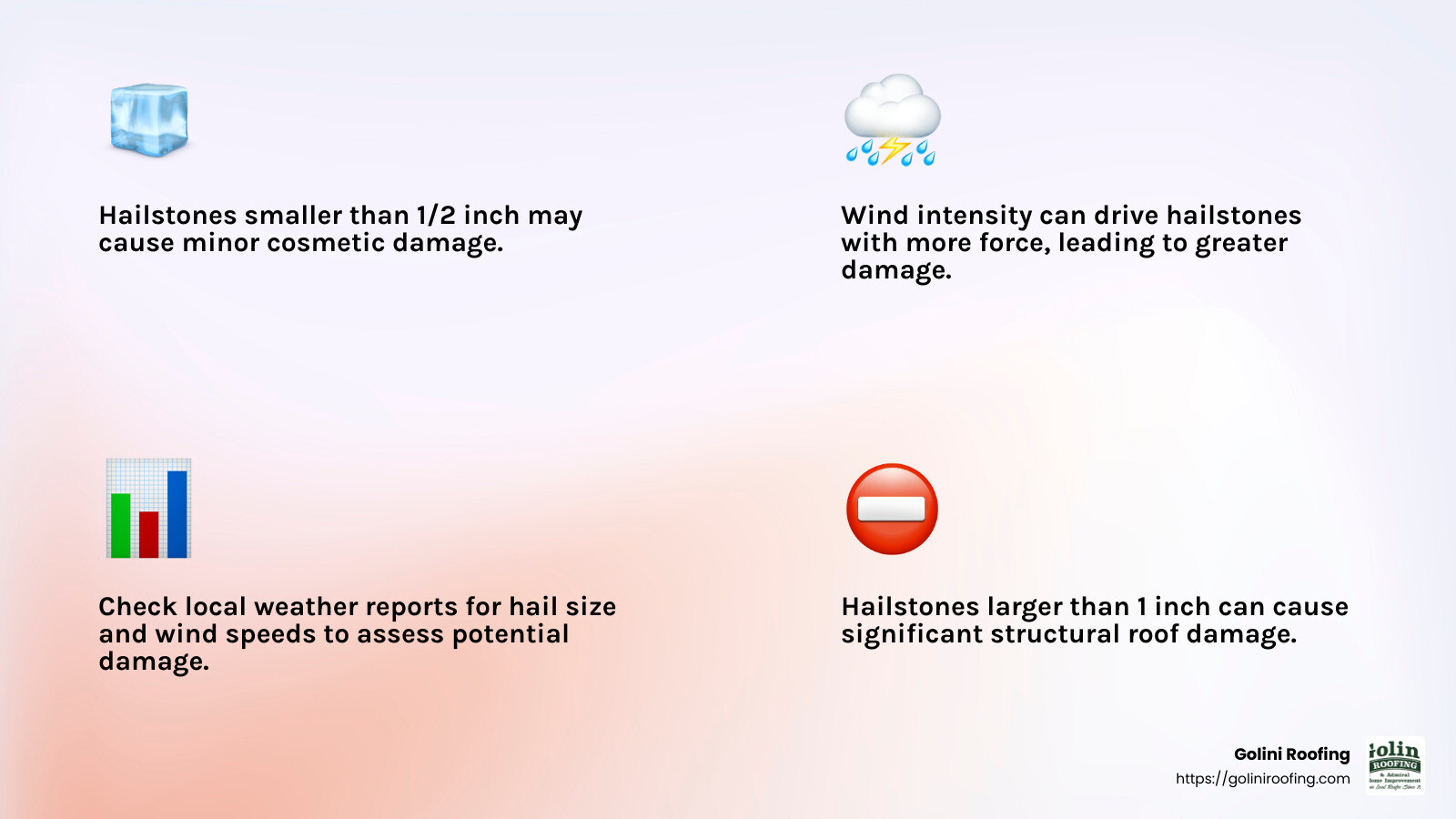
By understanding these factors, you can better assess whether your roof might have sustained damage. If the storm involved large hail or strong winds, it’s wise to proceed with a hail damage roof inspection. This initial assessment can guide you on whether immediate repairs are necessary or if a professional inspection is warranted.
At Golini Roofing, we’re here to assist with any concerns following a hailstorm, ensuring your roof remains secure and your home protected.
Conduct a Visual Inspection of Your Roof
After a hailstorm, one of the first steps you should take is to conduct a visual inspection of your roof. This can help identify obvious signs of damage that may need immediate attention. Here’s how you can do it effectively:
Loose Shingles
Start by looking for loose or missing shingles. Loose shingles can indicate that the wind has lifted them, potentially leading to leaks. If you see shingles on the ground, it’s a clear sign that your roof has been compromised.
Roof Discoloration
Next, check for any discoloration on the roof. Hail can knock off the protective granules on shingles, leading to dark spots or patches. This discoloration not only affects the appearance but also the integrity of your roof. Missing granules expose the underlying material, making it more susceptible to UV damage and water leaks.
Wood Exposure
Look for any signs of wood exposure. This could mean that the hail has caused significant damage, penetrating through the shingles and exposing the wooden structure beneath. Wood exposure can lead to rot and further structural issues if not addressed promptly.
Binoculars
Using binoculars can be really helpful, especially if you want to avoid climbing onto the roof yourself. They allow you to get a closer look at any potential damage from the safety of the ground. Focus on the areas where you suspect damage, such as the edges and corners, which are more vulnerable to wind and hail impact.
By conducting a thorough visual inspection, you can identify obvious damage and decide whether to call in a professional for a more detailed hail damage roof inspection. While you can spot some damage from the ground, a professional inspection often uncovers hidden issues that might not be immediately visible.
If you notice any of these signs, it’s time to contact Golini Roofing for a detailed inspection. Our experts can assess the damage accurately and provide you with the best options for repair or replacement.
Check for Collateral Damage
After a hailstorm, don’t just focus on your roof. Check for collateral damage around your property, as this can indicate that your roof might also be compromised. Here’s what to look for:
Dented Gutters
Start with your gutters. Hail can leave noticeable dents on them. These dents are more than just cosmetic; they can affect water flow, leading to potential water damage.
Window Screens
Inspect your window screens for any holes or tears. Hailstorms can easily puncture these, and if your screens are damaged, it’s a sign that the storm was strong enough to potentially harm your roof as well.
Fascia and Roof Flashing
Check the fascia and roof flashing. These areas are often made of softer metals that can show dings or dents from hail. Damaged flashing can lead to leaks, as it plays a critical role in sealing the edges of your roof.
AC Units
Don’t forget about your AC units. Look for dents or dings on the metal casing. These units are often overlooked, but damage here can indicate the severity of the hailstorm and potential roof damage.
Downspouts
Finally, examine your downspouts. Like gutters, they can get dented by hail. Dents in downspouts, especially those above five feet, are a strong indicator of hail impact, as these cannot be attributed to lawn equipment or other ground-level sources.
By checking these areas for collateral damage, you can get a better sense of the hailstorm’s impact on your property. If you find any damage, it’s a good idea to have a professional perform a hail damage roof inspection to ensure your roof’s integrity. Golini Roofing offers comprehensive inspections to help identify and address any issues that may arise from severe weather.
Inspect Your Siding and Other Structures
After ensuring your roof is intact, inspect your siding and other structures around your property. This step is crucial because hail doesn’t just target roofs—it can damage many parts of your home.
Discoloration
Begin by looking for discoloration on your home’s siding. Hail can strip away paint, leaving visible marks. On vinyl siding, this might appear as faded patches or streaks. Discoloration isn’t just an aesthetic issue; it can signal underlying damage that needs attention.
Dents
Next, search for dents on your siding. Vinyl siding is particularly susceptible to dents from hailstones. These dents can weaken the siding’s structure, making it less effective at protecting your home from the elements.
Painted Surfaces
Check any painted surfaces around your home. Hail can chip or peel paint, exposing the material underneath to moisture and potential rot. This is especially important for wooden surfaces, which can deteriorate quickly if left unprotected.
Decks
Lastly, don’t overlook your decks. Hail can cause chips and dents in wood or composite decking materials. Inspect the surface for any signs of impact. Even small chips can lead to larger issues like water damage or mold if not addressed promptly.
By thoroughly inspecting these areas, you’ll have a comprehensive understanding of the hailstorm’s impact on your property. If you notice any signs of damage, consider reaching out to a professional for a hail damage roof inspection. Golini Roofing provides expert inspections to help ensure your home remains safe and secure after severe weather events.
Hail Damage Roof Inspection by a Professional
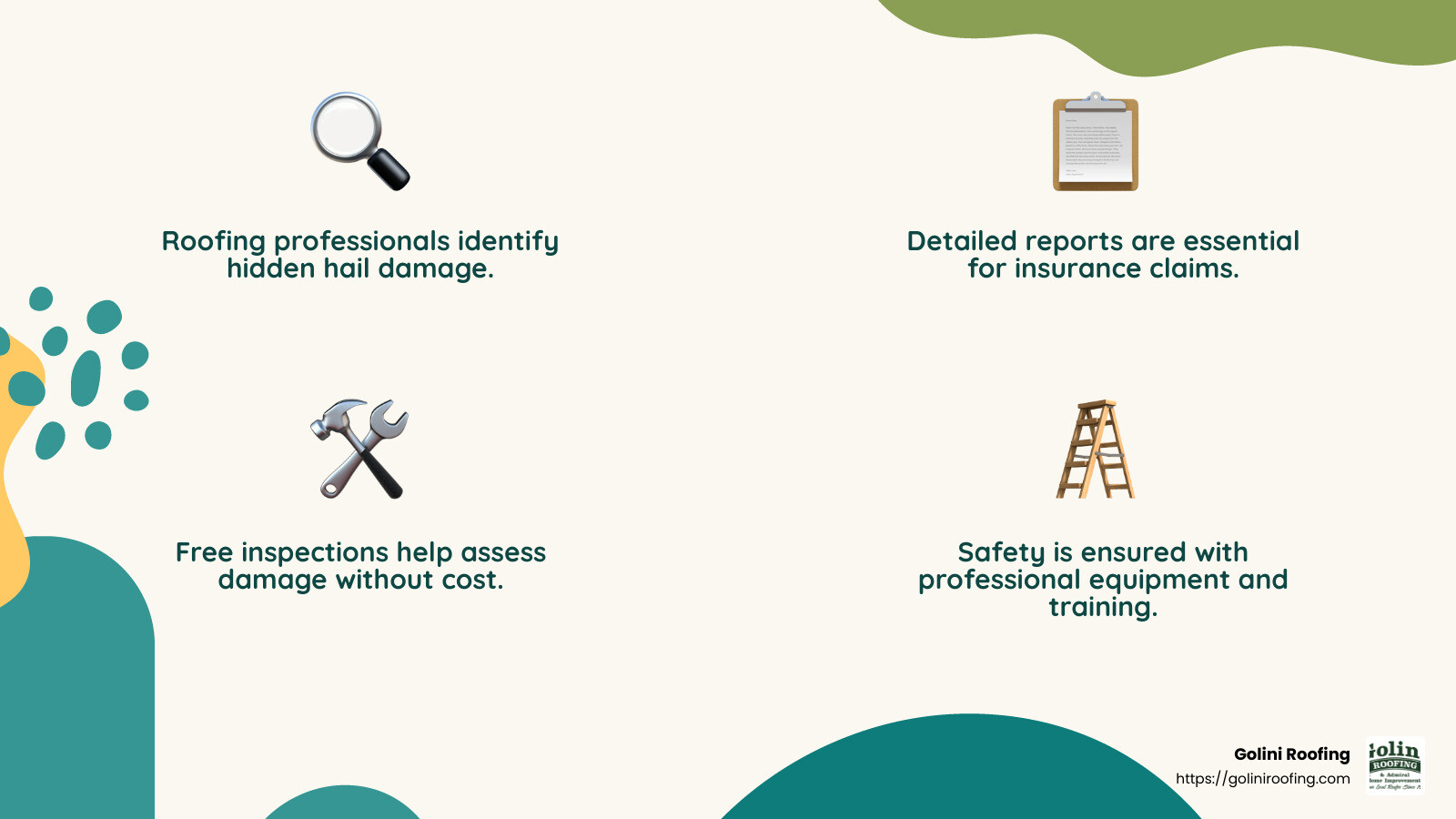
When a hailstorm hits, it’s crucial to have your roof inspected by a professional. A roofing contractor is trained to spot damage that may not be visible to the untrained eye. They know what to look for and can provide a detailed inspection report, which is essential for insurance claims.
Why Hire a Professional?
- Expertise: Roofing contractors deal with hail damage regularly. They understand the nuances of different roof types and how hail impacts each one. This experience is invaluable in assessing the true extent of damage.
- Safety: Climbing onto a roof is risky, especially after a storm. Professionals have the right equipment and training to inspect your roof safely. They can steer slippery surfaces and unstable areas without putting themselves or your property at risk.
- Comprehensive Inspection: A professional inspection goes beyond a simple visual check. Contractors examine shingles, vents, and flashing for dents and dings. They also look for less obvious signs of damage, like granule loss on shingles, which can lead to leaks and further issues.
- Documentation: After the inspection, you’ll receive a thorough report. This document outlines the damage and suggests next steps. It’s a critical component when filing an insurance claim, as it provides evidence of the hail damage.
Cost and Accessibility
Many roofing contractors offer free inspections, which means you can get an expert opinion without upfront costs. This is especially helpful if you’re unsure about the extent of the damage. A free inspection allows you to make an informed decision about repairs or replacements.
The Inspection Process
During the inspection, the contractor will:
- Start from the ground, checking for obvious issues like missing shingles or structural cracks.
- Climb onto the roof for a closer look at shingles, vents, and other components.
- Document any damage with photos and chalk marks to highlight problem areas.
- Provide an official inspection report with findings and recommendations.
Next Steps
If damage is found, the contractor will guide you through the process of filing an insurance claim. They’ll share their findings with your insurance company and help you understand the steps needed to repair or replace your roof.
Hiring a professional for a hail damage roof inspection ensures that no damage goes unnoticed. With their expertise, you can protect your investment and maintain the safety of your home.
What Does Hail Damage Look Like on Different Roof Types?
Understanding what hail damage looks like on various roof types is key to assessing the impact on your home. Each roofing material responds differently to hail, so let’s break it down.
Asphalt Shingles
Asphalt shingles are the most common roofing material, but they’re not invincible. When hail strikes, it can dislodge the protective granules on the surface. These granules are crucial as they protect the shingle from UV rays and weathering.
Signs of hail damage on asphalt shingles include:
– Granule Loss: Look for granules in your gutters or downspouts. Missing granules expose the asphalt layer, leading to faster deterioration.
– Bruises or Dents: These are soft spots where the granules have been knocked off. Press gently on the shingle—if it feels spongy, there’s likely damage.
– Cracks: Severe hail can crack the shingles, leading to potential leaks.
Wood Shingles
Wood shingles, also known as shakes, react differently to hail. They are more prone to splitting when hit by larger hailstones.
Indicators of damage include:
– Splitting: Hail impacts can cause wood shingles to split down the middle. This damage is usually visible upon close inspection.
– Dents and Gouges: Look for depressions or gouges on the surface. These can compromise the shingle’s integrity and lead to water penetration.
Metal Shingles
Metal roofing is durable, but not entirely immune to hail damage. The impact typically results in visible dents.
Look for:
– Dents: These are usually easy to spot and often appear on softer metals like aluminum.
– Paint Damage: Hail can chip or scratch the paint, which may lead to rusting if left untreated.
Granule Loss
Granule loss is a significant concern across different shingle types, especially asphalt. These granules act as a protective layer, and their absence can accelerate wear and tear.
Why is granule loss important?
– UV Protection: Granules protect the asphalt from harmful UV rays, which can cause cracking and brittleness.
– Aesthetic Damage: Loss of granules can also lead to discoloration, making your roof look patchy and worn.
In summary, each roof type shows hail damage differently. Knowing what to look for helps in identifying problems early and addressing them before they escalate. If you suspect hail damage, consider getting a hail damage roof inspection from a professional to ensure all issues are identified and documented.
Should You Fix Roof Hail Damage?
Deciding whether to fix hail damage on your roof depends on the type of damage—cosmetic vs. structural—and potential risks like water leaks and mold growth.
Cosmetic vs. Structural Damage
Cosmetic Damage: This includes minor dings and dents that don’t affect the roof’s functionality. While insurance companies often don’t cover cosmetic damage, monitor it. Over time, even small dents can lead to bigger issues, especially if they worsen with subsequent weather events.
Structural Damage: This type of damage affects your roof’s integrity and must be addressed promptly. Structural damage can lead to leaks and other serious problems. Insurance policies are more likely to cover this kind of damage, so it’s crucial to document it thoroughly during your inspection.
Risks of Ignoring Damage
Water Leaks: Hail can cause cracks or dislodge shingles, leading to leaks. Water seeping into your home results in costly repairs, such as fixing ceilings, walls, and insulation.
Mold Growth: Leaks can also lead to mold, which poses health risks and requires expensive remediation. Mold thrives in damp conditions, so addressing roof damage quickly is vital to prevent its spread.
Insurance Coverage
Filing a Claim: If your roof has structural damage, filing an insurance claim is often necessary. Most policies cover damage from hail, but you’ll need a detailed inspection report to support your claim.
Deductibles and Premiums: That you will likely have to pay a deductible. Also, frequent claims can increase your premiums, so weigh the costs and benefits before proceeding.
In summary, addressing hail damage promptly can prevent further issues and potential expenses. If you’re unsure about the extent of the damage, a professional hail damage roof inspection can provide clarity and help you decide on the best course of action.
Steps to Follow If You Think You Have Hail Damage
If you suspect your roof has been damaged by hail, it’s important to take immediate action. Here’s a step-by-step guide to help you through the process.
Visual Inspection
Start with a visual inspection from the ground. Look for loose or missing shingles, roof discoloration, and any signs of wood exposure. You can use binoculars to get a closer look without climbing onto the roof. Don’t forget to check for collateral damage around your home, such as dented gutters, window screens, and fascia.
Professional Inspection
If you notice any signs of damage, it’s time to call in a professional roofing contractor. They can conduct a thorough hail damage roof inspection. Many contractors offer free inspections, so it’s a good idea to take advantage of this service. A professional can spot damage that might not be visible to the untrained eye and provide you with an official inspection report.
Insurance Claim
Once you have the inspection report, you can decide whether to file an insurance claim. If the damage is structural, it’s usually covered by homeowners insurance. Make sure to document everything with photos and the inspection report. Contact your insurance company to initiate the claim process. Having a roofing contractor present during the adjuster’s visit can be beneficial, as they can advocate for a fair assessment.
Roof Repair
After your claim is approved, or if you decide to proceed without insurance, the next step is roof repair. Work with a reputable contractor to ensure quality repairs. Whether it’s replacing a few shingles or a full roof replacement, addressing the damage promptly will prevent further issues like water leaks or mold growth.
Following these steps can help you steer the aftermath of a hailstorm and ensure your roof is in good condition. Next, we’ll tackle some frequently asked questions about hail damage roof inspections.
Frequently Asked Questions about Hail Damage Roof Inspection
How to tell if a roof is damaged by hail?
After a hailstorm, you might notice dings or dents on your roof. These are common signs of hail damage. Check your roof vents and gutters for any dents. If you see splatter marks, which are lighter discolorations, it can also indicate hail impact. These marks don’t usually cause damage but show where hail hit.
Gutters can also reveal clues. If they’re dented or if you find granules from shingles in them, it’s a sign that your roof may have experienced damage. Granules protect shingles from UV rays, so their loss can lead to problems.
What size hail can cause roof damage?
Hailstones around 1-inch in diameter can start causing damage to common roofing materials like asphalt shingles. However, smaller hail combined with strong winds can also damage roofs. The type of roofing material matters too. For example, metal roofs might withstand larger hailstones better than asphalt shingles.
Why is hail damage bad for a roof?
Hail damage is more than just cosmetic. It can strip away protective granules from shingles, exposing them to harmful UV rays. Over time, this exposure can lead to brittleness, cracking, and even water leaks. Once water seeps in, it can cause further damage, like mold growth or structural issues. That’s why addressing hail damage promptly is crucial to maintaining your roof’s integrity.
Conclusion
At Golini Roofing, we understand that dealing with hail damage can be stressful. But you don’t have to face it alone. Our team is here to help you steer the process smoothly, from professional inspections to insurance claims and roof replacements.
With over 35 years of experience, we pride ourselves on our meticulous craftsmanship. Our expert inspectors will assess your roof thoroughly, ensuring no damage goes unnoticed. We offer free inspections to give you peace of mind and help you determine the best course of action.
If hail damage is found, we’ll guide you through filing an insurance claim. Our goal is to ensure you get the coverage you deserve. We know that insurance companies can be tricky, but with our expertise, we’ll advocate on your behalf to achieve a fair settlement.
When it comes to roof replacement, our hand-nailing technique ensures a high-quality, durable roof that stands the test of time. We believe in delivering nothing less than the best for our customers, ensuring your satisfaction and the longevity of your roof.
Choose Golini Roofing for your hail damage needs. Our commitment to exceptional craftsmanship and customer satisfaction makes us your trusted partner in protecting your home.
Ready to get started? Contact Golini Roofing for a free consultation today!
