Commercial Roofing & Waterproofing: Top 2025 Experts
Protecting Your Property from the Top Down
Your building’s roof is its first line of defense against the elements, making expert commercial roofing & waterproofing crucial for protecting your assets. The primary goal is simple: to maintain the watertight integrity of a building and keep its contents dry. However, commercial roofs are complex systems that demand specialized knowledge to stand the test of time.
Key commercial roofing systems include:
- Single-Ply Membranes: TPO, EPDM, and PVC are popular for their flexibility, light weight, and energy efficiency.
- Asphaltic Systems: Modified Bitumen (Mod Bit) and Built-Up Roofing (BUR) are multi-layered systems with a history of proven durability.
- Metal Roofing: Known for extreme longevity, fire resistance, and high wind resistance.
- Liquid-Applied Systems: These create a seamless, waterproof membrane, often used for unique roof shapes or restoration.
I’m Jack Golini, owner of Golini Roofing. Since 1982, I’ve been a leader in the roofing industry. With over 35 years of experience, I bring a deep understanding of commercial roofing & waterproofing to every project, ensuring exceptional craftsmanship.
Understanding the Core Commercial Roofing Systems
This section explores the most common materials and systems used to protect commercial properties, highlighting their unique characteristics to help you make an informed decision.
Single-Ply Membrane Roofing (TPO, EPDM, PVC)
Single-ply membranes are lightweight, tough, and installed in a single layer, offering a blend of flexibility and energy efficiency.
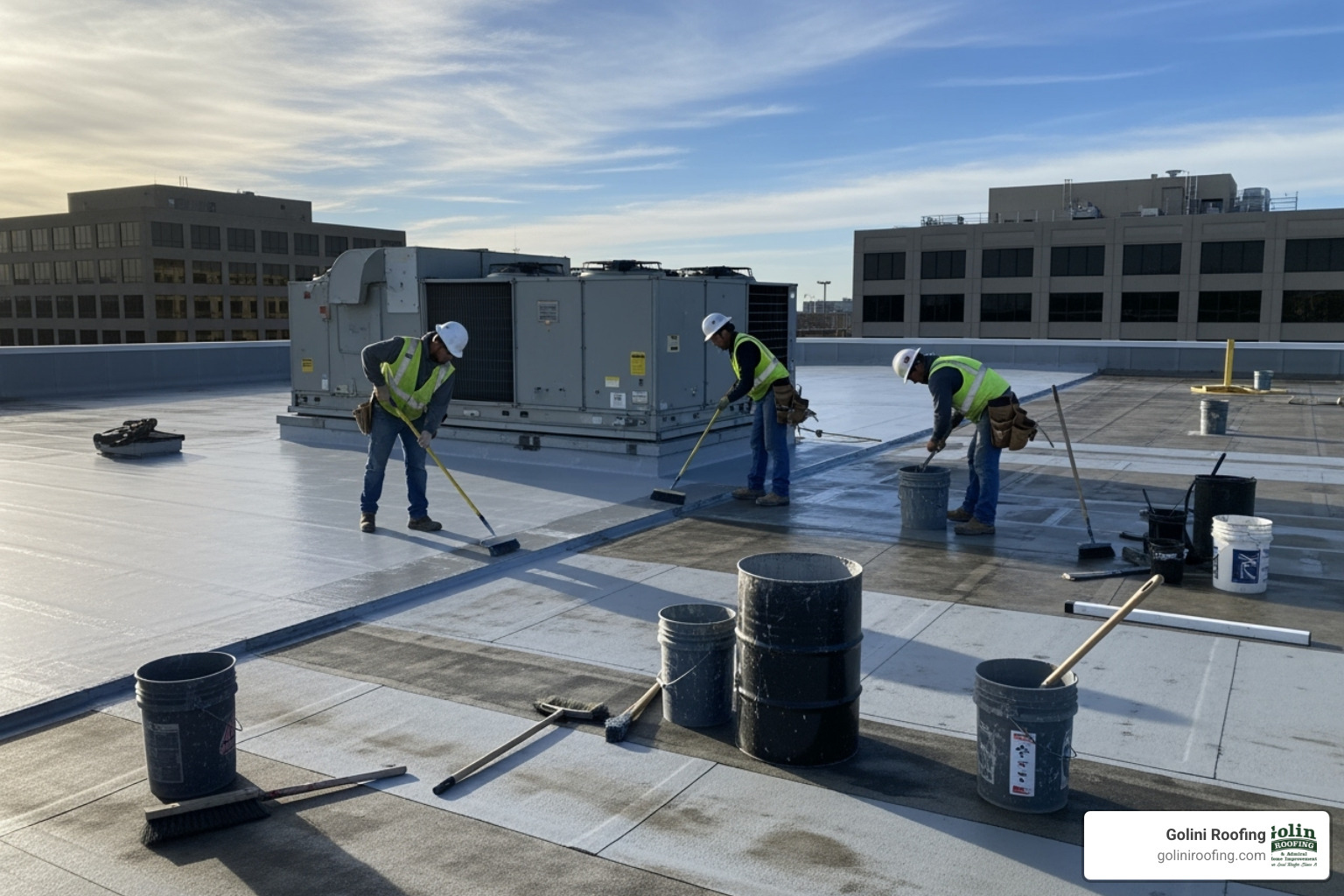
- TPO (Thermoplastic Polyolefin): As a market leader, TPO is popular for its durability and energy efficiency. Its seams are heat-welded to form a strong, seamless bond. The bright white surface reflects sunlight, which can lower cooling costs. Modern TPO formulations offer exceptional performance.
- EPDM (Ethylene Propylene Diene Monomer): Often called a “rubber roof,” EPDM is a durable thermoset membrane known for its flexibility and resistance to UV radiation, hail, and temperature extremes. Its primary advantages are longevity and weather resistance. Its dark color absorbs heat, but reflective coatings are available.
- PVC (Polyvinyl Chloride): Like TPO, PVC features strong, heat-welded seams. Its key advantage is excellent chemical resistance, making it ideal for restaurants or manufacturing plants. While the initial investment may be higher, its durability and chemical resistance provide long-term value.
Each single-ply option brings its own unique set of strengths, so the best choice for your building will depend on its specific needs, your local climate, and your budget for commercial roofing & waterproofing.
More info about Commercial Roofing.
Asphaltic Roofing Systems (Modified Bitumen & BUR)
Traditional asphaltic systems are known for rugged, multi-layered protection, offering a reliable shield against the elements for commercial roofing & waterproofing.
- Built-Up Roofing (BUR): As a trusted choice for over a century, BUR systems consist of multiple layers of roofing felts and hot-applied asphalt (bitumen). This creates a thick, durable, and redundant membrane, often topped with gravel for UV and fire resistance. Key benefits include proven longevity and superior puncture resistance, though the system is heavy and installation can be messy.
- Modified Bitumen (Mod Bit): An evolution of BUR, Mod Bit blends asphalt with polymers for improved flexibility and temperature resistance. It offers excellent waterproofing and improved durability over traditional BUR. Installation methods include torch-applied, hot-mopped, cold-adhered, or self-adhered, with torch-down applications requiring specific safety protocols.
Both BUR and Mod Bit systems offer reliable, time-tested performance, providing excellent protection against water intrusion for your property.
More info about Industrial Roofing.
Metal Roofing Systems
Metal roofing is a top choice for commercial buildings due to its exceptional durability and sharp appearance. Common types include standing seam and corrugated panels.
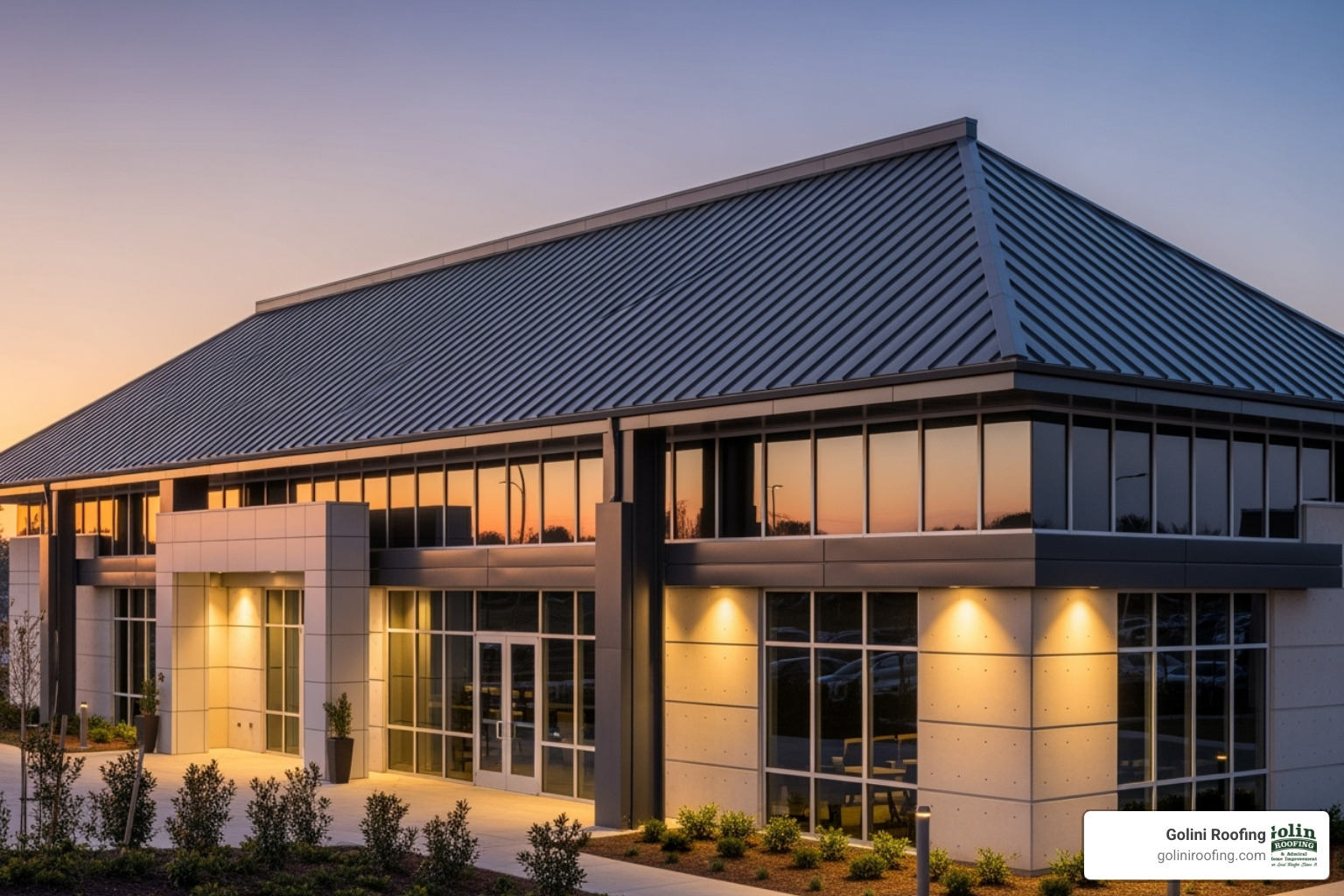
The primary benefits are incredible longevity (often 50+ years), high resistance to fire and wind, and sustainability. Metal is typically made with recycled content and is fully recyclable. While the higher initial investment is a key consideration, the long-term durability and minimal maintenance often make it a smart investment for building owners. It’s truly a powerhouse for commercial roofing & waterproofing.
More info about Commercial Metal Roofing Services.
Liquid-Applied and Spray Foam Systems
For roofs with complex shapes or numerous penetrations, liquid-applied and spray foam systems offer seamless restoration solutions, often without a full tear-off.
- Liquid-Applied Systems: A liquid coating of silicone, acrylic, or urethane is applied to the roof, curing to form a seamless, flexible, and lightweight waterproof membrane. These systems are ideal for complex roof geometries but require careful surface preparation for proper adhesion.
- Spray Polyurethane Foam (SPF) Systems: SPF provides both roofing and insulation in a single application. A liquid foam is sprayed on, expanding to create a rigid, seamless, and highly insulating layer. A protective topcoat is then applied to shield it from UV rays. SPF offers superior insulation and waterproofing but requires specialized applicators.
Both liquid-applied and SPF systems provide excellent waterproofing and can significantly extend the life of an existing roof.
More info about Commercial Projects.
The Science Behind High-Performance Commercial Roofing & Waterproofing
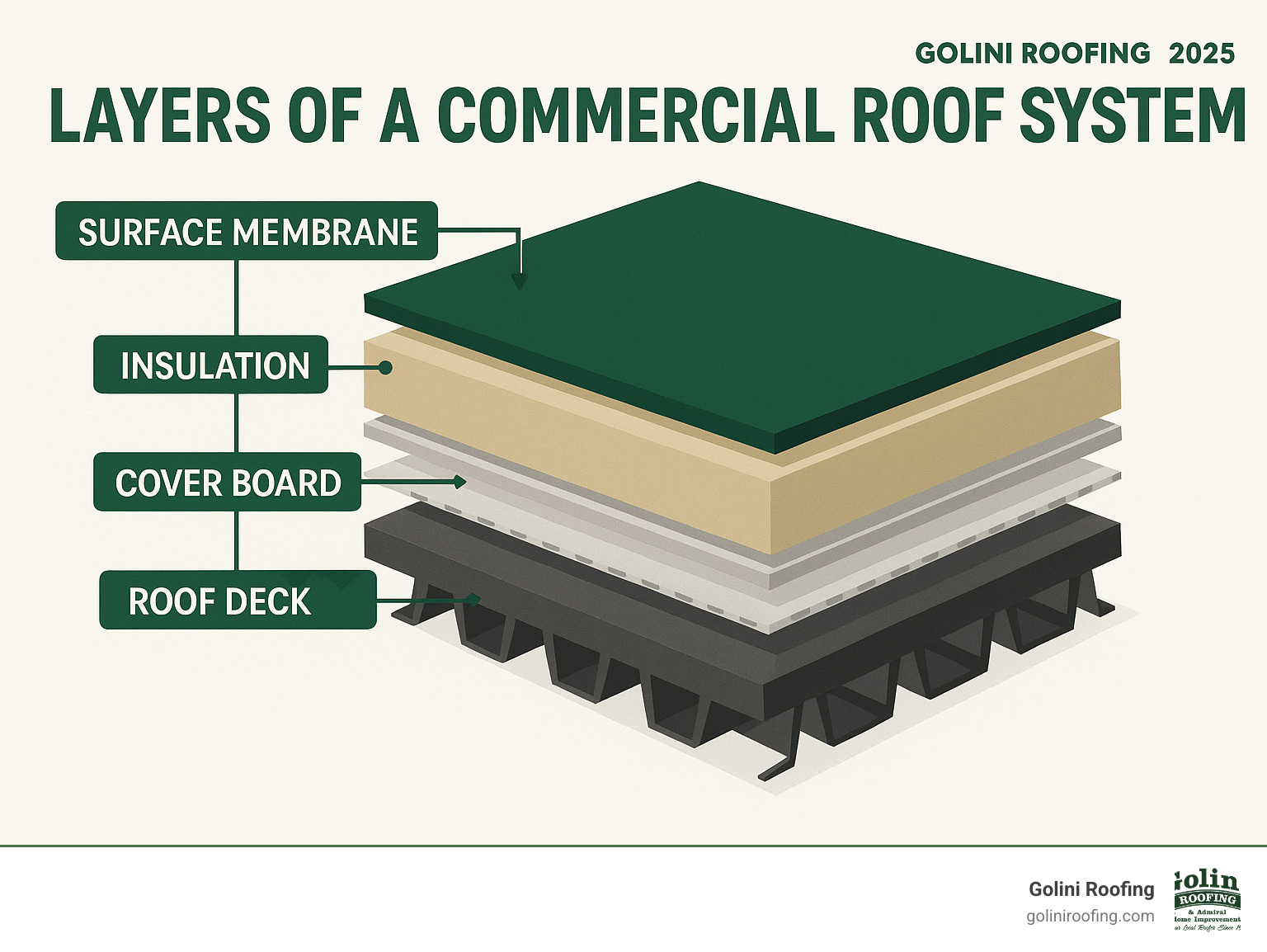
A successful roofing project goes beyond the surface material. It involves a complete system where every component works together to ensure energy efficiency and long-term protection.
Critical Components: Insulation and Vapor Barriers
A high-performance roof relies on more than just its surface. Key components like insulation and vapor barriers are essential for energy efficiency and long-term protection.
Proper insulation, measured by its R-value, reduces heat flow and lowers energy bills. Polyisocyanurate (Polyiso) insulation is a leading choice for commercial buildings due to its excellent thermal performance and responsible environmental impact.
Equally critical are vapor barriers and vapor retarders. These prevent warm, moist interior air from condensing within the roof assembly, which can lead to reduced insulation performance, mold, and structural damage. Correctly installing these components within the building envelope is fundamental to a successful commercial roofing & waterproofing system.
More info about Commercial Roofing Resources.
Installation Methods for Commercial Roofing & Waterproofing
Proper installation is the foundation of a durable roof. The chosen method depends on the roofing material, building structure, and budget.
- Mechanically attached systems use screws and plates to anchor the membrane, a cost-effective method with high wind resistance, ideal for single-ply roofs.
- Fully adhered systems use adhesives to bond the membrane for a smooth finish and superior wind uplift resistance.
- Ballasted roofs use the weight of gravel or pavers to secure the membrane. This is cost-effective for large roofs but adds significant weight and can complicate leak detection.
- Heat-welded seams are used for thermoplastic membranes (TPO, PVC), fusing the edges with hot air to create a continuous, watertight surface.
- Cold-applied and self-adhered systems are safer, flameless alternatives ideal for occupied buildings.
Regardless of the method, proper substrate preparation—ensuring a clean, dry, and smooth surface—is critical for success.
More info about Commercial Roof Contractors.
Innovations in Sustainable Roofing & Waterproofing
Sustainable roofing innovations benefit both the environment and your budget.
- Cool roofs feature reflective surfaces, measured by the Solar Reflectance Index (SRI), that absorb less heat. This lowers energy bills and helps reduce the urban heat island effect.
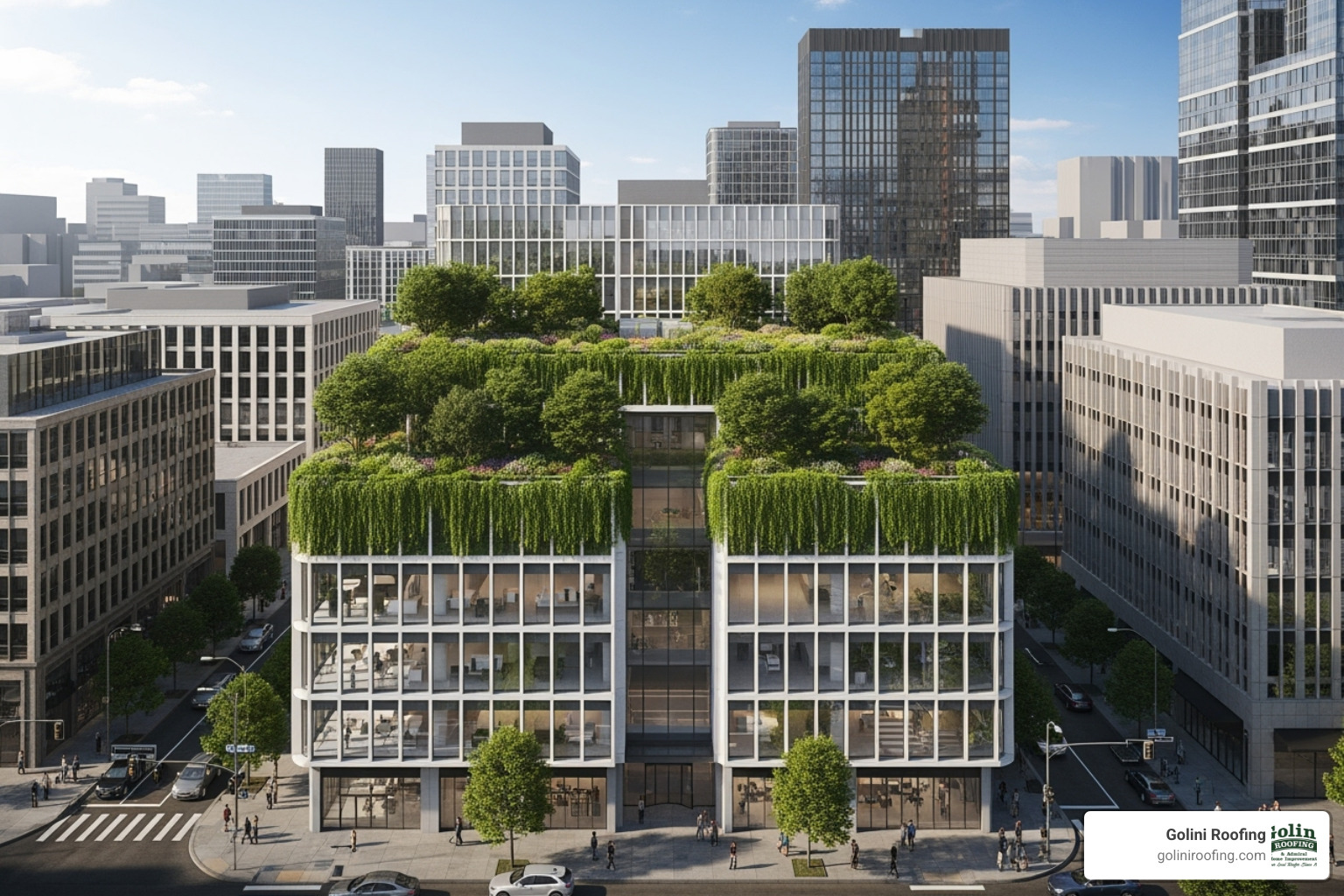
- Vegetative “green” roofs are living systems that provide excellent stormwater management, add insulation, and improve air quality, all while relying on a robust waterproofing membrane.
- Recycled materials are increasingly used in high-performance roofing products, reducing waste and the demand for new raw materials.
- Flameless installation solutions, such as cold-applied adhesives, improve safety for workers and building occupants by eliminating open flames.
These innovations are backed by advanced testing methods to ensure they meet stringent safety and performance standards, proving that sustainability and protection can go hand-in-hand in commercial roofing & waterproofing.
Lifecycle Management: Maintenance, Repair, and Replacement
Think of your commercial roof as a vital part of your business, much like a key employee! Just like you wouldn’t neglect essential team members, protecting your roof investment means taking a proactive approach throughout its entire lifespan. From those routine check-ups to knowing exactly when to mend a small issue or commit to a full upgrade, every step is about ensuring your building stays safe and dry.
Proactive Roof Maintenance and Inspections
Proactive roof maintenance is a smart investment that extends the life of your commercial roofing & waterproofing system, prevents costly emergency repairs, and ensures warranty compliance.
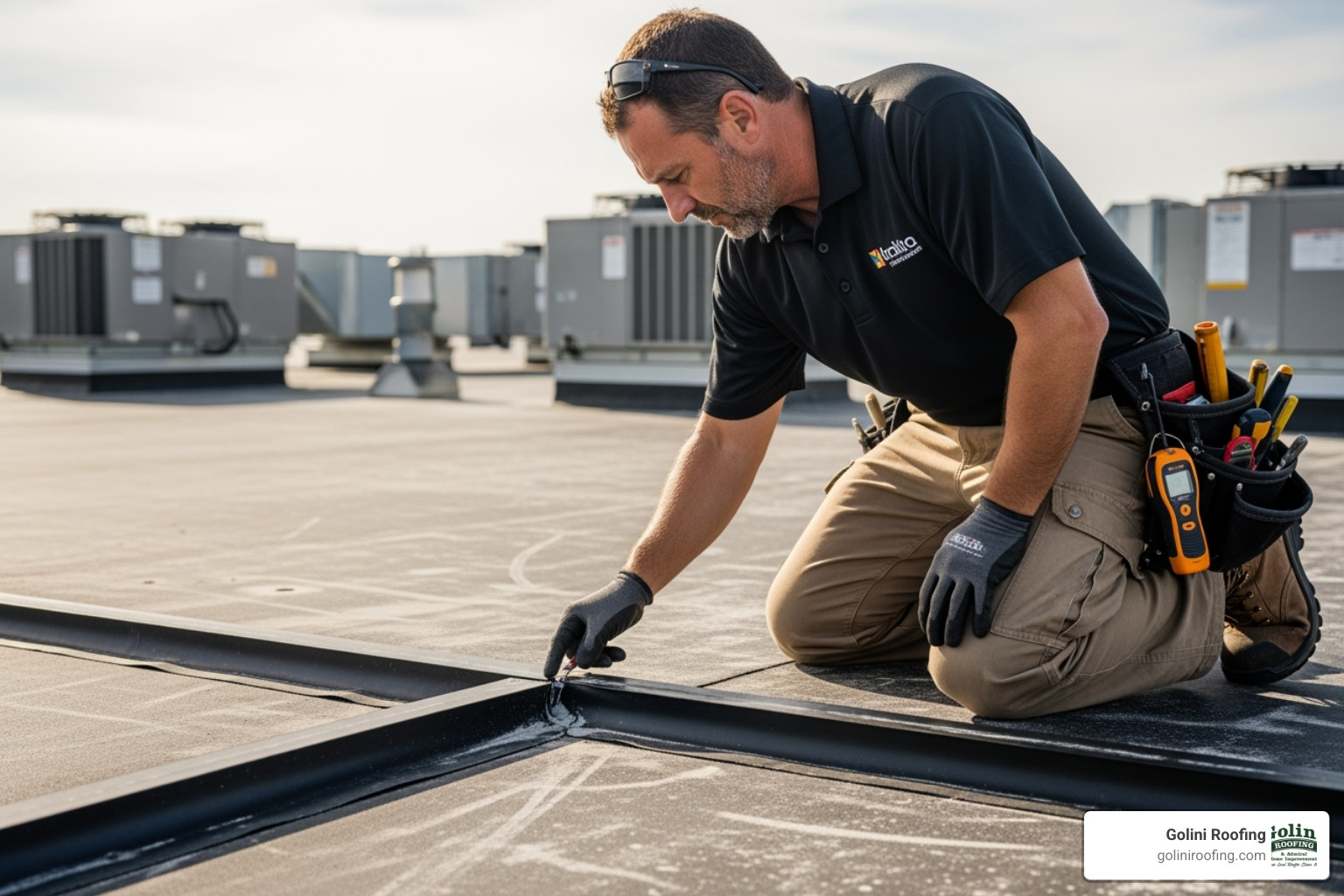
We recommend professional inspections at least twice a year and after any severe weather event to catch minor issues before they escalate. A thorough check-up uncovers hidden problems and keeps your roof performing at its best.
Here’s a quick look at what’s typically involved in a thorough roof check-up:
- Clear all debris from the roof surface.
- Inspect and clean drains, scuppers, and gutters.
- Check for any signs of standing water.
- Examine all seams, flashing, and penetrations.
- Look for membrane damage like blisters, cracks, or punctures.
- Trim overhanging tree branches.
- Document all findings with photos and notes.
Want to dive deeper into smart roof care? You can find More info about Commercial Roof Inspections and find how a Commercial Roof Maintenance Plan can keep your building protected for years to come.
The Critical Decision: Repair vs. Full Replacement
Deciding between repairing or replacing your commercial roofing & waterproofing system is a critical choice affecting your budget and building’s health.
Repairs are a cost-effective solution for localized issues on a relatively young roof, such as small punctures, isolated leaks, or minor flashing wear. This approach is viable if the underlying insulation and deck are sound.
Full replacement becomes necessary when damage is widespread or the roof has reached the end of its service life. Key indicators include:
- Widespread blistering, cracking, or deterioration of the membrane.
- Saturated insulation, which causes energy loss and structural risks.
- Frequent, recurring leaks in multiple areas.
- The roof has reached an advanced age and repair costs are escalating.
A replacement is a sensible long-term investment when ongoing repairs are no longer economical. Our team can provide a thorough evaluation to help you weigh the pros and cons and make the best decision for your property. Ready to find out more? Check out More info about Commercial Roof Repair Near Me.
Ensuring Quality in Your Commercial Roofing Project
The success of your project truly hinges on making the right choices, from the very system you choose to the experts you trust to install and maintain it. It’s all about setting your building up for long-term protection.
Factors for Selecting the Right Roofing System
Selecting the right commercial roofing & waterproofing system requires careful consideration of several factors. Our experts in Wakefield, MA, and surrounding areas like Burlington, Lynnfield, and Woburn can guide you through the process. Key considerations include:
- Building Use: The activities inside your building influence material choice (e.g., chemical-resistant PVC for a factory).
- Local Climate: The system must withstand Massachusetts’s variable weather, including sun, rain, snow, and wind.
- Project Budget: Balance upfront costs with long-term value and maintenance expenses.
- Structural Load Capacity: Ensure your building can support the weight of the chosen system, especially heavier options like ballasted or green roofs.
- Energy Code Requirements: Comply with local codes for insulation and “cool roof” standards.
- Anticipated Foot Traffic: High-traffic roofs require durable, puncture-resistant surfaces.
- Aesthetic Goals: If the roof is visible, its appearance can be a factor in material selection.
Considering these points ensures you choose a system that provides lasting value and protection.
Understanding Commercial Roofing Warranties
Understanding commercial roofing warranties is essential for protecting your investment. They define manufacturer and contractor responsibilities.
- Manufacturer Warranty: Covers defects in the roofing materials. Terms vary, but some high-performance systems offer coverage for 30 years or more.
- Contractor Workmanship Warranty: Covers issues arising from improper installation, typically for one to five years.
- NDL (No Dollar Limit) Warranties: These premium warranties cover both materials and labor for covered defects with no cost cap, offering the highest level of protection.
- Prorated vs. Non-Prorated: Non-prorated warranties cover 100% of repair costs for the term, while prorated coverage decreases over time.
Always read the fine print to understand covered defects, exclusions (like storm damage or unauthorized repairs), and maintenance requirements. Failure to perform required maintenance can void your warranty, highlighting the importance of proactive care for your commercial roofing & waterproofing.
Choosing a Qualified Commercial Roofing Contractor
Choosing the right commercial roofing & waterproofing contractor is the most critical step for a successful project. With over 35 years of experience, Golini Roofing understands what it takes to deliver outstanding results in Wakefield, MA, and surrounding communities. Look for these qualifications:
- Licensed and Insured: Verify they hold proper Massachusetts licensing, liability insurance, and worker’s compensation to protect you from financial risk.
- Proven Experience & Local Reputation: Choose a contractor with a strong track record in commercial roofing and positive local references. Review their project portfolio to assess their craftsmanship.
- Manufacturer Certifications: Certifications from top manufacturers indicate a high level of training and allow the contractor to offer the best warranties.
- Safety Record: A strong safety program protects workers, your property, and your business operations.
- Clear Communication: A professional contractor provides detailed, itemized proposals and maintains open communication throughout the project.
By vetting contractors on these points, you can confidently select a partner dedicated to delivering a high-quality, durable roof.
More info about Commercial Roof Companies.
Conclusion: Protecting Your Investment with Expert Care
Your commercial roof is a critical business asset. Protecting it requires combining durable materials with expert waterproofing techniques. Every step, from system selection to diligent maintenance, is vital for ensuring your building’s safety and your roof’s longevity.
In Massachusetts, partnering with a seasoned expert like Golini Roofing ensures you receive meticulous craftsmanship and a commitment to the long-term protection of your commercial property.
Ready to give your building the best defense from the top down? Explore our expert Commercial Roofing Services to learn how we can protect your investment.
