
What the Residential Roof Installation Process Actually Involves
The residential roof installation process is one of the most rewarding home improvement projects you can take on — but it’s also one of the most technical.
Here’s a quick overview of the core steps:
- Inspect and prep the roof deck — check for damage, remove old materials if needed
- Install underlayment — synthetic or rubberized asphalt as a moisture barrier
- Add drip edge and flashing — around eaves, rakes, valleys, and penetrations
- Plan panel layout — start opposite prevailing winds, snap a square reference line
- Cut and secure roof panels — working bottom to top, with proper overlaps
- Install trim and ridge cap — seal all edges and joints
- Final inspection and cleanup — check fasteners, remove metal shavings, verify seals
Residential roofs are gaining serious popularity among homeowners — and for good reason. They can last 40 to 70 years, weigh far less than traditional shingles (just 40 to 120 lbs per square versus 200 to 350 lbs for asphalt), and are made from at least 25% recycled material. They reflect heat, resist harsh weather, and rarely need major repairs.
But getting those long-term benefits depends almost entirely on how well the roof is installed. A single misaligned panel, a skipped flashing detail, or the wrong fastener can lead to leaks, rust, or costly repairs down the road.
I’m Jack Golini, owner of Golini Roofing, and I’ve been working through every stage of the residential roof installation process since 1982 — from simple residential re-roofs to complex multi-pitch jobs across Massachusetts’s North Shore. In this guide, I’ll walk you through exactly what it takes to do it right.
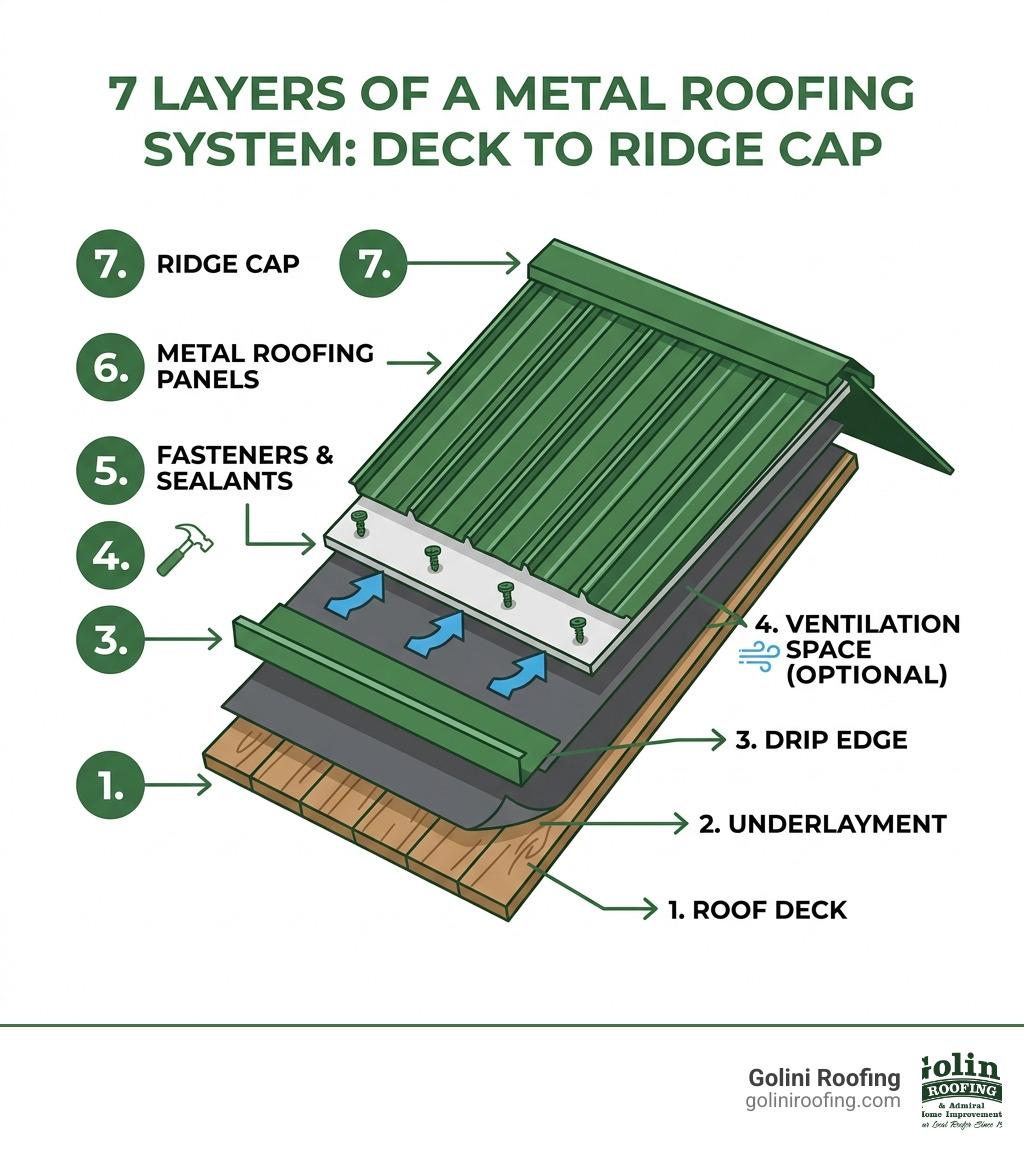
Residential roof installation process vocab explained:
Why Choose a Residential Roof?
When we talk to homeowners in Wakefield or Lynnfield about upgrading their homes, the conversation almost always turns to longevity. Why settle for a roof that needs replacing every 15 to 20 years when you can install a system that might outlast the mortgage?
| Feature | Asphalt Shingles | Residential Roofing |
|---|---|---|
| Average Lifespan | 15–25 Years | 40–70 Years |
| Weight per Square | 200–350 lbs | 40–120 lbs |
| Recyclability | Low (Landfill bound) | 100% Recyclable |
| Heat Reflection | Absorbs Heat | Reflects Solar Radiation |
| Maintenance | Moderate | Very Low |
One of the biggest perks we see in the Massachusetts climate is how these residential roofing systems handle our crazy weather. Because the material is non-combustible, it offers excellent fire resistance. Furthermore, its smooth surface allows snow to slide right off, preventing the heavy ice dams that plague so many homes in Winchester and Woburn during January.
Choosing the right material is the first step. You can explore Types of residential roofing to see the difference between steel, aluminum, and copper. While steel is the most common for its strength and cost-effectiveness, aluminum is a fantastic choice for coastal areas because it won’t rust.
Regarding the financial side, it is important to look at the Residential roof cost analysis. Based on general internet data, the average cost for a residential roof can range significantly. You might see prices anywhere from $10,000 to over $45,000 for a standard home, depending on the material and complexity. (Please note these are average market ranges and not specific quotes from us at Golini Roofing).
Mastering the Residential Roof Installation Process
Before you ever climb a ladder, you need the right gear. This isn’t a project where you can “wing it” with a standard hammer and a hand saw. Precision is the name of the game here.
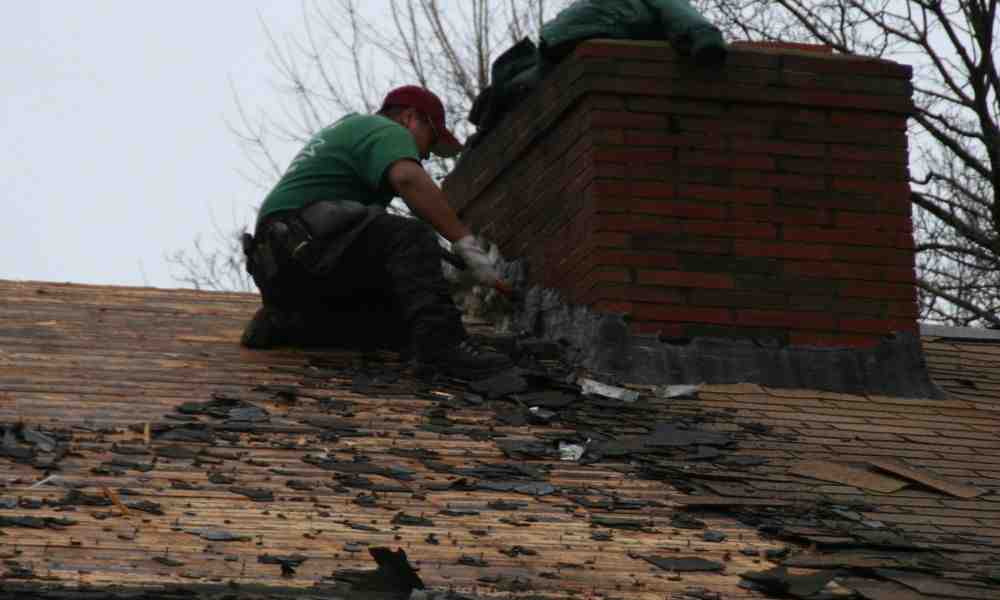
To get started, you’ll need:
- Fall Protection: A high-quality harness and anchor system are non-negotiable.
- Aviation Snips: For detail work and trimming around flashings.
- Metal Shears or a Circular Saw: Use a blade specifically designed for cool-cutting metal to avoid damaging the factory finish.
- Cordless Drill: With adjustable torque settings so you don’t over-drive the screws.
- Butyl Tape: Essential for creating watertight seals between overlapping panels and trim.
- Safety Gear: Cut-resistant gloves and impact-resistant goggles.
Properly Prepping for a new roof installation involves more than just buying tools. You need to ensure your delivery area is clear and that you have a plan for disposing of any old materials. If you are feeling overwhelmed by the technical requirements, checking out a Residential roofing contractors guide 2026 can help you understand the professional standards used by other local roofing companies and our team at Golini Roofing.
Phase 1: Preparation and Underlayment
The residential roof installation process lives or dies by the preparation of the roof deck. We always tell our clients in Reading and Stoneham: the roof surface is the “armor,” but the underlayment is the “skin.”
First, you must inspect the wooden deck. Any rotted plywood or soft spots must be replaced immediately. Roof panels are lightweight, but they require a solid, flat surface to fasten into. While some codes allow for installing over old shingles using furring strips, we generally recommend a full tear-off for the best results.
Once the deck is clean, it’s time for the underlayment. In our experience, synthetic underlayment has almost entirely replaced old-fashioned felt paper. It’s more durable, doesn’t tear as easily, and provides a much better moisture barrier.
- Drip Edge: Install the drip edge along the eaves first. This ensures water runs off the roof and into the gutters without wicking back into the wood.
- Ice and Water Shield: In colder spots like Wilmington and North Reading, we use a self-healing membrane along the eaves and in valleys. This protects against the “back-up” caused by ice dams.
- Underlayment Application: Lay the synthetic sheets horizontally, starting from the bottom and working up. Overlap each row by at least 6 inches to ensure water always sheds downward.
Following the correct Residential roofing installation steps ensures that even if a small amount of moisture gets under the roof covering (usually through condensation), it will never reach your home’s interior. For a visual walkthrough, you can reference this guide on How to install metal roofing.
Phase 2: Panel Layout and Attachment
Now we get to the “meat” of the project: the panels. This is where the residential roof installation process gets visual.
Before you drive a single screw, you must ensure the roof is square. We use the 3-4-5 squaring method. Measure 3 feet along the eave and 4 feet up the rake; the diagonal between those two points should be exactly 5 feet. If it isn’t, your panels will start to “stair-step,” and by the time you reach the other side of the house, you’ll have a massive gap.
Measuring and Cutting for a Precise Residential Roof Installation Process
Order your panels pre-cut to the exact length of your roof slope whenever possible. This eliminates horizontal seams, which are the #1 place for leaks to start. If you do need to cut on-site:
- Use metal snips for small notches.
- Use a dedicated metal-cutting saw for straight lines across the panel.
- Pro Tip: Never use a standard abrasive grinding wheel. The heat can “burn” the protective coating, leading to edge rust within just a few years.
Securing Panels During the Residential Roof Installation Process
When you’re ready to fasten, start on the side of the roof opposite the prevailing winds. This way, the overlapping seams face away from the wind, preventing rain from being blown under the panels.
- Fastener Placement: Use screws with integrated rubber EPDM washers.
- Torque Settings: This is critical! If you under-tighten, the washer won’t seal. If you over-tighten, you’ll crush the washer and cause it to crack. You want the washer to be compressed just enough to be flush with the metal head.
- Rib Nesting: Ensure the overlapping ribs “nest” perfectly. Many panels have an anti-siphon groove—make sure this is covered by the overlapping panel to prevent water from “climbing” up the seam.
If you’re looking for professional help with this stage, our Residential roofing services cover everything from layout to final fastening with the precision that only 35 years of experience can provide.
Phase 3: Flashing, Trim, and Final Inspection
The final 10% of the job takes 50% of the attention. Trim and flashing are what make the roof watertight.
- Gable Trim: This covers the “rake” or the side edges of the roof. Secure it over the panels using butyl tape and stitch screws every 12 inches.
- Valley Flashing: Valleys carry the most water. Ensure your valley metal is wide enough and that panels are cut cleanly to allow for debris to wash away.
- Ridge Caps: Before the ridge cap goes on, install foam closure strips. These act as a “breathable” barrier—they let air out (ventilation) but keep bugs, snow, and rain from blowing in under the peak.
- Chimneys and Pipes: Use EPDM “boots” for pipes and custom-bent flashing for chimneys. Never rely on just caulk; it will fail long before the roof system does.
Once the trim is on, do a final walkthrough. Check every fastener. Most importantly, remove all metal shavings. When you cut or drill metal, tiny bits of steel (swarf) are left behind. If left on the roof, they will rust in the first rain, leaving ugly orange stains on your brand-new finish.
To see the different aesthetic finishes available for these components, check out our Residential roofing options.
Frequently Asked Questions
Can I install a residential roof over existing shingles?
Yes, in many cases you can. However, you must check local building codes in towns like Wakefield or Woburn first. You’ll usually need to install 1×4 furring strips (strapping) over the shingles to provide a flat, ventilated base for the new roof. We always recommend a full inspection to ensure the weight won’t compromise your rafters.
What is the minimum slope for this type of residential roof?
For most residential “screw-down” or corrugated panels, a 3:12 pitch (3 inches of rise for every 12 inches of run) is the minimum. For very low slopes, you would need a standing seam-style system which is designed to be more water-resistant.
How do I maintain my roof after installation?
Residential roofing is very low maintenance, but not “no” maintenance. We suggest:
- Clearing debris from valleys and behind chimneys.
- Keeping your gutters clean to prevent water from backing up under the eave.
- Inspecting the rubber washers on your screws every 10–15 years, as they can eventually dry out.
Conclusion
The residential roof installation process is a major undertaking, but the payoff is a home that is protected for a lifetime. Whether you’re doing it yourself or hiring a team, understanding these steps is the key to a successful project.
At Golini Roofing, we pride ourselves on exceptional craftsmanship. While we are famous for our meticulous hand-nailing of shingles, we bring that same level of detail-oriented care to every residential project we touch. If you’re in the Wakefield, Burlington, or surrounding Massachusetts areas and want the peace of mind that comes with professional expertise, we are here to help.
Ready to upgrade your home’s protection? Start your residential roof installation process with a consultation from our expert team today!
