

What Is the Flat Roof Installation Process? A Quick Overview
The flat roof installation process involves several key steps that work together to create a durable, watertight roof system. Here’s a quick summary:
- Plan and prepare – assess the structure, pull permits, and select materials
- Remove the old roof – strip existing layers down to the deck
- Repair the deck – fix any rot, soft spots, or structural damage
- Install insulation – lay rigid boards with staggered joints for energy efficiency
- Apply the waterproofing membrane – roll out and adhere EPDM, TPO, or PVC
- Seal all seams and edges – critical for a leak-proof result
- Install flashing and drainage – direct water away from the roof surface
- Final inspection – check adhesion, seams, and drainage before sign-off
Most residential flat roof installations take 2 to 5 days, depending on roof size, weather conditions, and the material system chosen.
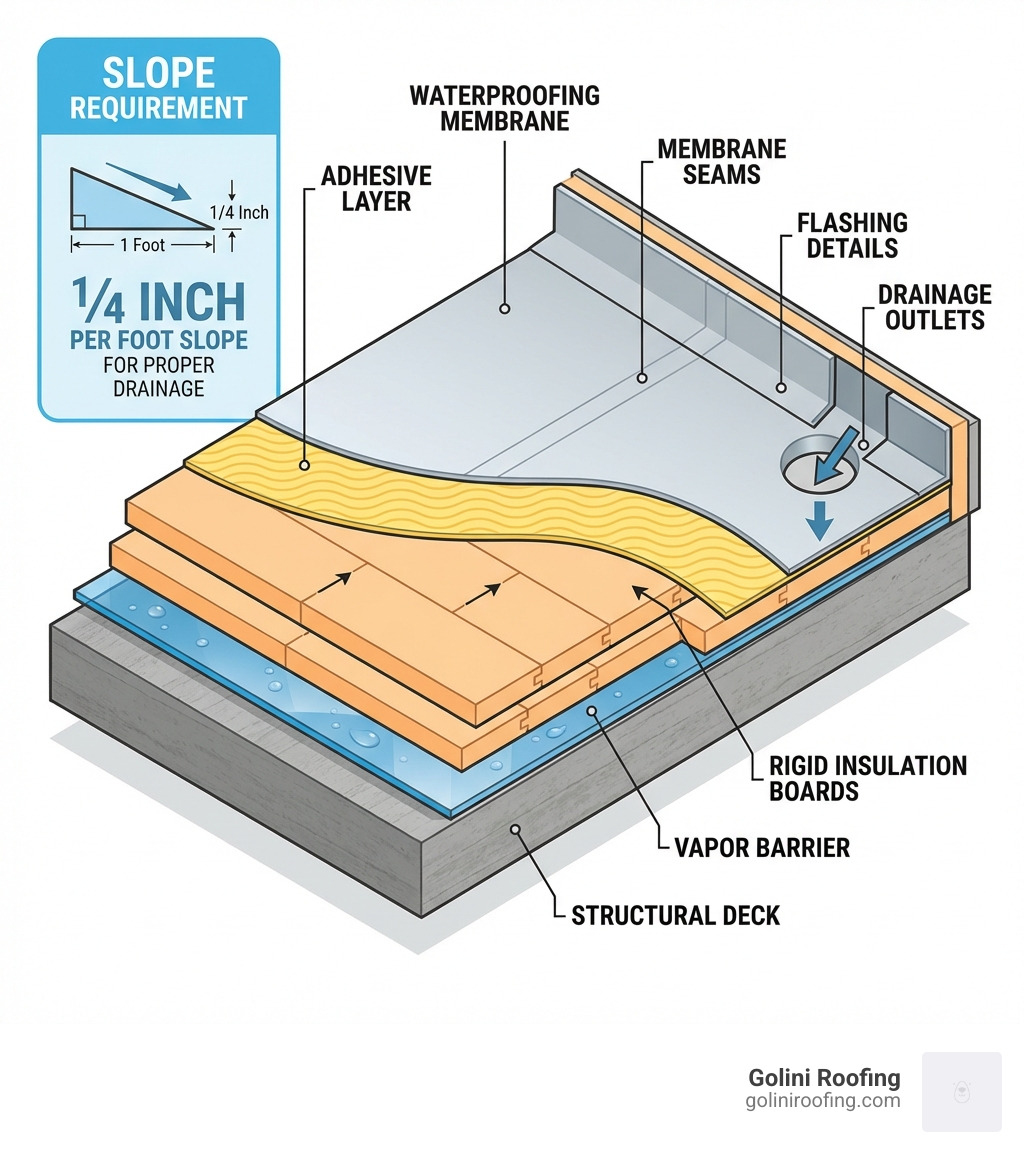
Flat roofs aren’t truly flat. They rely on a subtle slope – typically 1/4 inch per foot – to drain rainwater properly. Without it, water pools on the surface and causes damage over time. Modern materials like EPDM rubber, TPO, and PVC have made flat roofs more durable and practical than ever for residential homes. They offer a clean, modern look and create usable space for solar panels, rooftop gardens, or HVAC equipment.
But getting the installation right takes precision. Poor workmanship – especially around seams and drainage – is the leading cause of flat roof failures. That’s why understanding the process matters, whether you’re overseeing a contractor or simply making an informed decision about your home.
I’m Jack Golini, owner of our local roofing company, and with over 35 years of hands-on roofing experience in the Wakefield, MA area, I’ve seen every phase of the flat roof installation process up close. In this guide, I’ll walk you through exactly what a professional installation looks like so you know what to expect and what to demand from your roofer.
Simple guide to flat roof installation process terms:
- Residential roofing installation process
- TPO installation process
- Installation process for built-up roofing
Essential Components and Material Selection
When we talk about a flat roof, we aren’t just talking about a single sheet of rubber. A high-quality system is like a well-made sandwich—every layer serves a specific purpose to keep your home warm, dry, and structurally sound. For homeowners in Wakefield, Reading, or Stoneham, choosing the right “ingredients” is the first step toward a roof that lasts decades.
The Core Components
- The Structural Deck: This is the foundation of your roof, usually made of 5/8-inch plywood or OSB. It must be strong enough to support “dead loads” (the weight of the roof itself) and “live loads” (snow, rain, or people walking on it).
- Vapor Barrier: This layer prevents moisture from inside your home from rising into the insulation, where it could condense and cause rot.
- Insulation Layer: Usually made of “Iso” (polyisocyanurate) boards, this provides thermal resistance. For most residential buildings in our climate, an insulation R-value of at least 30 is recommended.
- Waterproofing Membrane: This is the star of the show. It’s the top layer that actually keeps the water out.
- Flashing and Drainage: These components direct water off the roof and seal the edges around chimneys, vents, or where the roof meets a wall.
Choosing Your Membrane
Selecting the right material is vital. Here is a comparison of the most common residential options we use:
| Feature | EPDM (Rubber) | TPO (Thermoplastic) | PVC (Polyvinyl Chloride) |
|---|---|---|---|
| Durability | 20–30+ years | 15–20 years | 20+ years |
| Seam Method | Adhesive/Tape | Heat-Welded | Heat-Welded |
| Color | Usually Black | White/Light Gray | White/Light Gray |
| Best For | Extreme cold/UV | Energy efficiency | Chemical/Grease resistance |
| Cost | Budget-friendly | Mid-range | Premium |
For a deeper dive into how these systems look on a home, check out our Residential Flat Roof Details page. Each material has its strengths; for example, EPDM roofing systems are incredibly resilient against the harsh New England winters we see in Woburn and Winchester.
The Step-by-Step Flat Roof Installation Process
Once the materials are selected, the real work begins. The flat roof installation process is a methodical journey that leaves no room for shortcuts.
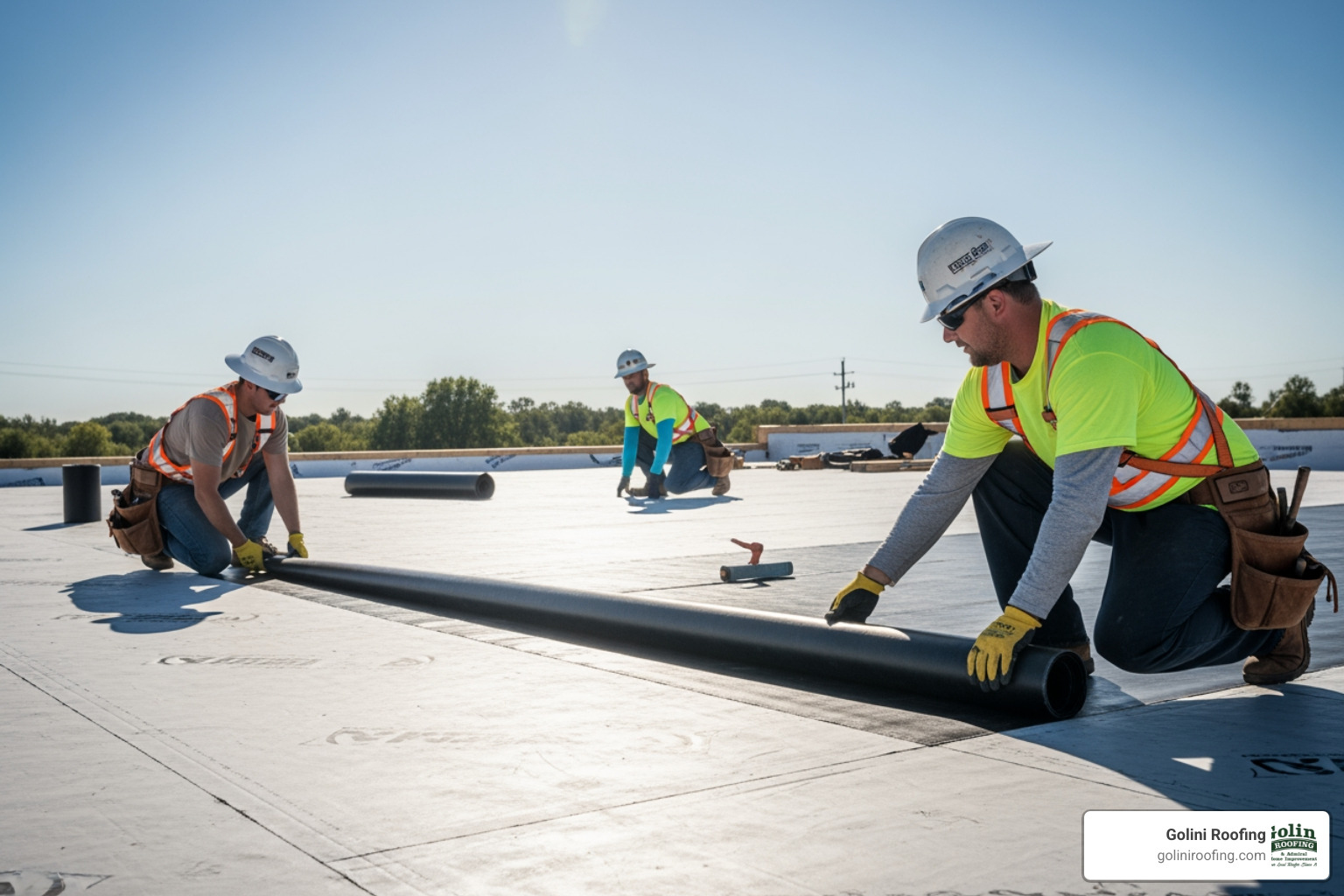
1. The Tear-Off and Removal
We start by “shedding the old skin.” This means removing every layer of the old roof down to the bare wood deck. While some local codes allow for a “recover” (putting a new roof over an old one), we almost always recommend a full Flat Roof Replacement to ensure the underlying structure is healthy.
2. Deck Preparation and Repair
With the deck exposed, we inspect for rot, soft spots, or “ponding” areas where water has historically collected. We replace any damaged plywood and, if necessary, use tapered insulation or “sleepers” to create that essential 1/4 inch per foot slope. A solid foundation is non-negotiable.
3. Insulation Attachment
We lay down the insulation boards (typically PIR or Iso boards). A key professional “secret” is to stagger the joints—sort of like how bricks are laid. This prevents “thermal bridging,” where heat escapes through the gaps between boards. We secure these boards using specialized screws and large plates to keep them flat and secure.
4. Membrane Application
Now for the “Membrane Magic.” We roll out the material (EPDM, TPO, or PVC) and let it “relax” for about half an hour. This prevents the material from shrinking or wrinkling later.
- For EPDM, we fold the sheet back, apply a heavy-duty adhesive to both the board and the membrane, and then roll it back down.
- For TPO and PVC, the TPO Installation Process often involves mechanical fasteners and heat-welding the seams with a hot-air tool to create a permanent, fused bond.
Planning and Preparation for the Flat Roof Installation Process
Before a single shingle or sheet is moved, we handle the logistics. This includes a structural assessment to ensure your home can handle the weight of the new system. We also coordinate building permits with local offices in towns like Lynnfield or North Reading. Weather monitoring is crucial; laying a membrane in the rain is like washing your car during a thunderstorm—it just doesn’t work! We ensure the substrate is meticulously cleaned; even a small pebble under the membrane can cause a puncture later.
Final Quality Assurance for the Flat Roof Installation Process
The final mile of the flat roof installation process involves a “probing” of every single inch of the seams. We use a specialized tool to ensure the bond is 100% watertight. We check for air bubbles, install termination bars at the edges to prevent peeling, and conduct a drainage test—sometimes even using a hose to simulate a heavy downpour—to ensure water flows exactly where it should.
Managing Drainage and Roof Transitions
The biggest enemy of a flat roof is “ponding” water—standing water that stays on the roof for more than 48 hours. To prevent this, we focus heavily on water management.
The 1/4 Inch Rule
Even though it’s called a flat roof, it must have a slope. We aim for a minimum of 1/4 inch of “fall” per foot. This directs water toward gutters, scuppers (holes in the side walls), or internal drains.
Joining Flat Roofs to Pitched Roofs
Many homes in our area—especially in older neighborhoods in Wilmington or Burlington—have a flat porch or garage roof that connects to a traditional shingled roof. This transition is a common leak point. We follow a strict protocol for joining a flat roof to a shingle roof:
- Remove Shingles: We strip back at least two courses of shingles from the pitched roof.
- Bridging Membrane: We install a “tie-in” membrane that extends at least 3 feet up the pitched roof.
- Ice and Water Protector: In our snowy climate, this extra layer of protection is vital to prevent ice dams from pushing water under the shingles at the transition point.
- Metal Drip Edges: We finish the perimeter with heavy-gauge metal flashing to ensure water sheds cleanly into the gutters.
Maintenance Strategies for Long-Term Durability
A flat roof is an investment, and like a car, it needs regular “oil changes” to reach its full lifespan. We recommend Flat Roof Maintenance at least twice a year—ideally in the spring and fall.
Your Maintenance Checklist:
- Clear Debris: Leaves and twigs can clog drains, leading to instant ponding.
- Check HVAC Units: If you have equipment on the roof, ensure the vibration hasn’t loosened any flashing.
- Inspect Seams: Look for “alligatoring” or small cracks caused by thermal movement (the roof expanding and contracting in the sun).
- Monitor Punctures: Even a dropped tool or a falling branch can create a pinhole leak.
Frequently Asked Questions about Flat Roofs
What is the average lifespan of a flat roof?
The lifespan depends heavily on the material and maintenance. EPDM is the marathon runner of the group, often lasting 20 to 30 years if cared for. TPO generally lasts 15 to 20 years. Regular inspections can easily add 5 years to the life of any system by catching small issues before they become structural failures.
How much does a flat roof installation cost?
Based on general internet data, flat roof installation costs typically range from $4 to $15 per square foot. However, this is a wide range because prices vary wildly based on the material (EPDM vs. PVC), the complexity of the drainage, and the amount of insulation (R-value) required. For example, a high-end PVC system with premium insulation could cost 3x more than a basic “recover” project. For a more tailored idea, you can use a Flat Roof Replacement Cost Calculator, but these are average internet estimates and not specific quotes from us.
Can I install a flat roof myself?
While a DIY approach is tempting for a small shed or porch, we strongly discourage it for your main home. The flat roof installation process requires specialized tools, such as heat-welders for TPO or heavy-duty rollers for EPDM. More importantly, most manufacturers will only honor warranties if the material is installed by a certified professional. One small mistake at a seam can lead to thousands of dollars in interior water damage.
Conclusion
Installing a flat roof is a complex, technical process that requires a “get it right the first time” mentality. From the initial structural assessment to the final seam inspection, every step is critical to the longevity of your home’s protection.
At Golini Roofing, we’ve spent over 35 years perfecting our craft in Wakefield, MA, and the surrounding communities. We treat every home as if it were our own, utilizing our signature meticulous hand-nailing technique for transitions and ensuring every membrane is laid with precision. Whether you are in Woburn, Winchester, or Stoneham, don’t leave your roof to chance.
Ready to ensure your home is protected by the best? Schedule a Flat Roof Consultation with us today, and let’s build a roof that stands the test of time.