Commercial Roofing Installation Process: 7 Essential Steps
Why Understanding the Commercial Roofing Installation Process Matters
The commerical roofing installation process is more complex than many realize. It’s a critical investment that protects your business assets. Unlike sloped residential roofs, commercial properties often have flat or low-slope systems requiring specialized materials and expertise in drainage, HVAC penetrations, and structural loads.
Poor installation can lead to costly leaks, energy loss, and business disruption. Understanding the process helps you ensure quality workmanship. Commercial roof installation costs can range from $3-$21 per square foot (note: these are industry averages, not a quote from Golini Roofing), making it a significant investment.
I’m Jack Golini, and with over 35 years of experience in Massachusetts, I know that a methodical installation is the key to a long-lasting roof. Here are the core steps:
The 7 Core Steps:
- Site Assessment & Planning – Structural evaluation, permits, material selection
- Old Roof Removal – Safe tearoff and deck preparation
- Insulation Installation – Energy efficiency and moisture protection
- New System Installation – Membrane application using proper techniques
- Flashing & Details – Sealing all penetrations and edges
- Quality Assurance – Comprehensive inspections and testing
- Cleanup & Handover – Final documentation and warranty transfer

Understanding the Basics: Commercial vs. Residential Roofing
Commercial and residential roofing are vastly different, primarily due to roof slope. Residential homes typically have steep-sloped roofs that easily shed water. In contrast, commercial buildings usually feature flat or low-sloped roofs covering large areas.
This fundamental difference dictates the materials and installation methods. While homes use shingles, commercial roofs require specialized membrane systems like TPO or EPDM to create a watertight seal. The installation complexity is also much higher. Commercial roofs must accommodate numerous HVAC units, vents, skylights, and external piping, each requiring meticulous sealing to prevent leaks.
Furthermore, their drainage systems are engineered to prevent water from pooling, a major risk on flat surfaces. Finally, structural load requirements are more demanding, as the roof must support heavy equipment and potential snow loads. Understanding these distinctions is the first step in any successful commercial roofing installation process.
Want to learn more about the residential side? Check out our guides on What is residential roofing? and Residential Flat Roof Details to see how the two worlds compare.
The 7 Essential Steps of the Commerical Roofing Installation Process
A commercial roofing project is a major undertaking where every step of the commercial roofing installation process is critical. The entire project must adhere to manufacturer specifications, local building codes, and OSHA safety regulations to protect your business. We treat each installation as a carefully planned lifecycle, as early decisions directly impact the final quality and longevity of your roof.
Step 1: Site Assessment and Planning for the Commercial Roofing Installation Process
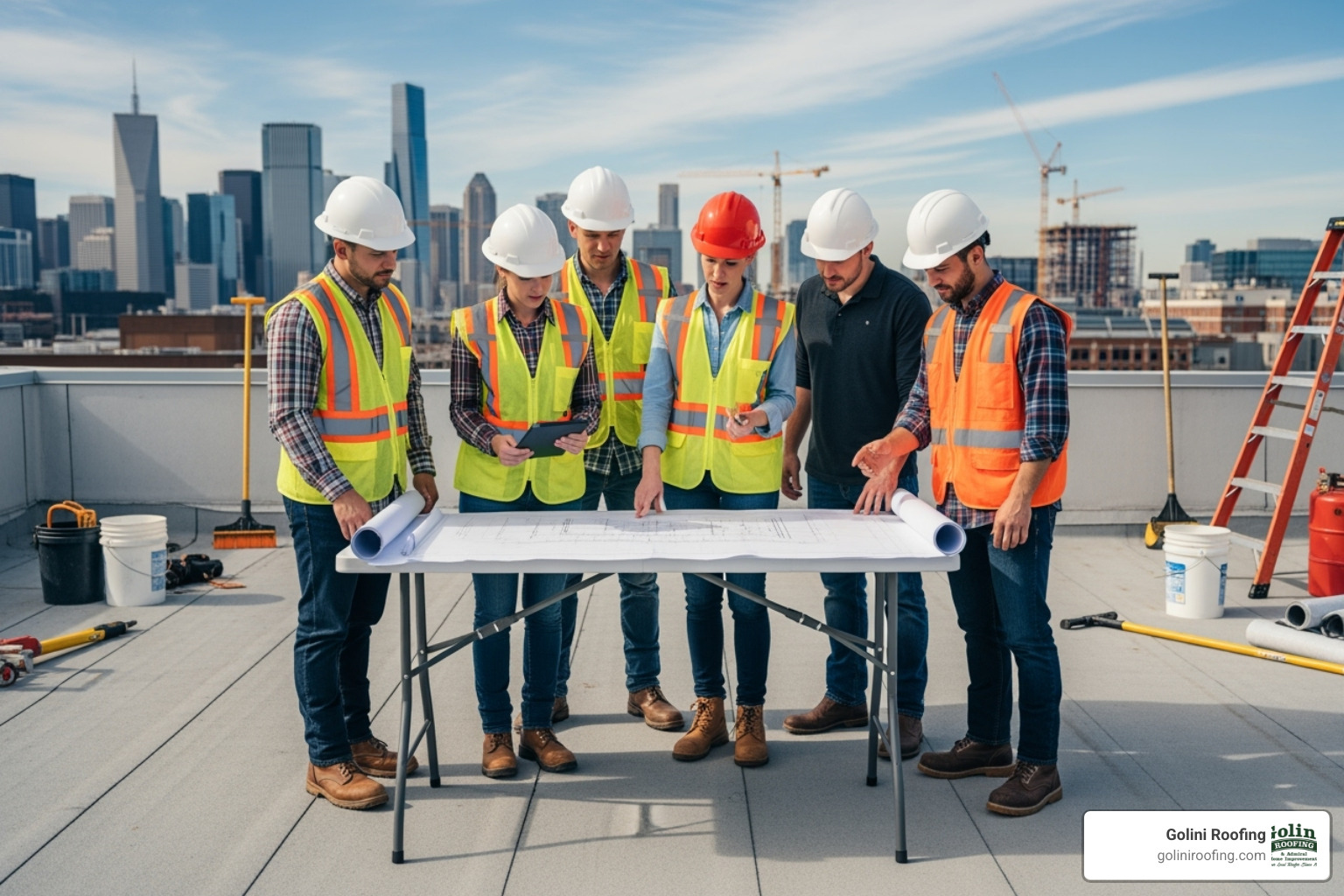
The process begins with a thorough roof inspection to assess structural integrity, identify existing damage, and evaluate the current drainage system. We pay close attention to the roof deck, looking for rot, water damage, and weak spots that could compromise the new system. Based on this assessment, we help you select the right materials for your building’s needs and budget. This phase includes developing a detailed project plan, creating a realistic timeline, and handling all necessary permits to prevent surprises later on. Proper planning is the foundation of a quality installation. You can learn more about our assessment approach through our Commercial Roof Inspections page.
Step 2: Tearing Off the Old Roof and Preparing the Deck
This step involves the safe removal of old roofing materials, which we handle carefully to protect the underlying structure. Once the old roof is gone, we conduct a detailed substrate inspection to identify any hidden issues like rot or water damage that require repair. Preparing the deck to be clean, dry, and smooth is crucial, as any imperfections can affect the performance and longevity of the new roofing system.
Step 3: Installing Insulation and Underlayment
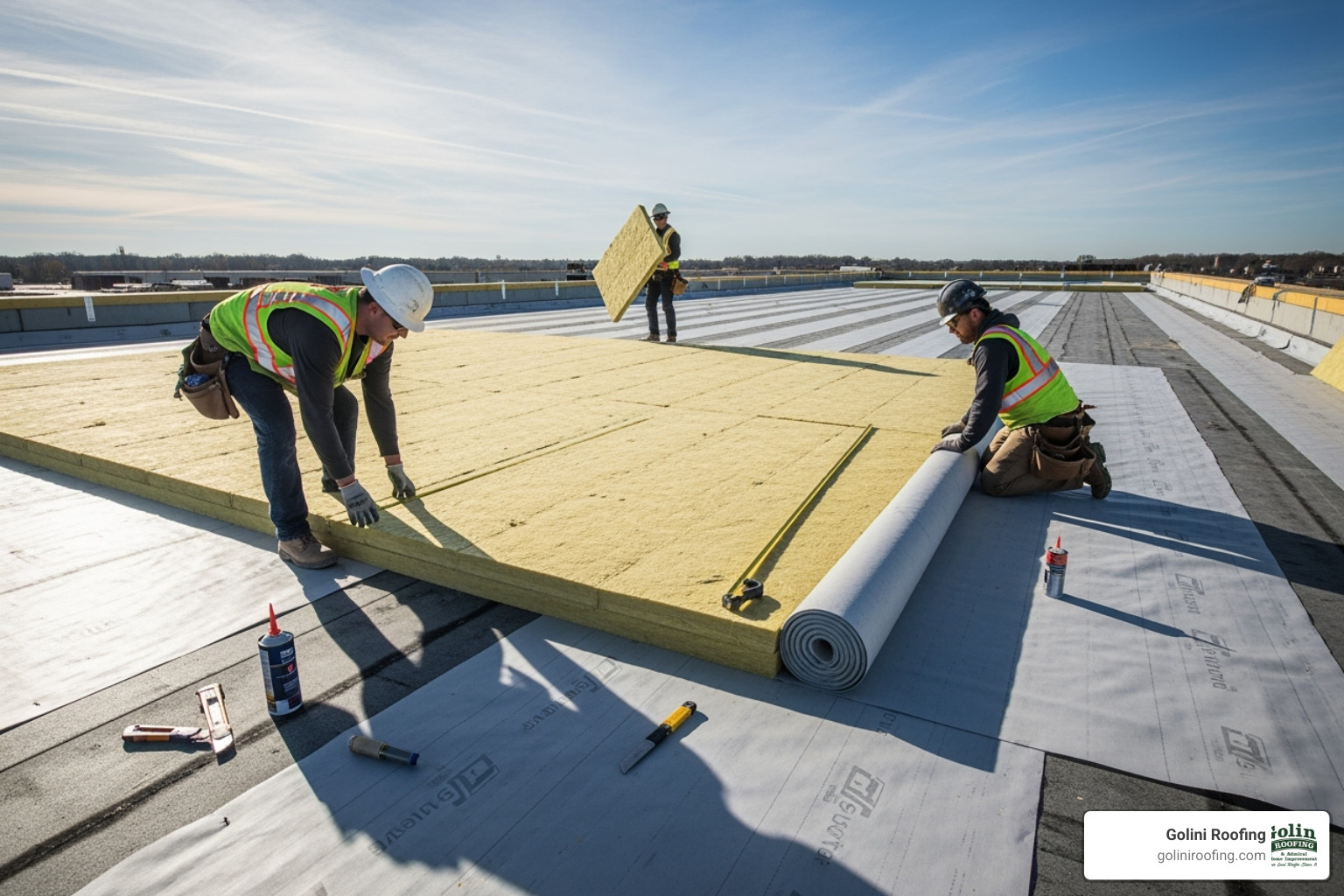
Insulation and underlayment are critical for energy efficiency and moisture protection. We often use polyisocyanurate (polyiso) insulation for its high R-value, which helps lower heating and cooling costs. A vapor retarder is also installed to prevent internal condensation and moisture buildup within the roof system. Together, these layers create a robust barrier against the elements, ensuring a comfortable indoor environment.
For more details about how all these pieces fit together, check out More info about our Roof Installation Process.
Step 4: Installing the New Commercial Roofing System
The installation method varies based on the chosen roofing system. Mechanically attached systems use fasteners, fully adhered systems use powerful adhesives, and ballasted systems use the weight of gravel or pavers for security. For single-ply membranes like TPO, we use heat-welding to fuse seams, creating a monolithic, waterproof surface. Strict adherence to manufacturer guidelines is non-negotiable, as it ensures warranty validity and optimal performance. You can see the full range of systems we install through our Commercial Roofing Services.
Step 5: Flashing and Detail Work
Detail work is critical for a leak-proof roof. Flashing is carefully installed around all penetrations, including HVAC curbs, vents, pipes, skylights, and parapet walls, as these are the most vulnerable areas. We often use custom metal fabrication to ensure a perfect, watertight seal. Proper edge detailing is also essential to prevent wind uplift and provide a clean, finished look. Poor flashing is a primary cause of roof failure.
Step 6: Critical Quality Assurance in the Commercial Roofing Installation Process
Ongoing inspections occur throughout the commercial roofing installation process to catch any issues early. A methodical final walkthrough includes checking every seam, fastener, and flashing detail. We may also use water tests or infrared scans to detect hidden problems. A final manufacturer inspection is often required to validate the warranty, providing an extra layer of quality control. Learn more about our quality standards on our Roofing Certification page.
Step 7: Final Cleanup and Handover
Our commitment to professionalism extends to a thorough final cleanup, where we remove all debris and old materials from your property. We provide you with all final documentation, including detailed warranty information for materials and our workmanship. Understanding your warranty is key to protecting your investment. We also give you specific maintenance recommendations to help extend your roof’s lifespan and ensure it performs well for years. The NRCA provides helpful guidance on Learn about warranties and why they are important.
Choosing the Right System: Common Commercial Roofing Materials
Choosing the right commercial roofing system is a critical decision affecting your building’s longevity, energy efficiency, and costs. The best choice balances lifespan, durability, budget, and suitability for the Massachusetts climate and your building’s specific use. We can guide you through the pros and cons of each major system. See our offerings on our main Commercial Roofing page.
Single-Ply Membranes (TPO & EPDM)
These are popular choices for flat and low-slope roofs.
- Thermoplastic Olefin (TPO): A single-ply membrane known for energy efficiency. Its reflective white surface reduces cooling costs. TPO is durable, resistant to UV rays and chemicals, and features strong, heat-welded seams. It holds a significant market share in both new construction and reroofing.
- Ethylene Propylene Diene Monomer (EPDM): Known as “rubber roofing,” EPDM is a durable synthetic rubber membrane. It is highly flexible and resilient in extreme weather, with a potential lifespan of up to 30 years.
Both systems are flexible, relatively easy to install, and can be mechanically fastened, fully adhered, or ballasted. For more details, consult the Single Ply Roofing Industry (SPRI).
Metal Roofing
Metal roofing is prized for its exceptional longevity (40-70+ years) and durability. It offers superior resistance to wind, fire, and impact. Metal is also a sustainable choice, often made from recycled content and fully recyclable itself. Its reflective properties can reduce cooling costs by up to 25%. We offer specialized Commercial Metal Roofing Services.
Built-Up Roofing (BUR)
A time-tested system, Built-Up Roofing (BUR) consists of multiple alternating layers of bitumen (asphalt) and reinforcing fabrics. This multi-ply construction offers excellent waterproofing and puncture resistance due to its built-in redundancy. Topped with gravel or a reflective coating, BUR is a highly reliable choice for flat roofs.
[TABLE] Comparing Commercial Roofing Systems
To help you visualize the choices, here’s a quick comparison of the common commercial roofing systems. Please remember, these are average costs based on internet data and not actual costs for Golini Roofing. Project costs can vary significantly based on roof size, complexity, accessibility, and specific material grades.
| Material | Average Cost ($/sq ft) | Lifespan (Years) | Key Benefits |
|---|---|---|---|
| TPO | $5 – $15 | 15 – 30 | Energy-efficient, UV resistant, durable, heat-welded seams |
| EPDM | $4 – $12 | 20 – 30 | Flexible, weather-resistant, easy to install, cost-effective |
| Metal Roofing | $7 – $30 | 40 – 70+ | Extremely durable, long lifespan, fire resistant, energy-saving, recyclable |
| Built-Up Roofing (BUR) | $5 – $15 | 20 – 40 | Multi-layered protection, excellent waterproofing, puncture resistant |
Key Factors For a Successful Project
A successful commercial roofing installation process creates a long-term solution that protects your business and maximizes your investment. Overlooking key factors can lead to costly repairs, business disruption, and damaged inventory. Every detail, from planning to final inspection, impacts your roof’s performance. We understand we’re protecting your livelihood, not just your building. For unexpected issues, we offer Commercial Roof Repair services.
Factors Influencing Cost and Timeline
Several factors influence project cost and timeline, helping you budget and set realistic expectations:
- Roof Size and Complexity: Larger roofs cost more, but complexity (multiple levels, skylights, penetrations) has a greater impact on labor and time.
- Accessibility: Difficult site access can increase logistical challenges and costs.
- Material Choice: Material costs and installation times vary significantly between systems like EPDM and metal.
- Labor Costs: The required skill level, from basic membrane installation to custom metalwork, affects labor costs.
- Existing Damage: Unforeseen structural or deck damage finded after tear-off can impact the scope and budget.
- Weather and Location: New England weather can cause delays, so we build flexibility into our schedules.
Choosing a Qualified Commercial Roofing Contractor
Your choice of contractor is the most critical factor. Poor workmanship can lead to costly failures. Look for these qualifications:
- Experience and Expertise: We bring over 35 years of commercial roofing experience in communities like Wakefield, Burlington, and Winchester.
- Licensing and Insurance: Proper licensing and comprehensive insurance protect you from liability. We are fully licensed and insured.
- Manufacturer Certifications: These ensure we are trained to install systems correctly, which is often required to validate your material warranty.
- Verifiable Track Record: Check customer reviews and ask for references. We are proud to share examples of Our Work.
- Written Estimates and Warranties: A detailed proposal and clear warranty information protect both parties.
The National Roofing Contractors Association offers more guidance on How to select a licensed roofing contractor.
The Importance of Post-Installation Maintenance
A new roof is an investment that requires care. Regular inspections, ideally twice a year and after major storms, are your first line of defense. They help catch small issues before they become expensive problems. Key maintenance tasks include:
- Debris Removal: Clearing leaves and branches prevents trapped moisture and membrane damage.
- Gutter and Downspout Cleaning: Ensuring proper drainage is critical to prevent water ponding and premature failure.
- Prompt Minor Repairs: Fixing small punctures or loose seams immediately prevents them from escalating into major leaks.
Proactive maintenance extends your roof’s lifespan and maximizes your return on investment. Our Commercial Roof Maintenance Plan handles scheduling and reporting, giving you peace of mind and protecting your property.
Frequently Asked Questions about Commercial Roof Installation
Over the years, we’ve had countless conversations with property owners who are considering a new commercial roof. The same questions come up time and again, and honestly, that makes perfect sense – installing a new commercial roof is a big decision! Let me share the answers to the most common questions we hear.
What is the most durable type of commercial roof?
For sheer longevity, metal roofing is often the top choice, with a potential lifespan of 40 to 70+ years. It offers excellent resistance to fire, wind, and impact. However, “most durable” depends on the specific needs of your building. EPDM rubber roofing is also highly durable, lasting up to 30 years and offering great flexibility in fluctuating temperatures. The best choice for your building will depend on your budget, building use, and other factors.
How long does a typical commercial roof installation take?
The timeline for a commercial roofing installation process varies widely. A small, simple roof may take only a few days, while a large, complex project can take several weeks. Key factors influencing the schedule include roof size and complexity, the chosen roofing system, weather conditions, and the extent of any necessary deck repairs. We provide a detailed, project-specific timeline after our initial site assessment.
Can a new commercial roof be installed over an old one?
Yes, installing a new roof over an existing one, known as a “roof-over” or overlay, is often possible. This can save on tear-off costs and reduce business disruption. However, it’s not always the right solution. We must first perform a structural assessment to ensure the building can support the added weight. We also inspect the current roof for excessive damage or moisture. If the existing roof is too compromised, a full tear-off is necessary to guarantee the new roof’s performance. Our initial inspection will determine the best course of action for your property.
Conclusion: Trust the Experts for Your Roofing Needs
Your commercial roof is a critical business asset. As we’ve outlined, the commercial roofing installation process is a multi-step procedure where every detail matters—from planning and preparation to installation and quality assurance. While quality materials are essential, the ultimate success of your project depends on the expertise of your roofing contractor. Skilled craftsmanship is what ensures a durable, long-lasting roof.
At Golini Roofing, we bring over 35 years of experience to every project. We have perfected our craft on all types of commercial roofing systems across Massachusetts, and our meticulous approach means we never cut corners. We proudly serve communities including Wakefield, Burlington, Lynnfield, North Reading, Reading, Stoneham, Wilmington, Winchester, and Woburn.
Your investment deserves to be protected by professionals who get the job right the first time. When you’re ready to secure your commercial property with a superior roofing solution, we are here to help.
For a comprehensive consultation on your roof installation process, contact our team today. Let’s discuss how we can secure your commercial property with a roofing solution built to last.
