Does a New Roof Need to Be Inspected? 3 Vital Reasons
Does a new roof need to be inspected? The quick answer is yes.
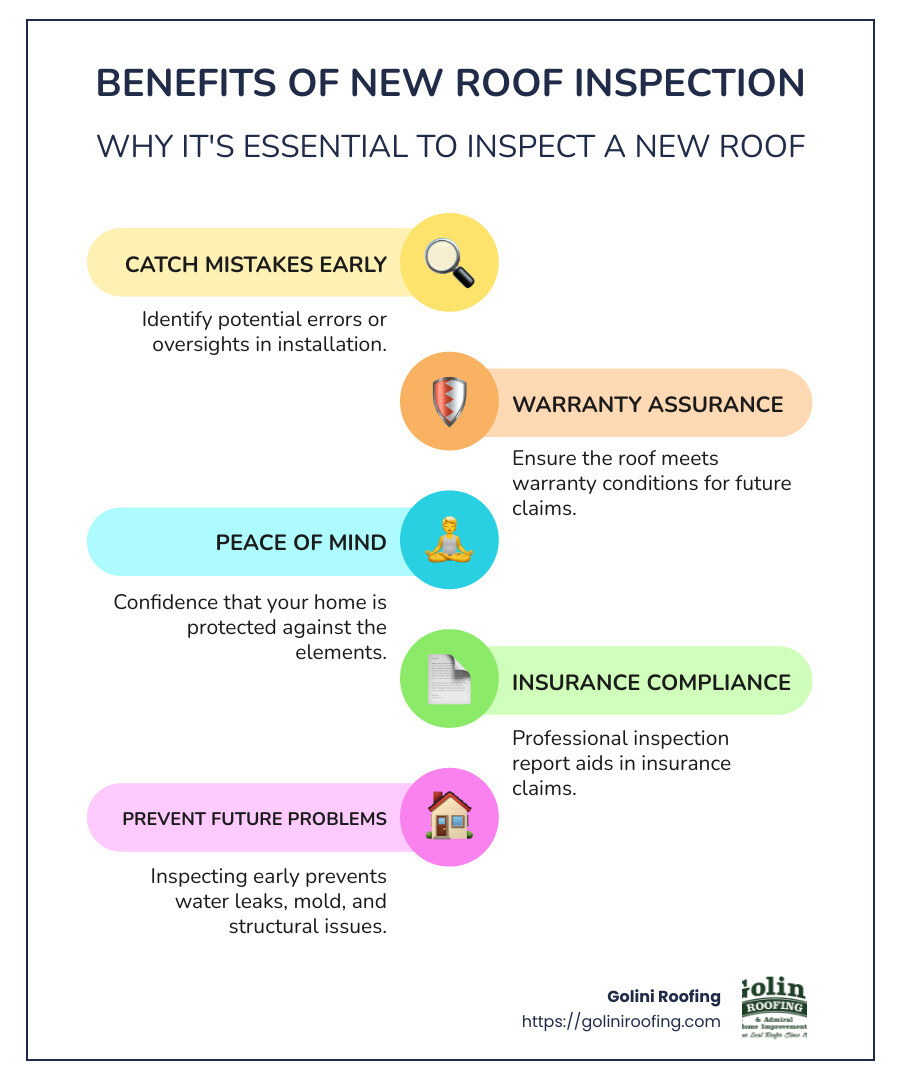
- Catch Mistakes Early: A new roof inspection helps identify any potential installation errors or oversights, which could save you from costly repairs later.
- Warranty Assurance: Verifying the condition of your new roof ensures you can make claims if issues arise within the warranty period.
- Peace of Mind: Knowing your roof is sound gives you confidence that your home is protected against the elements.
- Insurance Compliance: Having a professional inspection report can aid in insurance claims if roof damage occurs.
Many homeowners believe their investment in a new roof guarantees its reliability and quality. However, even brand-new installations can harbor hidden problems that may go unnoticed until they escalate. Conducting an inspection soon after the installation uncovers issues like leaks or improper ventilation, safeguarding your peace of mind and your home.
As Jack Golini, the proud owner of Golini Roofing with over 35 years in the business, I have continuously emphasized the importance of answering the question, “does a new roof need to be inspected?” My dedication to quality craftsmanship helps homeowners enjoy a durable, weather-resistant roof while minimizing disruptions and ensuring a thorough cleanup.
Does a new roof need to be inspected terms simplified:
– how much are roof inspections
– commercial roof inspections
– are roof inspections free
Why Is It Important to Inspect Your New Roof?
When you invest in a new roof, it’s easy to assume everything is perfect. But the reality is, even the best roofing jobs can have flaws. Inspecting your new roof is crucial to catch these issues early and avoid future headaches.
Avoiding Future Problems
Water Leaks and Mold: A small leak might seem harmless, but over time, it can lead to significant damage. Water can seep into your home, causing mold growth and compromising the structural integrity of your roof. Mold not only damages the roof but can also affect your health.
Structural Issues: Poor installation can lead to sagging or weak spots. These structural issues might not be obvious right away, but they can worsen over time, leading to costly repairs or even a complete roof replacement.
Insulation Problems: Improper insulation or ventilation can cause your home to lose heat in the winter and stay too warm in the summer. This not only affects your comfort but also increases your energy bills. An inspection ensures your insulation is doing its job.
Ensuring Proper Installation
Improper Materials: Sometimes, the wrong materials are used. This can affect the longevity and performance of your roof. An inspection will verify that all materials are correct and installed according to industry standards.
Missing Flashing: Flashing is crucial for preventing water from seeping into your home. Missing or improperly installed flashing can lead to leaks. Inspectors check for these issues to ensure your roof is watertight.
Poorly Secured Trusses: Trusses provide essential support for your roof. If they’re not secured properly, it can lead to structural problems. An inspection ensures that all trusses are in place and secure.
A certified roof inspector plays a vital role in identifying these issues. They have the expertise to spot problems that an untrained eye might miss, ensuring your new roof is both safe and durable. By taking preventive measures now, you can avoid further damage and enjoy peace of mind knowing your home is well-protected.
Types of Roof Inspections
When it comes to checking your new roof, there are three main types of inspections: physical, drone, and infrared. Each method has its own strengths, and choosing the right one depends on your needs and budget.
Physical Inspection
A physical inspection is the traditional way to assess a roof. This method involves a certified inspector climbing onto your roof with safety equipment to get a close-up view. They can feel for soft spots, check the integrity of the shingles, and ensure that all components are securely in place.
This type of inspection is thorough and allows inspectors to physically touch and test the materials. It’s especially useful for identifying issues like loose shingles or improperly installed flashing. However, it requires more time and can be risky for the inspector, especially on steep or high roofs.
Drone Inspection
Drone inspections offer a safer and quicker alternative. Equipped with high-quality cameras, drones provide a bird’s-eye view of your roof. This method is less intrusive and eliminates the need for inspectors to physically climb up, reducing safety risks.
While drone inspections are efficient, they are less thorough compared to physical inspections. They rely solely on visual data, which means they might miss hidden problems like soft spots or internal damage. Still, they’re a great option for a general overview or for roofs that are difficult to access.
Infrared Inspection
For a more comprehensive analysis, consider an infrared inspection. This method uses drones equipped with thermal imaging cameras to detect temperature variations on your roof. These variations can indicate moisture accumulation, thin insulation, or other hidden issues.
Infrared inspections are particularly effective at identifying problems not visible to the naked eye. While more expensive, they offer a detailed assessment that can prevent costly repairs in the future. This method is ideal for homeowners who want to ensure their roof’s structural integrity and insulation efficiency.
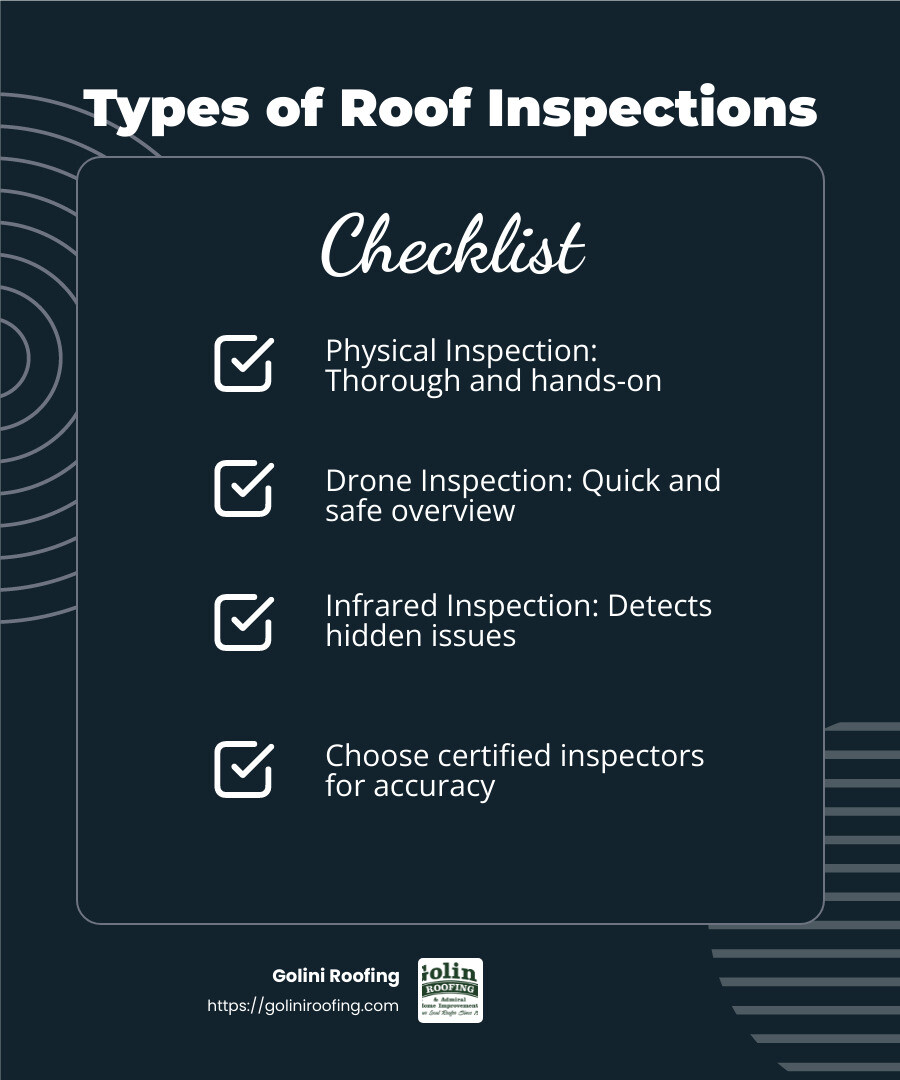
Each inspection type offers unique benefits. Whether you choose a physical, drone, or infrared inspection, ensure you hire a certified roof inspector to get the most accurate results. This proactive step can help catch errors early, ensuring your new roof is in top shape.
What Do Roof Inspectors Look For on a New Roof?
When you have a new roof, a thorough inspection is crucial to ensure everything is in perfect order. Roof inspectors focus on two main areas: the interior and the exterior of your roof. Let’s explore what they look for in each part.
Roof Interior
The first step in a roof inspection is often the attic inspection. Inspectors check for moisture signs, which can indicate leaks or poor ventilation. Moisture can lead to mold growth, which is a serious health hazard and can damage the structural integrity of your roof.
Inspectors also examine the insulation. Proper insulation is vital for energy efficiency and helps prevent ice dams in winter. They look for any wet or compressed insulation, which could signal a leak or poor installation.
Roof Exterior
On the outside, inspectors focus on several key elements:
- Shingles: They check for cracks, breaks, or missing granules. Damaged shingles can lead to leaks and reduce the roof’s lifespan.
- Flashing: This is the material that seals joints and prevents water from seeping in. Inspectors ensure it’s not rusted, damaged, or missing, as faulty flashing can lead to water damage.
- Fascia and Soffits: These are boards that cover the ends of the roof rafters. Inspectors check for rot, cracks, or any signs of water damage. Healthy fascia and soffits are crucial for proper roof ventilation.
- Chimney: The chimney is inspected for cracks or damage. Poorly sealed chimneys can be a major source of leaks.
Inspectors also evaluate the overall structural integrity of the roof. They look for any signs of sagging or unevenness, which could indicate deeper issues with the roof’s support system.
By focusing on both the interior and exterior, inspectors can catch potential problems early. This ensures your new roof is not only well-installed but also capable of protecting your home for years to come.
Does a New Roof Need to Be Inspected?
Absolutely, a new roof needs to be inspected. Even if your roof looks perfect from the ground, hidden issues can lurk beneath the surface. A post-installation check by a certified roof inspector is essential to ensure your roof is up to standard and will last for years.
Benefits of Post-Installation Inspection
- Catching Errors Early: Mistakes can happen during installation, such as improperly placed shingles or missing flashing. An inspection can catch these errors before they turn into costly repairs.
- Ensuring Longevity: A well-inspected roof is a long-lasting roof. By addressing potential issues early, you can extend the lifespan of your roof, saving you money in the long run.
- Peace of Mind: Knowing your roof is in top condition gives you peace of mind. You won’t have to worry about leaks or structural issues cropping up unexpectedly.
Cost of Roof Inspections
The cost of a roof inspection typically ranges from $120 to $400. This might seem like an extra expense, but it’s a wise investment. Spending a little now on an inspection can save you from expensive repairs down the road.
Many roofing companies offer maintenance programs that include regular inspections. These programs can be a cost-saving option, as they often come with perks like discounted repair rates and free gutter cleaning.
Investing in a post-installation inspection not only protects your roof but also maximizes your investment. It’s a small step that ensures your new roof will protect your home effectively for many years.
Frequently Asked Questions about Roof Inspections
Who Can Inspect a Roof?
Several professionals are qualified to inspect roofs:
- Licensed Roofers: These are experts in roofing and are often the best choice for a detailed inspection. They have specialized knowledge about roofing materials and installation techniques.
- Home Inspectors: While they provide a broad overview of a home’s condition, home inspectors can identify visible roofing issues. However, they might not catch all the details a licensed roofer would.
- Building Contractors: They have a good understanding of structural integrity and can inspect roofs as part of a broader property assessment.
When choosing someone to inspect your roof, ensure they have the proper licenses and certifications. This guarantees they have the skills and knowledge to do a thorough job.
How Much is a Roof Inspection?
The cost of a roof inspection typically ranges from $250 to $500. The price can vary based on the size of your roof and the type of inspection performed.
- Physical Inspection: This traditional method involves a hands-on check of the roof’s condition, looking closely at shingles, flashing, and other components.
- Documentation: After the inspection, you should receive a detailed report. This documentation is crucial, especially if you need to make an insurance claim or sell your home.
Investing in a professional roof inspection can help you catch potential issues early, saving you money on future repairs.
What is a Roof Certification?
A Roof Certification is an official report that assesses the condition and lifespan of your roof. It’s typically performed by a licensed inspector and is often required by homeowner’s insurance companies.
- Official Report: This document provides a detailed analysis of your roof’s condition, including any repairs needed and an estimated lifespan.
- Licensed Inspector: Only qualified professionals can perform a roof certification, ensuring accuracy and reliability.
- Homeowner’s Insurance: Many insurance companies require a roof certification before they will issue or renew a policy. This helps them assess risk and determine coverage.
Obtaining a roof certification can provide peace of mind, knowing that your roof is in good condition and your home is protected.
Conclusion
At Golini Roofing, we understand that your home is your sanctuary, and a robust roof is its first line of defense. Based in Wakefield, MA, we have over 35 years of experience in delivering exceptional craftsmanship and ensuring customer satisfaction. Our commitment to quality is evident in our meticulous hand-nailing technique, which improves the durability and longevity of every roof we install.
Choosing the right roofing contractor is crucial, especially in regions like Massachusetts where the weather can be harsh. Our team is dedicated to providing roofing solutions that stand up to the challenges of heavy snow, ice, and rain. We believe in doing the job right the first time, so you can have peace of mind knowing your home is protected.
Customer satisfaction is at the heart of what we do. We take extra care to minimize disruption to your daily life and ensure a spotless cleanup after the project. Our positive customer reviews reflect our dedication to delivering a seamless and satisfying experience.
If you’re considering a new roof or need an inspection to ensure your current roof is in top condition, we invite you to experience the Golini Roofing difference. Contact us today for a complimentary, no-obligation roofing estimate. Your home deserves the best, and we are here to provide it.
Let us help you protect your home with a quality roof that lasts.
