Replacing One Section of a Roof: Questions to Set the Right Scope
Replacing one section of a roof can make sense when the damage or wear is limited to one part of the house and the rest of the roof still has life left. Whether it is the right call depends on what a roofer finds when they look at the actual roof: the condition of the section that's failing, the condition of the roofing that will stay, and how the new work will tie into the old. Before you approve a partial replacement, ask the roofer to show you exactly where the work stops, why it stops there, and what it leaves unresolved.
This post is about approving a section-sized job: a whole slope, a porch roof, a rear addition or a dormer. If you are thinking about swapping out a few loose or missing shingles yourself, that is a different job; see our guide to replacing roof shingles.
When a partial roof replacement makes sense on North Shore houses
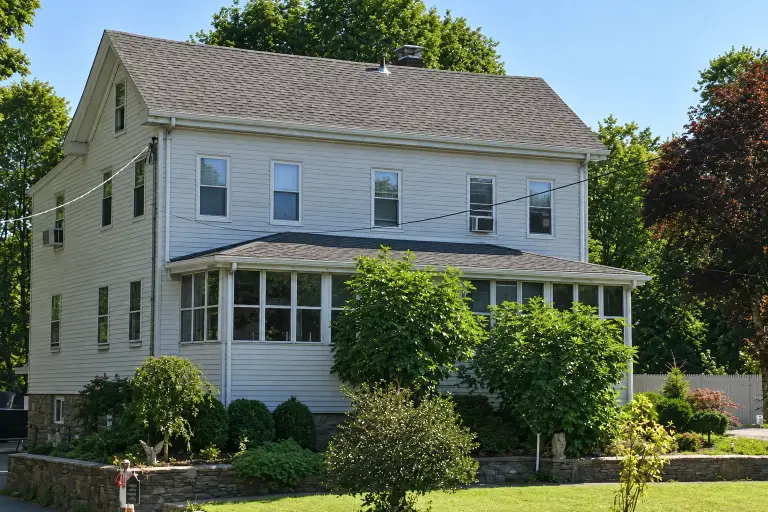
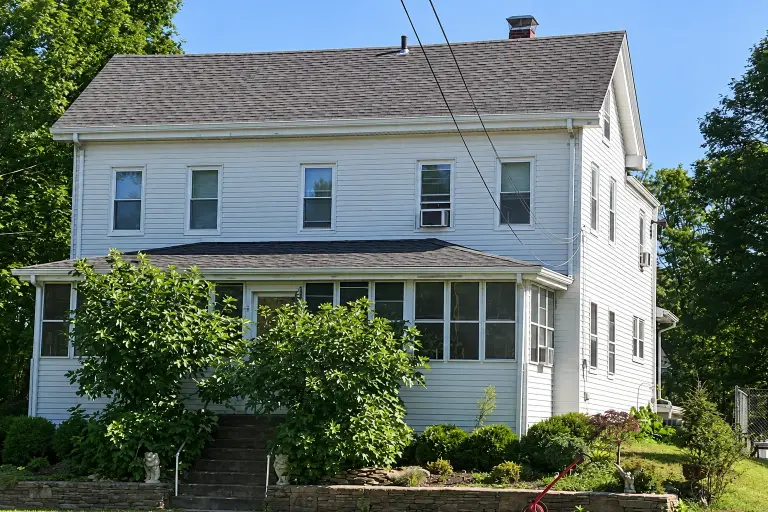
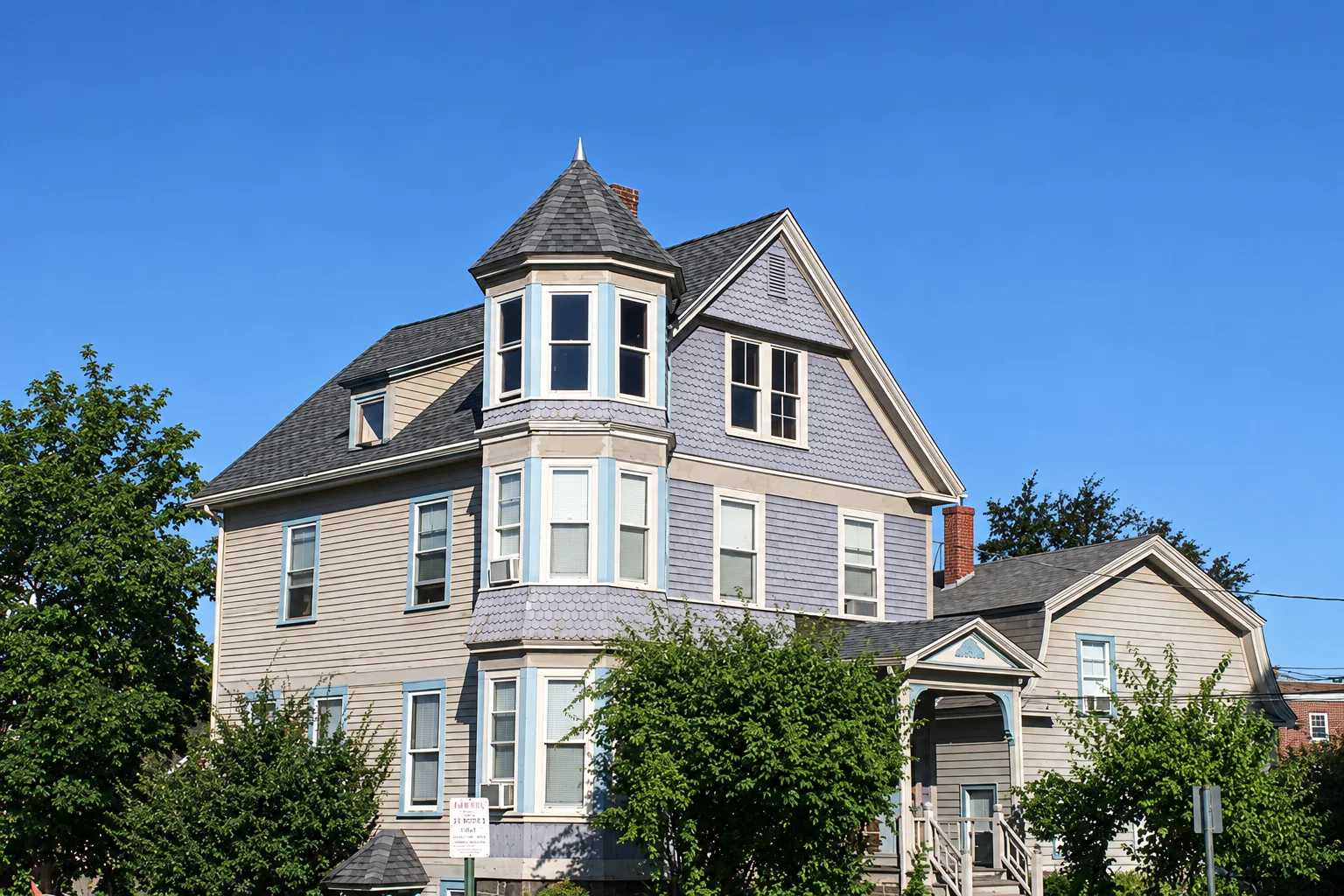
Many homes around Wakefield have roofs made of distinct sections that age differently. A colonial may have a main roof plus a separate low-pitch porch or sunroom roof. A cape may have dormers set into the main slopes. A Victorian can have several roof planes, a turret and valleys where slopes meet. A rear addition built decades after the house may have its own roof entirely. Sections facing south get more sun, and lower roofs can catch snow and ice sliding off higher ones in a New England winter. So one part of a roof wearing out ahead of the rest is common.
A section replacement tends to fit when:
- the problem is confined to one plane or one separate roof, such as storm damage on a single slope;
- the rest of the roof is in decent shape with years left;
- there is a natural break (a ridge, a wall, a change in pitch) where new work can end cleanly.
It is a weaker fit when the whole roof is near the end of its life, when leaks show up in several places, or when the new section would have to tie into worn shingles that will need replacing soon anyway. Plenty of roofs only need a repair, and we'll say so. When we look at a roof, we walk it, check the attic when we can get in, and tell you what's fine, what needs work and roughly how much life is left. That assessment is what a section decision should rest on. You can read more on our roof replacement and roof repair pages.
Ask where the work stops, and why there
A line like "replace rear section" in an estimate is not enough. Ask for the boundary on a marked-up photo or sketch, and ask:
- Which roof surfaces are included, and which neighboring surfaces stay?
- Why this boundary, and not a smaller or larger area?
- Does the proposed work fix the problem that was found, or is more investigation needed?
- Will any work extend past the marked area to tie the new roofing in?
The answer should connect what was found on the roof to where the line was drawn. A boundary chosen only because it keeps the price down is not the same as one chosen because the roof beyond it is sound.
Ask what was checked on the roofing that stays
"Not included" is not the same as "checked and in good shape." Ask the roofer which parts of the remaining roof were looked at, what they saw, and what couldn't be seen or reached. If the attic wasn't accessible, or part of the roof couldn't be walked safely, that should be said plainly. Ask whether there are concerns elsewhere on the roof that need separate attention, even if they are outside this job.
Ask how the new section ties into the old
The joints are where a partial replacement succeeds or fails. Depending on the roof, the tie-in may be at a ridge, a valley, a wall, a chimney, a skylight, a vent or a change in pitch. Ask:
- What happens at each edge of the new section: underlayment, shingles and flashing?
- Is the flashing at chimneys, walls and valleys inside the section being replaced, or reused?
- Will ice and water protection go down at the eaves and in any valleys within the section? Massachusetts public safety agencies warn that ice dams form at the roof edge after heavy snow and cold, and that water backing up behind them can leak into walls and ceilings (MEMA, DPS and DFS advisory).
- What happens if the deck under the old shingles turns out to be damaged?
On our replacements, the old roofing usually comes off down to the deck, any damaged wood is repaired, new underlayment and ice shields go down, worn flashing at chimneys, skylights, walls and valleys is replaced, and the new shingles are nailed by hand. Ask any roofer to tell you which of those steps apply to the section and how they handle the edge where new meets old. If completing a tie-in means disturbing roofing beyond the marked section, that work should be in the written estimate.
Ventilation matters too. A section replacement is a chance to ask whether the attic under that part of the roof is breathing properly, since an attic that can't vent holds heat and moisture, which ages shingles faster and feeds ice dams. Our post on ventilation questions for a replacement estimate lists what to ask.
Expect the new section to look different at first
New shingles next to old ones rarely match perfectly, even in the same color name. Older shingles have weathered and lost some granules; products and colors also change over the years. Ask which product and color are proposed, whether the existing shingle can be identified, and where the transition will be visible from the street. A rear slope or a porch roof hidden from the road is easier to live with than the front of the house. Our guide to choosing a shingle color explains how to compare samples against the existing roof. If the look would change your decision, settle it before you approve the work.
Get inclusions, exclusions and changes in writing
The written estimate should say what is included in the section, what is specifically excluded, and what could change the scope once the old roofing is off. Check that removal, disposal, deck repair, flashing and the tie-in work are each addressed. For hidden conditions, ask how a change would be documented and approved; our post on roof decking change orders walks through that. Ask too what any warranty covers for the new section and its joints with the old roof, and how the remaining roof is treated. Our roof warranty questions help you read those terms.
A partial reroof may still need a building permit. In Massachusetts, permits are handled by each town's building department, so confirm with the contractor who is pulling the permit for your town.
A quick checklist before you approve
- I can point to where the work stops and explain why it stops there.
- I know what was checked on the rest of the roof and what wasn't.
- The estimate covers the tie-ins, flashing and any work beyond the marked section.
- I've accepted how the new section will look next to the old.
- Inclusions, exclusions, change approvals and warranty terms are in writing.
If any of these is unclear, pause and ask for more assessment. That doesn't mean the whole roof needs replacing. It means the section proposal isn't clear enough yet to sign.
Common questions about replacing one section of a roof
Can you replace just one section of a roof?
Yes, when the problem is limited to one area and the rest of the roof is sound. A roofer should look at the whole roof in person and explain why the proposed boundary is the right one.
Will a new roof section match the old shingles?
Usually not exactly at first, because the old shingles have weathered and products change over time. Ask to compare samples against the existing roof and where the seam will be visible.
Is it better to replace the whole roof than one section?
It depends on the rest of the roof. If the remaining roofing is near the end of its life or leaking in several places, a full replacement often makes more sense; if it has years left, a section may be enough.
Does a partial roof replacement need a permit in Massachusetts?
It may. Permits are issued by each town's building department, so confirm with your contractor who is obtaining it for your town before work starts.
If one part of your roof in Wakefield or a nearby North Shore town is giving you trouble, request a free estimate or call (781) 246-0141. We'll look at the whole roof in person and tell you in writing whether a repair or a replacement makes sense.