Preparing for Driveway Snow Plowing: A Property Access Checklist
To prepare your driveway for snow plowing, settle four things before the first storm: where every car will be parked, what is hiding along the edges of the driveway, where the plowed snow should go, and how you and the plow company will reach each other. A plow driver working before dawn in a snowstorm can only work around what was agreed and marked ahead of time.
This checklist is for homeowners around Wakefield getting a driveway ready for a plowing service, and it is built around what we note on each driveway before the season. Golini Roofing has been based on Nahant St in Wakefield since 1982, and in winter we plow residential driveways in nine nearby towns. You can see how our service works on the residential snow plowing page.
Walk the driveway before the ground freezes
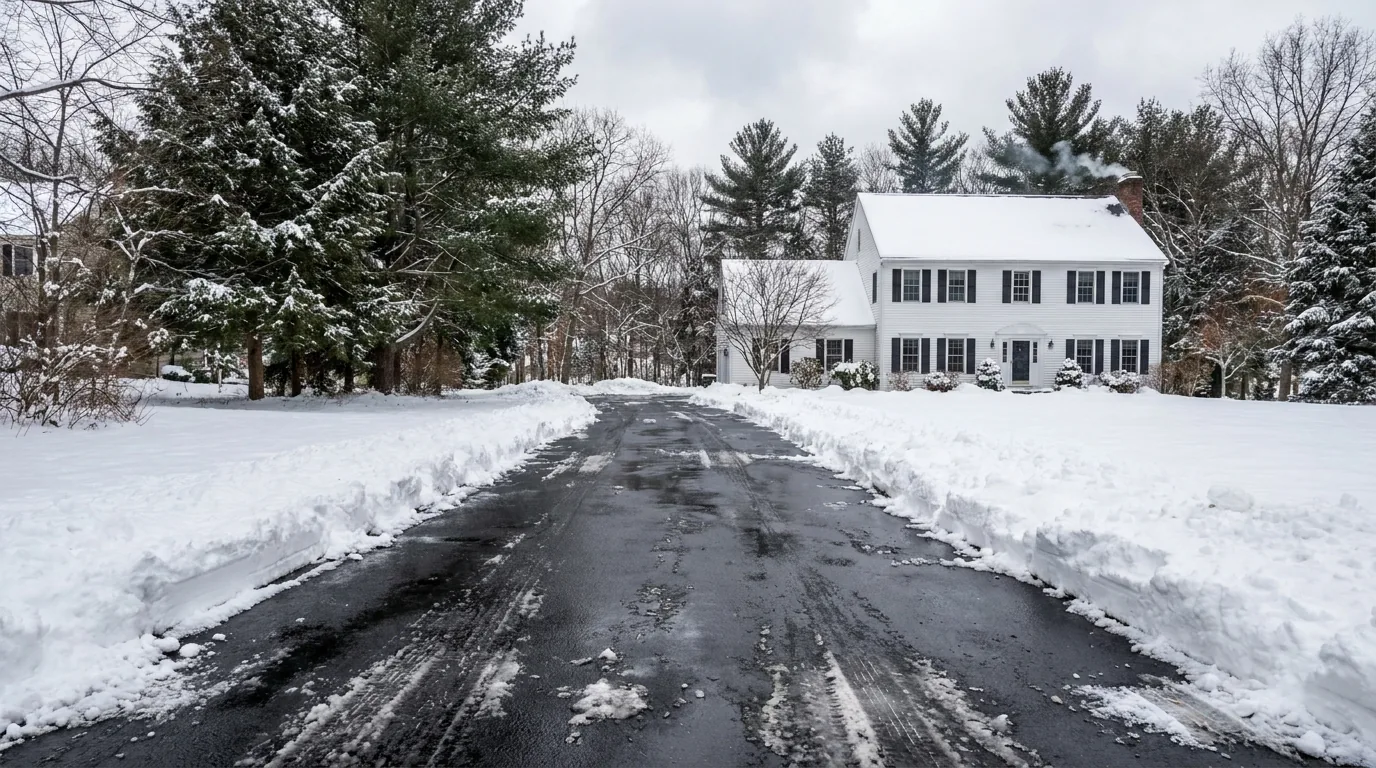
Once a foot of snow is down, a lawn edge, a granite curb and a low stone wall all look the same from a plow seat. The fix is to find them while you can still see them. Before the season starts, we note each driveway's edges, lawn lines, curbs, mailboxes and any stone or brick work so the crew knows where they are once everything is white. Whoever plows for you should do something similar. Walk it with them, or at least send photos.
- Edges and lawn lines. Where the pavement ends on each side, and any spot where the lawn sits level with the driveway and is easy to scrape.
- Hardscape. Cobblestone or Belgian block borders, brick aprons, retaining walls, lamp posts and walkway lights.
- Things at the street. The mailbox, a curb cut that is narrower than the driveway, and a nearby hydrant or storm drain that should not get buried.
- Surface problems. Heaved pavers, cracks or a raised manhole or cleanout cover a plow blade could catch.
- Slope and turns. A steep section, a curve, or a shared stretch with a neighbor.
Driveway markers (the tall stakes along the edge) help a lot on long or curved driveways. Agree on who puts them in and where, and get them in before the ground freezes. Do not try to locate or mark buried utility lines yourself.
Plan where the cars go during a parking ban
Parked cars cause more missed plowing than anything else. A car left in the middle of the driveway means the plow clears around it and leaves a frozen ridge that is hard to move later.
Wakefield shows why this needs a plan. The town no longer has an all-night winter parking ban, but one can be put in place during snow and other weather emergencies. The town says it may issue an on-street parking ban when significant snow accumulation is expected, so its crews can clean up the roads curb to curb, and it sends ban notices through its Everbridge e-Alert system. When a ban is called, cars that normally sit on the street end up in the driveway, often right where the plow needs to go. Reading, Stoneham, Woburn and the other towns nearby announce storm parking rules in their own ways, so sign up for your town's alerts.
- Decide where each household car parks during a storm, and where a guest or caregiver's car goes.
- Pick a stacking order so the car that leaves first is not blocked in.
- Ask the plow company what happens to the spot under a car that cannot be moved, and whether they come back for it.
- Keep keys where someone at home can move a car if the plan changes.
Decide where the plowed snow should go
Snow has to end up somewhere, and in a long winter the piles grow. Mark the spots you would like used on a simple sketch, then let the plow company tell you what is workable on your lot. Good placement keeps piles:
- off the sidewalk and out of the street;
- low enough near the end of the driveway that you can see traffic when backing out;
- away from house vents (federal winter safety guidance says to check that dryer, furnace, stove and fireplace vents are not blocked by snow);
- off shrubs, young trees and the spot where your roof drips or your downspouts drain, since that melt refreezes into ice on the driveway.
Ask how piles are handled as the season goes on. After a storm we push the piles back so the driveway does not get narrower each time it snows.
Confirm what the service covers
Plowing services differ in what they include, so get the answers in writing before the first storm rather than finding out at 6 a.m. Our residential service covers the driveway including the apron at the street, walkways, steps, entries, the space in front of the garage, and the paths to the mailbox and trash bins. In long or heavy storms we make return visits. Other companies may plow the driveway only, so ask about each item.
| Item | Question to ask |
|---|---|
| Apron at the street | Is the bank the town plow leaves at the end of the driveway cleared, and how many times per storm? |
| Walks, steps and entries | Which doors and paths are included? |
| Garage front | Is the area right in front of the garage doors cleared? |
| Long storms | Do you come back during the storm or only after it ends? |
| Snowfall threshold | How much snow has to fall before you come out? |
| Ice | Is any ice treatment included, or is that on us? |
Also decide between a seasonal plan, where you are on the list for every qualifying storm, and per-storm service, where you call when you want help. We offer both and explain the snowfall threshold for your plan when you sign up.
Write down household access needs
Tell the plow company what matters most in your house. If someone uses a walker or wheelchair, which entry and path must be clear first. If a nurse or caregiver visits, when they usually arrive. If someone leaves early for a hospital shift, say so. The CDC notes that cold weather puts extra strain on the heart and that people with heart disease or high blood pressure should follow their doctor's advice about shoveling, which is often the reason a household signs up for plowing in the first place.
Before each storm, move bins, planters, kids' toys and portable basketball hoops out of the plow path. Keep people and pets clear of the driveway while a plow is working, and never walk out to flag down a driver mid-storm. Call or text instead.
Your property access sheet
Copy these lines into a note, fill them in, and send a copy to your plow company with a few photos taken before the snow.
- Address, and how to find the driveway at night (house number location, shared driveway, corner lot):
- Edges, curbs, walls, mailbox and other things to avoid; markers placed by whom:
- Where each car parks during a storm and during a town parking ban:
- Preferred snow pile spots, and places to keep clear (vents, sightlines, shrubs):
- Walks, steps, entries and garage front included, yes or no:
- Priority entry and any access needs (mobility, caregiver, early shift):
- Seasonal or per-storm, and the snowfall threshold:
- Best phone number for storm-day questions, for both sides:
Plowing is a winter service, but the same Wakefield company takes care of the roof once the snow melts. If heavy snow leaves you with an ice dam, see our post on telling a roof leak from condensation, or call us about emergency roofing for an active leak.
Common questions about driveway snow plowing
When should driveway markers go in?
Before the ground freezes, usually late in the fall. Once the ground is frozen the stakes are hard to drive in, and once snow is down nobody can see where the edges are.
Do I need to be home when the plow comes?
No, as long as the cars are where you agreed and the driveway is clear of bins and other items. That is the point of settling the access sheet before winter.
What happens if a car is in the way?
The plow clears around it and the spot under the car stays snowed in. Agree ahead of time on where cars park during storms and whether the company returns for a spot that opens up later.
What should I send the plow company before winter?
Your filled-in access sheet and a few photos of the driveway taken before the snow, showing the edges, curbs, mailbox and any stone or brick work. Add the best phone number for storm-day questions.
Want your driveway on our route this winter? Request a free estimate and mention snow plowing, or call (781) 246-0141. Tell us your address and whether you want seasonal or per-storm service, and we will confirm we cover your street.