Free Residential Roofing Inspection: 7 Powerful Truths in 2025
Why Free Residential Roofing Inspections Are a Homeowner’s Best Friend
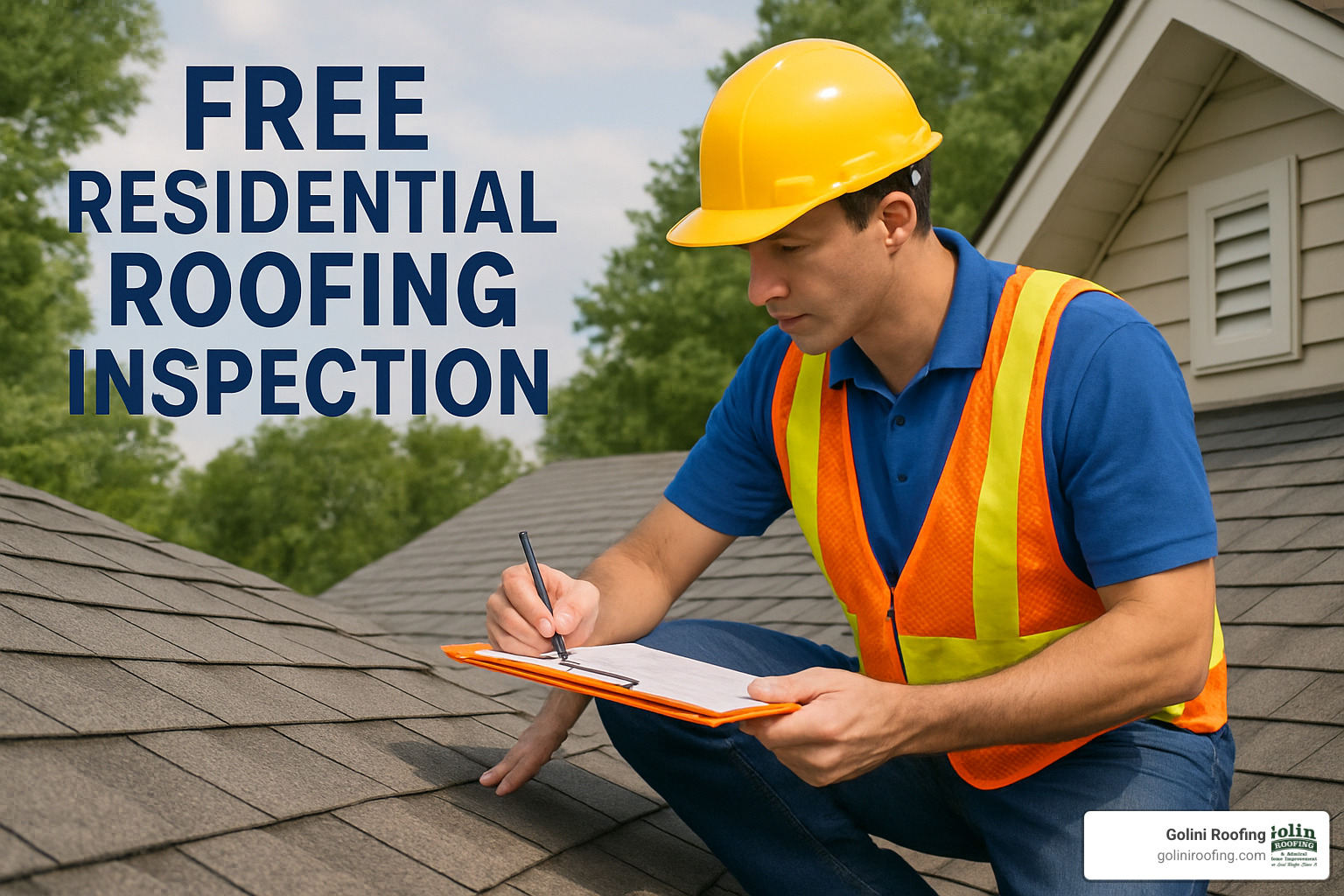
A free residential roofing inspection can save you thousands of dollars in emergency repairs, but only if you know how to spot the real deal from the scams. Here’s what you need to know:
What is a Free Residential Roofing Inspection?
• A comprehensive examination of your roof’s condition at no cost
• Typically takes 45 minutes to 2 hours depending on roof size
• Includes both exterior and interior (attic) assessments
• Results in a detailed report with photos and recommendations
When to Get One:
• At least once per year
• After severe weather events
• Before buying or selling a home
• When you notice missing shingles, leaks, or granules in gutters
Red Flags to Avoid:
• Door-to-door solicitors after storms
• Contractors who “find” damage during the inspection
• High-pressure sales tactics
• No local address or proper licensing
The catch? While legitimate contractors offer these inspections as a service to homeowners, scammers use fake “free inspections” to overcharge for unnecessary repairs. Some even tear off shingles to create fake storm damage, as reported by the Better Business Bureau.
Your roof protects your most valuable investment. In New England’s harsh climate – with heavy snow loads, ice dams, and nor’easters – a failing roof can lead to thousands in water damage, mold issues, and structural problems.
I’m Jack Golini, and I’ve been providing honest roofing assessments in the North Shore area since 1982. Over 35+ years, I’ve seen too many homeowners get taken advantage of by contractors using free residential roofing inspection offers as bait for unnecessary work.
Understanding Free Residential Roofing Inspections
Think of a free residential roofing inspection as a health checkup for your roof – except you don’t have to pay the doctor’s bill. It’s a comprehensive look at your roof’s condition without any upfront cost, but here’s where things get interesting (and where some homeowners get confused).
There’s a world of difference between an inspection and an estimate. An inspection is like detective work – we’re hunting for problems you don’t even know exist yet. An estimate? That’s when you already know your roof is leaking into the living room and you need someone to tell you how much it’ll cost to fix.
When contractors offer free inspections, we’re basically making a bet. We invest our time and expertise upfront, hoping that if your roof needs work, you’ll trust us to do it right. It’s a relationship-building approach that works well for homeowners who want honest assessments.
Now, if you were to pay for a professional inspection elsewhere, you’d typically see costs ranging from $75 to $850 (these are average internet-based costs, not Golini Roofing prices). Most homeowners end up paying around $220 for a standard paid inspection. But here’s the thing – many reputable roofing companies offer the same comprehensive service at no cost.
| Service Type | Cost Range | What’s Included | Best For |
|---|---|---|---|
| Free Inspection | $0 | Basic visual assessment, photos, repair estimate | Annual maintenance, storm damage assessment |
| Paid Inspection | $75-$850 | Detailed report, thermal imaging, structural analysis | Real estate transactions, insurance claims, complex roofs |
| Repair Estimate | $0-$100 | Cost breakdown for known issues | When you already know what needs fixing |
The whole process typically takes 45 minutes to 2 hours, depending on what we’re working with. A simple ranch in Wakefield? About an hour. A complex colonial in Burlington with multiple dormers and chimneys? We might be there for two hours, and that’s time well spent.
More info about what a roof inspection includes
Why do contractors offer them?
Let’s be honest about the business side of things. Free inspections are a loss-leader marketing strategy – we invest time upfront because we believe in building relationships, not just making quick sales. When done with integrity, this approach creates tremendous trust between contractor and homeowner.
We’ve also found that many homeowners want second opinions. Maybe their insurance company did a quick assessment after a storm, or another contractor gave them an estimate that seemed too high (or suspiciously low). An independent, free inspection can either confirm their concerns or give them peace of mind.
There’s also the insurance documentation angle. After those brutal nor’easters we get here in Massachusetts, having detailed photos and professional assessments can make or break an insurance claim. We’ve seen homeowners save thousands simply because they had proper documentation of storm damage.
When should you pay instead of going free?
While free inspections work great for most situations, there are times when paying for an independent assessment makes more sense. If you’re buying or selling a home in Reading or Stoneham, a paid inspection from a certified inspector with no financial interest in repairs carries more weight in real estate transactions.
Complex roofs with multiple levels, unusual materials, or suspected structural issues may require specialized equipment like thermal imaging or moisture meters that not all free inspections include. And if you specifically need an impartial third-party assessment for legal or insurance purposes, a paid inspection often has more credibility in those situations.
The key is understanding what you need and choosing accordingly. For annual maintenance and storm damage assessment, a free inspection from a reputable local contractor is usually your best bet.
Step-By-Step Free Inspection Process (Booking ➜ Report)
Getting your free residential roofing inspection scheduled is as simple as picking up the phone or filling out an online form. When we chat during the booking call, we’ll ask about any specific concerns you’ve noticed – maybe you spotted some granules in your gutters after last week’s storm, or you’ve got a mysterious water stain on your ceiling. We’ll also work out the best time for our visit and confirm whether you’ll be around during the inspection.
Before we arrive, there’s a short preparation checklist that helps everything go smoothly. Clear your driveway so we can park our truck close to your home, and make sure we can access your attic – that means moving any stored boxes away from the hatch. If you’re feeling ambitious, clearing obvious debris from your gutters beforehand helps us get a better look at your roof’s drainage. Don’t forget to secure any pets and trim back tree branches that might be hugging your roofline.

Today’s inspections blend old-school craftsmanship with cutting-edge technology. We often start with drone-based inspection for the initial overview, especially on steep roofs or homes in Woburn with tricky angles. These drones capture high-resolution images and can spot issues that might be dangerous to check by climbing around on your roof.
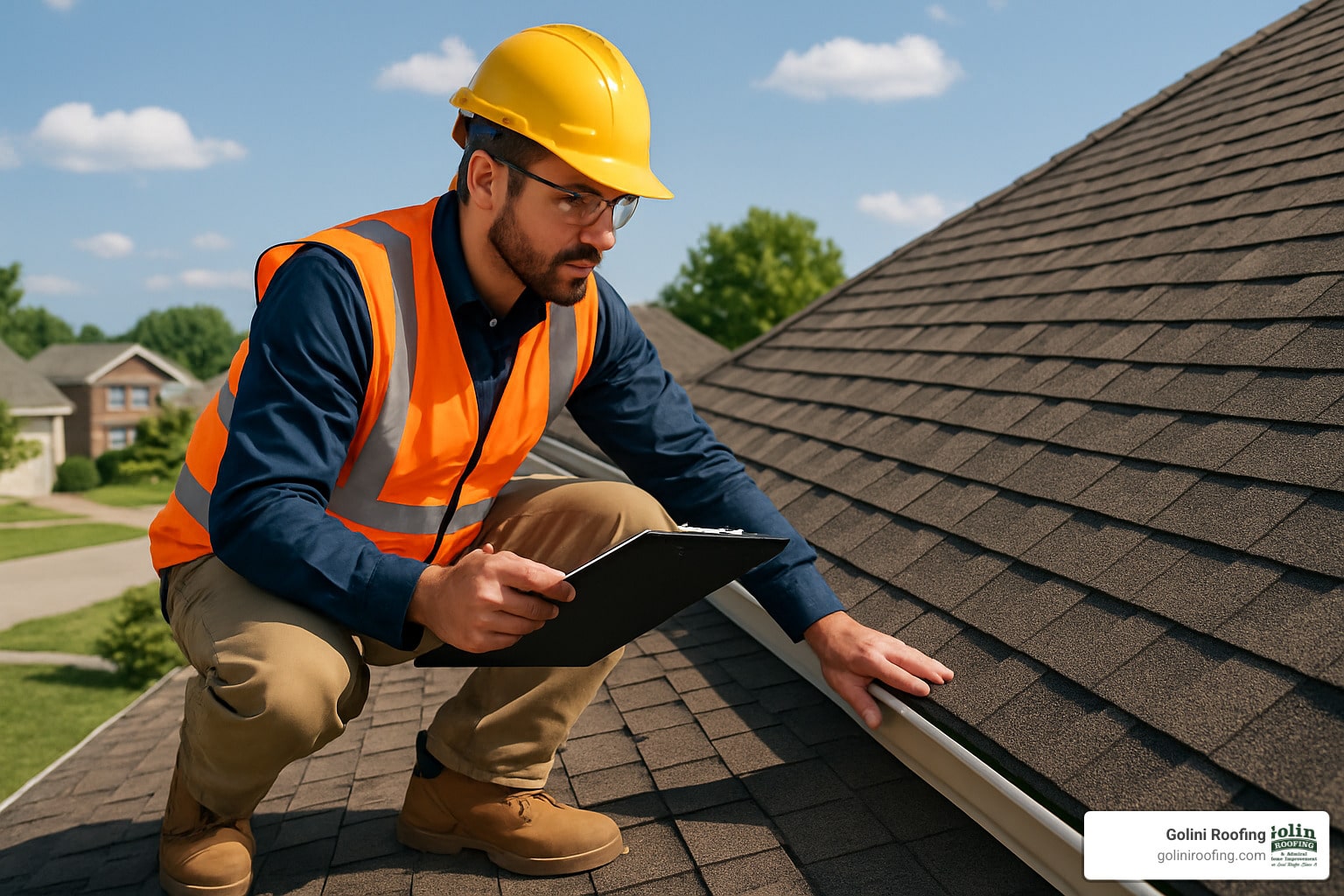
When it’s time for the detailed work, our certified inspectors follow strict OSHA safety standards while working through our comprehensive 18-point checklist. We’re not just looking for problems – we’re documenting the overall health of your entire roof system. Every step gets photo documentation, creating a visual record of your roof’s condition that you can reference for years to come.
More info about inspection duration
What happens during the visit?
Your inspection actually starts inside your home with an interior leak hunt through your attic space. We’re looking for telltale signs of water intrusion – dark spots on the wood, wet insulation, or water stains that show where moisture has been sneaking in. While we’re up there, we’ll also check your ventilation system and examine the structural integrity of your rafters and roof decking.
The exterior shingle check is where we really get into the details. We examine each section of your roof, hunting for missing, cracked, or lifting shingles that could let water through. We pay extra attention to your flashing around chimneys, vents, and valleys – these spots are like the weak links in your roof’s armor, where most leaks start.
Our debris mapping process identifies areas where gutters might be backing up or where moss and algae are setting up camp on your shingles. Every finding, whether it’s a small concern or something that needs immediate attention, gets photographed and noted for your final report.
After the inspection: understanding your report
Your inspection report comes packed with detailed photos that show both problem areas and the good parts of your roof. We use a simple damage grading system that takes the guesswork out of prioritizing repairs – you’ll know what needs fixing this month versus what you can plan for next year.
The report clearly maps out your repair versus replacement path. Sometimes a few missing shingles or small flashing repairs can add years to your roof’s life. Other times, widespread granule loss or structural issues mean it’s time to start planning for a full replacement.
When major work is needed, we’ll walk you through financing options that make sense for your budget. Whether it’s spreading repairs over time or planning for a complete roof replacement, we help you understand all your choices so you can make the best decision for your home and your wallet.
Issues Detected & Ideal Inspection Frequency
After 35+ years of serving Massachusetts homeowners, I’ve learned to spot the warning signs that indicate your roof needs attention. Some issues scream for immediate action, while others whisper warnings that smart homeowners learn to hear before they become expensive emergencies.
Leaks are the most obvious red flag, but they’re usually the final symptom of problems that have been developing for months or years. By the time water drips into your living room, significant damage may have already occurred in your attic and walls.
Missing or damaged shingles top our list of common findings during free residential roofing inspections. New England’s freeze-thaw cycles are particularly brutal – ice dams form, expand, and literally pry shingles off your roof. We see this constantly in Wakefield and surrounding towns after harsh winters.
Granule loss tells a story about your roof’s age and condition. Those little ceramic granules protect your shingles from UV damage and weather. When you start finding significant amounts in your gutters, your shingles are losing their armor. It’s like watching your roof slowly go bald.
Corroded flashing is a sneaky problem that causes major headaches. The metal strips around your chimney, vents, and roof valleys are your roof’s first line of defense against water intrusion. In our coastal Massachusetts climate, salt air accelerates corrosion, and failed flashing accounts for a surprising number of leak calls we receive.
Moss and algae growth might look charming in a fairy tale, but on your roof, they’re trouble. These organisms hold moisture against your shingles, gradually lifting and deteriorating them. The dark streaks you see aren’t just cosmetic – they’re signs that your roof is under biological attack.
Ventilation problems create a cascade of issues. When soffit or ridge vents get blocked, moisture builds up in your attic. This leads to mold growth, ice dam formation, and even structural damage. Your roof needs to breathe properly to stay healthy.
Structural sagging represents the most serious category of problems we encounter. This can indicate overloaded decking, damaged support beams, or even foundation issues affecting your entire roof system. It’s never something to ignore.
Storm damage from hail and high winds often creates problems that aren’t immediately visible. A nor’easter might knock a few shingles loose, but the real damage might be bruised shingles that fail months later, or loosened flashing that gradually allows water infiltration.
Here are the top 10 warning signs that should trigger an immediate inspection call:
- Water stains on ceilings or walls
- Shingle granules accumulating in gutters
- Curling, cracking, or missing shingles
- Daylight visible through roof boards
- Sagging roof sections
- Damaged flashing around chimneys or vents
- Moss or algae growth on shingles
- Ice dam formation in winter
- Higher than normal energy bills
- Animals or pests in the attic
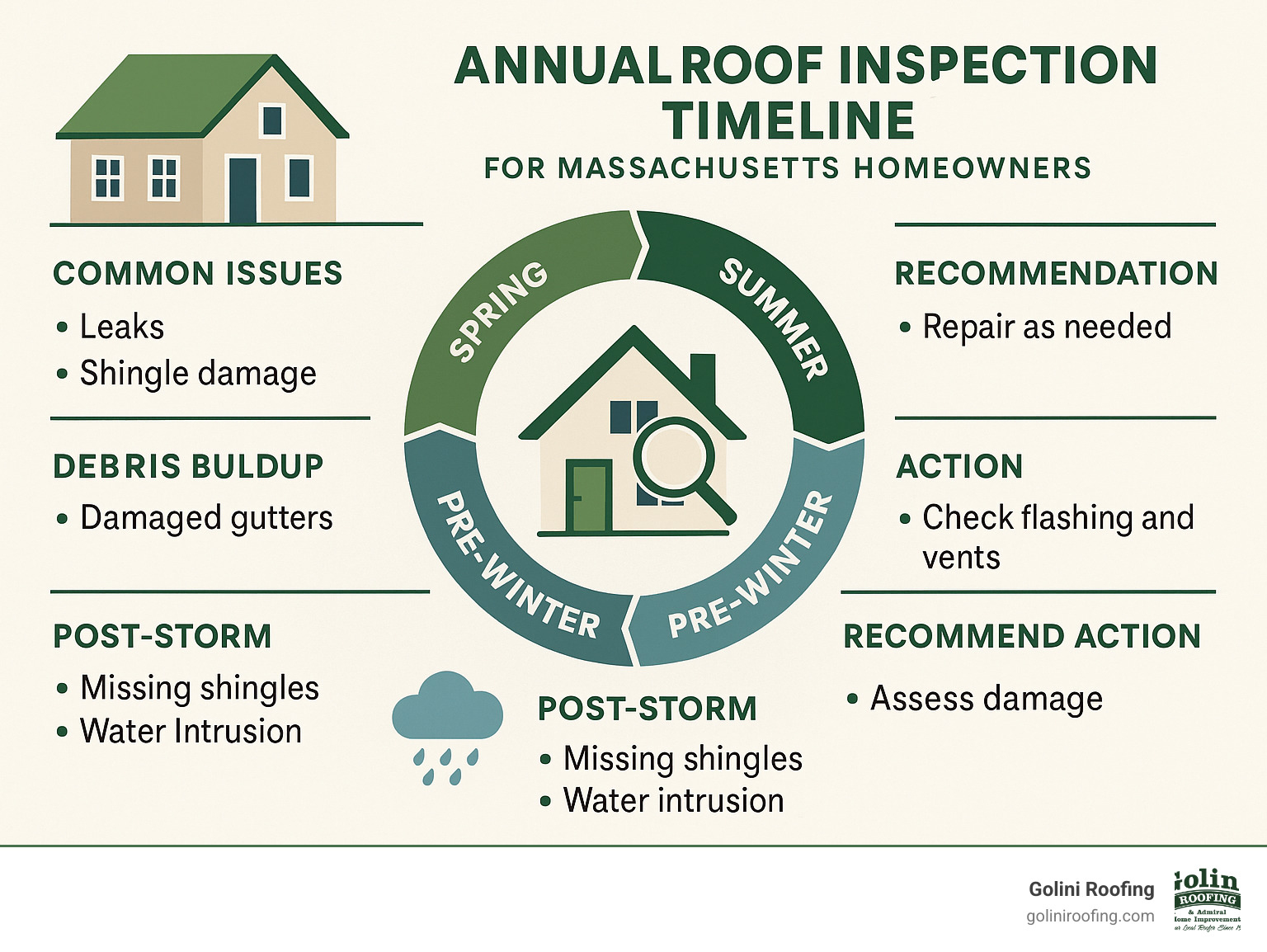
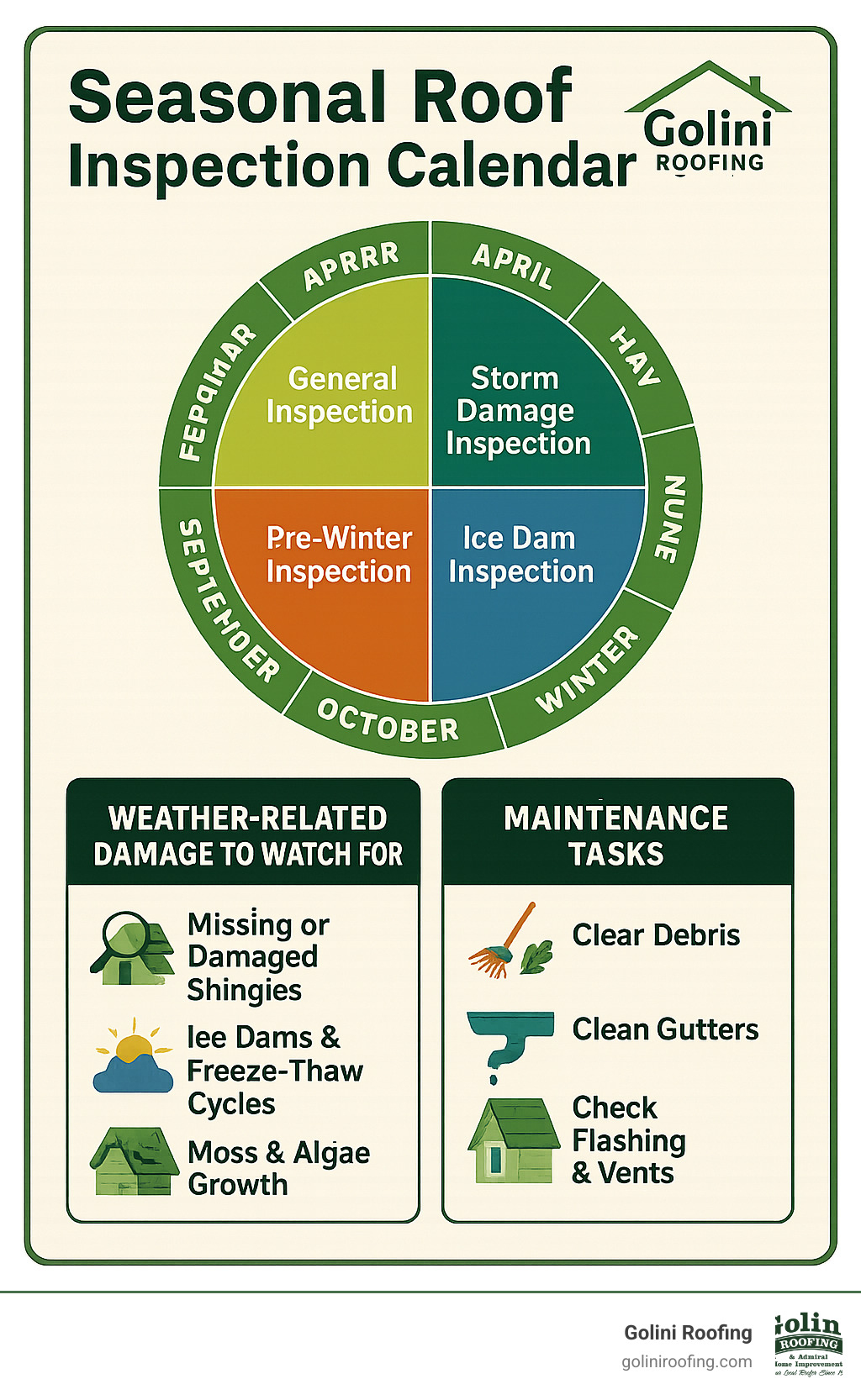
For inspection frequency, most Massachusetts homes benefit from annual inspections, ideally scheduled for late spring or early fall when weather conditions are optimal for safe roof access. However, if your roof is over 20 years old, consider twice-yearly inspections – the extra vigilance often catches small problems before they become major expenses.
Post-storm inspections are crucial after any significant weather event. Nor’easters, hurricanes, and severe thunderstorms can cause damage that isn’t immediately visible from the ground. Insurance companies often have time limits for filing claims, so prompt inspection after storms protects your coverage options.
Even new roofs deserve annual attention. This helps catch any installation issues while warranties are still fresh and establishes a baseline condition record for future reference. Plus, manufacturer warranties often require regular maintenance documentation.
More info about needing an inspection
Benefits, Risks & Picking a Trustworthy Inspector
Getting a free residential roofing inspection is like having a health checkup for your home’s most important protection system. The benefits go way beyond just spotting obvious problems – though early leak detection alone can save you thousands in water damage repairs.
We’ve seen minor flashing issues that cost $200 to fix prevent $15,000 in structural damage and mold remediation. It’s one of those situations where spending a little early saves you a lot later. Regular inspections also extend your roof’s lifespan significantly – a well-maintained roof can protect your home for 25-30 years, while neglected roofs often fail after just 15-20 years.
Professional documentation from inspections is invaluable for insurance claims. Insurance adjusters respect detailed reports from licensed contractors, and having before-and-after photos can make the difference between claim approval and denial. This becomes especially important after storm events that affect multiple homes throughout the North Shore area.
Your home’s resale value also benefits from documented roof maintenance. Potential buyers feel much more confident when they see professional inspection reports showing a well-maintained roof system.
Unfortunately, not everyone offering free residential roofing inspections has your best interests at heart. The Better Business Bureau reports that roofing scams spike after every major storm, with fraudsters using fake free inspections to target vulnerable homeowners.
The most common red flags include door-to-door solicitors who claim to be “working in the neighborhood” right after storms. These contractors often “conveniently find” damage during their inspection that requires immediate expensive repairs. Some scammers actually create damage – tearing off shingles or loosening flashing to justify their inflated repair estimates.
We’ve seen fabricated damage reports that quote $20,000 for repairs that either aren’t needed or should cost a fraction of that amount. It’s heartbreaking to see homeowners taken advantage of when they’re just trying to protect their investment.
Latest advisory on avoiding scams
Professional Roof Inspection Services
Vetting checklist for homeowners
Before allowing anyone on your roof, verify their credentials thoroughly. Check that they have a valid Massachusetts contractor’s license – you can look this up online through the state licensing board. Always ask for proof of liability insurance and workers’ compensation coverage.
Look for membership in professional organizations like the National Roofing Contractors Association (NRCA). These memberships indicate contractors who follow industry standards and continuing education requirements. Check their Better Business Bureau rating and ask for local references from recent customers.
A reputable contractor will gladly provide references from jobs in your area – we’re always happy to share contact information for recent customers in Wakefield, Winchester, or Burlington who can speak to our work quality.
Always insist on a written warranty for any work performed. Legitimate contractors stand behind their work with clear warranty terms. Be extremely wary of contractors who demand full payment upfront or pressure you to sign contracts immediately. Quality work doesn’t require high-pressure sales tactics.
Insurance & financing advantages
Professional inspections provide the crucial documentation needed for successful insurance claims. We work directly with insurance adjusters, providing detailed photos and damage assessments that support your claim. We can also help coordinate the repair process to ensure work meets all insurance requirements.
Many homeowners don’t realize that insurance claims often have specific deadlines and documentation requirements. Having a professional inspection done promptly after storm damage ensures you don’t miss critical deadlines that could void your coverage.
For major repairs or replacements, financing options can help spread costs over time rather than requiring large upfront payments. Understanding your insurance deductible and coverage limits helps you plan for out-of-pocket expenses and make informed decisions about repair timing and scope.
The adjuster coordination we provide often results in smoother claims processes and better outcomes for homeowners. Insurance companies appreciate working with established, licensed contractors who understand their documentation requirements and quality standards.
Frequently Asked Questions About Free Residential Roofing Inspection
How long does a free residential roofing inspection take?
Most free residential roofing inspections take between 45 minutes and 2 hours, but the exact timing depends on what we find up there. For a typical ranch-style home in Wakefield or Reading, plan on about an hour from start to finish.
Here’s what affects the timeline: roof size obviously matters – a small cape takes less time than a sprawling colonial. Complexity is the bigger factor though. Homes with multiple dormers, chimneys, or skylights require more careful examination of each penetration point where leaks commonly develop.
Weather conditions can slow things down too. We work more deliberately in windy conditions or when surfaces are damp – safety always comes first. If we find significant damage during the inspection, we’ll take extra time to document everything thoroughly for your records and potential insurance claims.
Multi-story homes in areas like Burlington or Winchester typically require the full 2-hour timeframe, especially if we need to access different roof levels safely. The good news? Our 35+ years of experience means we work efficiently while still being thorough.
Can a free residential roofing inspection help with insurance claims?
This is one of the biggest advantages of getting a professional inspection after storm damage. Insurance adjusters rely heavily on detailed documentation from licensed contractors, and our reports can make or break your claim approval.
We work directly with insurance companies throughout Massachusetts, providing the technical expertise adjusters need to evaluate damage accurately. Our inspection reports include specific damage descriptions, photo documentation, and repair cost estimates that support your claim with solid evidence.
Timing matters tremendously here. Getting a professional inspection done immediately after storm events like nor’easters or hail storms helps establish the timeline and cause of damage. Insurance companies are much more likely to approve claims that are well-documented by licensed professionals rather than homeowner photos alone.
We’ve helped countless homeowners in Lynnfield and North Reading steer the claims process successfully. Insurance adjusters actually appreciate working with contractors who provide clear, honest assessments – it makes their job easier and ensures you get fair treatment.
Are drone or virtual roof inspections as effective as in-person inspections?
Drone technology has revolutionized roof inspections in many ways, but it’s not a complete replacement for boots-on-the-roof examination. Drones excel at safety and initial assessment – we can identify obvious damage, missing shingles, and problem areas without putting anyone at risk on steep or damaged roofs.
The high-resolution imagery from drones is impressive. We can spot issues that might be missed from ground level and safely examine areas that would be dangerous to access directly. This is especially valuable for multi-story homes or roofs with steep pitches common in older New England architecture.
However, drones can’t tell the whole story. They can’t test for soft spots in decking, check how securely flashing is attached, or assess the condition inside your attic. Subtle issues like early granule loss or slightly loose shingles often require close-up, hands-on examination.
Our approach combines the best of both worlds – drone technology for comprehensive overview and safety, plus detailed hands-on inspection for areas that need closer evaluation. This hybrid method gives you the most thorough assessment while keeping our team safe and efficient.
For most free residential roofing inspections, we’ll use whatever combination of methods gives you the most accurate picture of your roof’s condition. After all, the goal is catching problems early, not showing off fancy equipment.
Conclusion
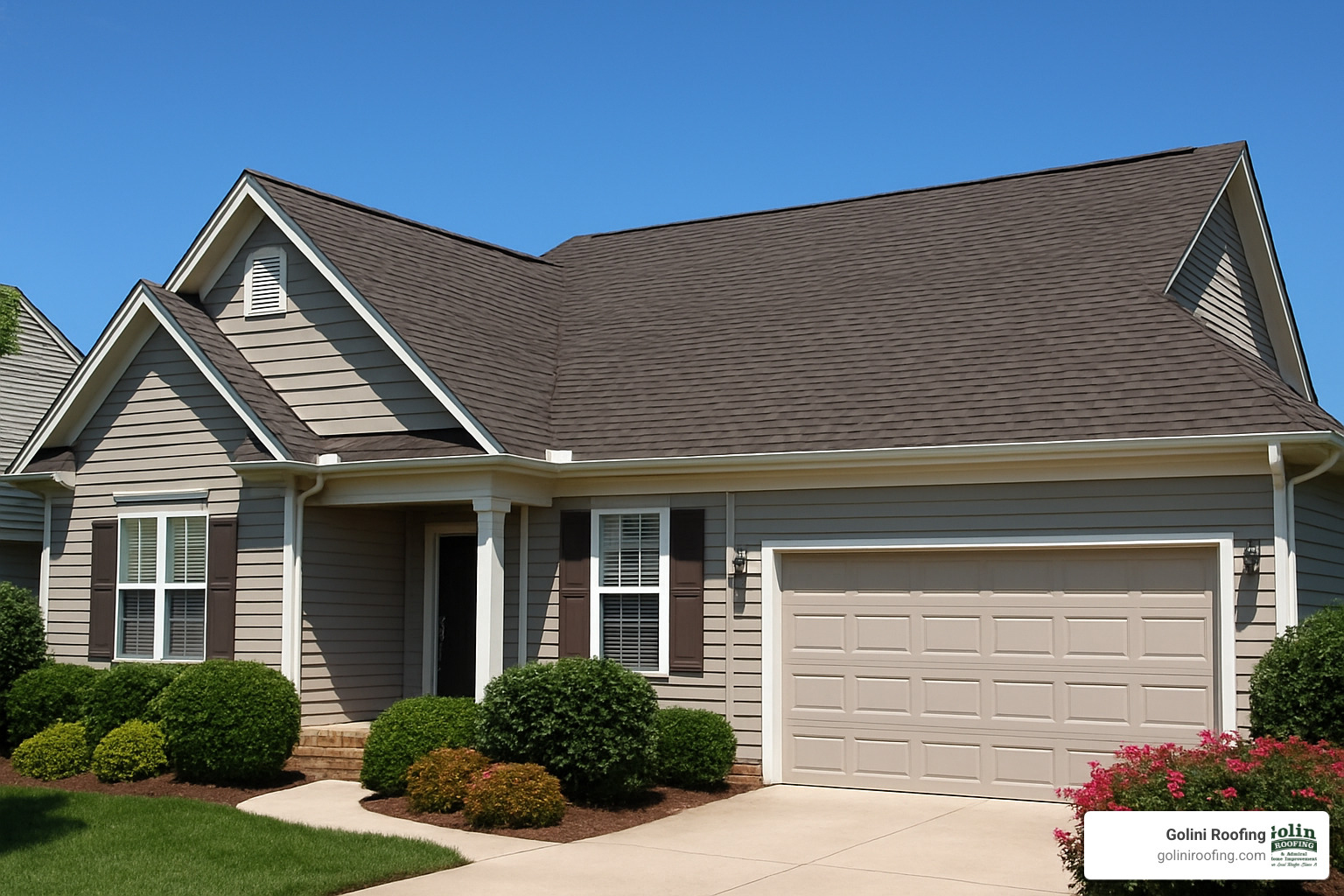
Your roof protects everything you care about most – your family, your belongings, and your biggest financial investment. A free residential roofing inspection gives you the peace of mind that comes from knowing exactly what’s happening up there, before small problems turn into expensive disasters.
The smart homeowners we work with understand that preventive maintenance beats emergency repairs every time. They schedule their annual inspections, keep an eye out for warning signs, and work with contractors they trust. They also know how to spot the red flags that signal roofing scams.
Here’s what we’ve learned after 35+ years of honest roofing work in Massachusetts: the contractors who offer legitimate free inspections are investing in long-term relationships, not quick profits. They provide detailed reports, answer your questions patiently, and never pressure you to sign contracts on the spot.
At Golini Roofing, we’ve seen too many homeowners get burned by storm chasers and door-knockers. That’s why we’ve built our business on transparency, quality craftsmanship, and genuine care for our neighbors throughout the North Shore. Our hand-nailed installation process might take longer, but it’s how we ensure your roof will protect your home for decades to come.
Whether your roof is brand new or approaching its golden years, regular inspections help you plan ahead and budget wisely. They also provide the documentation you need when insurance claims arise after severe weather events.
Don’t wait until you’re dealing with water stains on your ceiling or missing shingles in your yard. Schedule your inspection today and take the first step toward protecting your investment with the expertise that comes from over three decades of local experience.
More info about our Free Roofing Inspection