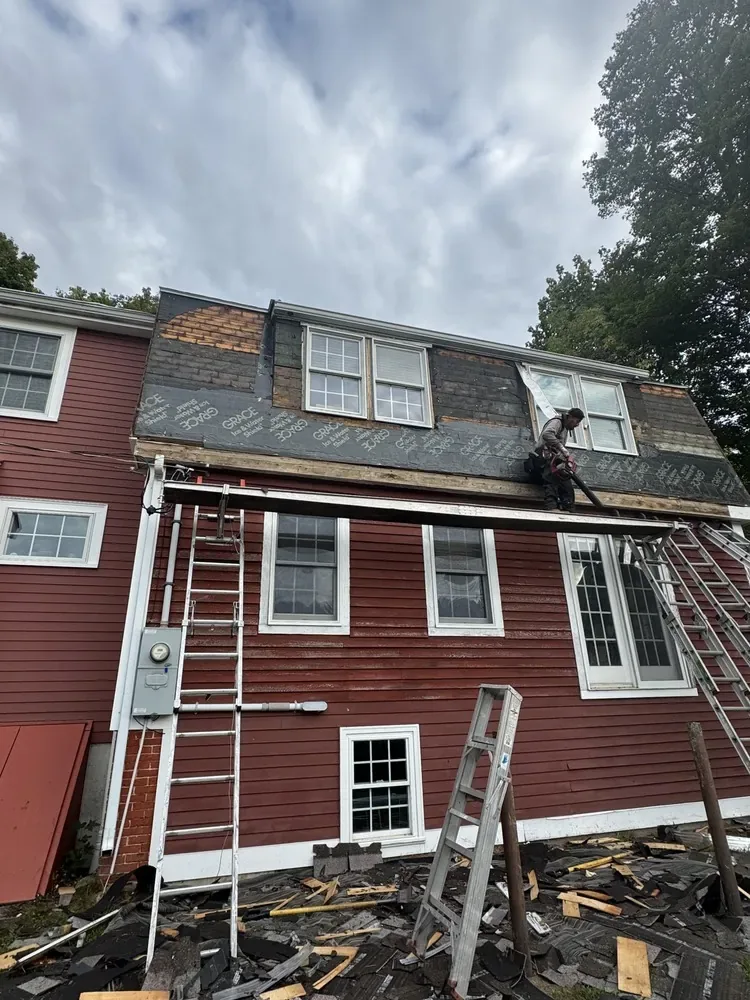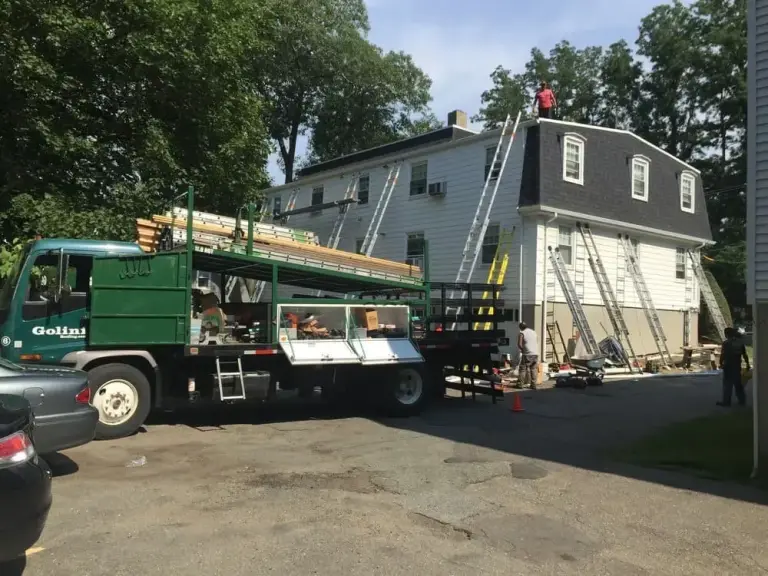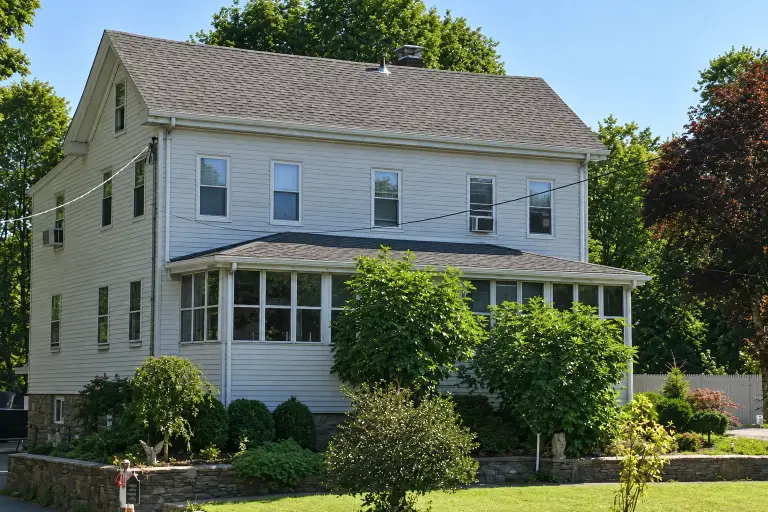

Can You Replace a Roof in Late Fall or Winter in Massachusetts?
You'll learn how cold temperatures affect a roof replacement, when waiting until spring is the smarter call, and what to do now if your roof is on the edge.
The short answer
- Roofs can be replaced in cold weather, but shingles seal more slowly and the crew has to adjust how they work.
- If your roof is sound and simply getting old, booking an inspection now and scheduling replacement for spring is usually the calmer choice.
- If you have active leaks, missing shingles, soft decking or a history of ice dam damage, waiting through a full winter can cost you more than cold-weather installation.
- A targeted repair now and a full replacement in spring is a reasonable middle path for many homes.
What cold weather actually changes on a roof replacement
Homeowners often hear that roofs "can't" be done in winter. That's not quite true. Roofs get replaced in cold months all the time. What changes is how the materials behave and how carefully the job has to be planned.
Shingles seal more slowly
Most asphalt shingles have a strip of adhesive on the underside. After installation, the sun warms that strip and it bonds each shingle to the one below it. That bond is a big part of what keeps shingles from lifting in wind. In cold weather, the strip may not activate right away. It can stay unsealed for weeks, sometimes until the first stretch of warm, sunny days in spring. Some manufacturers publish cold-weather instructions, such as hand-sealing shingles with a compatible adhesive, so it's worth asking how your installer handles this.
Materials get stiffer
Cold shingles are less flexible. They can crack if they're bent sharply, which matters most along ridges, hips and valleys where shingles have to fold or curve. Crews often store bundles somewhere warmer or work in smaller batches so materials aren't sitting out in the cold.
Underlayments and sealants are fussier
Self-adhering underlayments, like the ice-and-water membrane used along eaves and in valleys, stick best to a clean, dry, reasonably warm deck. Frost, snow or condensation on the wood can keep them from bonding well. Sealants used around flashing and vents can also cure more slowly in cold air.
Shorter days and less predictable weather
Late fall and winter bring fewer daylight hours and quicker weather changes. A crew can only open up as much roof as it can safely close up before dark or before snow moves in. That can stretch a job over more days than the same roof would take in summer. If you're curious how long a typical job runs in good conditions, our post on how many days a roof replacement takes walks through it.
Unsealed shingles aren't automatically a problem, but ask your roofer how they'll be secured until warm weather finishes the job.
When waiting until spring makes sense
If your roof is aging but still doing its job, there's rarely a reason to rush a replacement into the coldest part of the year. Spring and early summer give shingles the warmth they need to seal and give crews longer days to work.
Waiting is usually reasonable when:
- You have no water stains on ceilings or in the attic.
- Shingles are worn or curling slightly but none are missing.
- The roof deck feels solid and nothing looks like it's sagging from the ground.
- Your home hasn't had ice dam leaks in past winters.
- A professional inspection found wear but no active failure.
In that situation, the smart move is to use the winter for planning. Get your inspection, collect estimates, compare shingle colors and ask your questions while you aren't under pressure. You'll be ready to schedule when the weather turns. Planning ahead also gives you time to read up on things like warranty questions to ask before signing.
When you shouldn't wait out the winter
A Massachusetts winter is hard on a roof that's already failing. Snow sits on it for days, meltwater refreezes at the eaves, and ice dams can push water back under shingles. A roof with existing weak spots tends to let that water in.
Consider moving forward now, even in cold weather, if you notice:
- Active leaks showing up as fresh stains, drips or damp insulation.
- Missing or torn shingles, especially after a fall windstorm.
- Soft, spongy or sagging areas, which can mean the decking underneath is rotting.
- Repeated ice dam damage in past winters on a roof that's also near the end of its life.
- Heavy granule loss with bare spots on shingles. Our granule loss checklist explains what to look for.
In these cases, the risk is no longer just the roof. Water that gets in over a winter can damage insulation, drywall, framing and finishes. A cold-weather installation done with care is often a far better trade than months of slow leaks.
Never go up on a roof that's icy, snowy or frosty to check it yourself; look from the ground and leave anything higher to a professional.
A middle path: repair now, replace in spring
Many homes fall somewhere between "fine until spring" and "replace immediately." For those, a targeted repair can buy time. A roofer might replace a few blown-off shingles, reseal flashing around a chimney or vent, or patch a small leak so the roof gets through the winter. Then the full replacement happens once the weather warms.
This approach works best when the problem is localized and the rest of the roof is holding up. It makes less sense when damage is spread across the roof or the decking is failing, because you may end up paying for repairs on a roof that needs to come off anyway.
Golini Roofing has a Roof Repair page and a separate Roof Replacement page, and the honest answer for your house depends on what an inspection finds. If you're weighing both options, ask the roofer to explain why they'd recommend one over the other for your specific roof.
If something sudden happens, like storm damage or a leak that's actively coming through a ceiling, that's a different situation. The company also has an Emergency Roofing page for urgent problems.
Ask any roofer recommending a temporary fix how long they expect it to hold and what signs mean it's failing.
Questions to ask before a cold-weather replacement
If you decide to go ahead in late fall or winter, a good roofer will welcome these questions. Clear answers are a sign they've thought through cold-weather work.
- How will you handle shingle sealing in the cold? Ask whether they follow the shingle manufacturer's cold-weather instructions, and whether that includes hand-sealing.
- How will materials be stored? Bundles left in freezing temperatures are harder to work with without cracking.
- How much roof will be opened at once? In short days with shifting weather, smaller sections that get fully dried in each day reduce risk.
- What happens if snow or ice moves in mid-job? You want to hear a clear plan for protecting the house. Our post on weather delays during a replacement covers what that communication should look like.
- How will you deal with frost or moisture on the deck? Underlayment needs a dry surface to bond.
- Does cold-weather installation affect any warranty? Ask them to show you in writing what the manufacturer requires.
- What should we expect inside the house? Winter work may mean a colder attic for a few days and more noise in shorter, busier workdays.
If a roofer brushes off questions about cold-weather sealing, take that as a reason to get another opinion.
How to decide as winter sets in
If you're reading this in late fall, the ideal spring and summer window has passed for this year. That doesn't mean you're stuck. It means the decision is really about how much risk your current roof carries through the coming winter.
Step 1: Look from the ground
On a clear day, walk around the house. Use binoculars if you have them. Look for missing, lifted or cracked shingles, dark patches, sagging lines along the ridge, and loose flashing around chimneys and vents. Stay on the ground for this check and leave ladders and the roof itself to a professional, especially with any frost, ice or wet leaves around.
Step 2: Check the attic
With a flashlight, look at the underside of the roof deck and the insulation. Stains, damp spots, mold or daylight coming through are all warning signs. Frost on nails or the deck can point to ventilation or condensation issues instead of a leak; our post on roof leaks versus condensation helps you tell the difference. Watch your footing and step only on framing, never on the insulation between joists.
Step 3: Get a professional inspection
A roofer can see things you can't from the ground. Golini Roofing has a Roof Inspections page, and you can check the Towns We Serve page to see whether your town is covered. Ask the inspector to sort findings into three buckets: what's urgent before winter, what can wait until spring, and what's just normal aging.
Step 4: Make the call
- Urgent problems found: repair or replace now, using the cold-weather questions above.
- Minor issues only: fix them now and book the replacement for spring.
- No real issues: enjoy the winter and start planning when you're ready.
When you're ready to talk through your own roof, you can reach the team through the contact page. Bring your notes and photos from steps one and two, since they'll help any roofer understand what you've been seeing.
Photos of attic stains or ground-level views of damage, with the date noted, make it much easier to track whether a problem is getting worse over the winter.
Common questions
Will shingles installed in winter blow off?
Not necessarily. Shingles are still nailed in place, but the adhesive strips may not seal until warmer weather, which leaves them more vulnerable to wind lift in the meantime. The cold-weather questions above cover how to ask your roofer about this.
Can a roof be replaced if there's snow on it?
Snow and ice have to be cleared from the work area, and the deck needs to be dry before underlayment goes down. Roofers often wait for a clear window rather than working through active snow. Don't climb onto a snowy roof yourself, since it's a serious fall risk.
Is it cheaper to replace a roof in winter?
Pricing depends on the roofer, the roof and the scope of work, so there's no general rule. Cold-weather work can involve extra steps and shorter workdays. The only way to know for your house is to get a written estimate and ask how timing affects it.
What about flat or low-slope roofs in cold weather?
Many flat-roof membranes and adhesives also have temperature limits for proper installation, so the same caution applies. Ask the roofer what conditions the specific system needs and how they'll protect the building if weather changes mid-job. If you have a leaking flat roof right now, our flat roof repair post covers what you can safely do and when to call a pro.