Roof Replacement Weather Delays: A Homeowner’s Communication Checklist
Roof replacement weather delays are common in New England, and the stress usually comes from not knowing what happens next. Before your start date, agree with your roofer on four things: who makes the weather call and when you will hear it, how updates reach you, what happens to deliveries and the dumpster, and, if the old roof is already partly off, who is protecting the open areas and whom you call if water gets in.
This checklist is about communication during a delay. For how many days the work itself takes, see how many days a roof replacement takes. For what to move and cover before the crew arrives, see the roof replacement readiness checklist.
Why roofers stop for weather
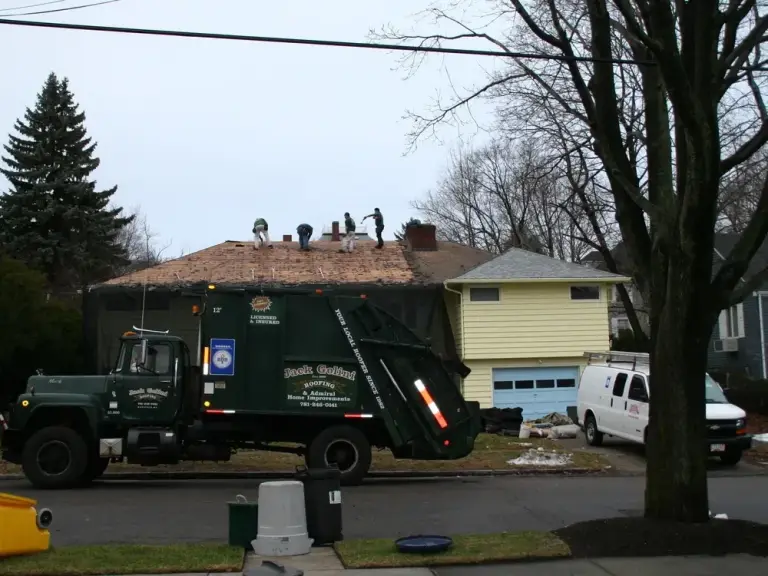
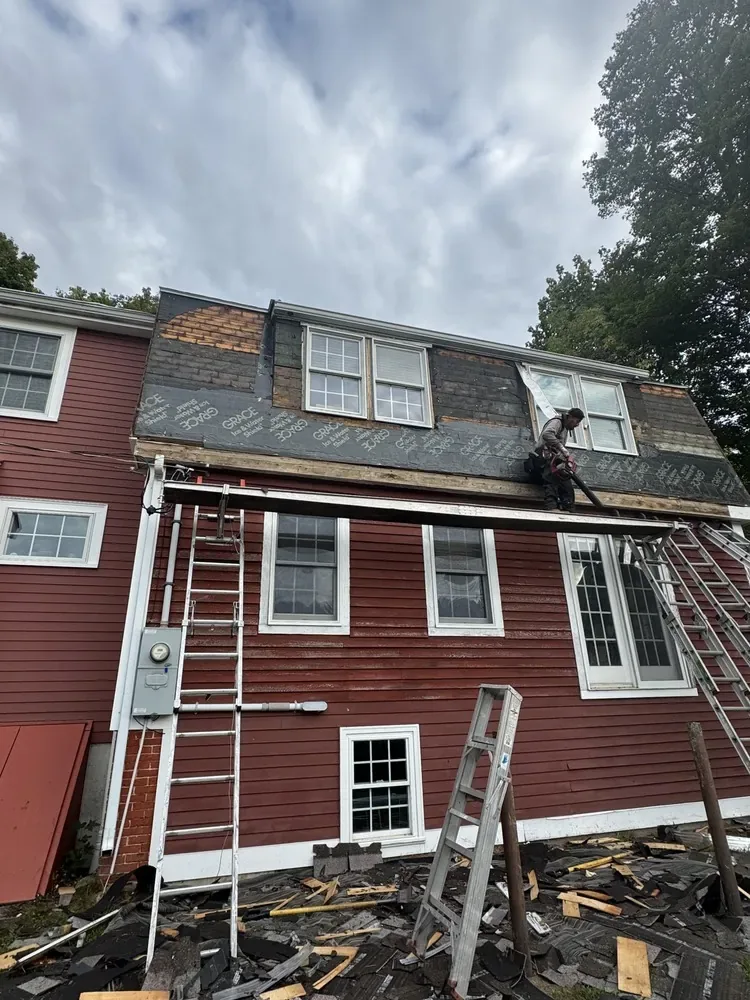
It helps to know what the crew is weighing, so a weather call makes sense when it comes. On a replacement we usually tear the roof off down to the deck, which means for part of each day some of your roof is bare wood or underlayment. Rain on an open deck is the obvious problem. There are others.
- Nor'easters. The National Weather Service says nor'easters are most frequent and most violent between September and April, bringing heavy rain or snow and gale-force winds. Around Wakefield and the North Shore that covers much of the roofing calendar.
- Frost and ice. A cold-weather bulletin from shingle maker Malarkey tells crews to make sure ice or frost is not present on the walking surface, and notes it can be hard to see on overcast days. A frosty fall morning can push the start back a few hours even when the forecast is dry.
- Cold and wind on the materials. The same bulletin notes that cold and moisture weaken the stick of Malarkey's self-adhering underlayment, that shingles get stiffer in the cold and cracked ones should not be installed, and that cold, high wind and blowing dust can keep a shingle's sealing strip from activating. It also says its wind warranties apply only when shingles are sealed. Your roofer may hand-seal shingles in cold weather, or wait for better conditions.
You do not need to judge any of this yourself. The point is to know that a dry forecast does not always mean a go, and a gray morning does not always mean a stop.
Before the start date: settle who calls whom
Ask whether your start date is firm or depends on a weather check, and who makes that decision. Then agree on the details:
- Who will tell you whether work is going ahead, and by when (the night before, or the morning of)?
- Call, text or email, and to which person in your house?
- If you have not heard by that time, whom do you contact?
- If the date slips, when is the next check-in, even if no new date is known yet?
Scheduling has a knock-on effect too. We work one job at a time: our crew starts a roof and stays on it until it is finished. Under that kind of schedule, a rainy week on the job ahead of yours can move your start date as well, so ask your roofer how they will let you know when that happens.
Decide which household plans stay flexible
List the plans tied to the work days: time off, working from another location, pet care, a child's nap schedule, a visiting relative. Mark the ones that are hard to change and tell your roofer about them early. Leave the easy ones flexible until the start is confirmed. If someone in the house works from home, our post on working from home during a roof replacement covers how to plan the workday around the noise.
Keep the readiness work in place during a short delay. Patio furniture can stay moved and attic items can stay covered. Ask before you put the cars back in the driveway, since a delivery or dumpster may still be coming.
Deliveries, the dumpster and the driveway
Materials and the debris container can arrive before the crew does. When the start moves, ask:
- Is the shingle delivery or the dumpster drop also moving, and who tells the supplier?
- If materials are already on the property or on the roof, who is responsible for them, and should anything stay clear around them?
- Do you need to keep the driveway open on a day that is no longer a work day?
Do not move bundles, ladders or equipment yourself. Ask the crew to do it if something is in your way.
If the roof is already open
A delay after tear-off has started is a different conversation from a delayed start. Ask your roofer to explain where things stand in plain terms:
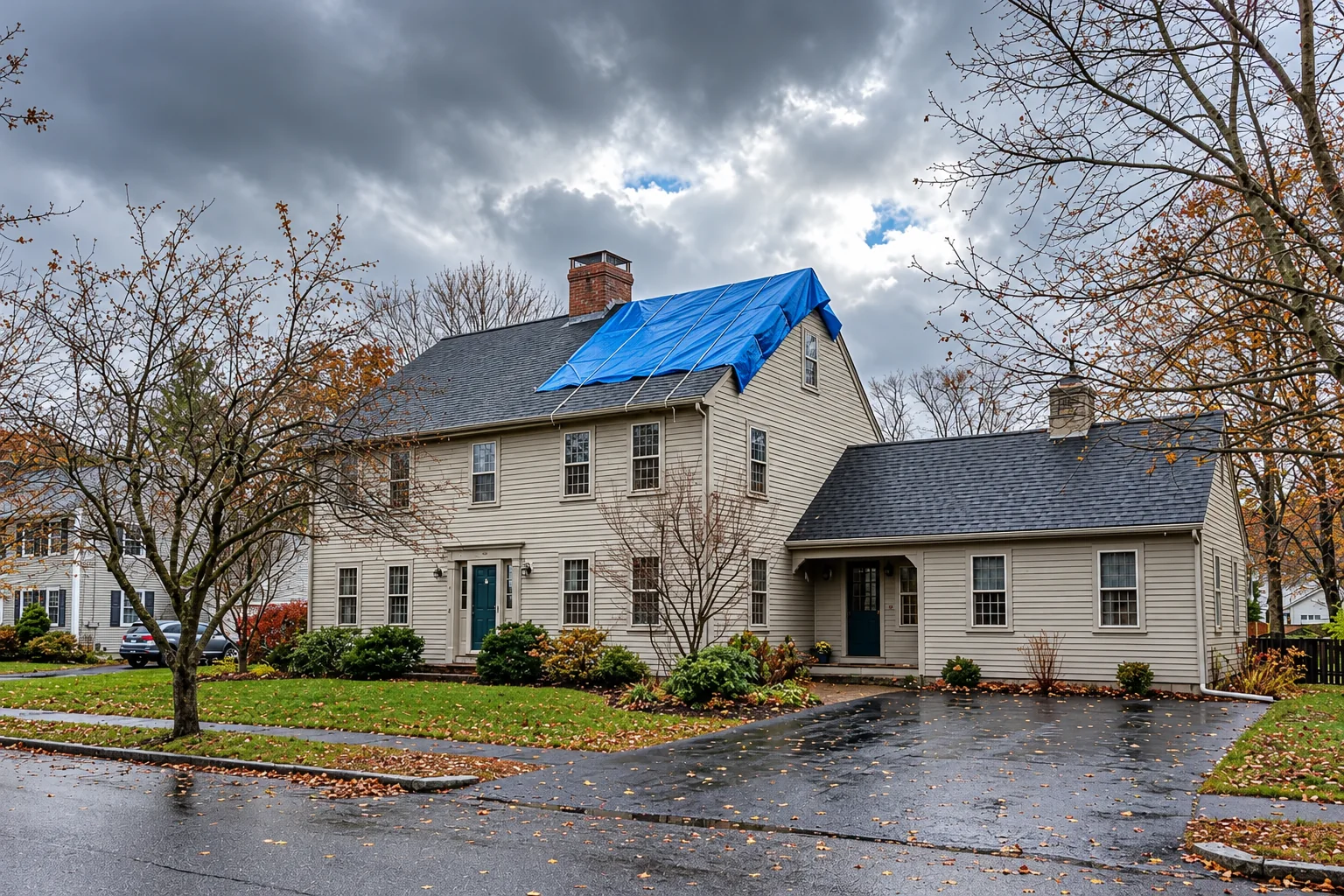
- Which sections are finished, and which are covered only with underlayment or tarps?
- Who checks the protection during the pause, especially after wind?
- Whom do you call if you see water inside, and what number works at night and on weekends?
- What information helps them: where the drip is, when it started, a photo of the ceiling?
Stay off the roof and leave tarps alone, even if one looks loose. Report it from the ground and let the crew handle it. If water is actively coming in and you cannot reach your roofer, our emergency roofing page explains how to reach us about an active leak.
Put the new plan in writing
After any schedule change, send a short text or email recap and ask the roofer to confirm or correct it: the new start or restart date, or that it is still undecided and when the next check-in is; any delivery changes; anything you are expected to do. Massachusetts law requires home improvement contracts over $1,000 to state a scheduled start date and a date for substantial completion (M.G.L. c. 142A, section 2), so keep the recaps with your contract. Our post on roof replacement records to keep covers the rest of the file.
Your weather delay checklist
Copy these lines into your notes before the start date and update them whenever the plan changes.
- Who makes the weather call, and by what time we hear it:
- How updates come (call, text, email) and to whom:
- Whom to contact if no update arrives:
- Household plans to keep, move or cancel:
- Delivery and dumpster dates, and who tells the supplier:
- If the roof is open: who checks protection, and the after-hours number:
- Current start or restart date, or the next check-in:
- Written recap sent and confirmed:
Common questions about roof replacement weather delays
Will a roofer work in the rain?
Roofers generally avoid tearing off with rain in the forecast, because the bare deck would be exposed. Light rain may stop work partway through a day while the open areas are covered.
Can a roof be replaced in cold weather?
Often yes, with precautions. Shingle makers publish cold-weather steps such as keeping shingles warm, watching for frost on the deck and hand-sealing shingles, and very cold, windy or icy days may still mean a pause.
What should I do if it rains while my roof is half done?
Call the roofer's contact number right away and tell them where any water is showing. Do not go on the roof or adjust tarps yourself.
Does a weather delay change my contract?
It can move the dates, so put the new schedule in a written recap the roofer confirms, and keep it with your contract.
Planning a roof replacement on the North Shore? Request a free estimate or call (781) 246-0141. Golini Roofing has worked from Wakefield since 1982, and you can read how we handle a full replacement on our roof replacement page.