
What Is a Roof Square and How Many Square Feet Does It Equal?
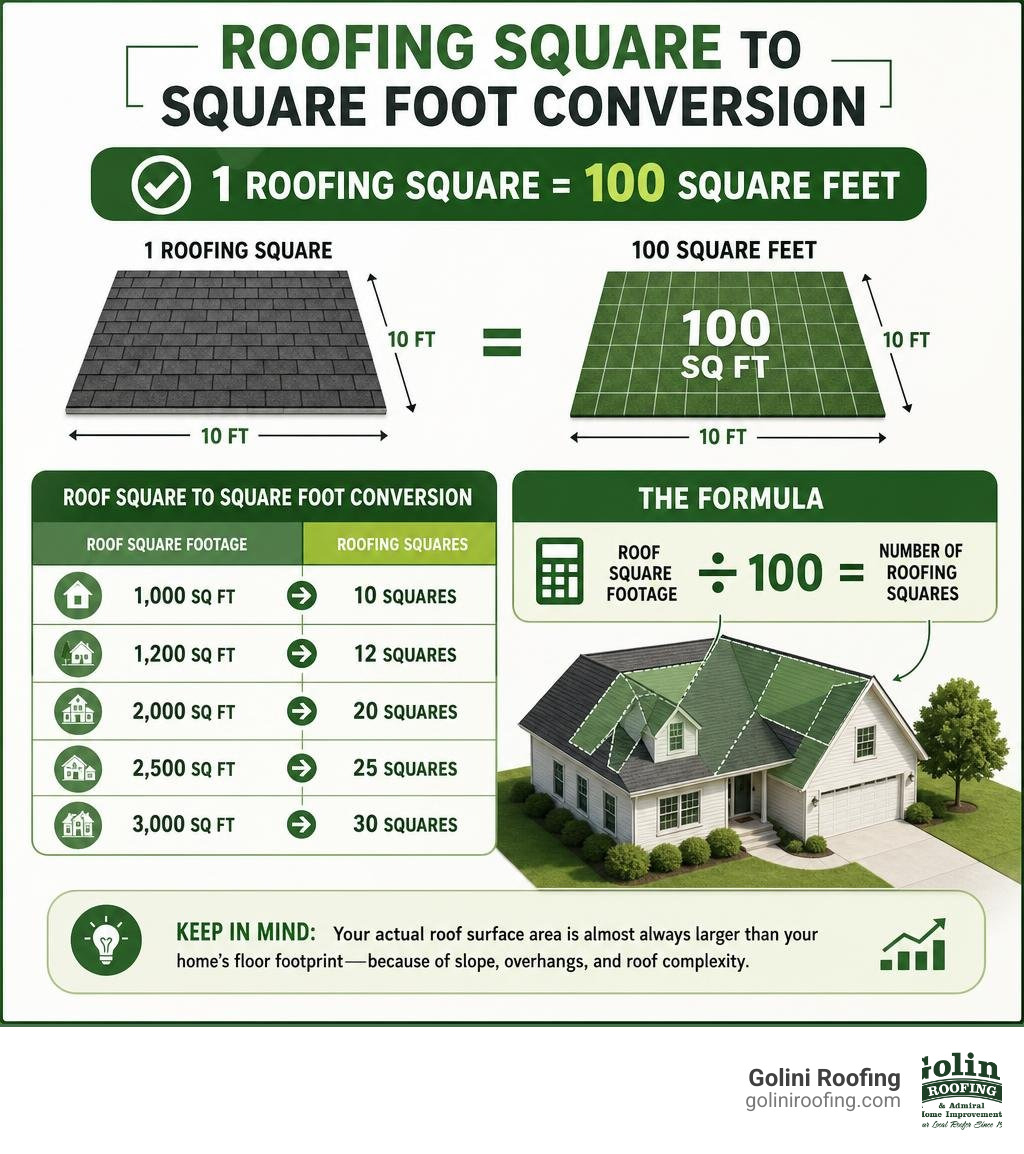
If you’re trying to figure out how many roof squares in a square foot there are, here’s the short answer:
1 roofing square = 100 square feet of roof surface area
To convert your roof’s square footage into roofing squares, simply divide by 100:
| Roof Square Footage | Roofing Squares |
|---|---|
| 1,000 sq ft | 10 squares |
| 1,200 sq ft | 12 squares |
| 2,000 sq ft | 20 squares |
| 2,500 sq ft | 25 squares |
| 3,000 sq ft | 30 squares |
Formula: Roof Square Footage ÷ 100 = Number of Roofing Squares
Keep in mind: your actual roof surface area is almost always larger than your building’s floor footprint — because of slope, overhangs, and roof complexity. So a 2,000 sq ft property in Wakefield or Reading, MA won’t simply have a 20-square roof. More on that below.
Understanding roofing squares is the first step to accurately estimating materials, comparing contractor quotes, and budgeting your project with confidence — whether you’re managing work in Wakefield, Reading, or elsewhere in Massachusetts.
I’m Jack Golini, owner of Golini Roofing in Wakefield, MA, and I’ve been calculating how many roof squares in a square foot for Massachusetts property owners since 1982. In that time, I’ve seen how a simple misunderstanding of this measurement can lead to under-ordered materials, surprise costs, and project delays — and this guide will help you avoid exactly that.
Important how many roof squares in a square foot terms:
- what is a roofing square in measurement
- how do you figure roofing squares
- coverage of a bundle of shingles
How Do You Calculate Roofing Squares from a House’s Square Footage?
Many project planners start by reviewing tax assessor records or property deeds. However, the living space square footage listed on those documents does not directly translate to the roof’s actual surface area.
To convert a building footprint into roofing squares for preliminary planning, you must follow a specific mathematical progression. First, identify the flat footprint of the roof area, including attached garages, porches, and eave overhangs. Once you have this horizontal footprint, it must be adjusted for the slope of the roof before dividing the final number by 100.
For a detailed look at this process, you can read our guide on How Do You Measure The Square Footage Of A Roof.
For planning purposes, you can use a Roof Square Footage Calculator or review How To Use Roofing Square Calculator In 5 Easy Steps. Final measurements and material orders should always be confirmed by a qualified roofing professional.
For quick online estimations, tools like the Roofing Square Calculator — Sq Ft to Squares to Bundles Converter and the Free Roof Area Calculator – Calculate Roof Square Footage | Roofing Calculator can help you visualize how these numbers shift based on your inputs.
Why Is a Roof’s Square Count Usually Larger Than the Building’s Footprint?
It is common for Massachusetts residential and commercial properties to have a roof surface area that is substantially larger than the building’s listed floor area. For example, a 2,200 square foot building may require a 3,500 square foot roof, which equals 35 roofing squares. Why does this discrepancy exist?
First, a building’s square footage only measures flat, horizontal floor space. It does not account for the angled pitch of the rafters. When you tilt a flat plane upward to create a slope, the surface area increases.
Second, roofs extend past the exterior walls of the structure to form eaves and rakes, also known as overhangs. These overhangs help protect siding, trim, and foundations from water damage, but they also add additional roofing surface.
Finally, architectural details such as front porches, attached garages, dormers, and entryways add to the total surface area without necessarily adding to the official heated or occupied floor area of the building.
How Does Roof Pitch and Slope Affect the Total Number of Squares?
Roof pitch is the measurement of your roof’s vertical rise over a 12-inch horizontal run. For example, a 6/12 pitch means the roof rises 6 inches for every 12 inches of horizontal run.
The steeper the pitch, the larger the actual roof surface area will be relative to the flat footprint of the building. To calculate the exact surface area, professionals use a “pitch multiplier” or pitch factor.
Here is how common pitches affect your total square footage:
| Roof Pitch | Angle (Degrees) | Pitch Multiplier |
|---|---|---|
| 3/12 | 14.0° | 1.031 |
| 4/12 | 18.4° | 1.054 |
| 5/12 | 22.6° | 1.083 |
| 6/12 | 26.6° | 1.118 |
| 8/12 | 33.7° | 1.202 |
| 12/12 | 45.0° | 1.414 |
For example, if you have a Massachusetts property with a flat footprint of 2,000 square feet and a standard 6/12 pitch roof, you would calculate the surface area as follows:
$$2,000 text{ sq ft} times 1.118 text{ (pitch multiplier)} = 2,236 text{ sq ft of actual roof surface}$$
Dividing 2,236 by 100 gives you 22.36 base roofing squares before accounting for waste. If that same footprint had a steep 12/12 pitch, the roof surface would jump to 2,828 square feet, or 28.28 squares.
To play with these multipliers yourself for preliminary planning, check out the Roof Area Calculator – Roof Squares, Pitch Factor & Material Estimate . Final measurements should be confirmed by a roofing professional before materials are ordered.
What Is the Typical Waste Factor When Ordering Materials?
When estimating shingles, underlayment, and starter strips, a professional roofing estimate cannot be based only on the exact net square footage of the roof. Materials must be cut to fit valleys, hips, rakes, and ridges. This cutting process inevitably creates scrap material that cannot be used.
This is known as the waste factor. The typical waste factor added to a roof estimate ranges from 10% to 25%, depending on the shape of the roof:
- Simple Gable Roofs: 10% waste factor.
- Standard Hip Roofs: 12% to 15% waste factor due to diagonal cuts along the hips.
- Complex Roofs with Multiple Valleys, Dormers, and Skylights: 15% to 25% waste factor.
Failing to account for waste can cause material shortages, project delays, and unnecessary exposure to Massachusetts weather. For accurate ordering, material quantities should be calculated and verified by a qualified roofing contractor. You can read more about allocating materials in Calculate Your Roof Shingles A Simple Guide To Estimating Materials.
How Many Bundles of Shingles Are Needed Per Roofing Square?
Shingles are heavy, which is why manufacturers package them into smaller, transportable bundles rather than selling them by the full square.
The number of bundles you need per square depends entirely on the type of material you select:
- Standard 3-Tab & Architectural Shingles: Typically 3 bundles per square. Each bundle covers roughly 33.3 square feet.
- Premium or Designer Shingles: Often 4 bundles per square because the shingles are thicker and heavier, covering about 25 square feet per bundle.
- Cedar Shakes: Usually 5 bundles per square due to their unique dimensional thickness and overlap requirements.
To learn more about how shingle packaging works, explore our articles on the Coverage Of A Bundle Of Shingles and Unpacking Shingle Coverage Everything You Need To Know About Bundles And Squares.
Tools and Methods to Accurately Measure Roofing Squares
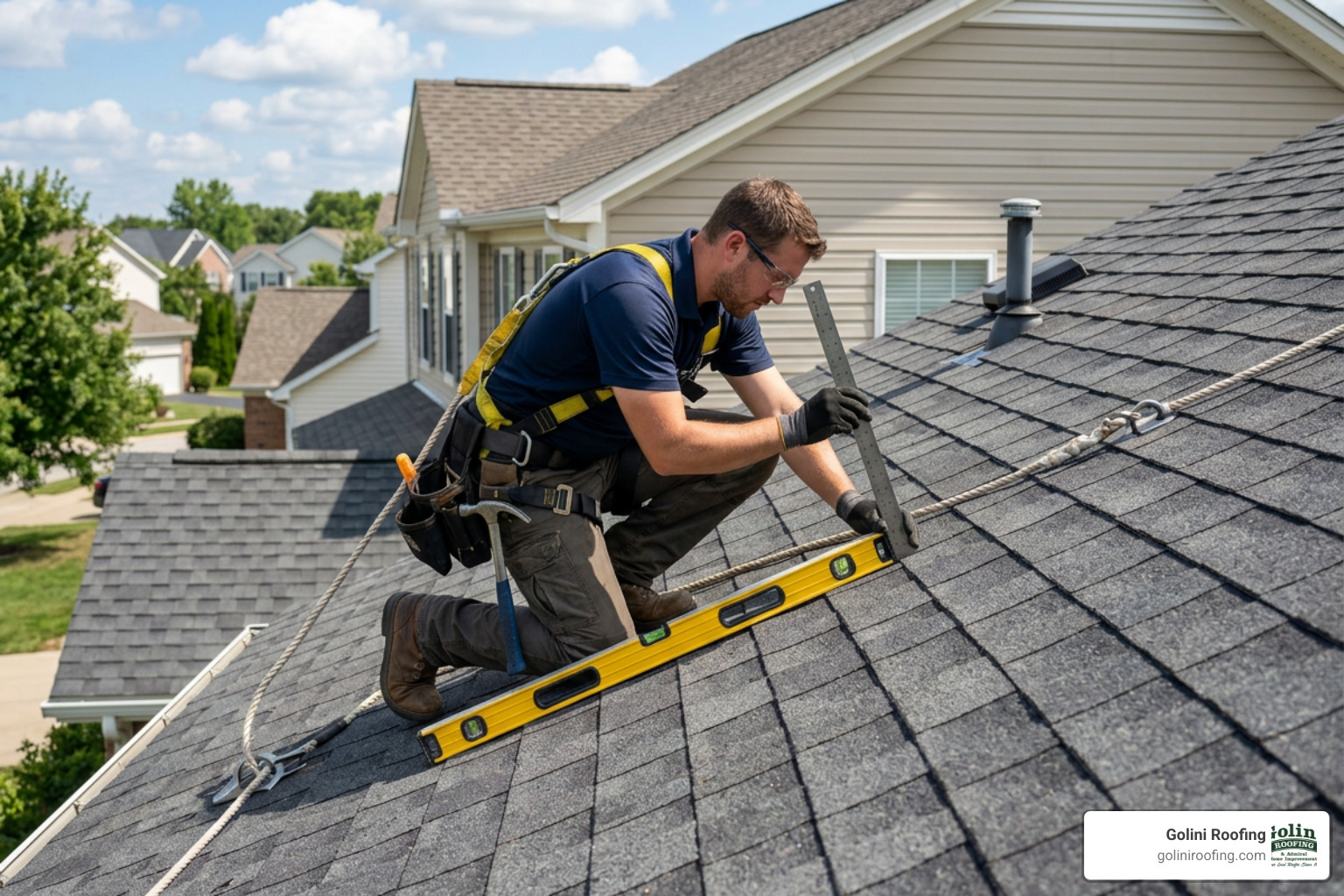
While some preliminary planning can be done from the ground, we strongly advise against climbing onto a roof due to the high risk of falls. Accurate roof measurement is best handled by trained professionals using proper safety equipment and measurement technology.
1. Remote Aerial & Satellite Mapping
Modern roofing contractors utilize advanced satellite and aerial imaging software to measure roofs remotely. These tools can calculate dimensions, pitch, and square footage with strong accuracy, eliminating the need for anyone to climb a ladder during the initial estimation phase.
2. Professional Ground-Up Verification
Ground-level measurements of the building footprint, combined with pitch readings taken safely and professionally, can help verify roof square footage. This method is useful for confirming digital measurements, but final calculations should be performed by a qualified roofing professional before materials are ordered or a project schedule is finalized.
For a deeper dive into professional measurement standards, check out the guide on How to Measure a Roofing Square and Roofing Square in Measurements.
How Complex Features Impact Your Roof Calculations
A roof is rarely a collection of simple flat rectangles. Architectural features can add character and performance benefits to Massachusetts residential and commercial buildings, but they also complicate material calculations:
- Valleys: Where two roof slopes meet, water channels down. These require specialized valley flashing and extra shingle cuts, increasing waste.
- Dormers: These projections require complex flashing, sidewall integration, and additional roofing squares that must be calculated individually.
- Hips and Ridges: The peaks and corners of the roof require specialized cap shingles. While these are measured in linear feet rather than square feet, they require additional material orders that must be integrated into the overall budget.
Because of these complexities, we highly recommend having a certified professional perform a comprehensive digital takeoff of the roof to ensure the material order is accurate.
Average Roof Replacement Costs in Massachusetts
When budgeting for residential or commercial roofing installation, repairs, replacements, or related gutter work in Massachusetts, it is important to treat any pricing information as a broad planning reference only. Publicly available online data and industry averages vary widely based on roof size, pitch, material selection, accessibility, structural requirements, and project complexity.
As a conservative example, if publicly available online data cites an average roof replacement cost around $10,000, a wide planning range should be modeled at approximately $20,000 on the low end to $50,000 or more on the high end to account for industry variability.
Please note: Any prices mentioned here are average-cost examples sourced from publicly available internet data and general industry averages. They are not the actual prices of Golini Roofing, do not represent a quote, and are not a guarantee of project cost. Every roof is unique, and actual pricing requires a professional inspection and written estimate.
Why Hand-Nailing Matters for Your Roof’s Lifespan
At Golini Roofing, we believe that an accurate measurement is only the foundation of a great roof. How those materials are installed makes all the difference.
While many modern crews rely on rapid-fire nail guns to install shingles quickly, our team proudly specializes in meticulous hand-nailing of every single shingle.
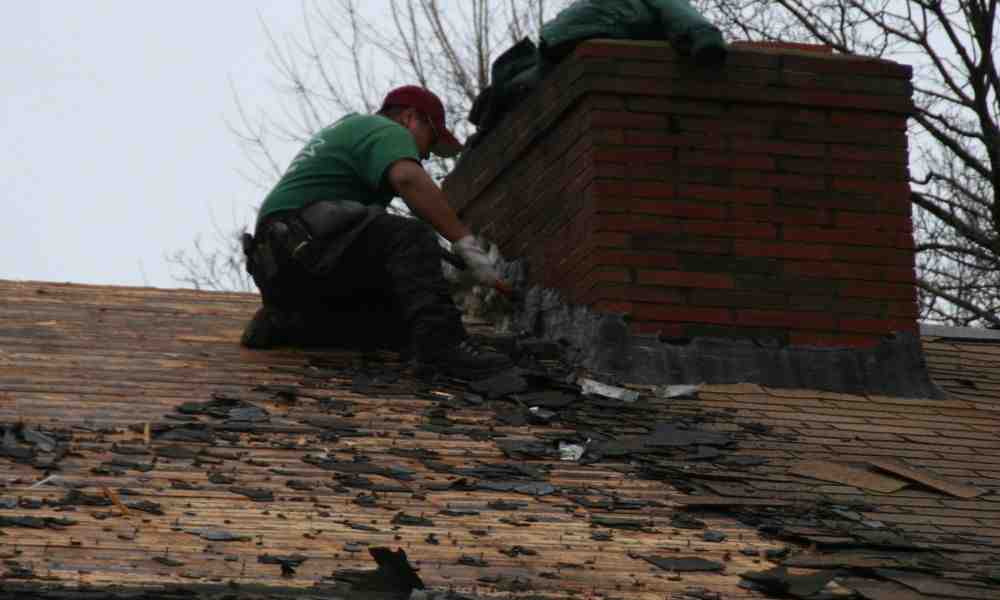
Hand-nailing allows our craftsmen to feel the resistance of the wood deck, ensuring that every nail is driven straight, flush, and to the exact depth required by the manufacturer. This prevents under-driven nails from puncturing the shingles above them and stops over-driven nails from cutting through the shingle membrane—a common cause of wind blow-offs and premature roof failure.
Get a Precise, Professional Roof Estimate Today
Calculating how many roof squares in a square foot your property needs is a great way to start planning, but nothing replaces a professional assessment. Golini Roofing provides residential and commercial roofing services throughout Massachusetts–including Wakefield, Reading, Stoneham, and Woburn–covering roof installation, roof repairs, roof replacements, and coordinated gutter services.
Have questions about your roof’s measurements, or are you ready to schedule a comprehensive inspection?
- Request a Quote: Submit your project details via our Quote Form.
- Explore Our Services: Learn more about our specialized roofing services, including installation, repairs, replacements, and professional gutter installations.
