Why Regular Inspections are Critical for Property Longevity
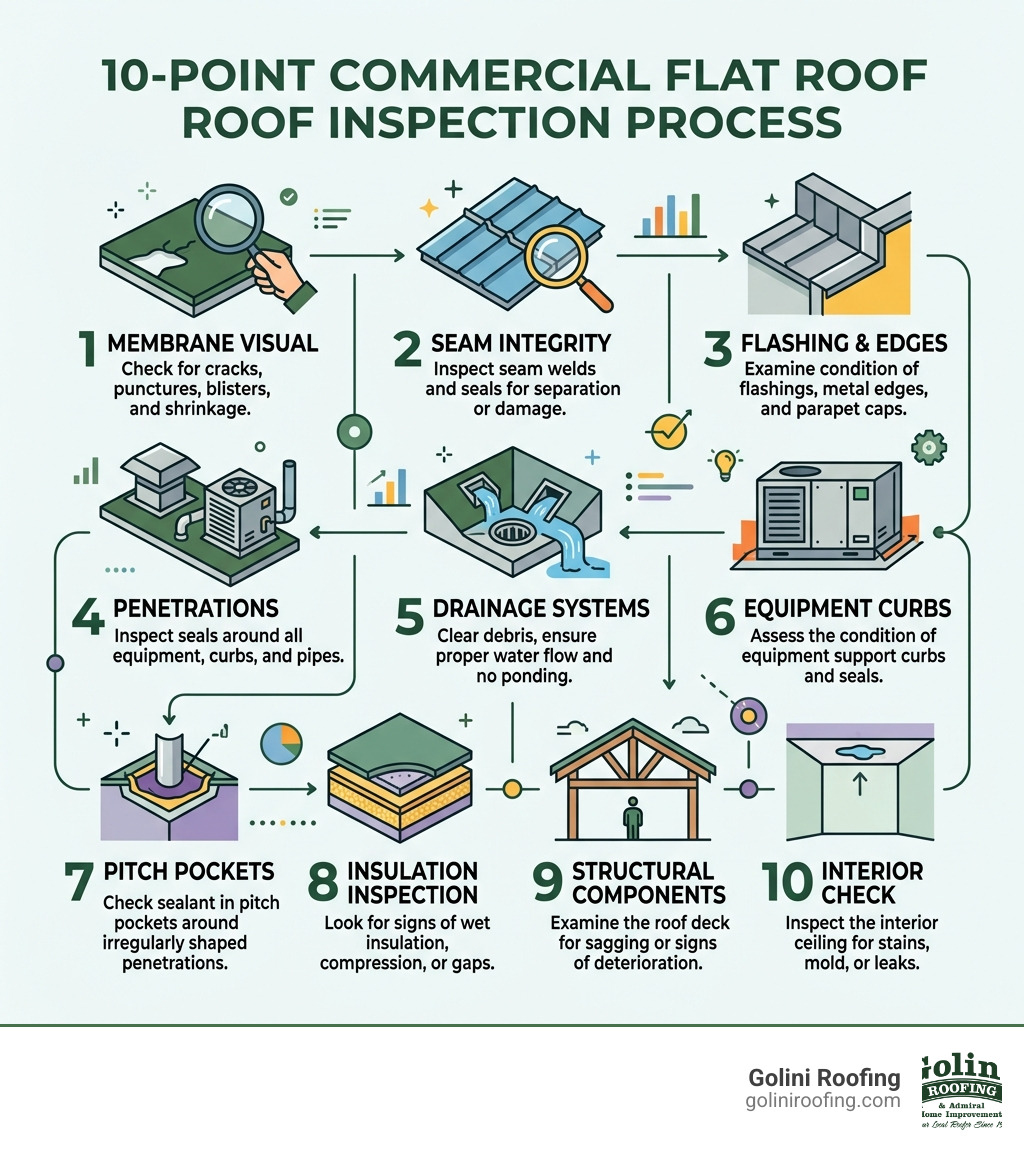
A flat roof inspection is a systematic evaluation of your roof’s membrane, drainage, flashings, penetrations, and structural components – carried out to catch damage early before it becomes a costly problem.
Here’s a quick overview of what it covers:
| Inspection Area | What’s Being Checked |
|---|---|
| Roof membrane | Cracks, punctures, blisters, shrinkage |
| Flashings & edges | Corrosion, lifting, improper sealing |
| Drainage systems | Clogs, ponding water, scupper blockages |
| Penetrations | HVAC curbs, vents, pipe boots, pitch pockets |
| Interior | Water stains, mold, insulation damage |
| Structural components | Sagging, deck deterioration, parapet walls |
Most professional inspections are recommended twice a year – typically in spring and fall – and after any major storm. A standard inspection takes between 1 and 3 hours, and average costs based on internet data range from as low as $200 up to $1,500 or more depending on roof size and complexity (these are industry averages, not Golini Roofing prices).
Skipping inspections is a gamble. A small undetected seam split or blocked drain can quietly cause thousands of dollars in interior damage – often without any obvious signs on the surface.
I’m Jack Golini, owner of Golini Roofing, and with over 35 years of roofing experience serving the North Shore area of Massachusetts, I’ve seen how a thorough flat roof inspection can be the difference between a simple repair and a full roof replacement. In this guide, I’ll walk you through exactly what a proper inspection involves and how to use it to protect your home.
Easy flat roof inspection glossary:
Think of your flat roof as the silent protector of your home. It stands between the harsh Massachusetts elements – from humid summers to heavy spring rains – and your living space, belongings, and family. However, flat roofs are workhorses that don’t always announce trouble loudly. Often, problems whisper before they shout during a major storm.
One of the most compelling reasons to prioritize Professional Roof Inspections is energy efficiency. The U.S. Department of Energy notes that significant building energy loss can occur through an underperforming roof system. When insulation becomes wet due to a hidden leak, it loses its R-value, forcing your HVAC system to work overtime and driving up your utility bills.
Beyond the monthly bills, a regular inspection guide serves as a vital asset management tool. It moves you from a reactive mindset – where you’re calling for emergency repairs during a storm – to a proactive one. Regular checks also help with warranty compliance; many manufacturers require documented routine maintenance to keep coverage valid.
Finally, there is the matter of Roof Inspection For Insurance. Having a documented history of the roof’s condition can be a lifesaver when filing a claim after a hail storm or high-wind event. It helps show that the damage was caused by the event and not by years of neglect, reducing financial risk.
The Comprehensive Checklist for Your Next Inspection
When we step onto a roof for a flat roof inspection, we aren’t just looking for holes. We are looking for the Big Four issues: openings in the system, water management failures, edge failures, and penetration failures.
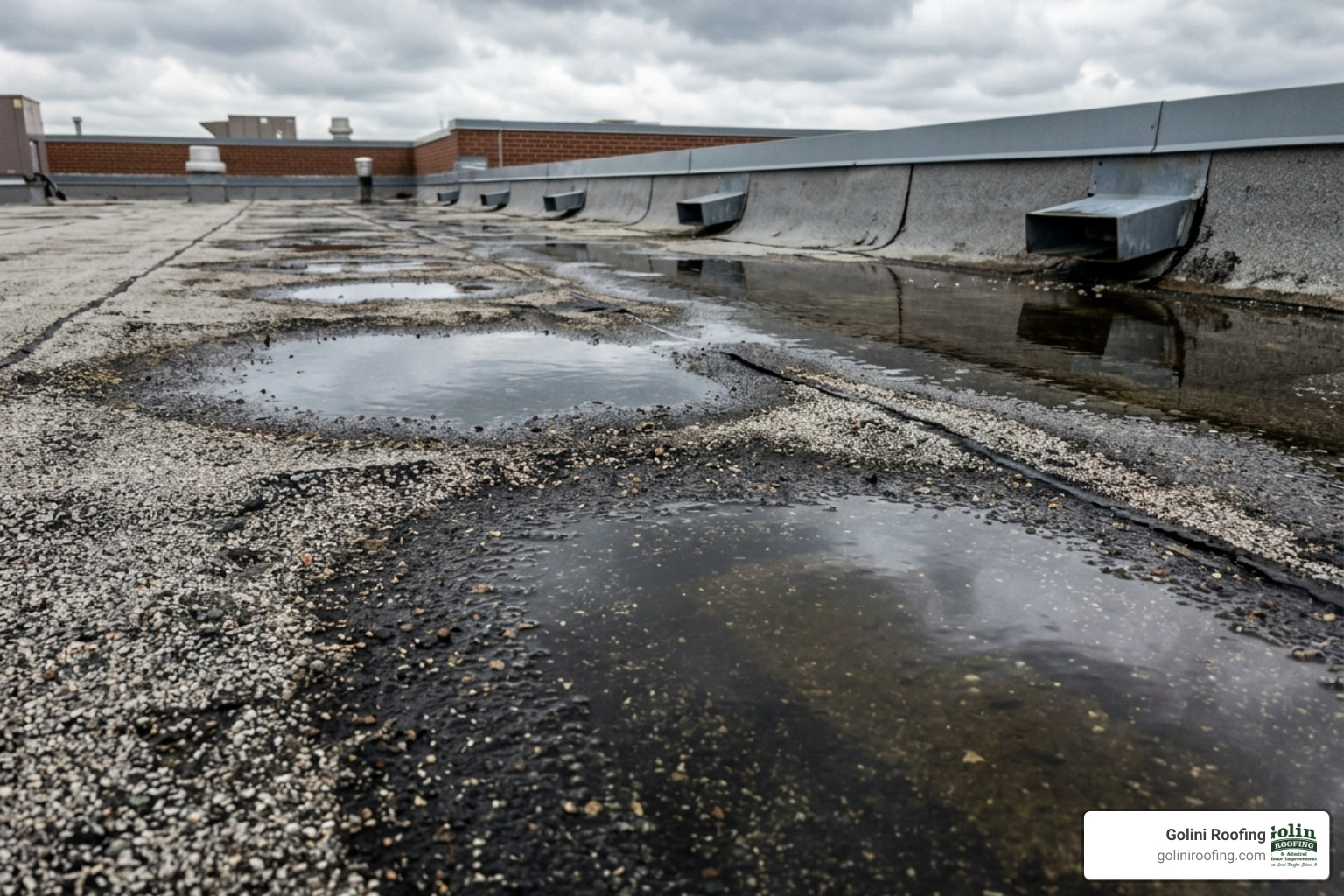
Using The Ultimate Roof Inspection Checklist For Finding Leaks And More, we start with the most common culprit: water. Flat roofs are designed to shed water, but they often struggle with ponding. If you see water standing on the roof for more than 48 hours after a rain, you have a drainage problem.
A thorough inspection checklist must include:
- Drainage Systems: We check internal drains, scuppers, and overflows for debris. Even a few handfuls of leaves can turn a roof into a swimming pool.
- Gutter Services: We ensure that Gutter Services are integrated correctly, checking that gutters and downspouts aren’t crushed or blocked.
- Membrane Integrity: We look for cracks, punctures, or alligatoring (cracking that looks like reptile skin).
- Parapet Walls & Termination Bars: These are the edges where the roof meets the wall. We look for loose termination bars or failing sealant that could allow water to wick behind the membrane.
Key Components of a Flat Roof Inspection
A Roofing Inspector pays special attention to the details. While the open field of the roof might look great, many leaks occur at penetrations and edges.
- Flashings: These are the metal or membrane reinforcements at perimeters and transitions. We look for corrosion, lifting, or gaps.
- Penetrations: This includes HVAC curbs, vents, and pipe boots. The sealants around these areas degrade over time due to UV exposure and must be checked for shrinkage.
- Pitch Pockets: These are small metal pans filled with sealer around irregular penetrations. If the pourable sealer has cracked or sunk, it’s a direct highway for water.
- Expansion Joints: These allow the building to move. If the covers are torn or the seals are broken, the roof system is at risk.
- Advanced Diagnostics: For a deeper dive, we might use moisture mapping or take core samples. Core samples reveal the layers of the roof, showing us if there is trapped moisture in the insulation that isn’t visible from the surface. This is a core part of Flat Roof Maintenance.
Safety Protocols for a Flat Roof Inspection
Safety isn’t just a box to check; it’s the most critical part of the job. A Certified Roof Inspector must adhere to strict OSHA compliance and safety practices.
Before any ascent, we evaluate the access methods – whether it’s a fixed ladder, a hatch, or a portable setup. We monitor the weather closely; a wet flat roof can be extremely slippery. On the roof, we establish perimeter safety zones and identify overhead hazards like power lines.
Our Professional Roof Inspection Services also include a global walk-through to check for structural stability. If the roof feels spongy or soft underfoot, it may indicate that the underlying deck is rotting or compromised, which is a major safety hazard for anyone walking on the surface.
Material-Specific Vulnerabilities: TPO, EPDM, and Bitumen
Not all flat roofs are created equal. Depending on what your building is covered with, you’ll face different challenges.
| Material Type | Typical Lifespan | Common Vulnerabilities |
|---|---|---|
| TPO (Thermoplastic Polyolefin) | 15–25 Years | Seam shrinkage, punctures, UV degradation over time |
| EPDM (Rubber) | 20–30 Years | Seam failure (adhesive breakdown), shrinkage, “bridging” at walls |
| Modified Bitumen | 15–25 Years | Granule loss, blistering, open “laps” or seams |
| BUR (Built-Up Roof) | 15–30 Years | Cracking, alligatoring, gravel displacement |
For TPO roofs, we often see shrinkage where the membrane pulls away from the edges. With EPDM, the seams are the weak point; since they are glued or taped rather than welded, the adhesive eventually fails. Our Flat Roof Repair Complete Guide covers these nuances in detail.
Even if you have Residential Roofing on part of your property, the principles of thermal shock apply. Temperature swings cause materials to expand and contract. Over time, this “breathing” can cause fasteners to back out or seams to pop open.
Understanding the Cost of a Flat Roof Inspection

One of the most common questions we get is, “How Much Does A Roof Inspection Cost?”
Based on average internet data, a standard flat roof inspection typically ranges from $200 to $500. Some companies charge by the square foot, often around $0.05 per square foot. However, for larger properties or roofs requiring advanced diagnostics like infrared thermography, costs can exceed $1,500 to $3,000. These figures are industry averages and not specific quotes for Golini Roofing.
When asking “How Much For Roof Inspection,” consider the diagnostic tools involved. Infrared cameras can detect areas where wet insulation is retaining heat, but they have limitations – they don’t work well when snow is present, and they often require the right testing conditions.
A good rule of thumb for budgeting is the 5-10% rule. If your annual maintenance and repair expenses reach 5-10% of the total roof replacement value, it’s usually more cost-effective to stop repairing and start planning for a replacement. Keeping an eye on How Much Are Roof Inspections now can help you avoid a much larger surprise later.
Frequently Asked Questions
How often should a flat roof be inspected?
We recommend a semi-annual frequency – once in the spring to check for winter damage and once in the fall to clear drains and gutters and prepare for colder weather. You should also ask yourself, “Do I Need A Roof Inspection?” after any major weather event like hail or high winds. Remember the 48-hour rule: if water is still there two days after the rain stops, call a pro.
How long does a professional inspection take?
How Long Does A Roof Inspection Take? For most properties, the duration is between 1 and 3 hours. Factors that influence this include the building size, the complexity of the roof levels, and the penetration count.
When should I repair versus replace my flat roof?
Most flat roofs have a 20-30 year lifespan. If the damage is localized, a Roof Repair may be the right next step. However, if you have widespread moisture in the insulation, recurring leaks in multiple areas, or structural sagging, replacement is usually necessary. Even if you aren’t seeing leaks, Does A New Roof Need To Be Inspected? Yes. A post-installation inspection helps confirm the contractor followed manufacturer specifications, protecting your warranty from day one.
Conclusion
Mastering your flat roof inspection checklist isn’t about becoming a roofing expert overnight; it’s about knowing what to look for and when to call in the professionals. By catching small problems early, you protect your home, your budget, and your peace of mind.
At Golini Roofing, we’ve spent over 35 years perfecting roof protection in Wakefield, MA, and surrounding areas like Reading, Stoneham, and Woburn. We pride ourselves on meticulous craftsmanship – including our signature hand-nailing technique for shingles – and we bring that same level of detail to every roof evaluation we perform. Whether you are in Lynnfield, Burlington, or Winchester, we are here to ensure your Residential Roofing remains a durable shield for your home.
Don’t wait for the next big storm to find out your roof is failing. Contact us today for a Free Roofing Inspection and let us help you extend the life of your roof with the quality and care your home deserves.
